
How to Start House Training Your Puppy
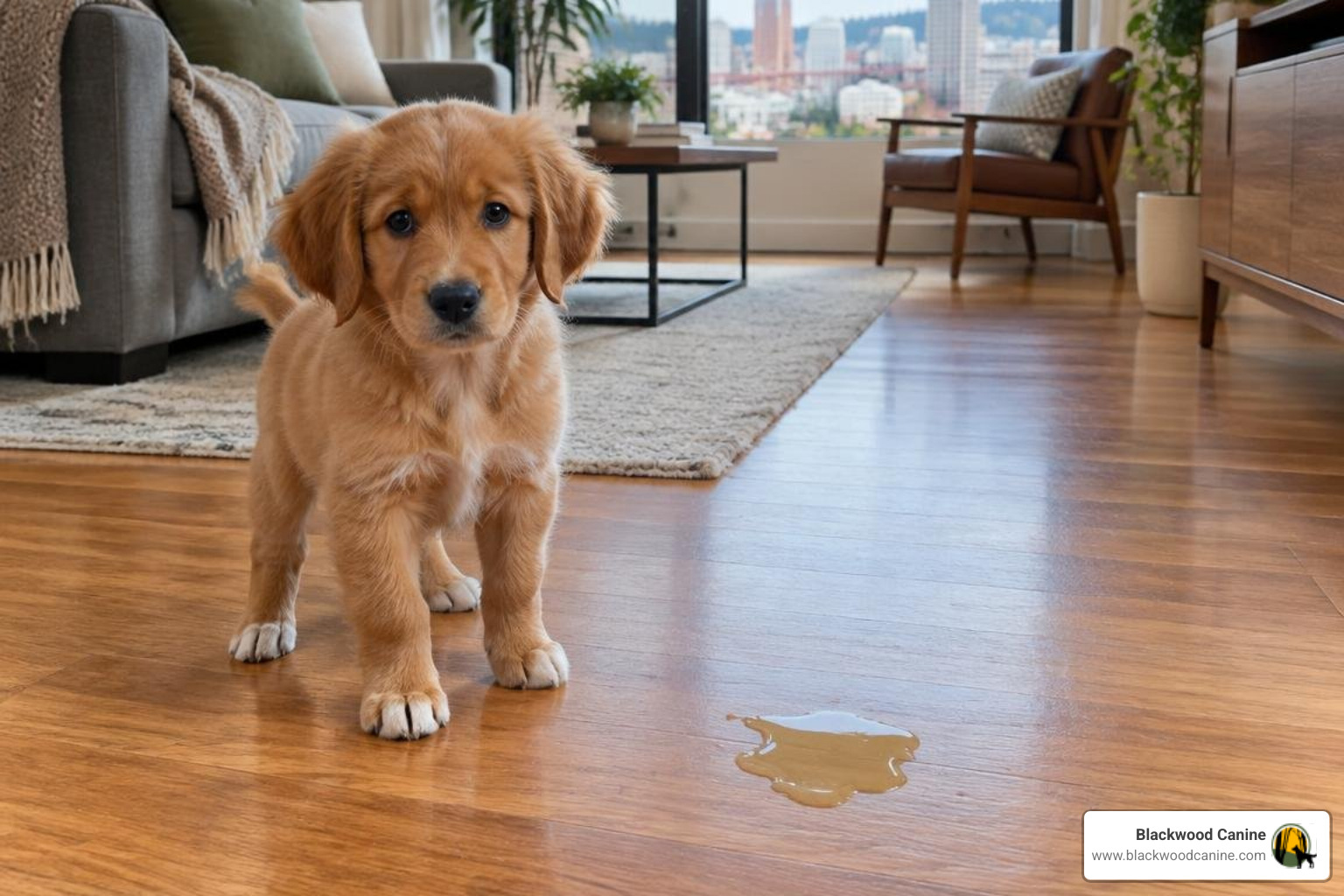
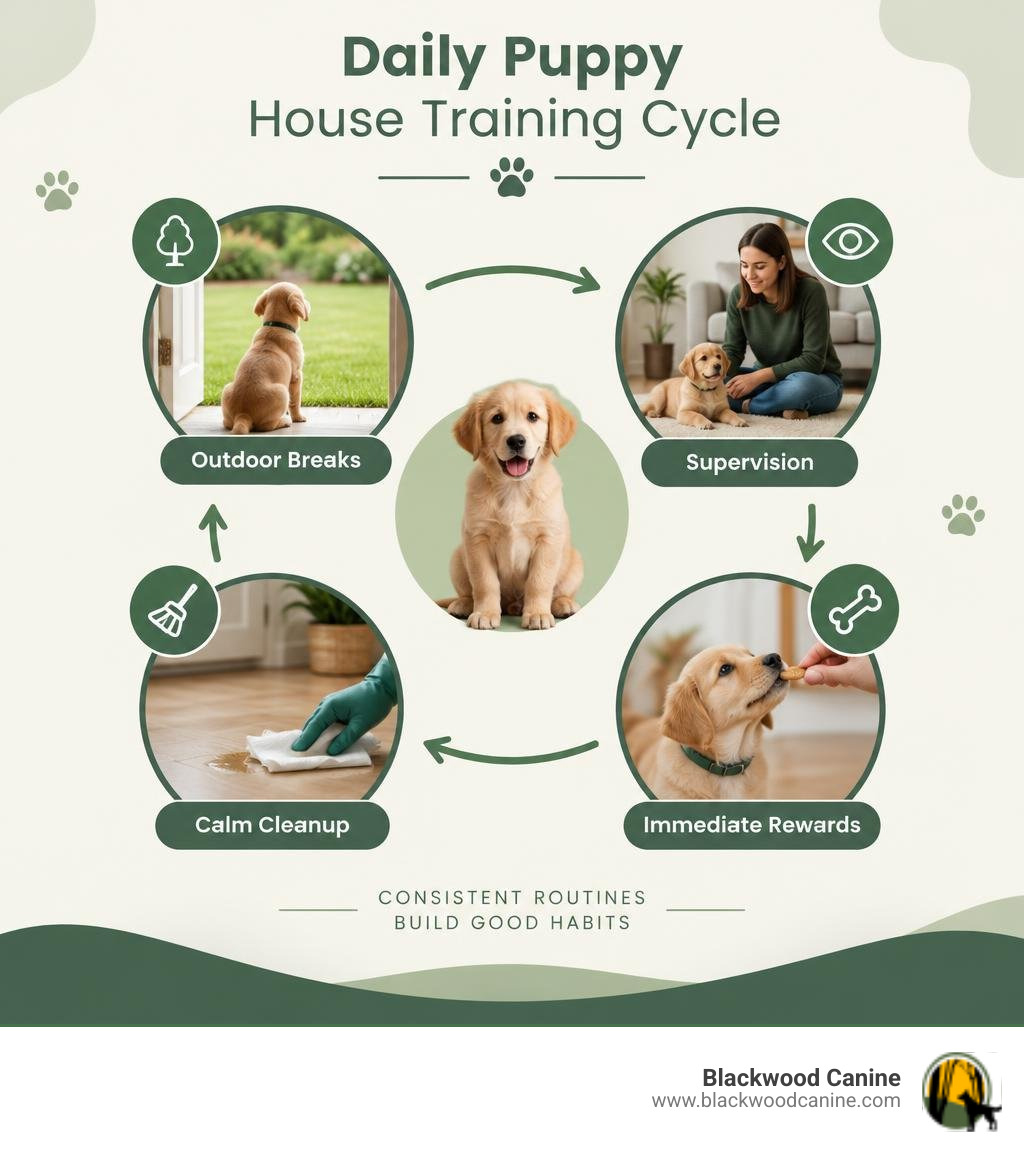
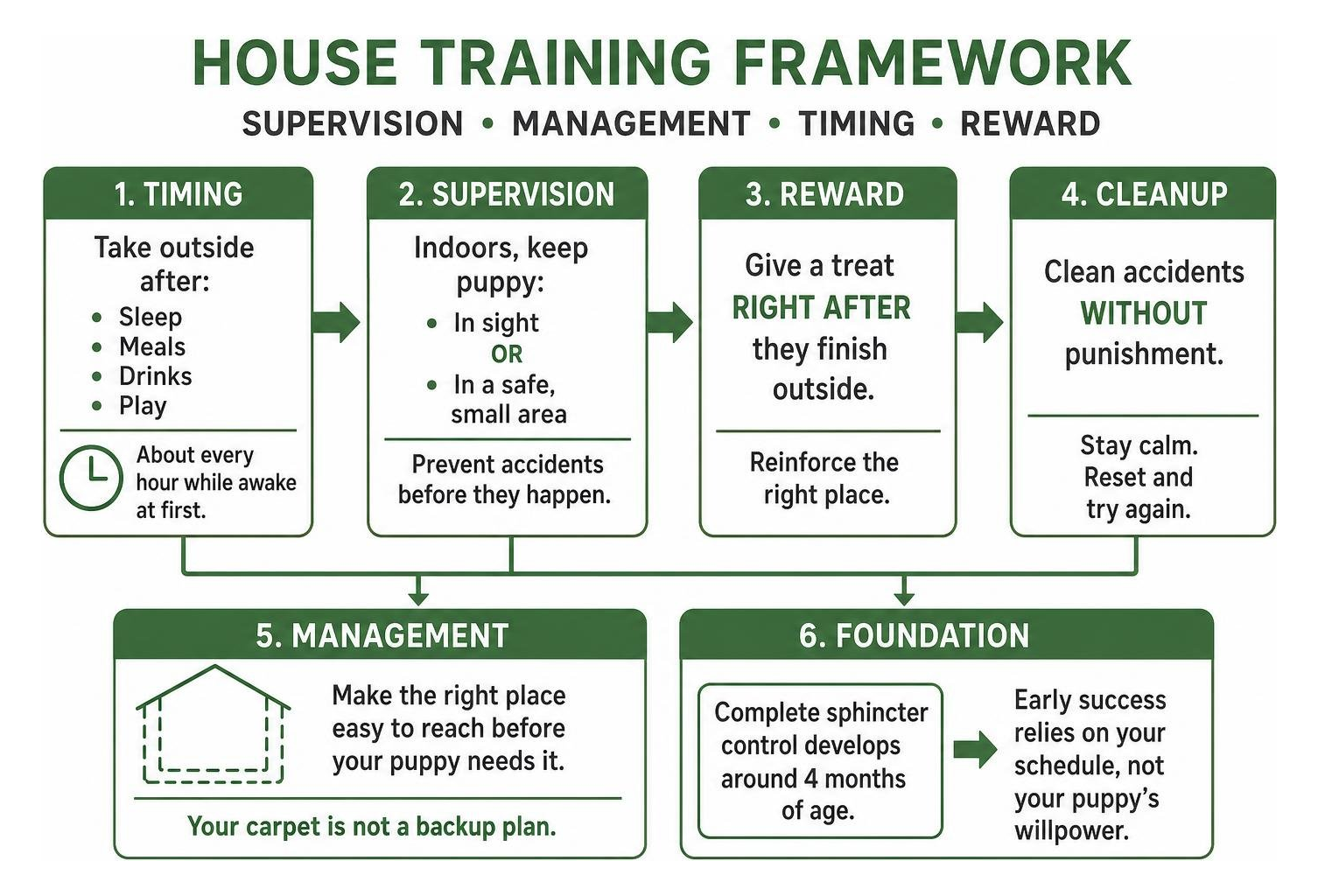
Start the day your puppy comes home. Take them to the same outdoor spot after sleep, meals, drinks, and play, and about every hour while they are awake at first. Give a treat right after they finish. Indoors, keep them in sight or in a safe, small area, and clean accidents without punishment.
The trick is to make the right place easy to reach before your puppy needs it. Your carpet is not a backup plan.
I’m David Wright, and five years apprenticing in dog training taught me the value of simple routines families can actually follow. In this guide, I’ll show you how to build a house training puppy routine around your day.
The Proven Framework for House Training a Puppy
Puppy bladders are small, active, and largely involuntary during the early weeks of life. Understanding basic developmental anatomy keeps expectations grounded. Complete sphincter control develops around four months of age, which means early success relies on your schedule rather than your pup's willpower.
Successful training requires clear expectations, smart management, and consistent follow through. Real results do not come from purely treat only methods or heavy handed corrections. Misusing any tool or correction creates confusion and fear, while relying solely on cookies without boundaries leaves you constantly cleaning up puddles. Proper balance combines clear communication, fair consequences, and solid structure. Training tools and correction methods should always be used under professional guidance so they support learning instead of undermining trust.
For detailed medical insights on development, check the Veterinary guidance on house training puppies from VCA Animal Hospitals. To avoid common handling traps, review what dog trainers say not to do when training a new puppy.
When to Start House Training Puppy Routines
Start the second your puppy sets paws on your property at eight weeks old. Young pups naturally avoid dirtying their immediate sleeping quarters, but they have no baseline concept that your living room rug is part of their clean den.
By managing their space and taking them straight to a dedicated outdoor bathroom area, you establish an instant scent association. Immediate habituation prevents indoor preferences from forming. If you want a straightforward blueprint, our easy way to potty train a puppy covers the first week fundamentals.
Recognizing Pre Potty Body Language and Signals
Puppies rarely schedule a formal announcement before popping a squat. You must become a sharp observer of subtle physical cues.
Watch for these warning signs:
- Sudden sniffing of the floor with nose glued down
- Circling or pacing in tight loops
- Abruptly abandoning a toy or chewing activity
- Drifting away into quiet corners, hallways, or behind furniture
- Whining, pacing, or heading toward an exit door
- Squatting posture or a stiffened, raised tail
When you see any of these signs, move immediately. Scoop up the puppy or calmly guide them outside on leash without making it a wild chase.
Choosing Your Method: Crates, Pens, and Potty Pads
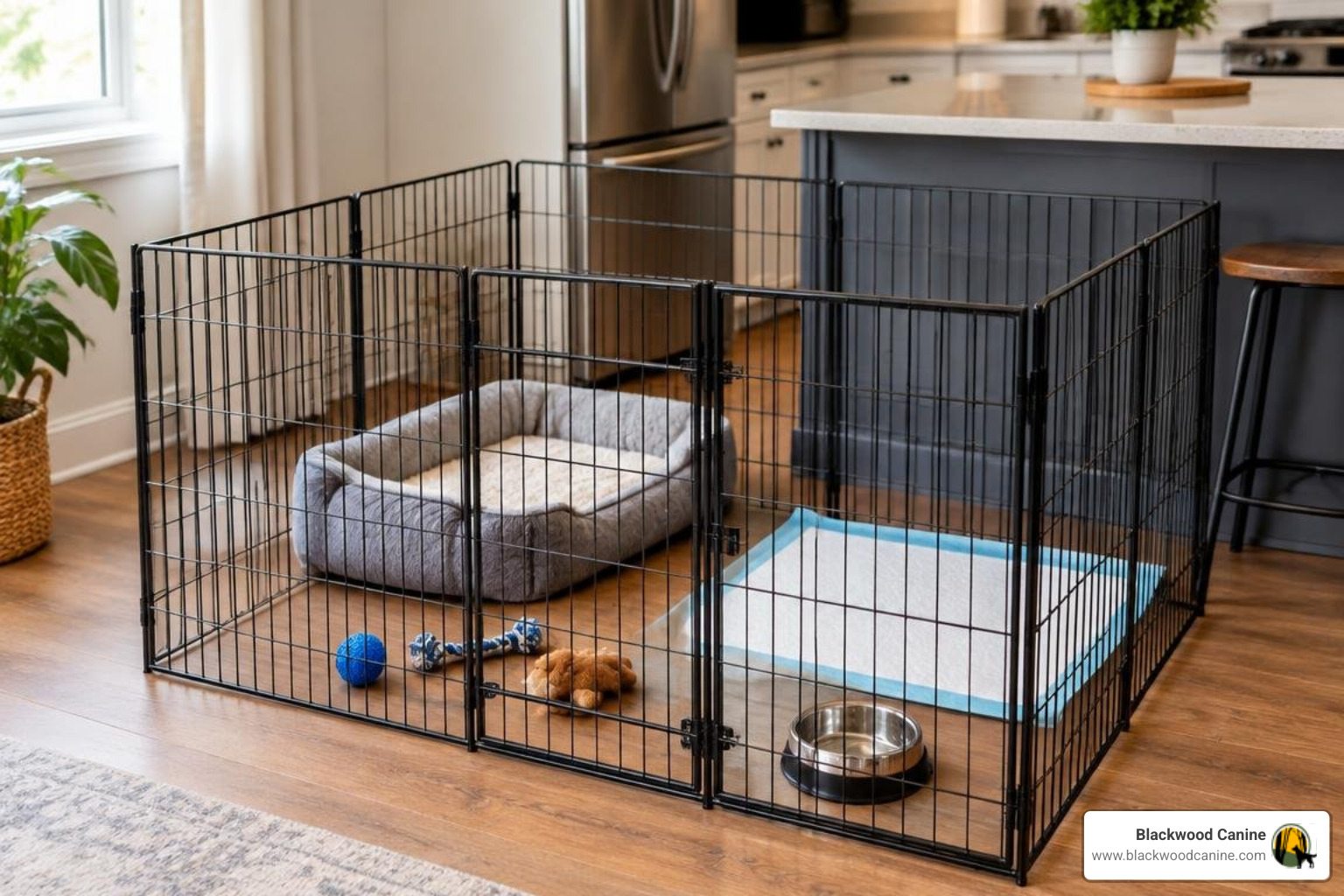
Management tools keep your puppy from rehearsing bad habits when your eyes leave them for even thirty seconds. Confinement is not cruel when used correctly; it provides safety, structure, and taps into their instinct to keep their bed clean.
When you cannot offer direct, hands on supervision, an appropriately sized crate or an exercise pen is your best friend. Another practical option is the umbilical leash method, where you attach the puppy's six foot leash to your waist. This keeps the pup in your immediate eyesight and eliminates stealth accidents. Resources like The Ohio State University Indoor Pet Initiative on canine housetraining offer great context on setting up stress free indoor environments.
Crate Confinement vs. Indoor Potty Pads
Choosing between crates, exercise pens, and pee pads comes down to your living setup, your daily work routine, and long term goals.
| Method | Best Used For | Key Advantages | Potential Drawbacks |
|---|---|---|---|
| Crate Confinement | Standard house training, bedtime, short daytime naps | Taps into natural den aversion; builds strong bladder holding capacity | Requires careful sizing; cannot be used for excessively long stretches |
| Indoor Potty Pads | High rise apartments, extreme mobility limitations | Convenient when outdoor access is physically restricted | Can create confusion about soft indoor surfaces like rugs |
| Direct Outdoor Training | Homes with easy yard or street access | Establishes immediate, lifelong outdoor surface preferences | Requires constant owner presence and frequent trips |
A crate must be sized so the pup can stand up, turn around, and lie down comfortably. If the crate is too long, the puppy will use one corner as a bathroom and sleep peacefully in the other. Use crate dividers to adjust the floor space as your puppy grows.
How to Transition from Puppy Pads to Outdoor Elimination
If you started on potty pads, transition to outdoor grass systematically to avoid confusing your dog.
Begin by moving the pad a few feet closer to your exit door every two days. Once the pad rests directly next to the doorway, move it outside to the exact patch of grass where you want them to go. Next, cut the pad in half, placing grass directly over it. Within a few days, remove the pad entirely. Keep the pup on a leash during this process so they stay focused on the task. Learn more about coordinating these steps with our puppy potty training timing guide.
Establishing Schedules, Feeding Routines, and Bladder Expectations
Puppies run on a rapid metabolic clock. What goes in will trigger elimination shortly afterward due to the gastrocolic reflex. Eating, drinking water, vigorous play, and waking up from naps all activate their digestive system.
Managing mealtimes and water access gives you predictable bathroom windows instead of random surprises. Helpful veterinary advice from the Puppy development and care insights from the Merck Veterinary Manual emphasizes regular feeding for digestive stability. You can also build a custom schedule with our housebreaking schedule generator.
Age Based Elimination Frequency and Bladder Capacity
A practical rule of thumb is that puppies can hold their bladder for roughly one hour per month of age during waking hours, up to about nine months. Very young pups (6 to 14 weeks) need 8 to 10 outdoor breaks per day.
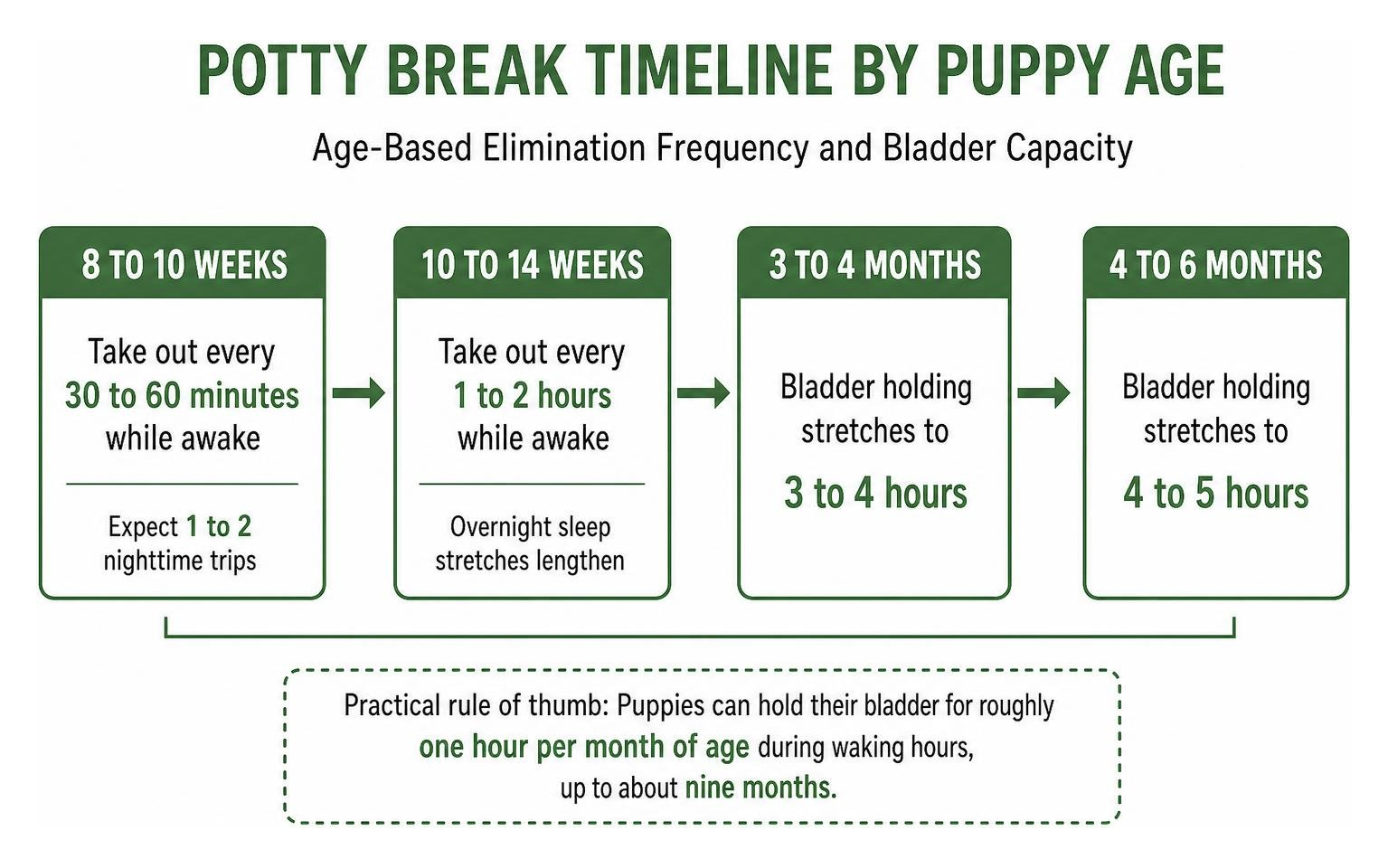
- 8 to 10 weeks: Take out every 30 to 60 minutes while awake; expect 1 to 2 nighttime trips.
- 10 to 14 weeks: Take out every 1 to 2 hours while awake; overnight sleep stretches lengthen.
- 3 to 4 months: Bladder holding stretches to 3 to 4 hours. See our 3 month old puppy schedule.
- 4 to 6 months: Bladder holding stretches to 4 to 5 hours. Check our 4 month puppy schedule guide.
Aligning Feeding Schedules with Outdoor Breaks
Never free feed dry kibble if you want a reliable house training schedule. Feed measured meals at set times every day:
- 6 to 12 weeks: 4 meals daily
- 3 to 6 months: 3 meals daily
- 6 to 12 months: 2 meals daily
Take your puppy outside 15 to 20 minutes after every meal. Pick up the main water bowl about two hours before bedtime to reduce late night wake up calls. For older pups, review our 6 month puppy potty guide.
Daily House Training Puppy Protocols for Fast Outdoor Results
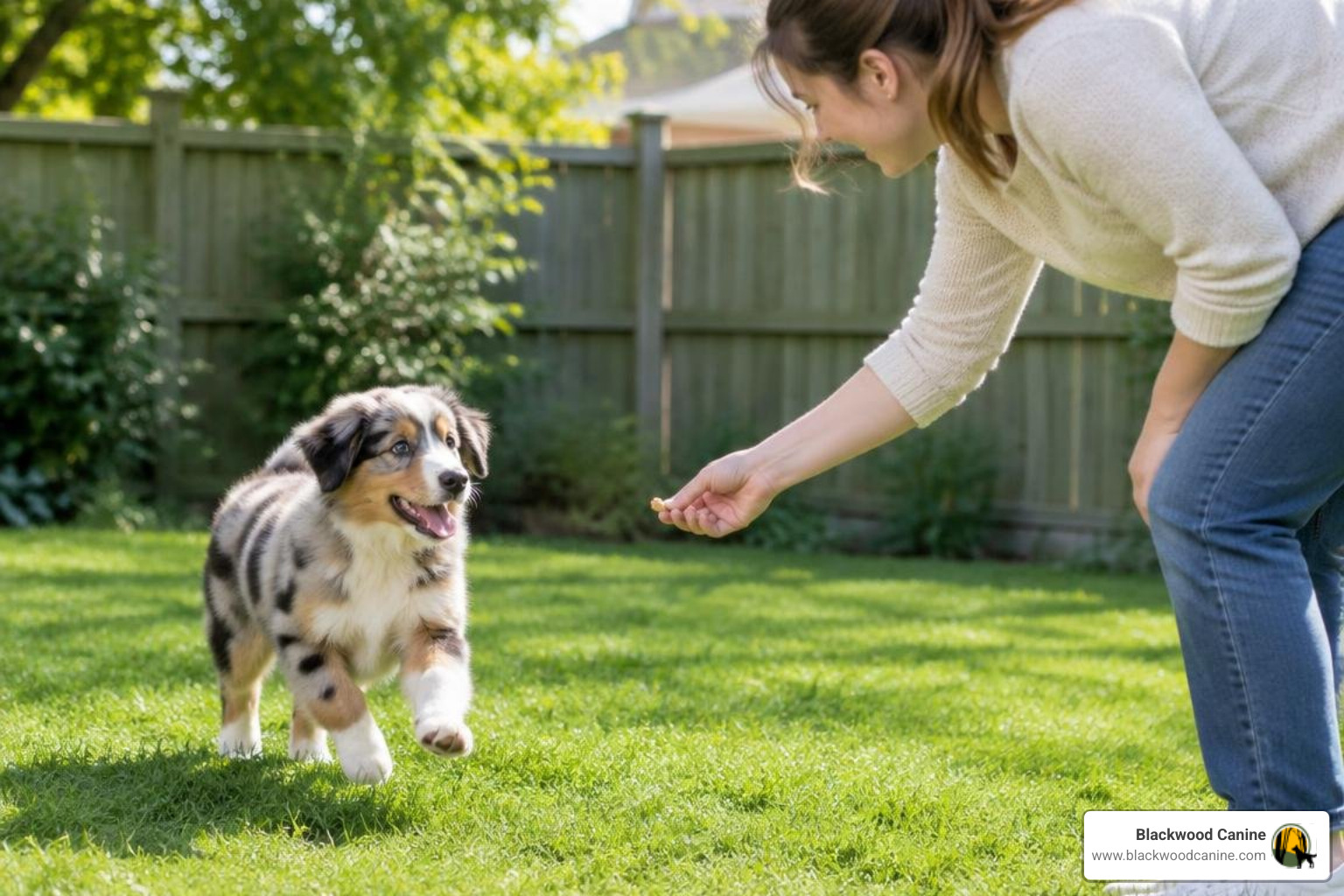
Consistency turns messy chaos into reliable habits. Keep a slip leash and high value treats by the door so you are always prepared.
Follow these daily operational rules:
- Walk your pup on a leash directly to the designated potty spot.
- Stand quietly in that zone for 5 to 10 minutes without turning it into a play session.
- Use a clear cue like "go potty" as they begin their pre elimination sniff.
- The moment they finish eliminating, mark with "Yes!" and deliver high value food within two seconds.
- If they do not eliminate after 10 minutes, bring them back inside, place them in their crate or on an umbilical leash for 15 minutes, then walk back out and try again.
For step by step UK behavioral advice, reference How to toilet train your puppy from Dogs Trust.
Interrupting Indoor Accidents Calmly and Correctly
If you catch your pup mid stream, stay composed. Do not scream, chase, or throw things. A sharp, startling "Ah ah!" or a firm clap is enough to pause their sphincter reflex.
Scoop them up or guide their leash immediately, rushing them out to their designated outdoor spot. When they finish the rest outside, reward them warmly. Scolding a dog after the fact or rubbing their nose in carpet does not teach cleanliness; it only teaches them to fear eliminating in front of you, which leads to hidden messes behind couches.
Enzymatic Cleanup and Eliminating Scent Triggers
Standard household cleaners and ammonia based sprays make the problem worse because ammonia mimics the chemical profile of urine. Dogs will repeatedly soil any spot that carries their scent markers.
Use a dedicated enzymatic cleaner that chemically digests biological proteins and pheromones. Soak the area thoroughly so the solution penetrates deep into the carpet padding and subfloor where urine settles. Blot clean with clean towels and allow it to air dry fully.
Managing Crate Soiling and Staged Den Freedom
If a puppy soils their crate, check these three common issues:
- Crate size: The crate is too spacious; add a divider.
- Absorbent bedding: Soft blankets can wick away urine, allowing the puppy to pee on one side and sleep dry on the other. Remove plush beds temporarily if needed.
- Duration: The puppy was left crated longer than their physical bladder capacity allows.
As your puppy proves their reliability, expand their living space using baby gates. Keep them restricted to a single room for at least one full week without an accident before opening access to a second room. If an accident occurs, step back one stage for another week.
Frequently Asked Questions About House Training Puppies
How long does it typically take to fully house train a puppy?
Most puppies achieve basic reliability within four to six weeks of strict, consistent scheduling. However, full house training status requires at least four straight weeks with zero accidents while having unsupervised freedom in the home. Most dogs reach true physical and mental reliability between six and eight months of age.
How do I teach my puppy to signal when they need to go outside?
Hang a potty bell at nose height next to your exit door. Every time you take the pup out on their scheduled break, gently tap their nose or paw against the bell, say your cue, and immediately open the door. Within two to three weeks, your puppy will connect ringing the bell with the door opening. Watch out for clever pups who ring it purely to go chase leaves; keep potty trips strictly business.
When should I consult a veterinarian about housetraining setbacks?
If a previously reliable puppy suddenly starts having frequent accidents, urinates in small dribbles, licks their genitals constantly, or has loose stool, contact your vet promptly. Urinary tract infections, intestinal parasites, and excessive thirst issues require medical intervention, not more obedience training.
Bringing Peace and Predictability to Your Home
Housetraining is about building daily rhythms, practicing clear communication, and enforcing sensible management boundaries. Slip ups will happen, but staying consistent across feeding, crate management, and scheduled breaks will set your household up for success.
For busy dog owners living in Scappoose, St. Helens, Warren, Bethany, Hillsboro, Beaverton, Portland, and Vancouver who feel exhausted by puppy accidents, professional help is within reach. At Blackwood Canine, our basic obedience foundation training starts at 4 weeks, while our immersion and complex behavior modification programs run on 6 week and 8 plus week timelines.
If you are ready for clear coaching and lasting daily structure, explore our easy puppy training resources or reach out to our team to build your Good Dog Game Plan.