
Why Do Puppies Bite? Understanding Normal Mouthing and Teething

To stop puppy biting quickly, redirect your puppy to a toy the moment teeth touch skin, then pause play for 10 to 20 seconds if they bite again. Provide frozen chews for teething relief and stick to a consistent routine with plenty of naps. This approach teaches bite inhibition without harsh corrections.
Living with a young pup often feels like sharing your living room with a furry piranha. You reach down for a sweet cuddle, and suddenly needle sharp teeth clamp onto your wrist. It is painful, frustrating, and leaves many owners wondering if their new companion is secretly hostile.
Puppies use their mouths to interact with the world around them. While human babies use their hands to grab, poke, and taste objects, puppies explore everything through their jaws.
The Root Causes of Puppy Biting
Understanding the motivation behind the mouthiness helps you respond with patience and strategy rather than irritation. Puppies do not bite out of spite. They bite because biology drives them to do so.
- Sensory exploration: Between 8 weeks and 6 months of age, puppies investigate their environment through taste and texture. Your fingers, shoe laces, and coffee table corners are all novel items waiting to be inspected.
- Teething relief: Puppies start teething around 3 to 4 months of age. Their baby teeth fall out, and 42 adult teeth push through the gums until roughly seven months old. Chewing creates counter pressure that soothes inflamed gums.
- Littermate social learning: Puppies explore social hierarchies and boundaries through rough play. When siblings wrestle, a sharp bite produces a high yelp from the playmate, signaling that the game is over. If puppies leave their mother before 7 to 8 weeks, they miss out on these early lessons in self control.
- Fatigue and overstimulation: Just like overtired toddlers who throw temper tantrums, puppies lose impulse control when they are exhausted. When a pup becomes frantic, zoomy, and relentlessly mouthy, they often need an enforced nap rather than more stimulation.
- Accidental reinforcement: If your puppy grabs your pants and you squeal, dance around, or wave your hands, they view your reaction as an exciting game of tug.
Understanding these developmental stages is essential for practical management. You can review expert insights on puppy mouthing or check out our guide on tips for new puppy owners to help get your household on the right track from day one.
Normal Play Mouthing vs. Resource Guarding and Aggression
A primary worry for pet parents in Scappoose, St. Helens, and Portland is whether their dog's biting indicates real aggression. True aggression in young puppies is uncommon, but resource guarding and fear based reactions can develop early if warning signs are ignored.
Play mouthing involves a relaxed body, bouncy movements, and wagging tails. In contrast, defensive or possessive behaviors involve a frozen posture, direct hard stares, and low rumbling growls over items like food, chews, or stolen socks.
| Behavior Trait | Playful Mouthing | Resource Guarding & Aggression |
|---|---|---|
| Body Language | Loose, wiggly, curving spine, bouncy steps | Stiff, frozen posture, hard eye contact, tense jaw |
| Vocalizations | High pitched play barks, snorts, silent nipping | Low guttural growls, lip curling, snapping air |
| Triggers | Fast movement, excitement, petting, tired state | Approaching food bowl, taking toys, touching sore spots |
| Response to Redirection | Readily switches to toys or settles after a pause | Refuses to let go, stiffens further, escalates to snap |
| Bite Pressure | Inhibited or accidental hard clamping during play | Intentional, targeted biting with rapid muzzle punch |
When an issue involves possessiveness over meals, studying a veterinary guide to food aggression in puppies provides essential context on how guarding behaviors develop.

How to Stop Puppy Biting in 4 Proven Steps
Stopping unwanted mouthing requires a balanced combination of clear communication, consistent management, fair consequences, and reliable reinforcement. You cannot rely strictly on constant treat delivery or harsh physical intimidation. Successful puppy raising relies on establishing clear boundaries that your dog can easily comprehend.
Step 1: Teach Bite Inhibition with Calm Redirection
Bite inhibition refers to a dog's ability to control the force of their mouth. A dog that learns how to moderate bite pressure as a youngster is far less likely to cause serious injury as an adult.
Whenever your pup attempts to gnaw on your flesh, swap your skin for an appropriate chew toy. Keep soft toys, rubber bones, or long fleece tug ropes within reach in every room.
- As soon as you feel teeth, offer an engaging toy.
- Wiggle the toy on the floor to make it move like prey, capturing their attention.
- The moment their jaws close around the toy instead of your hand, offer calm verbal praise.
- Use long tug toys so there is plenty of distance between your fingers and their teeth.
If you need more hands on advice for handling persistent grabbers, explore these puppy trainer tips to stop nipping.
Step 2: Establish Immediate, Nonphysical Play Pauses
Puppies crave social interaction. Removing your attention is one of the most effective ways to teach them that sharp teeth ruin the fun.
When teeth make painful contact with your skin:
- Make a crisp, high pitched yelp or say a clear marker like "Too bad!"
- Freeze completely. Do not pull away quickly, as fast movement triggers chasing instincts.
- Fold your arms, stand up, and look away for 10 to 20 seconds.
- If your pup continues jumping and biting your ankles, calmly step behind a baby gate or door for a brief 20 second time out.
- Step back in and resume calm interaction.
Never swat your puppy on the nose, pin them to the ground, or force their mouth shut. Physical punishments, when applied incorrectly or without professional guidance, can create fear, escalate arousal, and teach your dog to defend themselves. If you are considering any form of correction, work with a qualified trainer to ensure it is used safely and fairly. For a deeper breakdown of common mistakes, read our article on what not to do when training a new puppy.
Step 3: Provide Safe Teething Outlets and Mental Enrichment
Teething causes genuine discomfort. If you do not give your puppy legal items to destroy, they will find their own outlets on your baseboards, rugs, and hands.
- Frozen chews: Soak a clean washcloth in water or low sodium bone broth, twist it into a rope shape, and freeze it. The cold fabric numbs sore gums.
- Rubber chew toys: Stuff durable rubber toys with wet food, plain pumpkin, or mashed banana and freeze them solid. Licking and chewing naturally releases calming hormones in the brain.
- Toy rotation: Do not dump thirty toys into a basket on the floor. Keep three available per day and rotate them every evening to maintain novelty.
- Enforced crate naps: Puppies need roughly 16 to 18 hours of sleep per day. Follow a simple schedule of one hour awake followed by two hours of restful crate time.
Setting up predictable daily habits keeps arousal levels low. Discover practical daily routines for a well mannered puppy to create structure in your home.
Step 4: Socialize Early and Avoid Common Training Mistakes
Puppies learn bite inhibition best from other balanced dogs. Between 6 and 14 weeks of age, your puppy is in their critical socialization window.
Organize controlled playdates with vaccinated, well behaved adult dogs who will deliver fair, gentle corrections when your puppy plays too rough. Calm social exposure with stable adult dogs gives young pups safe opportunities to learn bite control and respect boundaries.
Avoid rough play like wrestling with bare hands or playing tug with short socks. These games teach your pup that human skin and clothing are legitimate targets. You can find straightforward, structured routines in our overview of easy puppy training strategies.
When Puppy Biting Becomes a Medical or Behavioral Concern
Most puppy mouthing is a normal developmental phase that resolves with maturity and training. However, there are scenarios where biting indicates underlying health complications or emerging behavioral issues.
Recognizing Red Flags and Underlying Medical Triggers
Sometimes excessive biting is driven by physical discomfort. If a puppy experiences sudden pain, their natural response is to lash out with their teeth to protect themselves.
- Retained baby teeth or oral injuries: If deciduous teeth fail to fall out when adult teeth erupt, it causes crowded roots, gum infections, and severe jaw discomfort.
- Ear infections or skin allergies: Puppies with irritated ears or itchy paws often snap when touched around the head, neck, or paws.
- Gastrointestinal pain: Internal discomfort from parasites or dietary upset makes puppies irritable and reactive to handling.
- Sudden behavior changes: If a previously gentle pup begins snapping when lifted or touched, schedule an exam with your vet to rule out underlying pain.
When you notice warning signs that go beyond normal puppy antics, consult this guide on when puppy biting requires veterinary care to ensure nothing is missed medically.
Managing Persistent Puppy Biting with Professional Support
If medical problems have been cleared by your vet and your dog continues to bite with intense pressure, growl aggressively when handled, or display intense barrier frustration, it is time to bring in professional help.
Training is never about choosing between pure positive bribery or harsh force. Real life results require clear expectations, fair structure, reliable management, and follow through.
- For young pups needing an early foundation, our structured puppy jump start programs build healthy habits and impulse control right away.
- Older pups ready for formal handling benefit from our 4 week basic obedience foundation training.
- For dogs exhibiting complex fear, resource guarding, or serious arousal challenges, we build structured intervention plans using 6 week and 8 plus week behavior modification timelines.
We do not run quick fix programs shorter than 4 weeks because building reliable habits and true communication takes dedicated repetition and real world practice.
Frequently Asked Questions About Puppy Biting
How long does the puppy biting stage usually last?
Most puppies outgrow intense biting between 6 and 8 months of age. The phase peaks between 12 and 20 weeks when teething discomfort is at its highest. As adult teeth settle into place by month seven and consistent training takes root, the urge to mouth human hands diminishes. High energy working breeds or herding dogs may take slightly longer to settle their oral habits.
Why does my puppy bite my feet and pant legs when walking?
Moving ankles and fluttering fabric trigger predatory chase drive. To a puppy, your moving feet look like small animals darting across the floor.
When your pup attacks your pant legs, stop walking and freeze immediately. Moving your legs makes the game more fun. Keep a toy in your pocket, and toss it forward in front of you before you step forward, redirecting their focus onto the toy instead of your ankles.
What should I do if my puppy growls or snaps around food?
Never punish a growling puppy. A growl is a vital warning signal. If you punish the growl, you remove the warning and create a dog that bites without notice.
Instead, manage the environment:
- Feed your puppy in a quiet, undisturbed area such as inside their crate.
- Teach the trade up game. Walk by while they are eating and toss a piece of high value roast chicken into their bowl from a comfortable distance.
- Teach them that human hands approaching their bowl brings higher value rewards, removing the perceived need to defend their food.
Building a Calm, Confident Companion for Life
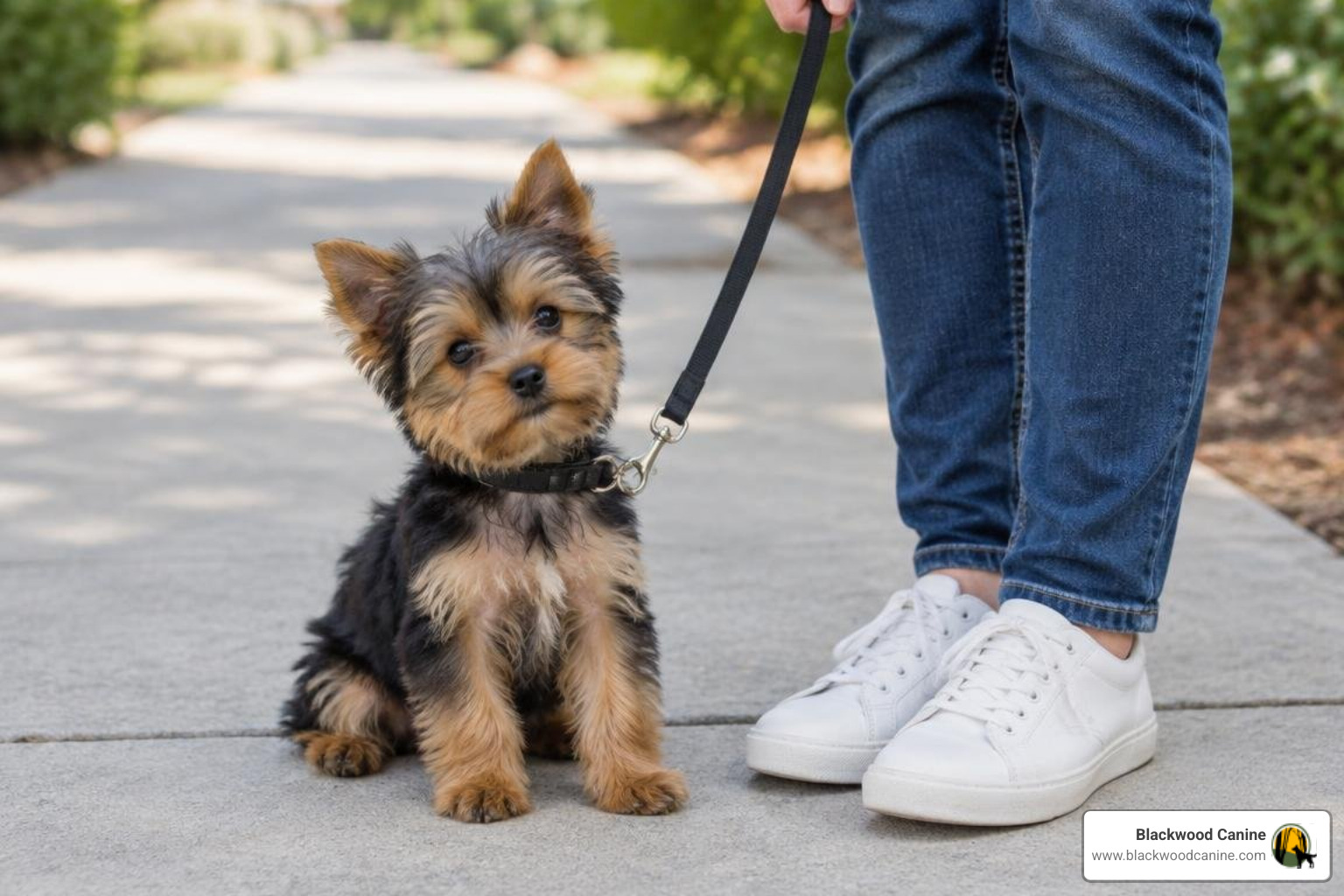
Raising a puppy through the nipping and teething months tests your patience, especially when your hands are scraped up and your favorite clothes have holes in them. This phase is temporary. With structured routines, safe chew outlets, and calm feedback, your puppy will learn to use their mouth gently.
Successful dog training is about building clear communication and solid expectations between you and your companion. If you are in Portland, Beaverton, Hillsboro, Bethany, Warren, St. Helens, Scappoose, Vancouver, or surrounding areas, you do not have to struggle through the puppy biting phase alone.
Take the next step by exploring our comprehensive dog training services and let Blackwood Canine guide your family toward a polite, reliable companion.