
The Best Dog Training Clicker Depends on Your Dog
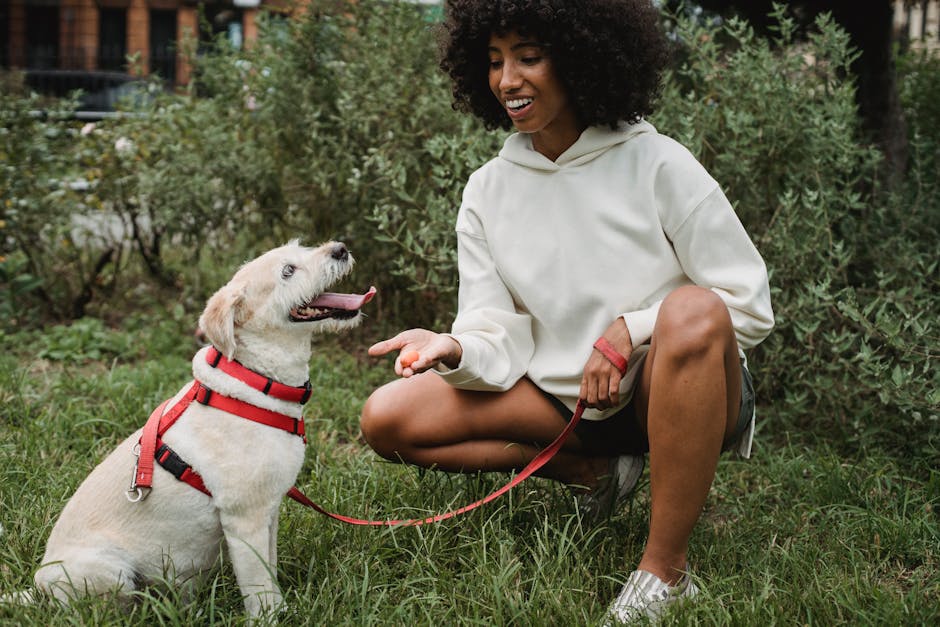
For most owners, the HoAoOo Pet Training Clicker is the best pick. Its wrist strap keeps it handy, and its clear click is easy to use during training. If your dog flinches at sharp sounds, choose the quieter PetSafe Clik R instead. The best clicker is one your dog can hear without getting startled and you can press the moment they get something right.
I'm David Wright, and I spent five years apprenticing with a dog trainer before starting my own training practice. For me, the question "what is the best clicker for dog training?" starts with your dog's comfort and your ability to click on time.
How Clickers Work and Key Features to Look For
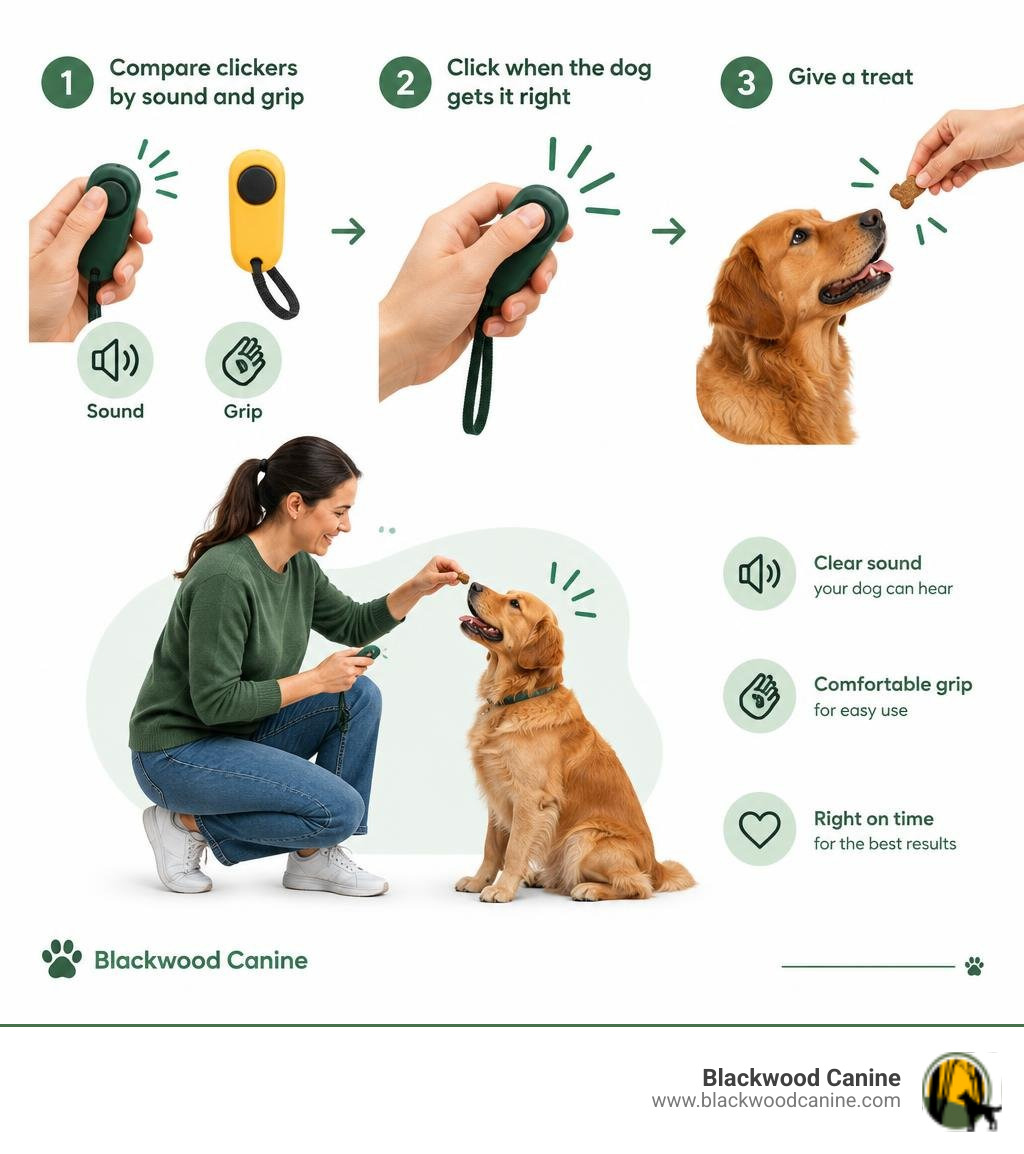
A clicker is a simple mechanical noisemaker that serves as an event marker. When your dog does what you want, you press the button to make a crisp, distinct sound, then immediately follow up with a reward.
This process relies on classical conditioning, a scientific principle discovered by Ivan Pavlov in the late 1800s. By pairing a neutral sound with a primary reinforcer like food, the click itself takes on value. It acts as an acoustic bridge between the exact split second a behavior happens and the moment the treat lands in your dog's mouth.
Human speech can be messy. When we say "good boy," our pitch, volume, and mood change constantly. A mechanical clicker never changes its tone, eliminating confusion. Timing is everything; research shows you have less than a second to mark a behavior before your dog connects the reward to something else.
Effective dog training is not just about relying on endless treats or outdated dominance ideas. At Blackwood Canine, we look at dog training methods through a balanced lens of clear expectations, consistent boundaries, fair consequences, and solid management. Tools like clickers, long lines, or prong collars are not inherently good or bad; improper use is the real issue. Any tool should be introduced under qualified guidance to ensure clear communication. You can also explore this guide to clicker training pets for more background on mechanical marking.
When choosing a device, consider:
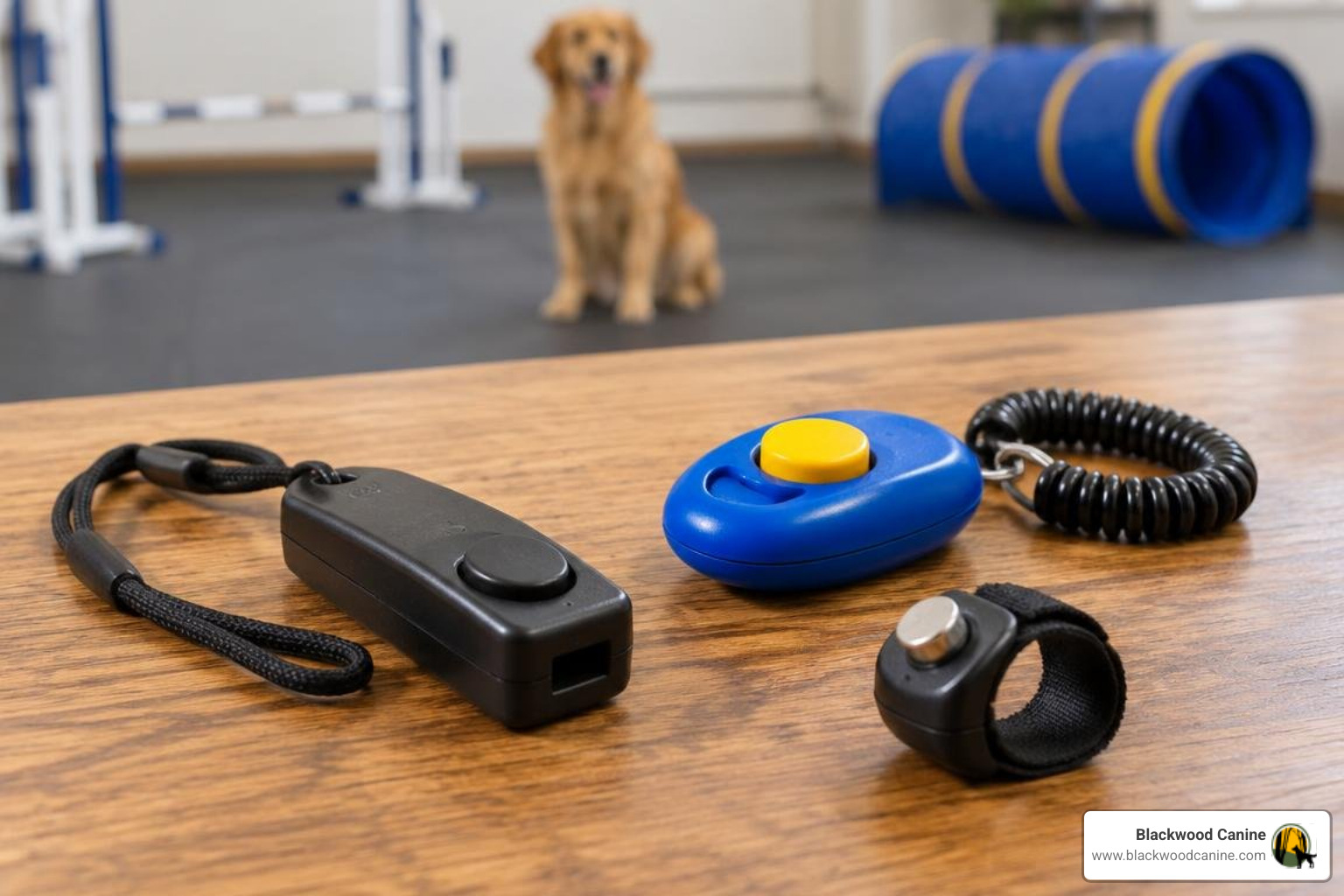
- Attachment method: Wrist coils, lanyards, or finger straps keep the tool anchored to your hand so you do not drop it while juggling a leash.
- Button raised profile: A raised button is easier to press quickly without looking down.
- Body ergonomics: The shell should sit comfortably in your palm without slipping.
Tone, Volume, and Durability Features
Clicker sound levels vary noticeably between brands. Traditional metal box clickers utilize a raised stainless steel plate that produces a loud, metallic snap. This sound carries well outdoors but can startle a nervous dog in a quiet living room.
Plastic housing models with enclosed reeds create a softer sound. If you live in rainy areas like Portland or Beaverton, look for weather resistant components. A stainless steel leaf spring resists moisture and grit, whereas cheaper carbon steel plates can rust and jam after a wet winter walk.
What Is the Best Clicker for Dog Training on a Budget?
Dog training gear tends to vanish into couch cushions, car cup holders, and jacket pockets. Because of this, budget often comes down to the cost per unit rather than just the price of a single device.
Single clickers generally run between $2.99 and $10. Buying multi packs lowers your cost to around $2.00 to $3.00 per unit. Establishing a lost tool protocol by keeping spares in your treat pouch, car, and entryway ensures you never skip a training session because your primary clicker went missing.
Top Contenders: What Is the Best Clicker for Dog Training?
We put top market contenders through real world training paces to compare their sound projection, grip security, and durability.
| Clicker Model | Price | Sound Profile | Attachment Style | Best Use Case |
|---|---|---|---|---|
| HoAoOo Pet Training Clicker | $4.49 (2 pack) | Crisp and Medium Loud | Elastic Wrist Coil | Everyday All Around Training |
| PetSafe Clik R | $2.99 (Single) | Ultra Soft (Muffled) | Finger Band / Loop | Sound Sensitive and Nervous Dogs |
| Educator Finger Clicker | $9.42 (Single) | Crisp and Adjustable | Adjustable Hook Loop | Agility and Multi Task Handling |
| Karen Pryor i Click | Multi pack varies | Soft to Medium Click | Keyring Loop (No Strap) | Indoor Precision and Puppies |
| Starmark Pro Training | $5.49 (Single) | Loud and Sharp Snap | Lanyard Attachment | Outdoor Distance and Windy Fields |
HoAoOo Pet Training Clicker: Best Overall Value
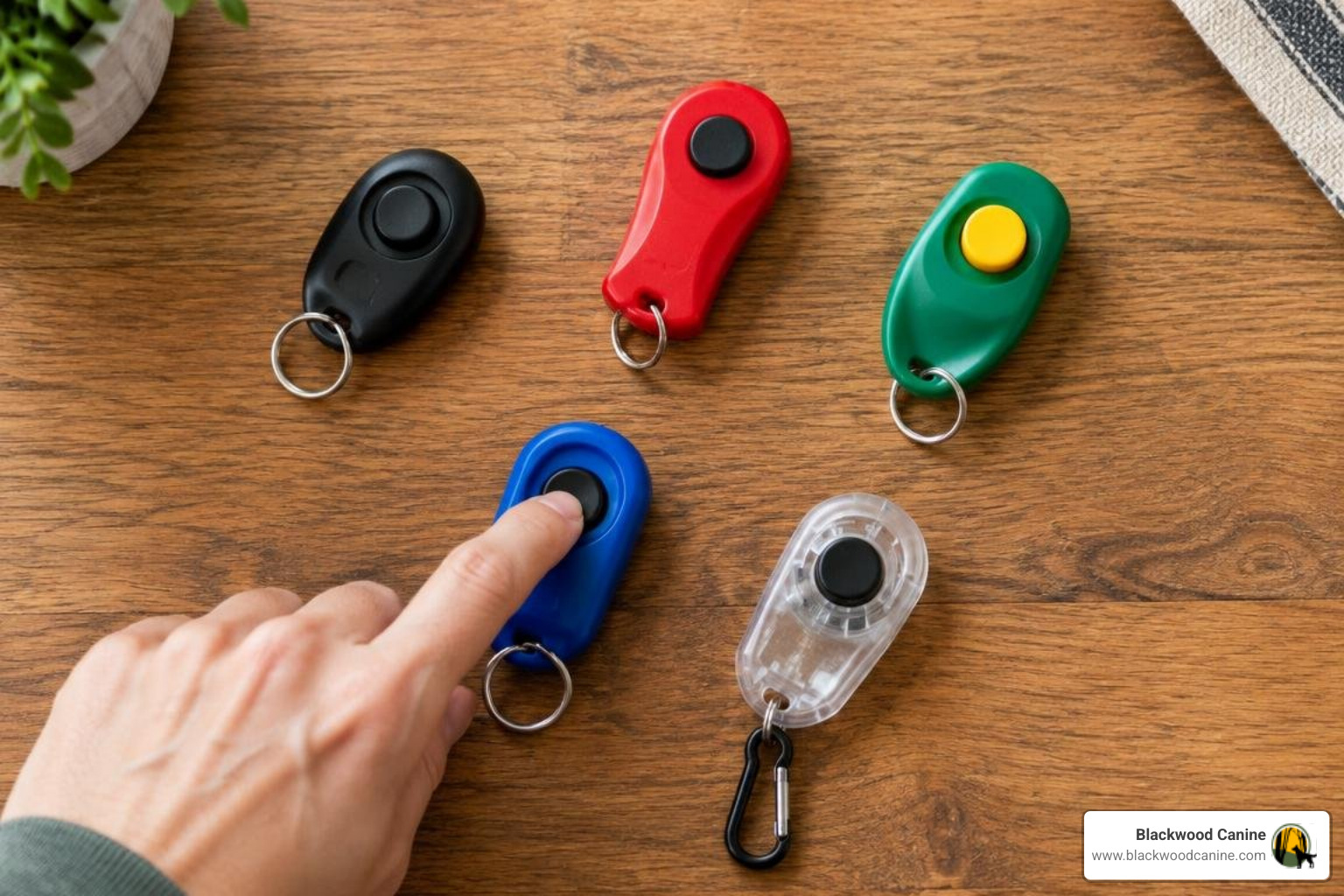
The HoAoOo clicker is our top overall recommendation for most pet owners. Priced at just $4.49 for a two pack, it delivers excellent build quality and convenience at an accessible price.
It features a durable teardrop plastic casing with an easy to press raised button. The included elastic wrist coil keeps the device secured to your wrist, freeing your fingers to manage treats and leash tension without dropping the marker. In sound tests, it produced a clear, distinct click that easily cut through moderate neighborhood distractions without sounding overly harsh indoors.
PetSafe Clik R: Best for Sound Sensitive Dogs
If your dog is timid or startles easily at sudden household noises, standard clickers can cause them to shut down. The PetSafe Clik R is specifically engineered for noise sensitive dogs.
In testing, the Clik R registered roughly four times softer than standard box clickers. It uses a muffled internal mechanism housed in an ergonomic green and purple plastic shell. It features a built in stretchy finger band, allowing you to wear it on your non dominant hand while keeping your fingers open to hold a leash or deliver food rewards. At $2.99, it is an inexpensive tool for gentle indoor foundation work.
Educator Finger Clicker: Most User Friendly Ergonomics
The Educator Dog Training Finger Clicker is designed for handlers who find standard handheld units awkward. Priced at $9.42, it is a premium option built around hands free convenience.
This clicker straps directly onto your index or middle finger using an adjustable hook and loop band. It rests naturally in the palm, letting you trigger the button with your thumb while keeping both hands available for leash handling or toy play. It also includes adjustable sound slots on the back; covering or uncovering the cutouts allows you to alter the output volume to fit your environment.
Karen Pryor i Click: Best Gentle Tone for Precision
Designed by clicker training pioneer Karen Pryor, the i Click remains a favorite among trick trainers and service dog handlers who value subtle handling.
The i Click does not require a hard press. A light tap on its rounded button fires the mechanism, making it ideal for fast, repetitive shaping sessions. The tone is softer and less abrasive than traditional metal clickers, preventing noise fatigue during long training drills. Its only real drawback is the lack of an included wrist strap, meaning it can slip into couch cushions if you are not careful.
Starmark Pro Training Clicker: Best Loud Tone for Outdoor Distance
When training outside at local parks across Scappoose, Hillsboro, or Vancouver, ambient traffic and wind can drown out quieter clickers. The Starmark Pro Training Clicker solves this with an exposed stainless steel click plate that produces a loud, resonant snap.
This robust volume makes it effective for distance recalls, field work, and high drive sports where your dog might be working twenty yards away. While durable, the exposed metal plate can occasionally stick if dirt or pocket lint builds up underneath, so it requires occasional cleaning.
How to Introduce, Charge, and Fade Your Clicker
A clicker means nothing to a dog until you establish an association. You must charge the marker before using it to teach complex cues.
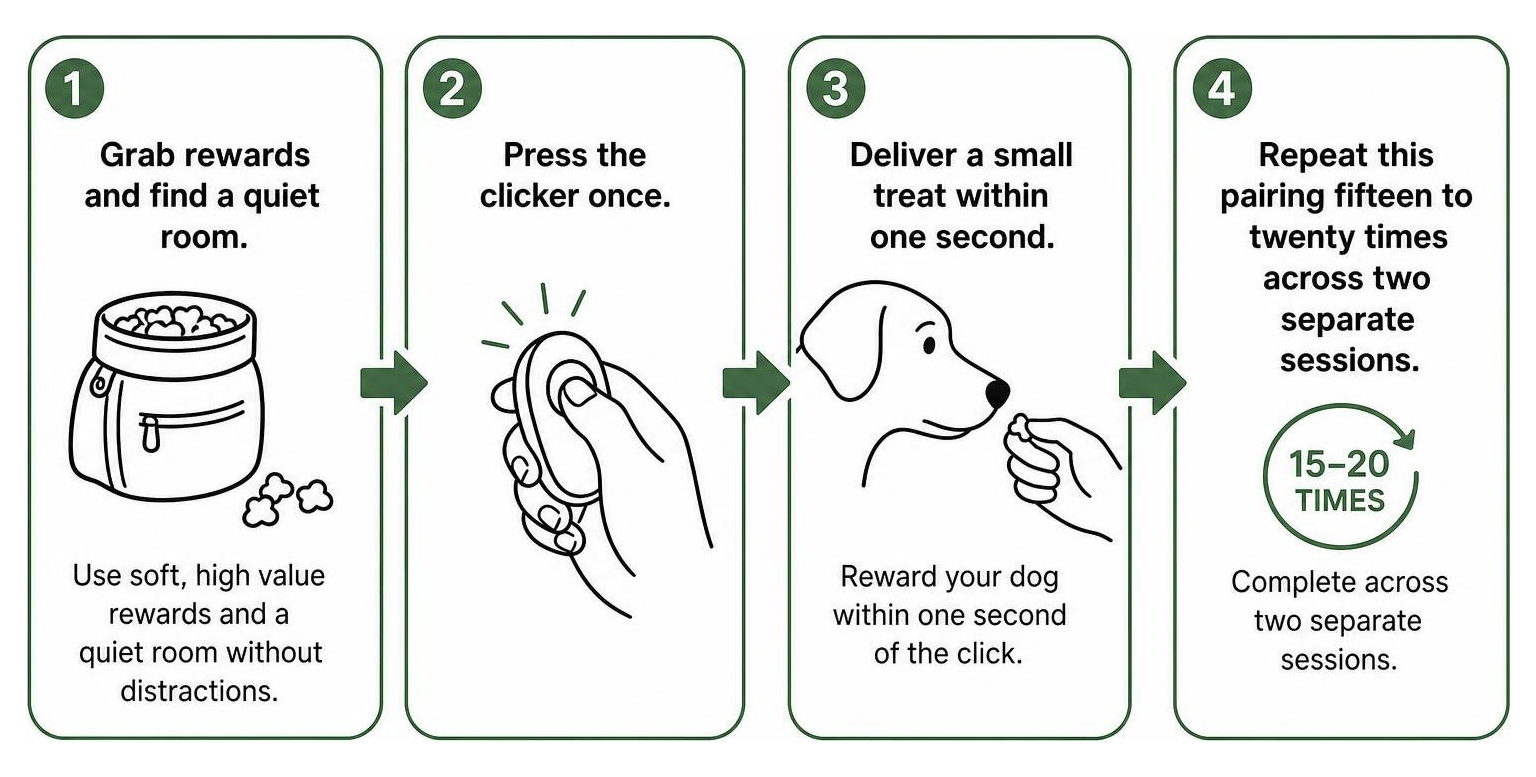
Charging the clicker is simple:
- Grab a pouch of soft, high value rewards and find a quiet room without distractions.
- Press the clicker once.
- Deliver a small treat to your dog within one second.
- Repeat this pairing fifteen to twenty times across two separate sessions.
Ensure you practice building engagement with food so your dog remains focused on you. Follow the one click, one treat rule strictly. Never click multiple times to express extra enthusiasm; clicking constitutes a promise of a reward, and multiple clicks muddy the clarity of your communication.
What Is the Best Clicker for Dog Training Outdoors vs Indoors?
Indoor spaces bounce acoustic waves off walls and floors, making softer clickers like the PetSafe Clik R or Karen Pryor i Click comfortable for both you and your dog.
Outdoors, ambient noise from wind, traffic, and wildlife quickly disperses sound. For outdoor sessions in open fields, a louder device like the Starmark Pro Training Clicker or HoAoOo ensures your signal reaches your dog's ears over background noise.
Moving Beyond the Click: How to Fade the Marker
A clicker is a teaching tool, not a permanent crutch. You do not need to walk around with a plastic device strapped to your wrist for the rest of your dog's life.
Once your dog reliably performs a behavior on cue in different environments, begin replacing the clicker with a verbal marker like "yes!" Follow our steps for fading food lures to transition your dog from continuous rewards to a variable schedule of reinforcement. At this stage, your dog should transition into real world basic obedience routines where verbal feedback and clear boundaries maintain reliable behavior.
Frequently Asked Questions About Dog Training Clickers
Can you use a clicker for dogs of any age?
Yes. Clicker training works for puppies as young as eight weeks as well as senior dogs. Age does not limit learning capacity; it simply dictates the length of your sessions and the physical mechanics of the exercises. For older pets, check out our guide to training adult dogs to adapt your mechanics around their physical comfort.
How many clickers should you keep on hand?
Most active handlers keep three to four clickers on hand. Keep one attached to your primary leash, one in your training treat bag, and one in your vehicle console. Multi packs make it affordable to stash backups in various locations so you never miss a training opportunity.
What should you do if your dog is scared of the clicker sound?
If your dog ducks their head, pins their ears, or walks away when you click, the volume is too intense. You can muffle a standard clicker by wrapping blue painter tape over the metal housing or clicking with the device tucked inside your jacket pocket. If your dog remains wary, switch to a soft model like the PetSafe Clik R or use a crisp verbal marker like "yes" instead.
Getting Real Results With Your Dog
A clicker is an excellent mechanical tool for marking clear moments of success, but lasting obedience requires a complete foundation. True reliability comes from clear communication, sensible management, structured repetition, fair consequences, and owner consistency.
If you are a dog owner in Scappoose, St. Helens, Warren, Bethany, Hillsboro, Beaverton, Portland, or Vancouver feeling frustrated by unreliable obedience, you do not have to figure it out alone. At Blackwood Canine, our basic obedience foundations start at 4 weeks, while our complex behavior modification programs run 6 to 8 plus weeks. If you are curious about clicker training basics, start with the right tool, stay consistent with your mechanics, and reach out to book your Good Dog Game Plan when you are ready for structured, professional guidance.