
The Complete Guide to Retraining and Obedience for Older Dogs
The Truth About Dog Training for Adult Dogs (And Why Most People Get It Wrong)
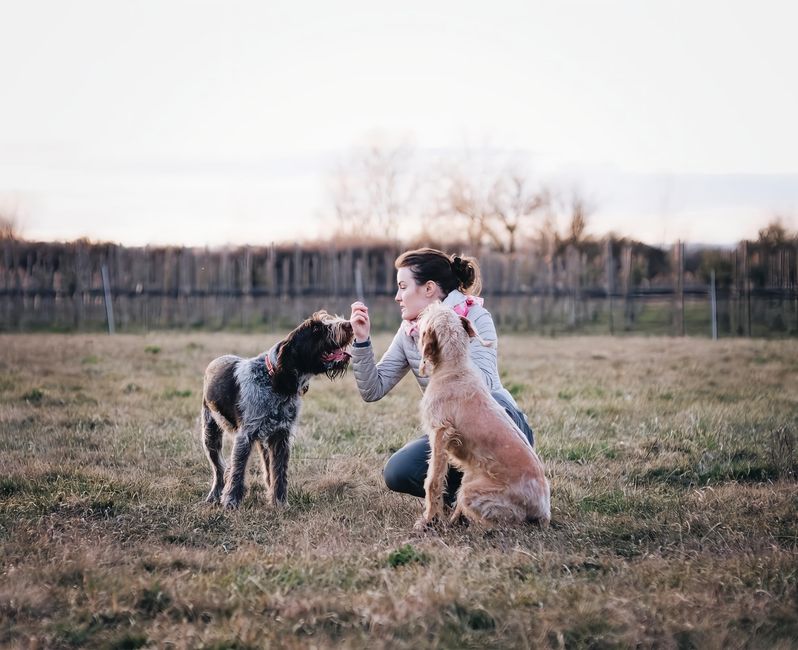
Dog training for adult dogs works. Full stop. But there's a good chance you've already tried something and it didn't stick, which is exactly why you're here.
Here's a quick answer before we go any further:
Can you train an adult dog?
- Yes, dogs can learn new behaviors at any age
- Adult dogs actually have better focus and impulse control than puppies
- The real challenge is not the dog's age, it's using an approach built for mature dogs
- Most failed attempts come down to inconsistency, unclear expectations, or a method designed for puppies
- Positive reinforcement matters, but so do clear rules, management, and follow through
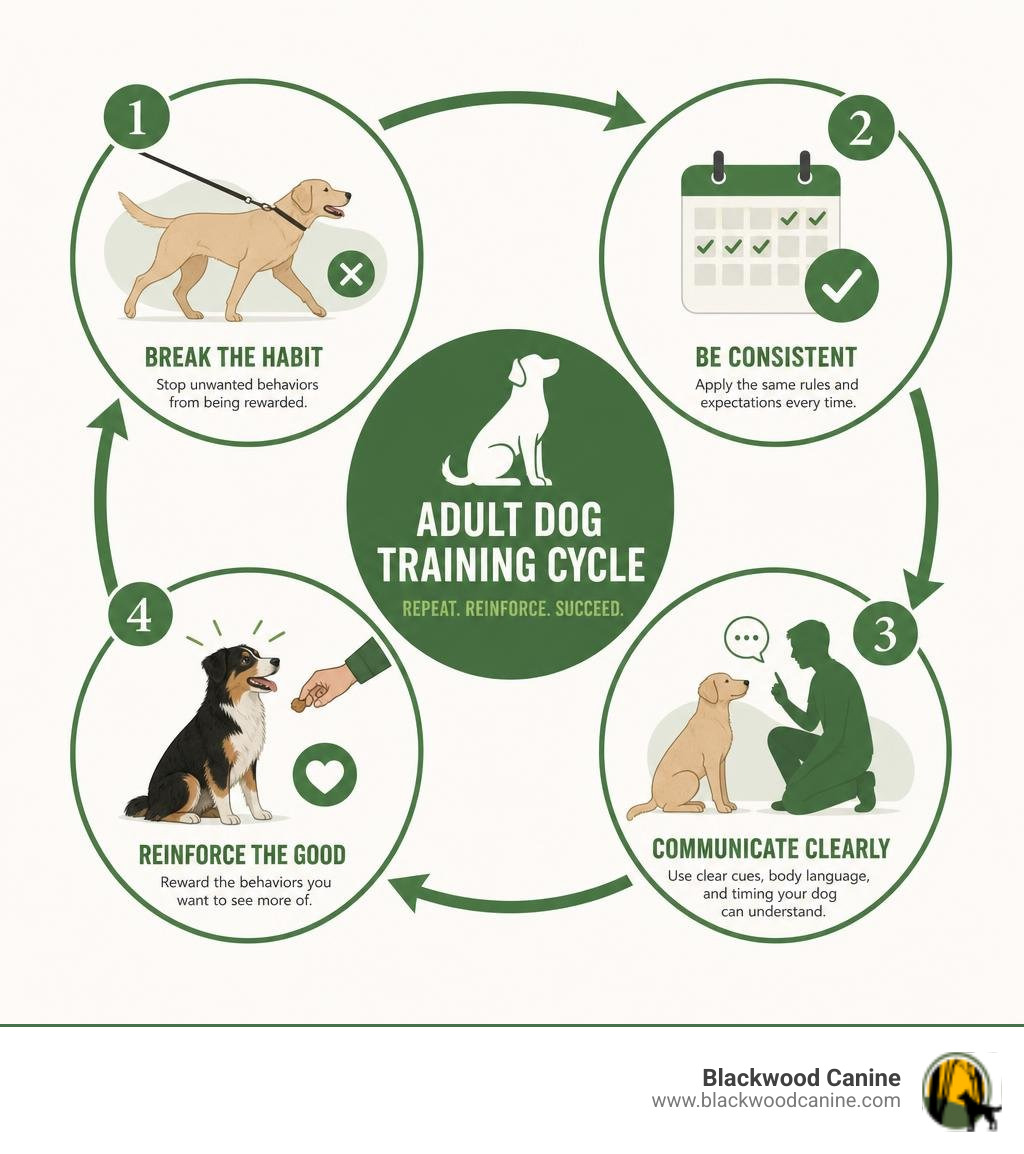
Most people assume the window for training closed somewhere around six months. It didn't. Adult dogs (typically 2 years and older) have stable hormones, stronger attention spans, and more self control than puppies or adolescent dogs. That's actually an advantage.
What works against you is not your dog's age. It's habits. An adult dog has had months or years to practice the behavior you're now trying to change. Pulling on leash, jumping on guests, ignoring you at the park. Those patterns are grooved in. They don't disappear with a few treat repetitions.
That's the honest truth most articles skip over.
Good training for an adult dog isn't just about teaching "sit." It's about setting clear expectations, managing the environment so bad habits stop getting reinforced, being consistent across every person in your household, and following through every single time. That combination is what actually moves the needle.
I'm David Wright, founder of Blackwood Canine, and dog training for adult dogs is something I've worked on directly since apprenticing under a professional trainer in 2009, starting with my own dog aggressive Cane Corso. This guide covers everything I've learned about what actually works with mature dogs, and what tends to waste your time.
Why Dog Training for Adult Dogs is Highly Effective
Many dog owners in Scappoose, Warren, and Portland feel discouraged because they think they missed the boat. They assume that if they did not get their dog into a class during puppyhood, they are stuck with behavioral issues forever. This is scientifically inaccurate.
Adult dogs possess several cognitive advantages over puppies:
- Stable Hormones: Unlike rowdy adolescents testing boundaries or puppies with short attention spans, adult dogs have mature brains. Their hormones are stable, which makes their behavior far more predictable.
- Stronger Impulse Control: An adult dog has a natural capacity for self control that a puppy simply has not developed yet.
- Longer Attention Spans: A puppy can focus for maybe one to three minutes before their brain wanders. An adult dog can easily handle five to ten minute training sessions, and they can focus through distractions much better.
The challenge with adult dogs is not their ability to learn. It is their history. If your dog has spent three years pulling you down the street in Hillsboro, that behavior has become a default habit. To change it, we have to teach a new habit while stopping the old one from being rewarded.
When you look at Dog Training for Adult Dogs: Complete Obedience - Paw And Breeds, you see that older dogs are highly capable of learning complete obedience. But to get there, you need a system designed for mature dogs. Standard puppy training methods that rely entirely on holding a treat in front of a dog's nose often fail with adults. If the dog decides they do not want the treat, or if a passing squirrel in Beaverton is more interesting than a piece of kibble, they will simply ignore you.
We explain this dynamic in our post on Blog Dog Training Methods Positive Reinforcement vs Dominance Training. Effective training is not about dominating your dog, nor is it about bribing them with treats forever. It is about clear communication, consistent rules, and reliable follow through.
Key Differences Between Training a Puppy and an Older Dog

Training an older dog requires a different mindset than raising a puppy. Puppies are blank slates. With a puppy, you are focused on prevention, basic socialization, and house training. With an adult dog, you are often working on rehabilitation, habit breaking, and building engagement.
Physical limitations are another critical factor. If you ask an older dog to sit and they hesitate or resist, it might not be stubbornness. Joint pain, hip discomfort, or arthritis can make certain physical positions uncomfortable. Always have a veterinarian check an older dog to rule out physical pain before starting a new training routine.
Here is a quick look at how puppy training compares to training an adult dog:
| Training Aspect | Puppy Training | Adult Dog Training |
|---|---|---|
| Primary Focus | Prevention, socialization, house training | Habit breaking, focus, clear boundaries |
| Attention Span | Very short (1 to 3 minutes) | Longer and more stable (5 to 10 minutes) |
| Hormone Levels | Constantly changing | Stable and predictable |
| Physical Limits | Developing joints, high energy | Potential joint pain, arthritis, lower stamina |
| Habit History | None (blank slate) | Deeply grooved default behaviors |
How to Start Training an Adult Dog with No Prior Experience
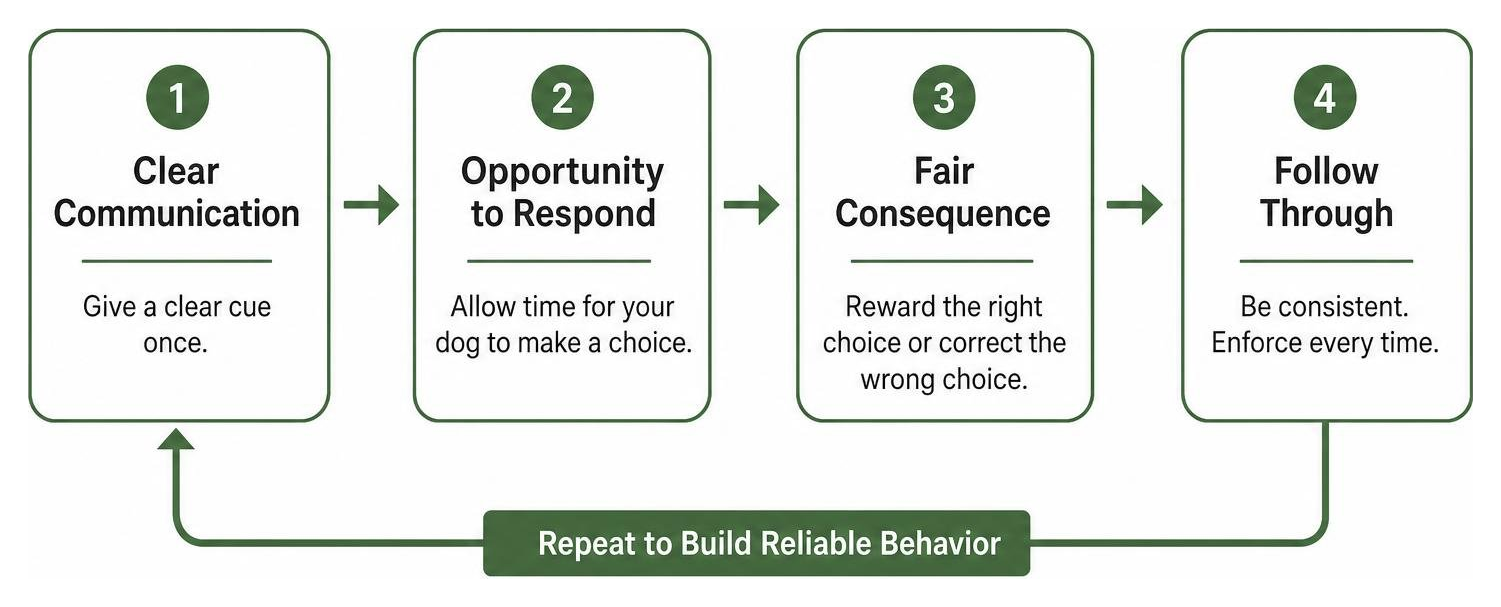
If your dog has never had formal training, do not panic. Start by shifting how you interact with them daily. Successful training is not just a ten minute session on Saturday morning. It is a daily practice of clear communication, management, consistency, and follow through.
You must establish clear expectations and boundaries. If you do not want your dog on the couch, that rule must apply every single day, to every person in the house. When rules change based on who is home, the dog gets confused and stops listening.
We use a simple framework to build reliable behaviors:
Setting Up Your Home for Dog Training for Adult Dogs
Before you teach commands, you need to manage your dog's environment. If your dog has free run of your house in St. Helens or Vancouver while they are still practicing bad behaviors, you are fighting an uphill battle.
- Crate Training: A crate is not a punishment. It is a valuable management tool that keeps your dog safe, prevents destructive habits when you cannot supervise, and teaches them how to settle calmly.
- The Place Command: Teach your dog to go to a designated cot or mat and stay there until released. This is an incredible tool for managing excitement when guests arrive or when you are eating dinner.
- Food Engagement: Stop feeding your dog out of a bowl for free. Use their daily meals to build motivation and focus. When your dog learns that their food comes from cooperating with you, their attention span will skyrocket. Learn more about this approach in our guide on Blog Dog Training Strategies Building Engagement with Food.
Step by Step Guide to Core Obedience Commands
When teaching commands to an untrained adult dog, start in a quiet room inside your house where there are zero distractions.
- Sit: Hold a piece of food directly in front of your dog's nose. Slowly move your hand back over their head. As their nose goes up to follow the food, their rear end will naturally go down. The moment their rear hits the floor, mark the behavior with a clear word like "Yes!" and give them the food.
- Down: Start with your dog in a sit. Hold a treat to their nose and slowly draw it straight down to the floor between their front paws. Once their chest touches the ground, mark with "Yes!" and reward.
- Stay: Ask your dog to sit or down. Wait one second, mark, and reward. Gradually increase the duration before you reward. Do not step away yet. Build duration first, then slowly add distance, one step at a time.
- Recall (Come): Start indoors. Say your dog's name followed by "Come" in an enthusiastic tone. Back away quickly. When they move toward you, mark and reward. Never call your dog to you to punish them, or they will learn that coming to you leads to bad things. For outdoor practice around distractions, always use a long line leash to ensure safety, as recommended by resources like Train Your Pet.
- Leave It: Hold a low value treat in a closed fist. Let your dog sniff and lick your hand. Ignore the behavior. The second they pull their nose away and stop trying to get the food, mark and reward them with a different, higher value treat from your other hand. They learn that ignoring the item leads to a better reward.
- Heel: Keep your dog on your left side. Walk forward. If they walk calmly next to your leg, mark and reward. If they pull, stop walking immediately.
Keep these daily sessions short, limiting them to 5 to 10 minutes to avoid mental fatigue.
Addressing Common Behavior Issues in Mature Dogs
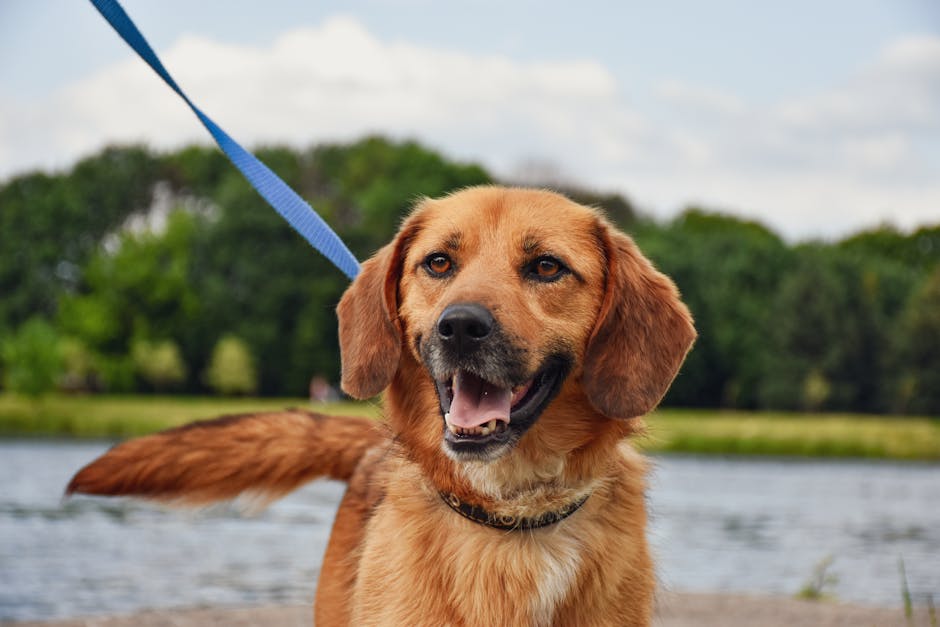
Many adult dogs end up in our programs because of specific, frustrating behaviors that make daily life stressful. Whether you live in Bethany, Hillsboro, or downtown Portland, these issues usually stem from a lack of clear boundaries and consistent management.
Managing Leash Pulling and Jumping Up
Walking your dog should not feel like getting dragged by a freight train. Leash pulling is not an instinctual behavior, but dogs do it because it works. If they pull and you keep walking, they learn that pulling gets them where they want to go.
To fix leash pulling, you must stop moving when the leash is tight. Use a standard six foot flat leash (never a retractable leash) and practice loose leash walking in low distraction areas first. Turn and walk in the opposite direction the moment your dog starts to pull. They must learn that a loose leash is the only way the walk continues.
Jumping up on people is another common issue. Dogs jump to greet us because they want attention, and even pushing them away or yelling can feel like a reward to an excited dog.
To stop this, practice boundary training and calm greetings. Ask your dog to go to their place bed when guests arrive. Do not let guests pet or interact with your dog until they are completely calm. We break down these steps in detail in our post on Blog Dog Obedience Teaching Your Dog Not to Jump Up on People.
Handling Reactivity and Fear in Dog Training for Adult Dogs
If your dog lunges, barks, or growls at other dogs or people during walks in Beaverton or Vancouver, they are likely dealing with reactivity. Reactivity is often driven by fear, frustration, or overexcitement.
Forcing a reactive dog into a crowded group class is counterproductive and unsafe. Instead, we use systematic desensitization and counter conditioning. This means finding your dog's "threshold distance" the distance at which they can see another dog without reacting.
We reward calm behavior at this safe distance, gradually moving closer as the dog builds confidence. You can read more about our specialized approach on our Reactive Dog Training page.
When to Hire a Professional Dog Trainer
Many owners try to fix behavioral issues on their own but hit a plateau. You should consider hiring a professional dog trainer if:
- Your dog shows signs of aggression toward people or other dogs.
- Your dog has severe separation anxiety that leads to self injury or home destruction.
- You feel overwhelmed, frustrated, or unsafe handling your dog.
- You simply do not have the time to build the foundation training yourself.
Private Lessons Versus Immersion Programs
If you decide to get professional help, you have two primary options: private lessons or immersion programs (often called board and train).
Private Lessons are great for owners who want to be hands on throughout the entire process. A trainer works with you and your dog in your home or at a training facility, teaching you how to handle your dog. This requires a significant time commitment from you to practice the homework between sessions. To see if this is right for you, read Blog Is Private Dog Training Worth the Investment.
Immersion Programs (Board and Train) are highly structured boot camp programs where your dog stays with a professional trainer for several weeks. This is incredibly effective for busy owners or for dogs dealing with deeply ingrained behavioral issues. The trainer does the heavy lifting to build the foundation manners, then teaches you how to maintain the training at home. For local parents, we discuss this option in Blog When Is Dog Boot Camp a Good Idea for Portland Pet Parents.
Frequently Asked Questions About Training Older Dogs
Is it really possible to train an adult dog or is it too late?
It is absolutely possible. The idea that you cannot teach an old dog new tricks is a complete myth. Thanks to neuroplasticity, a dog's brain can form new neural connections and learn new behaviors at any age. While older dogs may have established habits that take time to break, their superior focus and impulse control often make them easier to train than distracted puppies.
How long does it take to see results when training an older dog?
You will often see initial changes in focus and cooperation within the first week of establishing clear boundaries and using daily food engagement. However, solidifying new habits and breaking long standing bad behaviors typically takes four to six weeks of daily, consistent practice. Real change is about repetition and follow through over time.
Should I use treats or other rewards for training an adult dog?
Yes, rewards are highly effective for teaching new behaviors. However, you must avoid the trap of only having your dog listen when a treat is visible. Use food luring to guide them into the position initially, but quickly phase out the physical lure so they respond to your verbal cue or hand signal first. Over time, transition to real life rewards, like opening the back door, going for a walk, or throwing a toy, so they learn that cooperation leads to good things.
Conclusion
Training an adult dog is one of the most rewarding things you can do. It builds a deeper bond, reduces daily household stress, and gives your dog the structure they need to navigate the world safely.
At Blackwood Canine, we serve dog owners across Scappoose, Warren, St. Helens, Bethany, Hillsboro, Beaverton, Portland, and Vancouver. We do not offer quick fixes or empty promises. We focus on clear communication, practical management, and consistent follow through to help you build a reliable relationship with your dog.
If you are ready to stop feeling frustrated and start making real progress, the best next step is our Good Dog Game Plan. We will assess your dog, discuss your goals, and build a clear path forward.
Explore our Immersion Dog Training programs today to learn how we can help you and your dog succeed.