
How to Achieve Calming Car Rides for Dogs Without Losing Your Mind
Why Calming Car Rides for Dogs Is Harder Than It Looks

Calming car rides for dogs is one of those challenges that sounds straightforward on paper, but quickly falls apart when you are standing in your driveway with a shaking, drooling dog who refuses to even look at the backseat.
If your dog pants, whines, paces, or panics the moment they hear your car keys, you are not dealing with a stubborn pet—you are dealing with a dog in a state of genuine distress. Car anxiety is incredibly common, but it is also highly treatable when you stop looking for quick fixes and start addressing the root cause.
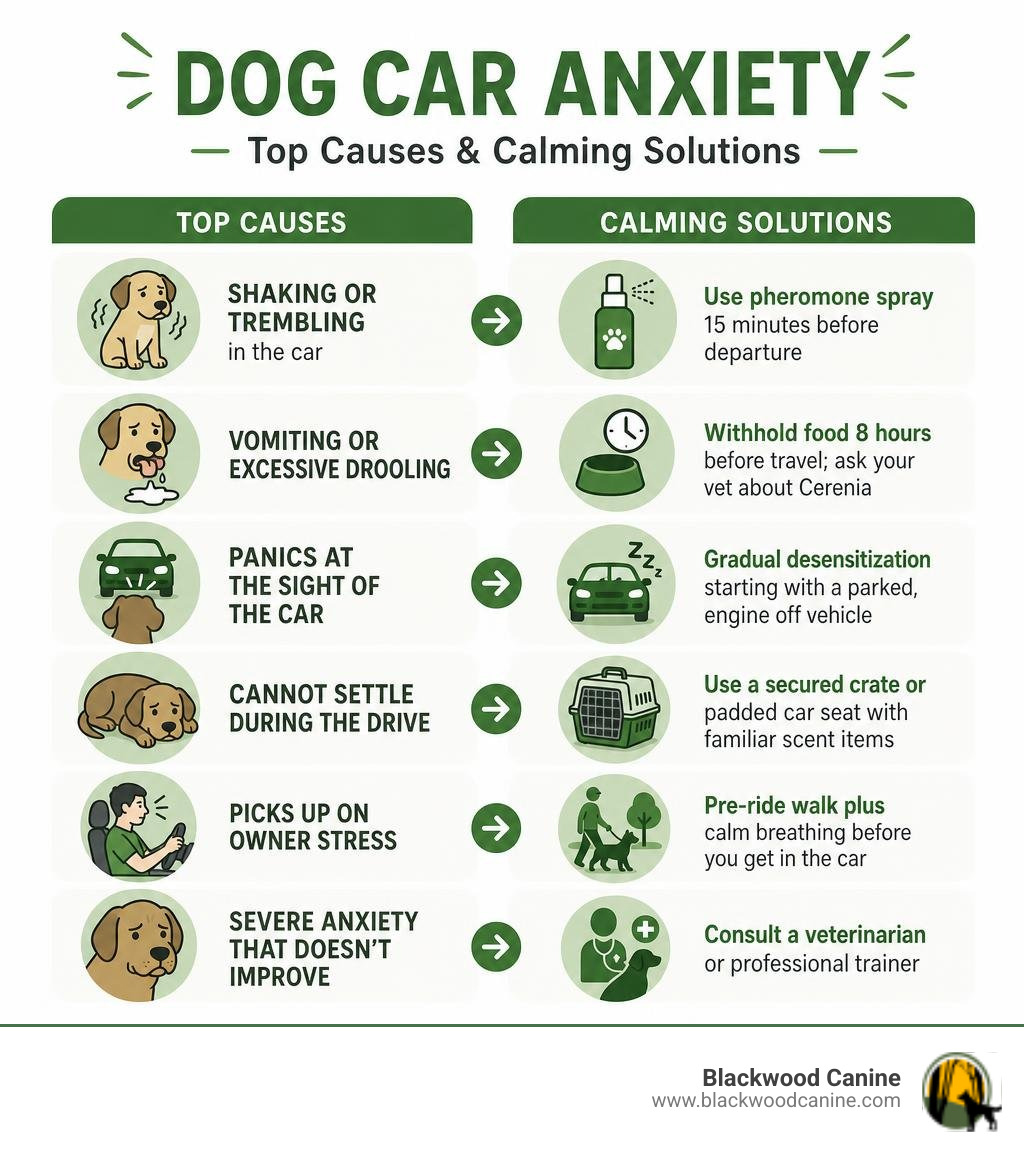
Here is a realistic breakdown of what actually works:
| Problem | Solution |
|---|---|
| Dog shakes or trembles in the car | Pheromone spray applied 15 minutes before departure |
| Dog vomits or drools excessively | Withhold food 8 hours before travel; ask your vet about Cerenia |
| Dog panics at the sight of the car | Gradual desensitization starting with a parked, engine-off vehicle |
| Dog cannot settle during the drive | Secured crate or padded car seat with familiar scent items |
| Dog picks up on owner stress | Pre-ride walk plus calm breathing before you get in the car |
| Severe anxiety that does not improve | Consult a veterinarian or professional trainer |
At Blackwood Canine, we look at car anxiety through two lenses: physical discomfort (like motion sickness) and learned fear (often built from a history of only riding in the car to go to the vet). Neither of these issues will resolve on their own, and ignoring them only deepens the behavioral pattern.
Some dogs struggle because their vestibular system has not fully adjusted to the motion of a vehicle. Others have developed a conditioned emotional response, pairing the car with high-stress events. Furthermore, dogs are incredibly sensitive to our own emotional states. A 2024 study from Bristol University confirmed that dogs can detect physiological changes in humans, including elevated cortisol levels, through scent alone. If you are anxious about how the ride will go, your dog already knows.
This guide covers the practical tools, environmental management, and training protocols that actually yield results. No gimmicks, just solid training.
I am David Wright, founder of Blackwood Canine. As a professional dog trainer with over a decade of experience helping owners in the Portland area, I specialize in creating clear communication and building reliable behaviors. I have helped countless clients resolve severe car anxiety, and in this guide, I will walk you through the exact steps we use to achieve calm, stress-free travel.
Recognizing the Signs of Car Stress and Anxiety in Dogs
Before you can fix the problem, you have to know what you are looking at. Many owners mistake severe panic for simple excitement or stubbornness. Your dog is not trying to annoy you when they refuse to hop into the backseat. They are communicating in the only way they know how.
When we work with clients in Beaverton, Hillsboro, or Portland, we often see dogs displaying a range of stress signals before the car even leaves the driveway. The most common signs of travel anxiety include:
- Excessive panting and drooling: If the air conditioning is blasting and your dog is dripping saliva or panting heavily, this is a clear physiological stress response, not a temperature issue.
- Whining, barking, or pacing: A dog who cannot sit still or constantly vocalizes is struggling to cope with the environment.
- Yawning and lip licking: These are subtle displacement behaviors that dogs use to try to calm themselves down when they feel uneasy.
- Trembling or shaking: This is a major indicator of fear. If your dog looks like they are freezing in the middle of July, their nervous system is in fight or flight mode.
- Vomiting or sudden accidents: This can be a mix of physical motion sickness and extreme psychological distress.
If you want to dive deeper into how dogs communicate their discomfort, you can read our guide on Understanding and Transforming Reactive Dog Behavior: What You Need to Know. Recognizing these early warning signs is the first step in stopping the cycle of panic.
The Battle of Physics: Motion Sickness vs. Psychological Anxiety
It is crucial to understand whether your dog has a physical issue or a psychological one, though they often feed into each other.
Puppies are incredibly susceptible to motion sickness because their inner ears, which control balance, have not fully developed yet. If a puppy gets nauseous every time they ride in the car, they quickly learn to dread the vehicle. By the time they are an adult dog, the physical motion sickness might have resolved, but the psychological dread remains.
For some adult dogs, a sudden onset of car sickness can point to vestibular disease or other inner ear issues. If your older dog suddenly starts throwing up on short trips, a trip to the vet is in order. If you are in the unfortunate position of dealing with end of life care for a senior dog, services like St Helens Home Euthanasia Services can help prevent stressful final car rides.
To manage physical motion sickness, you must modify the environment:
- Limit meals before travel: Withhold food for at least 8 hours before a long drive. A dog traveling on an empty stomach is far less likely to vomit. Keep them hydrated, but skip the kibble.
- Optimize crate placement: Place small dog crates on the floor of the middle seat. This location experiences the least amount of physical motion and swaying.
- Use veterinarian approved medications: For serious cases, ask your vet about Cerenia (maropitant citrate), which is FDA approved for motion sickness and can be given to puppies over 8 weeks old. It should be administered 2 hours before the ride. Over the counter antihistamines can also help, but always consult your vet first.
Environmental Management: Crates and Dog Car Seats
At Blackwood Canine, we talk a lot about management. Management is not a failure of training; it is the foundation of it. If your dog is loose in the backseat, pacing from window to window, sliding around on slippery leather, and trying to climb into your lap, they cannot settle.
Providing physical stability is one of the fastest ways to help a stressed dog. When a dog has to constantly use their muscles to counterbalance the turns, stops, and accelerations of a vehicle, it increases their physical fatigue and heightens their anxiety.
The Power of a Travel Crate
A secure, size appropriate crate is the gold standard for car safety and comfort. A crate acts as a familiar safe space. To make it even more effective, you can drape a blanket or towel over the sides. This simple trick blocks the visual trigger of scenery whizzing by, which is a massive contributor to both motion sickness and environmental arousal.
Padded Dog Car Seats and Pods
If your dog is too large for a crate or you prefer an alternative, a highly cushioned dog car seat can work wonders. Products like the Travel Dog Pod | Buy The Original Dog Car Bed & Travel Seat For Your Dog – Luther Bennett are designed with high, heavily stuffed walls. These thick cushions absorb the physical movement of the car, allowing your dog to sink in and feel secure instead of sliding around.
For smaller dogs, a premium option like the Luxury Dog Car Seat | The Travel Pawket offers a pillow soft base and built in safety tethers. When using these seats, always attach the safety tether to a properly fitted harness, never to the dog's collar, to prevent severe neck injuries during sudden stops.
Step-by-Step Desensitization and Counter-Conditioning
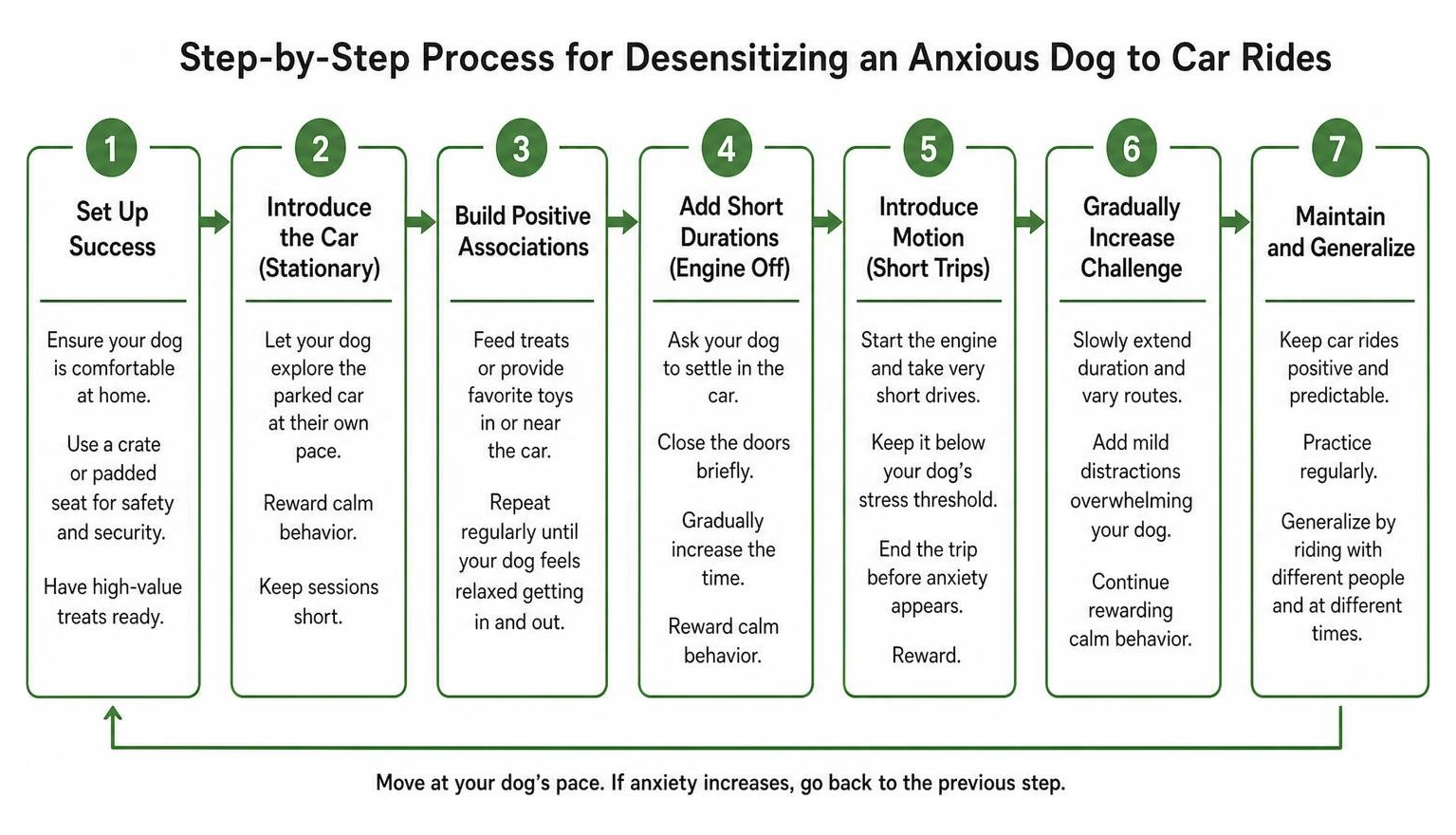
You cannot resolve a deep-seated fear of the car by forcing your dog inside and driving from Portland to Seattle. That approach only floods the dog's nervous system and confirms their worst fears. Instead, we must use systematic desensitization (gradually exposing the dog to the car at a level they can easily handle) and counter-conditioning (changing their internal emotional response using high-value rewards).
For a detailed look at how we structure these behavioral shifts, check out our page on Behavior Modification Training.
Here is the step-by-step protocol to implement at home:
Step 1: The Stationary, Engine-Off Car
Do not attempt to go for a drive yet. Walk your dog out to the car on a loose leash. Toss high-value rewards (like freeze-dried liver, hot dogs, or real chicken) near the vehicle. If your dog remains relaxed, open the doors and let them explore the stationary car at their own pace. You can even feed them their regular meals inside the parked car. Your goal is to build a positive association with the physical vehicle itself.
Step 2: Sitting Inside with the Engine Off
Climb into the backseat with your dog, keeping the doors open if they show any hesitation. Sit together quietly, offer calm praise, and feed high-value treats. Keep these sessions incredibly short—one to two minutes max. If your dog displays subtle stress signals like yawning or lip licking, you have pushed past their threshold. Back up a step.
Step 3: Introducing the Engine Sound
Once your dog happily hops into the car expecting a reward, turn the key. Do not put the car in drive. Simply let the engine idle so your dog gets accustomed to the sound and vibration. Deliver high-value rewards, turn the engine off, and exit the vehicle.
Step 4: The Driveway Roll
Back out of the driveway and immediately pull right back in. Park, turn off the engine, and reward your dog. You are building a predictable, low-stress pattern.
Step 5: Short, Successful Trips
Drive around the block, ending the trip on a high note with a jackpot of treats. Gradually increase the distance over several weeks. If you rush this process, you will find yourself back at square one. For professional, hands-on guidance through this protocol, our In-Home Private Lessons are designed to help you execute these steps successfully in your own driveway.
Training Positive Associations and Varying Destinations
One of the biggest mistakes dog owners make is only using the car for things the dog hates. If the only time your dog gets into the backseat is to go to the vet or the groomer, they will quickly learn to dread the car keys.
You must vary your destinations. Take short drives to fun places. Go to a quiet trail in Scappoose, a park in St Helens, or a sniffy walk in Warren. Make sure the vast majority of car rides end in something your dog loves.
Use positive reinforcement strategically. While the car is moving, it is often best to avoid feeding treats to prevent motion sickness. Instead, deliver the high value rewards immediately upon arrival at your destination. This builds positive anticipation for the end of the ride.
If you are dealing with a dog who is also reactive to things they see out the window during these drives, you might find our article on Spring Is Here and So Is Every Dog Your Dog Hates helpful for managing their arousal levels.
For more structured training advice, read our Dog Trainer Advice on Dealing with Car Anxiety.
Natural Calming Aids and Sensory Tools for Travel
While training is the long term solution, natural calming aids can provide excellent temporary support to help your dog stay below their stress threshold during the learning process.
Pheromone Sprays and Wraps
Synthetic pheromone products, such as ADAPTIL Transport Spray, mimic the soothing scents produced by mother dogs to comfort their puppies. Clinical studies show that using ADAPTIL can result in an 85% reduction in shaking and a 71% reduction in panting.
- Pro Tip: Never spray pheromones directly on your dog. Spray the car interior, crate, or bedding 15 minutes before introducing your dog to allow the alcohol carrier to evaporate. You can also apply it to a pressure wrap like a ThunderShirt to combine physical compression with chemical calming.
Calming Supplements and Chews
Fast acting calming chews containing ingredients like L tryptophan, green tea extract, colostrum, and vitamin B1 can help take the edge off. Give these to your dog about 30 to 45 minutes before you plan to leave. Many owners in community forums discuss their success with these tools, as seen in this Facebook Group Thread on Calming Aids.
Auditory Therapy
The canine nervous system is highly sensitive to sound. Playing specialized classical music designed with bioacoustic principles can help soothe an anxious traveler. Products like In the Car (75 min) < iCalmPet use simplified arrangements to calm dogs while keeping the driver alert. You can also find free resources like this 20 Hour Calming Music Playlist on YouTube or this Relaxing Music for Dogs Afraid of Car Journeys.
Managing Your Own Energy: The Scent of Stress
We cannot talk about calming car rides for dogs without addressing the person holding the leash. Dogs are absolute masters at reading our body language, vocal tones, and biochemistry.
As mentioned earlier, the 2024 study from Bristol University proved that dogs can smell the physiological changes associated with human stress, such as elevated cortisol. If you approach the car anticipating a stressful episode—gripping the steering wheel with white knuckles, sighing, or tensing up—your dog receives a clear chemical cue that there is something to fear. At Blackwood Canine, we always emphasize that training the human is just as important as training the dog.
To break this feedback loop:
- Move your body first: Take your dog on a structured 5 to 10-minute walk before getting in the car. This helps burn off excess adrenaline for both of you.
- Practice calm breathing: Before you turn the key, take a moment to regulate your own nervous system. Inhale for 4 seconds, hold for 4 seconds, and exhale for 6 seconds. Lowering your heart rate directly influences your dog's stress levels.
- Keep your communication neutral: Avoid coddling or constantly reassuring your dog in a high-pitched, anxious voice. This often validates their concern. Instead, use a calm, neutral, and confident tone.
To learn more about how our own emotions impact our dogs, read our article Stop Feeling Guilty About Your Reactive Dog: You Didn't Break Them.
Safety First: Restraint and Temperature Management
A calm ride must also be a safe ride. Letting your dog roam free in the vehicle is a safety hazard for them and a massive distraction for you. It is also illegal in many jurisdictions to travel with an unrestrained pet.
Crash Tested Restraints
Always secure your dog using a crash tested harness attached to a seatbelt, a secured travel crate, or a sturdy vehicle barrier. If you are preparing your dog for a long road trip, having the right gear is essential. You can check out this detailed guide on Dog Road Trip Gear: Rhys's Cooling & Calming Kit for Long Drives | Chill-Dogs for ideas on how to set up your vehicle.
Temperature and Airflow
Heat and anxiety are a dangerous combination. An anxious dog pants heavily, which raises their body temperature. A hot dog gets anxious faster, creating a dangerous cycle.
According to the AKC, a parked car can reach 100°F in under 20 minutes on a 70°F day. Never leave your dog unattended in a vehicle, and ensure the back of the car has active airflow. Car AC units hit the front seats first, often leaving the cargo area or backseat significantly warmer. Use passive cooling tools like magnetic window shades and active tools like clip on fans to keep fresh air moving over your dog.
When to Seek Professional Training or Veterinary Help
If you have tried gradual desensitization, minimized meals, used calming wraps, and your dog is still screaming, thrashing, or injuring themselves trying to escape the car, it is time to stop guessing.
Severe car anxiety is a major welfare issue. You do not have to suffer through it alone, and neither does your dog. A professional trainer can help you identify exactly where the communication is breaking down and build a customized management plan. At Blackwood Canine, we specialize in helping families navigate these exact challenges through our Private Lessons Dog Training.
In some cases, behavioral training must be paired with situational veterinary medication to help the dog remain calm enough to learn. Do not hesitate to consult your veterinarian if your dog's panic is severe.
Schedule Your Good Dog Game Plan Today
You do not need another random internet tip or a miracle cure that does not work. You need a clear, consistent plan tailored to your dog, your lifestyle, and your vehicle.
If car rides have become a source of dread for you and your dog, let us help you build a reliable communication system and a practical management routine. Whether you are in Scappoose, Beaverton, Portland, or Vancouver, the first step is scheduling a Good Dog Game Plan.
We will assess your dog's behavior, look at what you have already tried, and create a realistic path forward so you can finally enjoy stress free travel together.
Schedule Your Good Dog Game Plan with Blackwood Canine Today