
How to Train Your Puppy Without Losing Your Mind
Easy Puppy Training Starts Here (Before You Lose Your Mind)
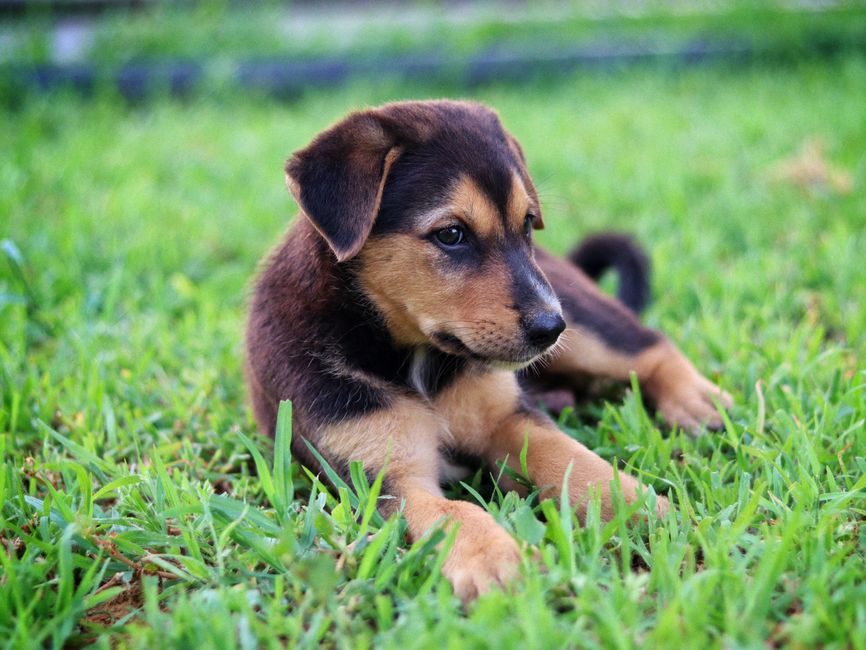
Easy puppy training is possible, but it takes more than treats and good intentions. Here is what actually works:
- Start immediately. Puppies can learn basic skills as early as 8 weeks old.
- Keep sessions short. Five to ten minutes, a few times a day. That is it.
- Use rewards that matter. Small, high value treats work best for young puppies.
- Be consistent. Every person in the house needs to follow the same rules.
- Manage the environment. Crates, leashes, and supervision prevent bad habits before they start.
- Socialize early. The window between 7 and 14 weeks is critical for accepting new people, animals, and places.
Look, nobody warns you about the sleep deprivation, the bite marks on your hands, or the puddles on the floor. You pictured a puppy that sits politely and comes when called. What you got is a tiny, sharp toothed chaos machine who has zero interest in your agenda.
That gap between expectation and reality is where most owners start to struggle.
Here is the uncomfortable truth: puppies are not born knowing the rules. They do what works for them, right now, in this moment. Biting gets a reaction. Jumping gets attention. Pulling on the leash gets them to the smell faster. From their perspective, it is all working perfectly.
Training is not magic. It is clear communication, consistent management, and repetition over time. Done right, it builds a relationship your dog actually wants to be part of.
I am David Wright, founder of iWorkDogs Dog Training Co. and a trainer with over fifteen years of hands on experience helping owners get real results through easy puppy training built on play, clear expectations, and practical systems. In this guide, I will walk you through exactly what to do, in what order, so you can stop guessing and start making progress.
The Reality of Easy Puppy Training
Many new pet parents in Portland and Vancouver WA bring home a puppy expecting an easy, intuitive process. They quickly realize that without a clear plan, frustration sets in. The secret to easy puppy training is understanding how your puppy learns and adjusting your expectations to match their developmental stage.
Puppies are capable of learning basic skills as early as eight weeks old. When they first arrive at your home, they are already absorbing information from every single interaction. If you wait until they are older to start training, they will spend those early weeks learning behaviors you do not want, like chewing on your shoes or barking for attention.
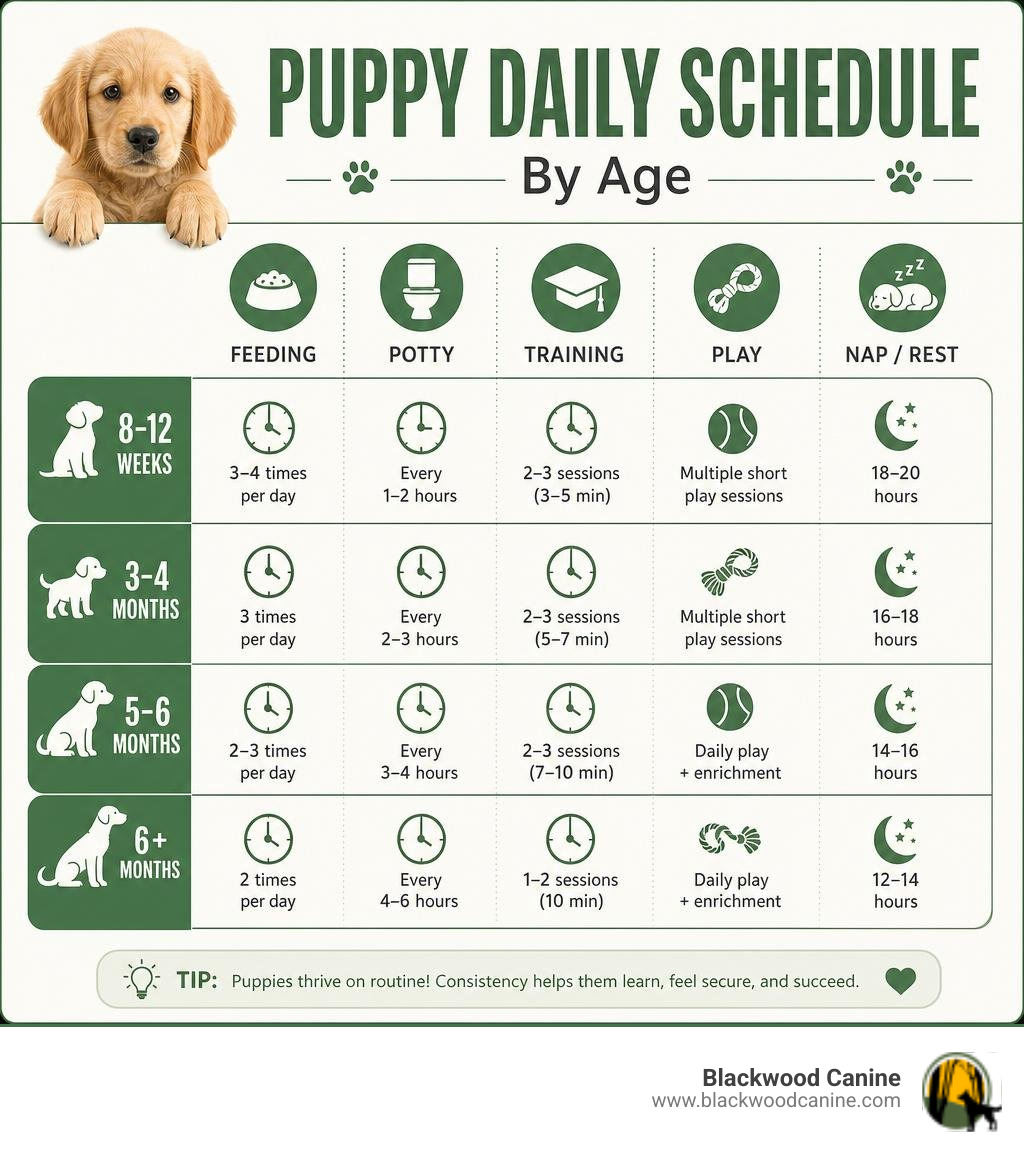
If you have a three month old puppy, you are in a prime position to build a strong foundation. At this age, your puppy is like a sponge. However, their attention span is incredibly short. This is why we advocate for five to ten minute training sessions. Trying to train a young puppy for thirty minutes straight will only lead to frustration for both of you. Keep lessons brief, fun, and highly focused.
To set yourself up for success, read our guide on Bringing Home A Puppy Training Tips For New Portland Pet Parents. Understanding what to expect during those first few weeks in your home will save your sanity.
It is also vital to know what mistakes to avoid. Many well meaning owners accidentally reinforce the very behaviors they want to stop. For example, pushing a jumping puppy away often feels like a fun game of wrestling to them. To make sure you are on the right track, review What Dog Trainers Say Not To Do When Training A New Puppy.
Setting Up Your Puppy for Success with Management and Rewards
Before you teach your puppy a single command, you must manage their environment. Management is the unsung hero of puppy training. If your puppy cannot access your shoes, they cannot learn to chew them. If they are always supervised, they cannot sneak off to pee on your rug.
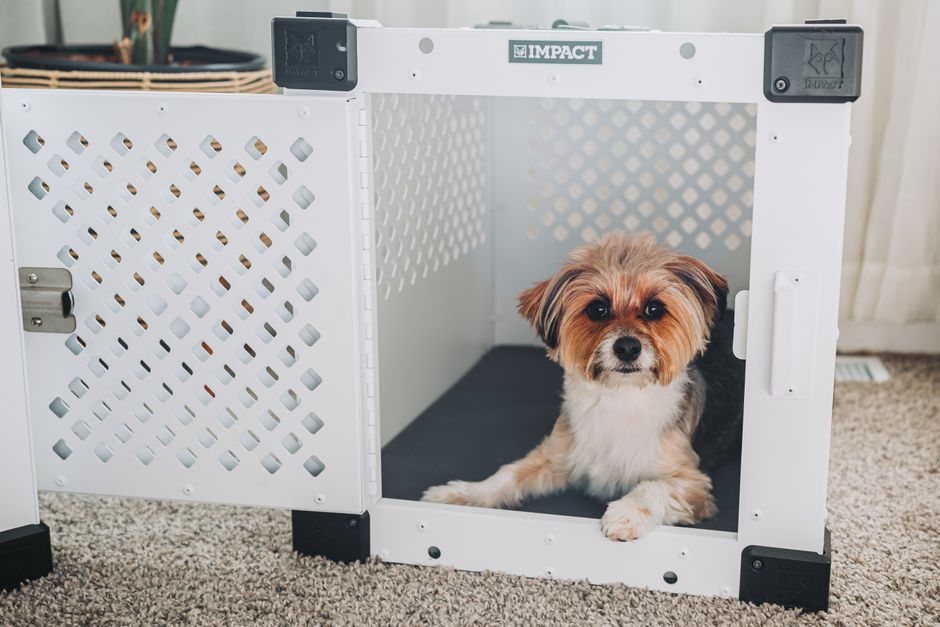
Crate training and potty training go hand in hand. Dogs naturally avoid soiling the area where they sleep. By using a properly sized crate, you utilize this natural instinct to build bladder control.
A great rule of thumb for crating is that a puppy can safely hold their bladder for roughly one hour per month of age. A two month old puppy can handle about two hours in a crate, while a three month old puppy can manage three hours. To make your life much easier, use our Housebreaking Schedule Generator to create a predictable routine for meals, potty breaks, and crate time.
When it comes to teaching new behaviors, your choice of reward is everything. We use high value treats that are small, soft, and smelly. Think of these treats as your puppy's paycheck. The treat should be tiny, roughly the size of a pencil eraser, so your puppy does not get full too quickly or lose focus while chewing.
Using food is about more than just giving out treats. It is about building engagement. Your puppy should learn that paying attention to you is the most rewarding thing they can do. For practical tips on how to use meals to build focus, check out Dog Training Strategies Building Engagement With Food.
If your puppy is highly motivated by food, you might run into a common issue: eating too fast. Puppies that gulp their food can struggle to focus during training. If you have a speed eater, read Does Your Pup Eat Too Fast Puppy Training Methods For Speed Eaters to learn how to slow them down and use their meals to your advantage.
How to Teach the Five Basic Puppy Cues
Teaching your puppy basic cues gives you a way to communicate clearly. In modern dog training, we prefer the word cue over command. A cue is a signal that a reward is available if the puppy performs a specific behavior. A command carries an outdated, punitive tone of do it or else.
By teaching these five basic cues, you build a cooperative relationship based on trust. For a deeper look at behavioral development, you can read about Puppy Behavior and Training Basics | VCA Animal Hospitals .
When teaching these cues, we focus on positive reinforcement rather than physical force. Pushing a puppy's rear down to force a sit can be confusing and frightening. To understand why we avoid physical force, read Dog Training Methods Positive Reinforcement Vs Dominance Training.

Easy puppy training for sit and down
The easiest way to teach sit and down is through a method called luring. Luring involves using a high value treat like a magnet to guide your puppy's nose and body into the correct position.
To teach a sit, hold a treat directly in front of your puppy's nose. Slowly move the treat up and back over their head, toward their tail. As their nose goes up to follow the food, their rear end will naturally go down. The second their rump touches the floor, mark the behavior with a enthusiastic "Yes!" or a click, and deliver the treat.
To teach a down, start with your puppy in a sitting position. Hold the treat at their nose and slowly lower it straight down to the floor between their front paws. Once their chest touches the ground, mark the moment and reward them.
Sometimes, a puppy might get frustrated and walk away from the lure. If this happens, you can use capturing. Capturing means waiting for your puppy to perform the behavior naturally, like lying down to rest, and immediately marking and rewarding it.
To learn more about using food lures effectively, read Transform Your Dogs Training With The Power Of Luring A Guide To Happy And Effective Learning. Once your puppy understands the hand motion, you must learn Fading The Lure How To Fade The Food Lure so they do not rely on seeing food to obey. If you want to make your timing precise, look into Curious About Clicker Training Dog Trainers Explain The Basics.
Easy puppy training for stay and come
A reliable stay and come can save your puppy's life.
To teach stay, you must first introduce a release word, such as "Free" or "Okay." The release word tells your puppy that they are allowed to move. Ask your puppy to sit. Wait one second, say your release word, and toss a treat a step away. Gradually increase the time they must wait before you say the release word. Do not add distance until they can stay in place for ten seconds.
To teach come, use an upbeat, distinct recall word. Avoid using their name as the recall word, as you say their name constantly throughout the day. Say your recall word, clap your hands, and take a few quick steps backward. Puppies naturally love to chase. When they run to you, grab their collar gently with one hand while feeding them a high value treat with the other. This prevents them from learning to dart away when they get close.
Teaching polite loose leash walking
Walking on a loose leash is a skill that takes patience. A perfect competitive heel is unnatural and unnecessary for everyday walks. Your goal should simply be a loose, relaxed leash that allows your puppy to safely explore.
Start by letting your puppy wear their collar and a light leash around the house to get used to the sensation. When you start walking, reward your puppy with a treat whenever they look up at you or walk near your side.
If your puppy begins to pull, stop walking immediately. Do not yank the leash back. Simply become a tree and wait for them to turn around to look at you. When the leash goes slack, praise them and continue walking. You can also use sudden turns to the right or left to keep your puppy engaged and paying attention to your movement.
For more tips on managing polite behavior during walks, including how to handle greeting people, read Dog Obedience Teaching Your Dog Not To Jump Up On People.
Socialization and Puppy Classes
Socialization is not just about letting your puppy play with other dogs. It is about helping them build confidence around new sights, sounds, surfaces, and environments.
The critical socialization period for puppies occurs between 7 and 14 weeks of age. During this developmental window, puppies naturally accept new experiences with minimal fear. Experiences during this phase must be positive, safe, and controlled.
For a step by step guide on how to safely navigate this timeline, check out Basic Puppy Training: When & How to Train Your Puppy | Purina US .
Many owners worry about socializing their puppy before they are fully vaccinated. While you should avoid high risk areas like public dog parks, puppies can safely attend controlled puppy socialization classes as early as seven to eight weeks of age, provided they have received their first round of vaccinations.
What to Do When Your Puppy Does Not Obey
If your puppy ignores a cue, do not panic or get angry. Puppies do not act out of spite. If they do not obey, it is usually because of one of three reasons:
- Too many distractions: A puppy who sits perfectly in your living room might struggle to sit at a busy park in Hillsboro or Beaverton.
- Low value rewards: You might need to upgrade your treats to something more appealing, like small pieces of freeze dried liver or cheese.
- The step is too hard: You may have moved too fast. Go back to a simpler step and build up slowly.
Never repeat a cue over and over if your puppy does not respond. If you say "Sit, sit, sit," your puppy learns that they do not have to listen the first time. Instead, move closer, make the task easier, and guide them with a lure if necessary.
If your puppy's frustration turns into nipping or biting, read Is Your Pup A Nipper Try These Puppy Trainer Tips To Stop Biting for practical ways to redirect that sharp toothed energy.
Frequently Asked Questions About Puppy Training
When should I start training my three month old puppy?
You should start training immediately. If your puppy is three months old, they are in a prime learning window. Focus on basic manners, crate acclimation, potty training, and building positive associations with the world around them.
How long should puppy training sessions be?
Keep training sessions very short, ideally five to ten minutes, repeated two to three times a day. Always end each session on a positive note with a successful repetition and plenty of praise.
Are puppy training pads worth using?
For most owners, training pads are an unnecessary extra step that actually delays outdoor potty training. Unless you live in a high rise building or have severe mobility issues, it is best to teach your puppy to go outside from day one.
Conclusion
Training a puppy is a big commitment, but it does not have to make you lose your mind. By focusing on clear communication, consistent management, and positive reinforcement, you can raise a well mannered companion.
If you want to start off on the right foot, read our advice on 3 Things You Can Do To Have A Well Mannered Puppy.
For hands on professional help in Portland, Beaverton, Hillsboro, Vancouver WA, or the surrounding areas, consider our specialized Puppy Jump Start Program. We are here to help you build a reliable, stress free relationship with your dog.