
The Foolproof Potty Schedule for a 6-Month-Old Puppy
A Practical 6 Month Old Puppy Potty Schedule That Prevents Accidents

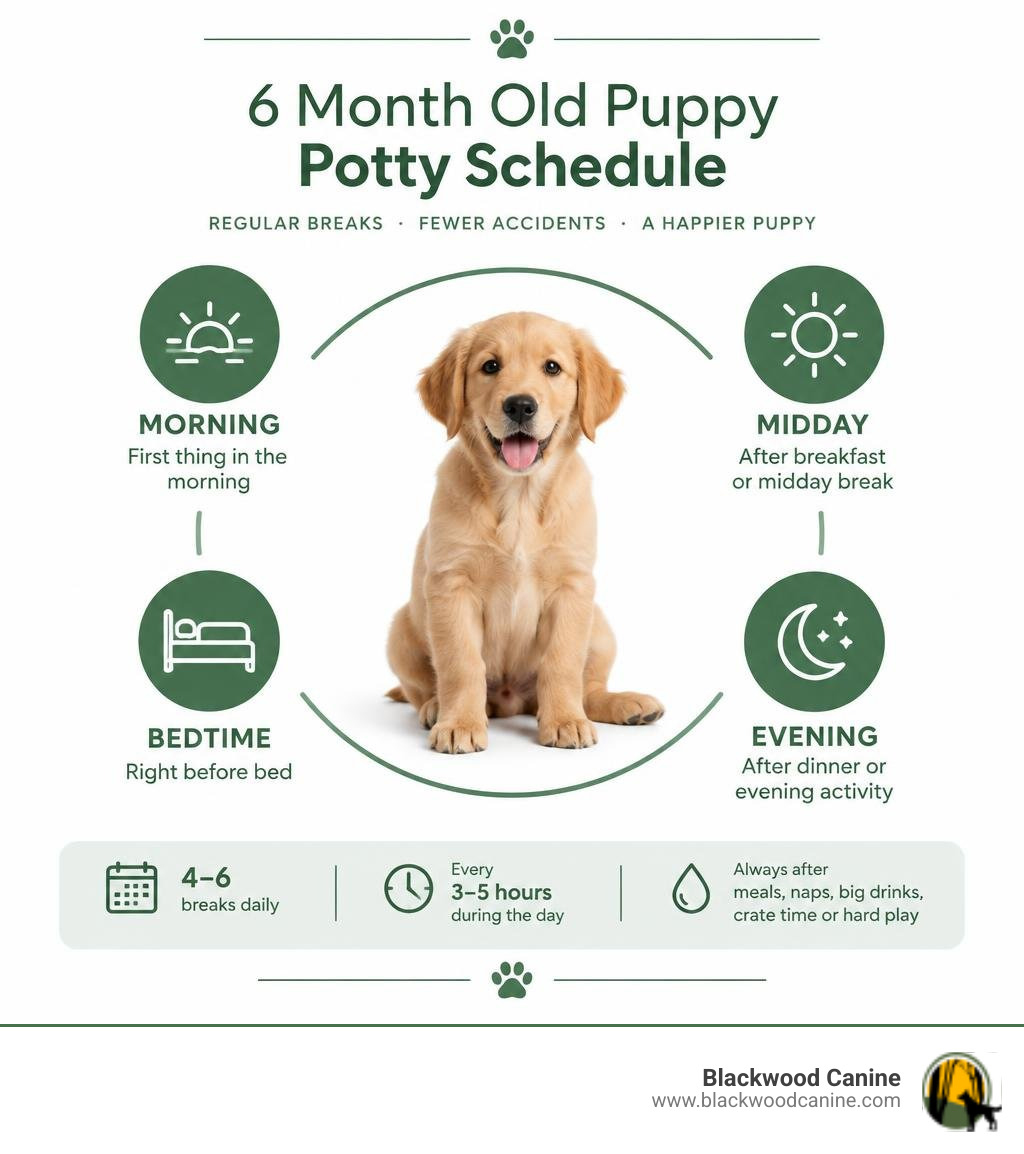
If your six month old puppy is still leaving surprise puddles on the rug, the fix is usually not more scolding. It is tighter timing and less unsupervised freedom. A solid 6 month old puppy potty schedule means taking your puppy out 4 to 6 times daily, plus immediately after waking, meals, naps, big drinks, crate time, and hard play.
A simple daily rhythm looks like this:
- First thing in the morning
- After breakfast
- Midday
- Late afternoon
- After dinner or evening activity
- Right before bed
Most healthy puppies this age can physically hold it about 5 to 7 hours, but that is a limit, not a target. During the day, offer a potty trip every 3 to 5 hours while you rebuild reliable habits. At six months, adolescence can make a puppy suddenly forget what they seemed to know. Very convenient. Very puppy.
I am David Wright. After years of hands on dog training and an apprenticeship under an experienced trainer, I have helped owners simplify the routines behind a reliable 6 month old puppy potty schedule so their dogs can succeed at home, not just during training.
How Puppy Bladder Capacity Works at 6 Months
By half a year of life, your puppy is undergoing massive physical changes. The tiny bladder that could barely hold water for an hour during early puppyhood is now backed by stronger sphincter muscles and greater biological maturity.
Physiological control during the daytime is vastly different from nighttime rest. When a dog sleeps, their metabolic rate slows down, meaning urine production drops and holding urine for seven or eight hours overnight becomes routine. Daytime holding capacity depends directly on movement, excitement, water intake, and mental focus. If an adolescent pup is zooming around the living room, their system produces waste far faster than when they are resting.
Understanding Bladder Biology and the Month Plus One Rule
A common formula used by dog professionals is the month plus one rule. This simple guideline calculates a puppy's maximum holding window by taking their age in months and adding one. According to this math, a six month old pup can physically manage around seven hours under quiet conditions. In real world terms, most veterinarians and trainers cap waking daytime holding capacity between five and seven hours.
Understanding a true schedule helps dog owners realize that holding capacity represents a physical ceiling, never an everyday goal. While your dog might be biologically capable of holding urine for six hours, asking them to do so regularly while awake invites failure. Keeping daytime outings spaced every three to five hours protects muscle tone, prevents discomfort, and removes the pressure that leads to indoor mistakes.
Evolution from a 3 Month to a 6 Month Old Puppy Potty Schedule
Reflecting on your dog's growth shows just how far their physical stamina has advanced. When looking back at progressing from a 3 month old puppy schedule, a young puppy needed immediate relief every two to three hours and had zero margin for delay.
As your dog matured through sixteen weeks, you were likely comparing milestones with a 4 month puppy schedule guide, where bathroom trips dropped to roughly six to eight times per day. By nine months, most canines settle into their adult groove of three to four daily outdoor breaks.
| Age | Daytime Potty Frequency | Max Awake Bladder Capacity | Typical Overnight Sleep |
|---|---|---|---|
| 3 Months | Every 2 to 3 hours (8-10 trips/day) | 3 to 4 hours | 6 to 7 hours (possible night break) |
| 6 Months | Every 3 to 5 hours (4-6 trips/day) | 5 to 7 hours | 8 hours (fully through the night) |
| 9 Months | Every 4 to 6 hours (3-4 trips/day) | 7 to 8 hours | 8+ hours (adult baseline) |
The Ultimate Daily 6 Month Old Puppy Potty Schedule
A predictable framework creates reliable house habits. When your dog knows exactly when their next opportunity to eliminate outside is coming, their internal clock stabilizes.
Morning, Midday, and Evening Potty Routines
Here is an effective daily template built for busy households that balances potty outings, feeding windows, and mental structure:
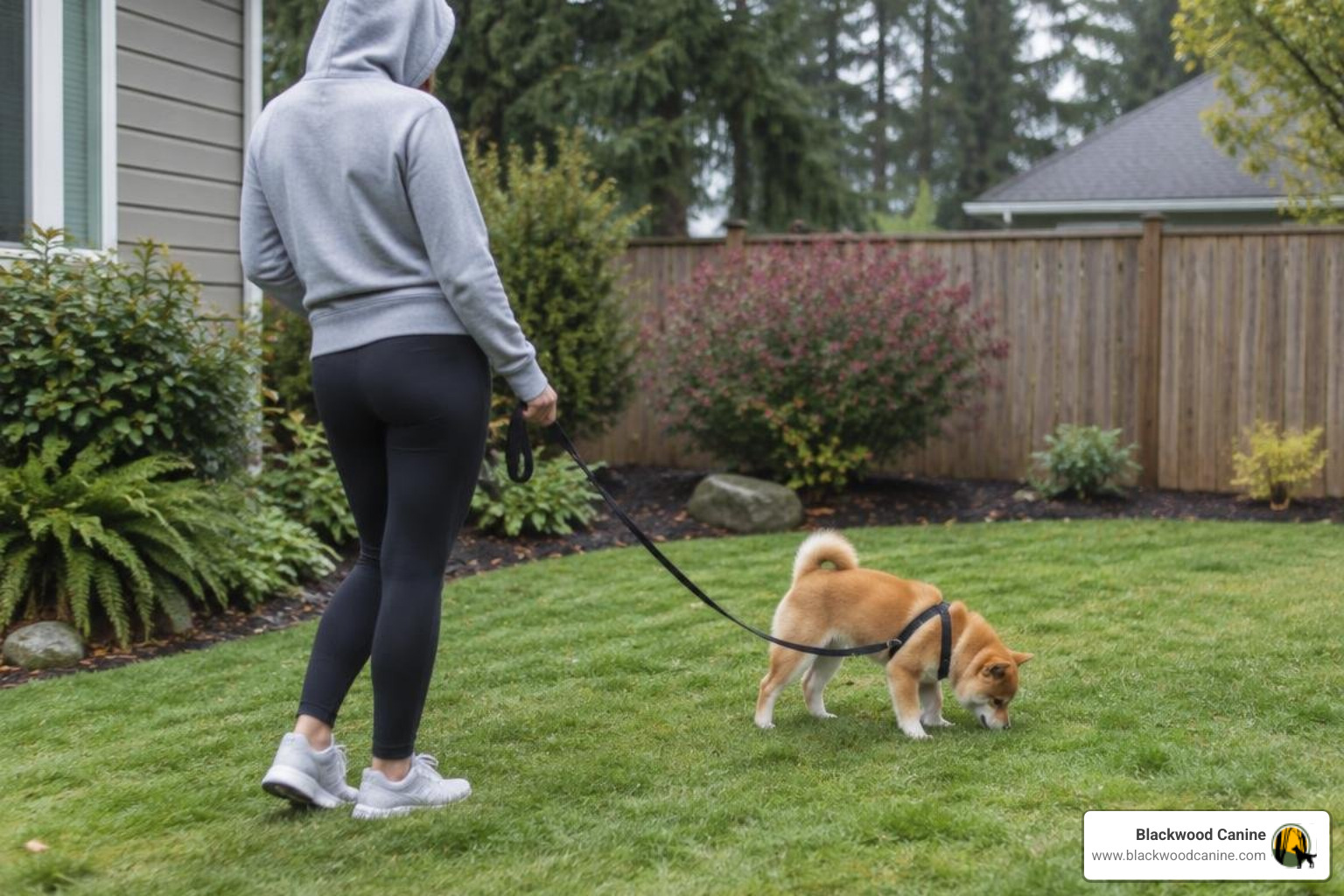
- 6:30 AM – Morning Wake Up Outing: Straight out of the crate or sleeping area to the designated outdoor potty spot on a leash. Give clear praise and immediate reward once they finish.
- 7:00 AM – Breakfast: Serve morning meal. Allow moderate access to water.
- 7:30 AM – Post Breakfast Outing: Take the pup outside roughly twenty to thirty minutes after eating to account for natural gastrointestinal activation.
- 8:00 AM to 12:00 PM – Rest or Structured Downtime: Pup rests in their crate or a secure indoor pen while you work or handle morning tasks.
- 12:00 PM – Midday Relief and Walk: A solid thirty minute outdoor break including a dedicated potty trip and structured leash walking.
- 12:45 PM to 4:30 PM – Afternoon Rest: Supervised rest period or quiet chew time.
- 4:30 PM – Late Afternoon Outing: Quick relief trip before evening household activity ramps up.
- 5:30 PM – Dinner: Evening meal served on a clean, predictable schedule.
- 6:00 PM – Post Dinner Outing: Outdoor potty break to clear digestion from the evening meal.
- 6:30 PM to 9:30 PM – Supervised Family Time: Supervised free time in active living areas. Keep eyes on your pup or use a drag leash to prevent sneaking off into quiet bedrooms.
- 10:00 PM – Final Bedtime Potty: Final leash trip to empty the bladder completely before lights out.
If you want a customized setup tailored around your family's exact work hours, building routines with a housebreaking schedule generator is a great way to map out specific daily checkpoints.
Transitioning Meals and Adjusting the 6 Month Old Puppy Potty Schedule
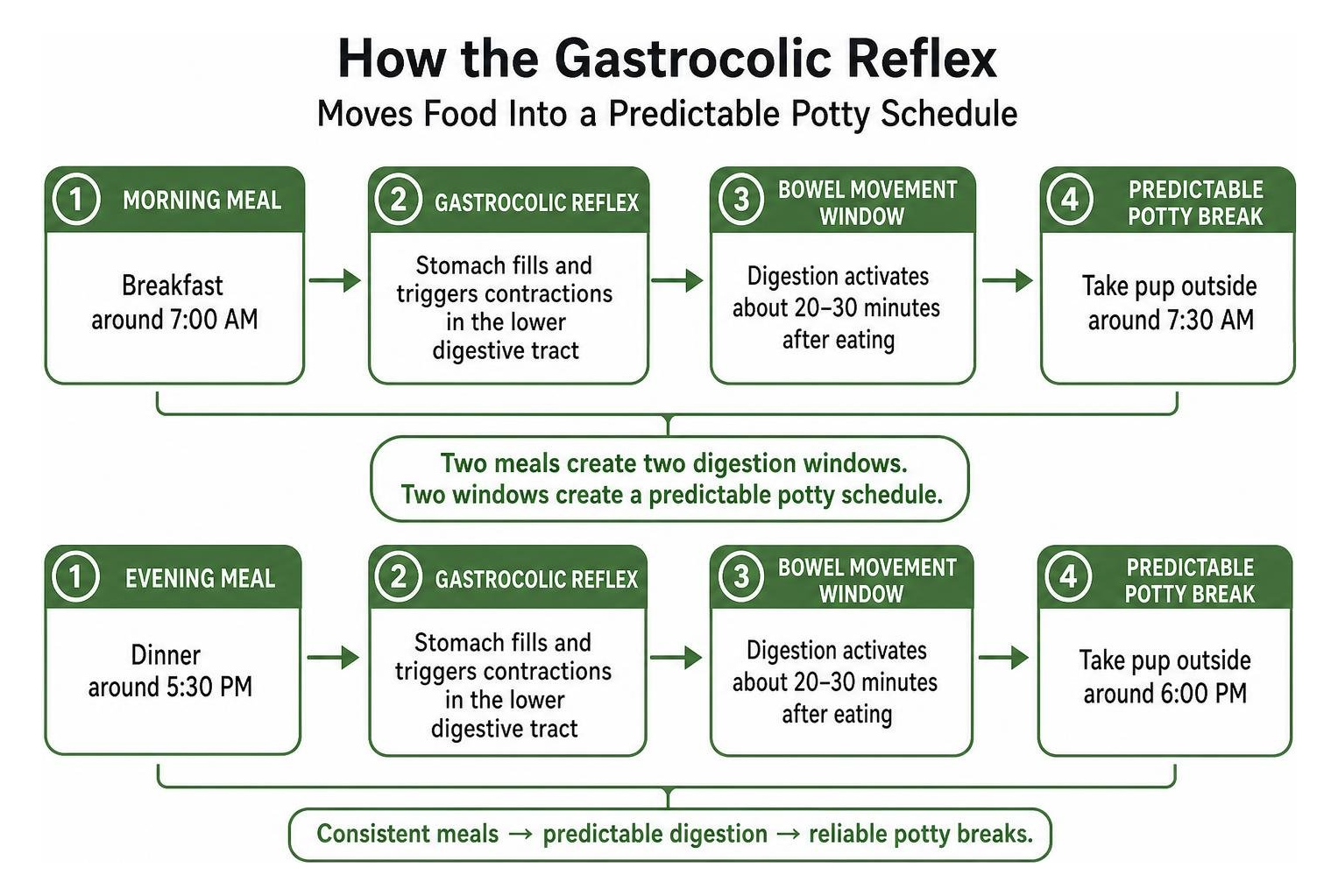
Around six months of age, most puppies are ready to transition from three daily meals down to two. Dropping the midday lunch simplifies your daily schedule and makes bowel movements significantly more predictable.
Eating triggers the gastrocolic reflex, an automatic physiological response where filling the stomach stimulates contractions in the lower digestive tract. By feeding exclusively at morning and evening intervals, you create two distinct, predictable digestion windows.
Water management is equally vital in the evening hours. Keep water freely accessible throughout the active day, but consider picking up the water bowl about two hours before the final bedtime trip. This allows your pup to fully process fluids, aligning their night habits with a healthy 5 month old puppy sleep guide routine so everyone sleeps soundly until morning.
Recognizing Potty Cues and Crate Training at 6 Months
Even with a steady clock schedule, your dog will occasionally have to eliminate off rhythm. Catching these moments requires reading subtle body language before an accident starts.
Subtle Body Language and Elimination Signs
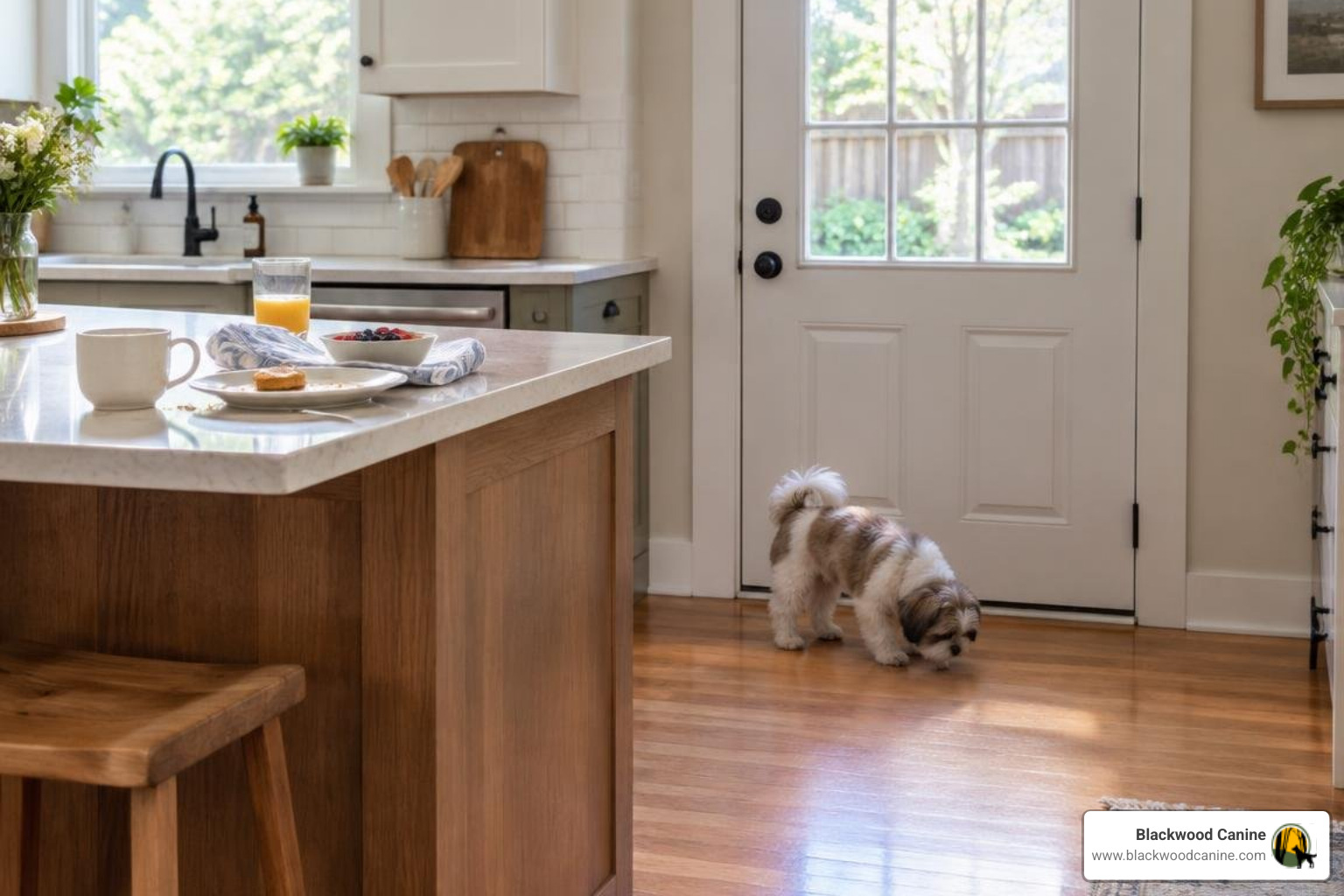
Younger puppies tend to drop and go without warning. Six month old adolescent dogs give clearer body language clues if you know what to watch for:
- Sudden Sniffing: Abruptly dropping their nose to the floor and investigating rugs or baseboards with intense focus.
- Tight Circling: Walking in small, tight loops in corners or behind furniture.
- Disengaging from Play: Suddenly abandoning a favorite toy or wrestling match to wander away silently into another room.
- Door Guarding: Standing stiffly by back doors or pacing near exit points.
- Restless Vocalization: Low whining or pacing while looking between you and the hallway.
Many owners choose to pair these natural alerts with door bells or simple cues. If you want a straightforward blueprint for setting up these habits, review these proven steps for an easy way to potty train a puppy.
Smart Crate Routines and Safe Holding Limits
A crate is an essential management tool that relies on a dog's instinctive desire to keep their resting space clean. At six months old, a crate provides a safe holding zone for four to six hours during the day.
Proper sizing is critical. If a crate is too large, a puppy will happily soil one corner and sleep soundly in the other. The crate should offer just enough space for your dog to stand up, turn around naturally, and lie flat on their side.
Never use crate confinement as an emotional punishment. It should always remain a calm resting den where your dog receives tasty long lasting chews and peaceful downtime. Misuse of training tools is where problems start, which is why confinement spaces should always be used thoughtfully and paired with adequate exercise and fair bathroom breaks. Training methods and tools should always be used under professional guidance.
Troubleshooting Accidents and Adolescent Setbacks
Just when everything seems to be running on cruise control, the six month mark hits, bringing teenage rebellion right along with it.
Handling the 6 Month Teenage Regression
Adolescence causes a surge of reproductive hormones and rapid mental shifts. Puppies that were dependable at five months might suddenly stare at you blankly when asked to go outside, or lose focus entirely because an interesting bird flew past the fence.
This regression is not spite; it is simply developmental brain fog. When training stalls, avoid turning routines into emotional battles. Owners often fall into traps like scolding past mistakes or offering excessive unearned freedom. Checking what dog trainers say not to do when training a new puppy can keep your responses productive. If you are navigating life in the Pacific Northwest, these tips on bringing home a puppy in Portland offer realistic perspective on seasonal management and outdoor routines.
Cleaning Mistakes and Resetting House Rules
When indoor accidents happen, how you respond determines how fast your puppy recovers reliability:
- Clean with Enzymatic Cleaners: Standard household soaps leave behind microscopic urea crystals. To a dog's sharp nose, that spot remains a designated bathroom. Use a true enzymatic cleaner to eliminate the scent markers completely.
- Apply the Three Second Reward Window: Deliver high value rewards and calm praise outside within three seconds of your dog finishing their business on the grass. Rewarding them after you walk back into the kitchen only rewards them for walking through the doorway.
- Tighten Indoor Supervision: If accidents pop up, temporarily reduce unsupervised roaming. Keep your dog in the same room with you, use baby gates, or tether them nearby on a light leash.
Establishing reliable household harmony means reinforcing clear communication and consistent boundaries. You can easily reset daily expectations using 3 things you can do to have a well mannered puppy.
Frequently Asked Questions About 6 Month Old Puppy Housebreaking
How long can a 6 month old puppy hold its bladder during the day?
Most healthy six month old puppies can hold their bladder for five to seven hours under calm, restful conditions. When your pup is awake, playing, or drinking heavily, provide outdoor relief every three to five hours to ensure success.
What should I do if my 6 month old puppy suddenly starts having accidents?
First, rule out physical medical issues with your veterinarian, such as urinary tract infections or digestive bugs. If health is clear, treat the setback as an adolescent regression. Restrict unsupervised house roaming, return to a strict feeding and water schedule, and supervise them closely until outdoor consistency returns.
Should a 6 month old puppy still be crated overnight for potty training?
If your dog is fully accident free and settles quietly without wandering or chewing furniture, you can slowly test giving them access to a secure dog bed in your bedroom. If they still pace, chew, or have nighttime accidents, crating overnight provides clear boundaries that prevent mistakes while you sleep.
Building Lasting Habits for a Clean and Calm Home
Potty training an adolescent dog is less about tricky secrets and far more about daily consistency, clear communication, and solid management. A great routine eliminates guesswork for your dog, while fair boundaries and immediate rewards show them exactly how to succeed in your home.
If you are a busy dog owner in Scappoose, St. Helens, Warren, Bethany, Hillsboro, Beaverton, Portland, or Vancouver feeling frustrated by teenage setbacks, you do not have to figure it out alone. At Blackwood Canine, we believe successful training is built on practical routines, clear expectations, fair consequences, and follow through.
Our basic obedience foundation training starts at four weeks of dedicated work, and we use six week and eight plus week timelines for complex behavior modification to help you establish dependable, real world reliability.
When you are ready to stop cleaning up messes and start enjoying a confident, well mannered companion, getting your personalized Good Dog Game Plan through our puppy jump start program is the best next step. Reach out to our team today, and let us help you build a clean, calm daily routine that works for your whole household.