
How to Master Your 5-Month-Old Puppy's Sleep and Crate Schedule
How Sleep Needs Change: The 5 Month Old Puppy Sleep Schedule Explained

Puppies at five months sit in a unique developmental pocket. They are no longer the sleepy babies who crashed after twenty minutes of sniffing grass, but they are not adult dogs either. A typical five month old puppy needs roughly 15 to 17 hours of sleep every 24 hours to support rapid bone growth, muscle repair, and central nervous system development.
During deep sleep, the canine brain releases vital growth hormones and organizes new memories from training sessions. Without enough deep rest, your puppy cannot properly process what they learned earlier in the day. Understanding how puppy sleep patterns and hours change across developmental phases helps you set realistic expectations for their daily stamina.
| Age Stage | Total Daily Sleep Needed | Average Wake Window | Typical Nap Frequency |
|---|---|---|---|
| 8 to 10 Weeks | 18 to 20 Hours | 45 to 60 Minutes | 4 to 6 Naps Daily |
| 10 to 12 Weeks | 18 to 19 Hours | 60 to 75 Minutes | 4 to 5 Naps Daily |
| 3 to 4 Months | 16 to 18 Hours | 1.5 to 2 Hours | 3 to 4 Naps Daily |
| 5 to 6 Months | 15 to 17 Hours | 2 to 3 Hours | 2 to 3 Naps Daily |
| Adult (1+ Years) | 12 to 14 Hours | Variable | Natural Rest Cycles |
Adult dogs thrive on 12 to 14 hours of rest, while your five month old still requires several dedicated daytime sleep blocks to prevent physical and mental burnout.
Awake Windows vs. Nap Length in a 5 Month Old Puppy Sleep Schedule
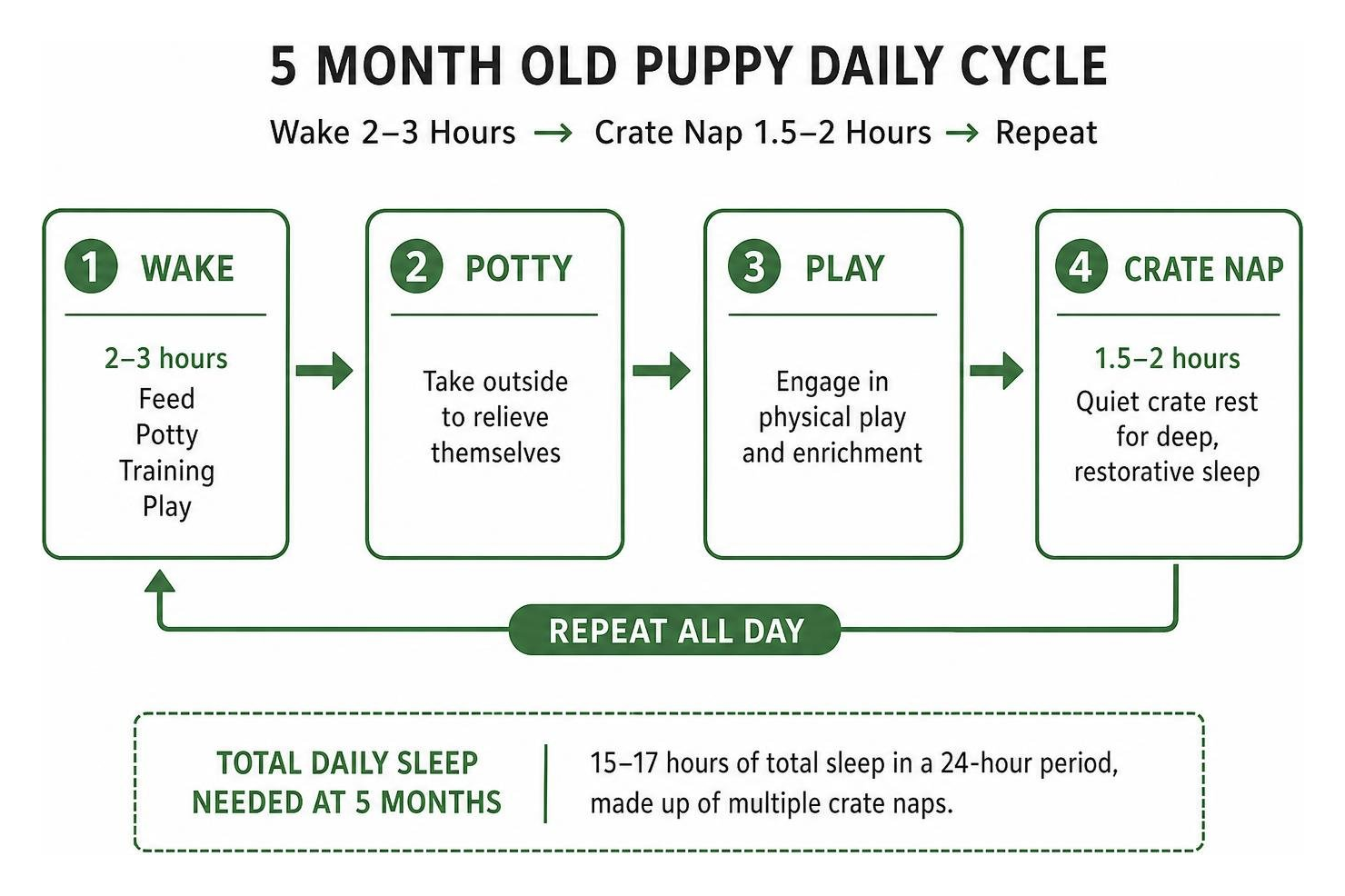
The biggest change from our earlier 4 month puppy schedule guide is the expansion of the awake window. At five months, most pups can stay happily awake for 2 to 3 hours at a time.
During these awake windows, your pup gets fed, goes outside to relieve themselves, works through obedience drills, and engages in physical play. Once that two to three hour mark hits, their nervous system begins to fatigue. Naps should ideally run for 1.5 to 2 hours in an area free from foot traffic so your pup enters deep, restorative rapid eye movement sleep.
Why Teething and Adolescence Disrupt Sleep
Just when you think you have a solid routine, biology throws a wrench into the works. Five months marks the peak of adult tooth eruption. As large molars push through sensitive gum tissue, the resulting mouth pain can cause nighttime restlessness, whining, and pacing.
This discomfort often manifests as sudden destructive chewing or renewed nipping. Using targeted tips to stop puppy biting alongside soothing aids like frozen rubber toys, chilled carrots, or safe chew items helps relieve oral pressure before you put your pup down for a nap.
Early hormonal shifts also start around this age, making puppies more reactive to novel sounds and environmental changes.
Designing a Predictable Daily Routine for Daytime and Nighttime Rest
Canine biology runs on rhythm. Establishing consistent wake times, meal slots, and potty breaks sets your puppy's internal clock for smooth transitions. If you need a customized bathroom framework to pair with your sleep plan, using our housebreaking schedule generator helps eliminate guesswork between nap windows.
Sample Hour by Hour 5 Month Old Puppy Sleep Schedule
Here is a practical, structured daytime and nighttime plan designed for real households:
- 6:30 AM – Wake Up and Potty: Immediate trip outside on leash to empty bladder and bowels.
- 7:00 AM – Breakfast and Training: Morning meal worked into hand feeding for basic engagement and manners.
- 7:30 AM – Structured Walk or Yard Play: A 20 to 30 minute walk around your neighborhood to explore and sniff.
- 8:30 AM to 11:30 AM – Morning Crate Nap (Nap 1): Uninterrupted deep rest in a quiet, darkened space.
- 11:30 AM – Potty Break and Free Play: Quick relief outside, followed by supervised indoor freedom.
- 12:30 PM – Lunch or Enrichment Chew: Light midday meal or a durable chew item.
- 1:30 PM to 4:00 PM – Afternoon Crate Nap (Nap 2): Second major sleep block of the day.
- 4:00 PM – Potty Break and Training Session: Bathroom trip, followed by basic obedience practice and handling drills.
- 5:30 PM – Dinner: Evening meal served in a bowl or puzzle feeder.
- 6:30 PM to 7:30 PM – Evening Catnap (Optional Nap 3): A quick rest to bridge the gap if your pup seems worn down.
- 7:30 PM – Low Stimulation Social Time: Hanging out calmly with the family in the living room.
- 9:30 PM – Final Potty and Bedtime: Final outdoor relief trip, then straight into the crate for the night.
Managing Nighttime Sleep and Potty Breaks
By five months, most healthy puppies possess the physical bladder capacity to sleep 8 to 10 hours overnight without an emergency bathroom run. However, if your pup does wake up whining in the middle of the night, keep the interaction entirely functional.
Carry or walk them directly outside on leash to their designated spot, wait three minutes for them to go, praise softly without excitement, and place them immediately back into the crate. Implementing an easy way to potty train a puppy relies on keeping night trips dull and business focused so your dog does not view midnight barking as a way to start playtime.
How to Set Up the Ideal Crate and Sleep Environment
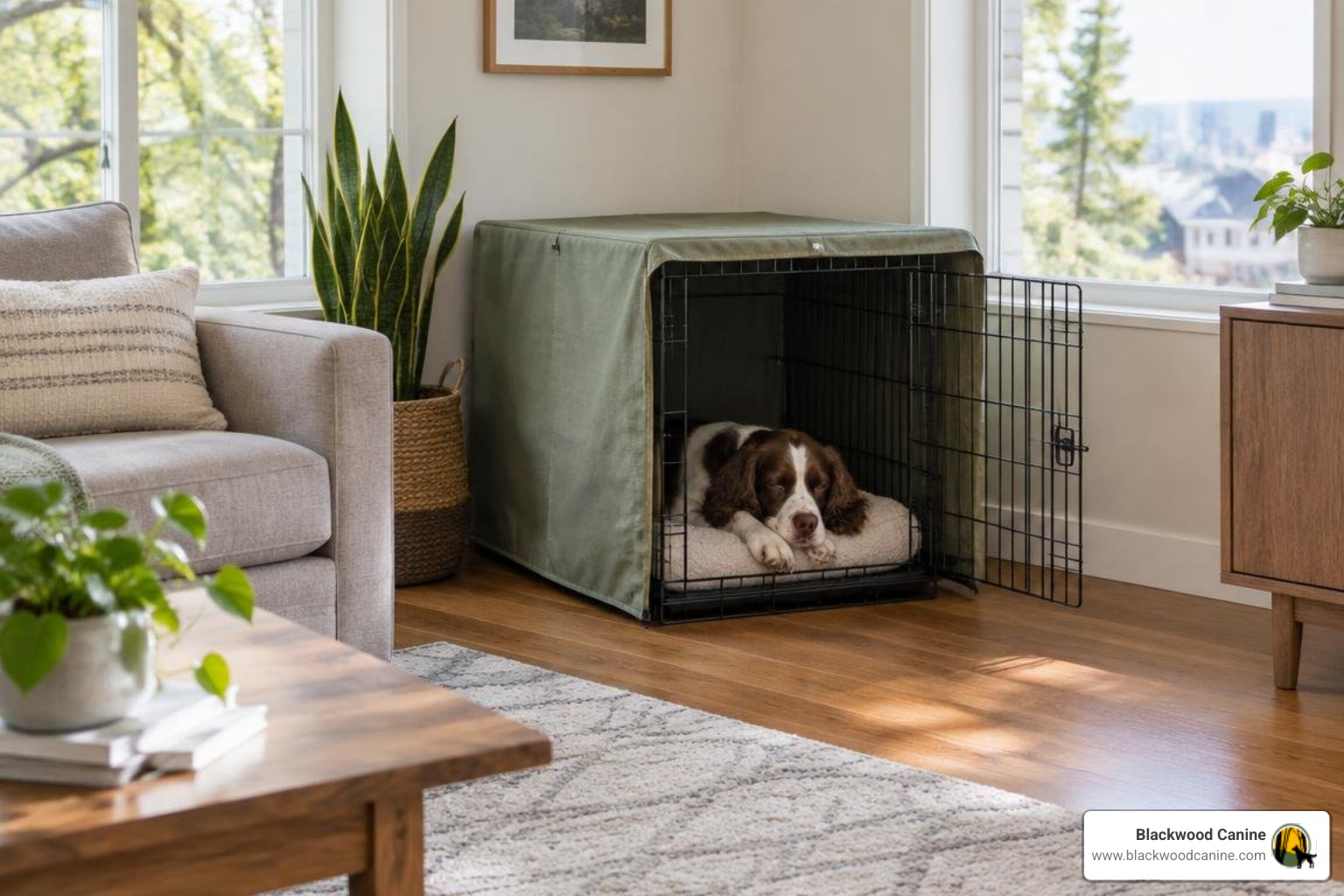
A five month old puppy easily gets distracted by everyday household movement. Setting up a dedicated rest cave removes environmental triggers that keep their brain fired up.
- Proper Crate Sizing: The crate must allow your pup to stand up, turn around easily, and stretch out on their side, without offering enough excess floor space to soil one corner and sleep in the other.
- Temperature Control: Keep the room between 65 and 72 degrees Fahrenheit. Puppies run hot and will fuss if they cannot find a cool resting posture.
- Blackout Covers: Use a fitted, breathable crate cover or a dark sheet over three sides of the crate to block out visual stimuli.
- Sound Masking: A simple box fan or white noise machine drowns out sudden door slams, street traffic, and television noise.
While self settling is a skill we build over time, most five month olds still lack the impulse control to choose sleep over household action. Enforced crate naps provide the structure they need to power down.
Identifying and Fixing Sleep Regression and Overtired Meltdowns
When a five month old misses their naps, they do not simply yawn and go to sleep on the rug. Instead, their system floods with adrenaline and cortisol.
The signs of an overtired five month old puppy include:
- Sudden, frantic zoomies through the house with hard banking off furniture.
- Hard, painful biting on hands, pant legs, and leashes.
- Complete inability to listen to familiar cues.
- Excessive demand barking, whining, and barrier frustration.
- Hyper fixation on forbidden items like shoes, baseboards, or rugs.
When this meltdown occurs, do not add more exercise. More physical activity on an overtired puppy simply adds fuel to the fire. Reviewing developmental sleep research and wake windows confirms that sleep deprivation directly worsens behavioral stability. Guide your puppy to their crate with a calm demeanor, shut the door, and let them rest.
Training tools and corrections, when used appropriately under professional guidance, give clear feedback, but you should never correct a puppy for behavior driven purely by exhaustion. Successful training requires clear expectations, sensible boundaries, proactive management, reinforcement, fair consequences, repetition, follow through, and unwavering owner consistency.
Frequently Asked Questions About 5 Month Old Puppy Sleep
Is it normal for a 5 month old puppy to sleep 18 hours a day?
Yes. While the average is 15 to 17 hours, larger breeds and highly active working lines often need up to 18 hours to recover from physical growth spurts and mental exertion.
The key is evaluating their behavior during wake windows. If your puppy is bright, hungry, interactive, and enthusiastic when awake, longer sleep duration is simply healthy recovery. If they seem weak, disoriented, or refuse meals, consult your veterinarian to rule out medical concerns.
Should I still enforce crate naps at 5 months?
Yes. Most five month old dogs do not possess the self regulation required to settle independently when interesting family activity is happening around them.
Enforced crate naps remove the burden of decision making from the puppy. It ensures they get the continuous, deep sleep cycles necessary for emotional stability and physical health.
How do I handle a 5 month puppy sleep regression?
Sleep regressions at this age typically last one to three weeks. They are usually triggered by teething pain or adolescent boundary testing.
Do not overhaul your entire daily routine or abandon crate rules. Check that their physical needs are met, offer a frozen chew toy to numb tender gums before crate time, and maintain your regular schedule. Consistency provides the security your pup needs to work through the phase.
Building Calm and Reliable Rest for Your Growing Pup
Raising a puppy in the Pacific Northwest means balancing wet outdoor trail adventures with calm indoor manners. A structured rest schedule is the quiet engine behind reliable obedience, clean house manners, and a relaxed home environment.
When you give your dog predictable rest, you protect your own sanity while setting your puppy up for long term success. If you live in Scappoose, St. Helens, Warren, Portland, Vancouver, Beaverton, Hillsboro, or Bethany and find yourself stuck with stubborn crate protests, frantic evening meltdowns, or boundary struggles, you do not have to figure it out alone.
Our team at Blackwood Canine provides real world, practical guidance to help you build reliable habits. The best way to get personalized coaching tailored to your pup is through our puppy jump start program. Reach out today, get a clear Good Dog Game Plan in place, and enjoy a well rested, well mannered companion.