
How to Potty Train Your Puppy the Easy Way
The Easy Way to Potty Train a Puppy Starts with a Routine
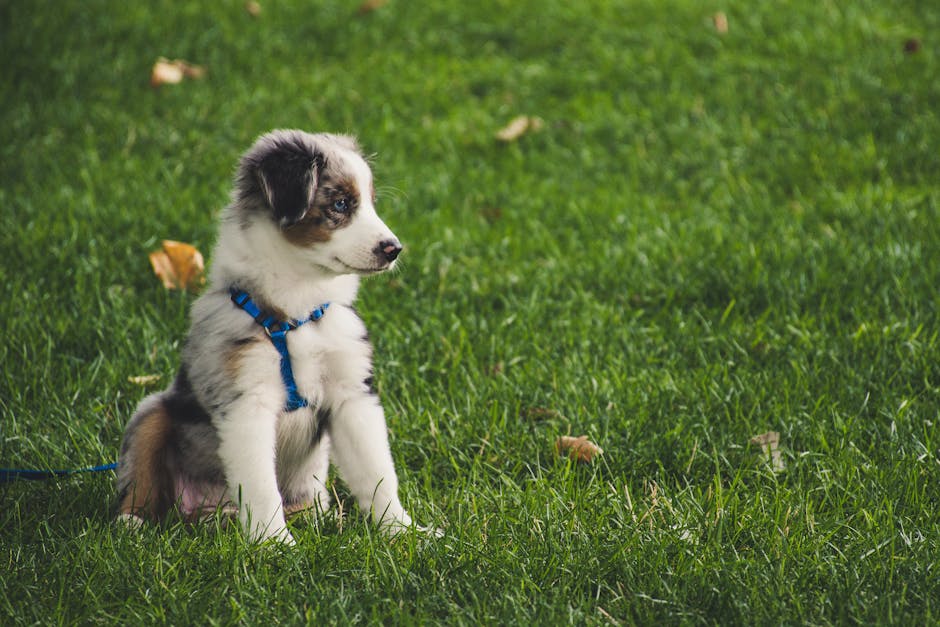
If you rely on your puppy to tell you when they need to go, you will spend your week scrubbing carpets. That is an uncomfortable truth many owners learn too late. Finding an easy way to potty train a puppy starts with controlling the clock, clear communication, and solid management.
Young puppies lack the physical impulse control to signal before an accident happens. Instead of waiting for an emergency, you need to build a routine around their biological timing. Puppies process food and liquids fast. Eating, drinking, sleeping, and playing trigger elimination. Taking your puppy outside right after these moments creates natural wins through repetition and follow through.
Setting fixed feeding times is vital. Free feeding makes bowel movements unpredictable. Most puppies need to poop 15 to 30 minutes after eating. By serving meals at specific times twice or thrice daily, you turn bathroom breaks into a scheduled event. You can check out this How to Potty Train a Puppy Schedule First Guide for more details on schedule management.
Why a Strict Housebreaking Schedule Beats Everything Else
A strict routine works because it aligns with your puppy's natural digestive clock. Real progress takes owner consistency, clear boundaries, and management. When puppies eat, sleep, and move on a predictable timeline, their body adapts.

To make this process simple, you can use a housebreaking schedule generator to align your day around your pup's specific needs. Keeping a simple 14 day log where you track meal times, water intake, outdoor pees, poops, and indoor accidents will help you spot patterns fast. You might notice your pup always needs to poop exactly 20 minutes after breakfast, or pees 10 minutes into active play. Once you know their rhythm, preventing accidents becomes simple.
How Often Should You Take Your Puppy Out?
The baseline rule of thumb is simple: puppies can generally hold their bladder awake for about one hour for every month of age, up to six months. However, when awake and active, they need much more frequent trips.
- 8 to 10 weeks old: Take them out every 30 to 60 minutes while awake.
- 10 to 12 weeks old: Take them out every 60 to 90 minutes.
- 12 to 16 weeks old: Take them out every 2 hours.
- 16+ weeks old: Take them out every 3 to 4 hours.
Beyond the clock, always take your puppy directly to their potty spot after these key events:
- Immediately upon waking up in the morning or after a nap.
- Within 15 to 30 minutes after finishing a meal.
- Right after a vigorous play session or intense chew time.
- Immediately after taking a large drink of water.
- Right before bedtime.
Spotting Warning Signals and Setting Up Environmental Control
You cannot watch your puppy if you are scrolling on your phone or cooking dinner in another room. Unearned freedom leads directly to indoor accidents. Until your puppy goes weeks without a mistake, they need active supervision or secure confinement.
Tethering is a great supervision method. Attach a lightweight leash to your puppy's harness and loop the other end around your belt or a heavy couch leg while you are sitting nearby. This prevents the puppy from wandering into a quiet hallway or behind the dining table to relieve themselves.
Common Pre Potty Warning Signals
When puppies need to go, their body language changes. Learning to read these subtle signs lets you catch them before an accident happens:
- Sudden sniffing: The puppy drops their nose to the floor and sniffs intently in a small area.
- Circling: Walking in small, tight circles while keeping the nose down.
- Leaving the room: Abruptly walking away from you, play, or toys toward a dark corner, hallway, or rug.
- Pacing by doors: Standing near or staring at the door leading outside.
- Sudden restlessness: Pausing mid play, whining slightly, or breaking focus for no apparent reason.
If you spot any of these signals, interrupt calmly and carry or lead your puppy straight to their outdoor potty spot.
Crate Training as an Easy Way to Potty Train a Puppy
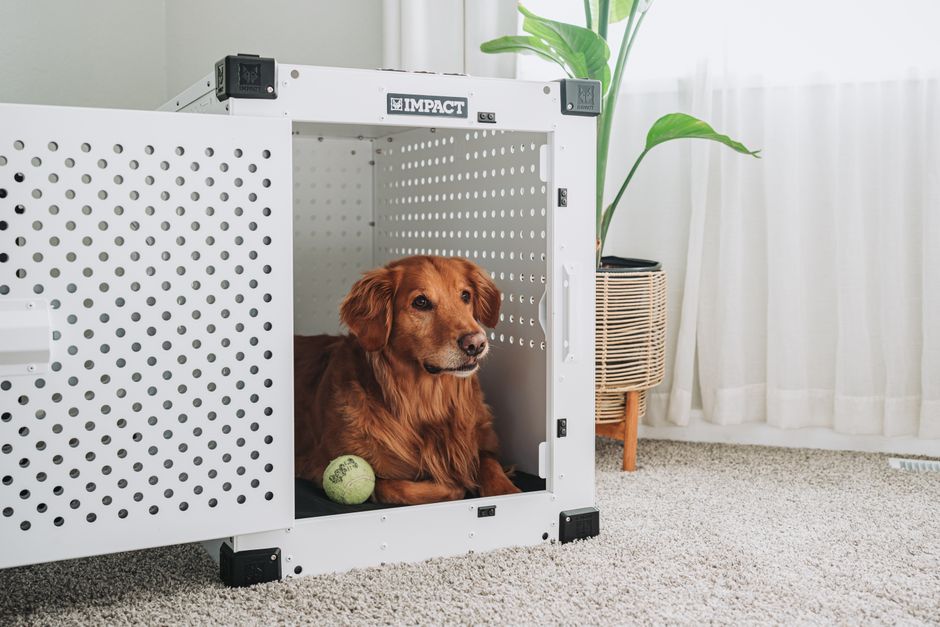
Crate training is the most reliable tool for teaching bladder control. Dogs naturally avoid soiling where they sleep and rest. A crate harnesses this instinct by encouraging your puppy to hold their bladder until you open the door to take them outside.
Proper sizing is vital. The crate should only be large enough for the puppy to stand up, turn around, and lie down comfortably. If the crate is too large, your puppy will pee in one corner and sleep comfortably in the other. Use an adjustable divider panel to expand the space as your puppy grows.
Never use the crate for harsh punishment. The crate must remain a calm, safe den associated with positive things like stuffed chew toys and peaceful naps. If you toss a frustrated puppy in their crate after an accident, they will build anxiety, which makes bladder control much harder.
Handling Indoor Accidents, Pads, and Special Living Spaces
Accidents happen. How you respond determines whether your training stays on track or takes three steps backward.
| Strategy | Outdoor Training | Puppy Pads |
|---|---|---|
| Primary Location | Grass, gravel, or designated dirt spot | Indoor paper or pad setup |
| Surface Habit | Teaches natural outdoor preferences | Can cause confusion with rugs and bathmats |
| Long Term Ease | High (dog defaults to going outside) | Medium (requires transitioning outside later) |
| Best Used For | Houses, yards, easily accessible spaces | High rise apartments, unvaccinated young pups |
What To Do When Accidents Happen Indoors
If you catch your puppy mid squat indoors, make a neutral sound like "ah ah" to startle them gently into stopping. Immediately pick them up or guide them on leash straight to their outdoor potty spot. If they finish outside, reward them enthusiastically.
If you find a puddle after the fact, say nothing. Do not scold, yell, or rub their nose in it. Puppies cannot connect delayed punishment to an action they did minutes ago. Punishing them only teaches them to hide behind the couch next time they need to eliminate because they associate your presence with danger. Learn more on what dog trainers say not to do when training a new puppy.
Clean every accident thoroughly using an enzymatic cleaner. Standard household cleaners use ammonia or fragrance, which only masks the scent to human noses. Ammonia actually smells like urine to a dog and will draw them right back to that exact carpet patch. Enzymatic formulas break down the organic uric acid crystals completely.
Puppy Pads Versus Outdoor Training
We generally advise skipping puppy pads if you have easy ground level access to an outdoor area. Pads teach puppies that eliminating on soft, absorbent surfaces indoors is fine. This often leads to confusion where puppies start peeing on bathmats, laundry piles, and area rugs.
If you must use pads temporarily, place them in a dedicated pen zone far from their sleeping area. When transitioning off pads, slowly move the pad toward the exterior door over several days, eventually placing it outside on the grass before removing it entirely. Check out this guide on How to Potty Train a Puppy or Dog for extra insights on indoor management setups.
Potty Training in Apartments and Small Spaces
Apartment living in places like Portland or Vancouver presents real logistical hurdles, like elevators, long hallways, and lack of private yards. A young puppy cannot always hold a full bladder during a two minute elevator ride.
- Carry your pup: Pick up your puppy before stepping into the hallway or elevator. Puppies rarely eliminate while being held in your arms.
- Use a balcony grass patch: Real grass patches placed on a private balcony offer a fast, natural alternative for late night breaks.
- Keep the leash short: Maintain control in common areas so your puppy stays focused on moving outside rather than sniffing or marking carpeted hallways.
Timeline, Common Mistakes, and When to Call Your Vet
Potty training is not an overnight task. While you can build a strong routine framework within a week or two, complete reliability requires physical development and long term consistency.
How Long Does Potty Training Take?
Most puppies take between 4 to 6 months to become fully housebroken. Smaller breeds like Chihuahuas or Yorkies often take longer, sometimes up to a year, because they have smaller bladders and higher metabolic rates.
While guides like this Puppy Potty Training in 7 Days Schedule show how fast you can install a solid routine, physical sphincter control takes time to mature. Expect occasional setbacks, especially around adolescent growth spurts or schedule shifts.
The Easy Way to Potty Train a Puppy Without Common Mistakes
Avoid these four common training traps:
- Late treats: Rewarding your puppy 30 seconds after they come back inside connects the treat to entering the house, not peeing outside. Give the treat within 3 seconds of them finishing their business directly at the outdoor spot.
- Too much early freedom: Allowing an un-housebroken puppy to roam freely through multiple rooms guarantees hidden accidents.
- Using harsh punishment: Yelling breaks trust and makes your puppy fearful of going potty anywhere near you.
- Skipping nighttime breaks: Expecting an 8 week old puppy to hold their bladder for 8 hours overnight leads to crate accidents.
Check out these 3 things you can do to have a well mannered puppy for more tips on avoiding early management traps.
When to Seek Veterinary Advice
Sometimes what looks like a stubborn training issue is actually a medical problem. Contact your veterinarian if you observe any of these warning signs:
- Your puppy pees tiny amounts every few minutes.
- You notice blood or dark discoloration in their urine.
- Your puppy cries, whines, or strains while attempting to eliminate.
- Diarrhea or extremely loose stools make bowel control impossible.
- A previously well trained puppy suddenly experiences severe, frequent regression without any routine change.
Urinary tract infections (UTIs) and internal parasites are common in young pups and make physical bladder control impossible until treated.
Frequently Asked Questions About Housebreaking
What is the fastest way to potty train a puppy at home?
The fastest method relies on strict routine adherence, constant direct supervision, crate training when unsupervised, and delivering high value treats within 3 seconds of outdoor elimination. Eliminating unearned indoor freedom prevents mistakes before they happen.
Should I wake a sleeping puppy to go potty?
During daytime hours, if a young puppy has been napping for 2 to 3 hours, it is best to wake them calmly and take them directly outside. At night, let a sleeping puppy rest. If they wake up and whine, take them out for a quiet, low energy bathroom break on a leash, then return them straight to the crate.
Why does my puppy pee inside right after being outside?
This usually happens because the puppy was distracted outside by smells, weather, or play and forgot to fully empty their bladder. Stand still in one quiet spot outside for 3 to 5 minutes without playing. If they do not go, bring them inside, crate them for 10 to 15 minutes, and then try again outside.
Ready for Fewer Accidents and a Clearer Puppy Routine
At Blackwood Canine, we work with busy dog owners across Scappoose, St. Helens, Warren, Bethany, Hillsboro, Beaverton, Portland, and Vancouver who feel frustrated by indoor accidents and ongoing mess. The easy way to potty train a puppy does not rely on tricks, harsh corrections, or constant frustration. Real success requires clear expectations, strict management, reinforcement, fair consequences, and owner consistency.
We serve as your guide to establish clear communication and predictable boundaries. Setting up our Good Dog Game Plan is the standard next step to build structure in your home. You can also explore our Puppy Jump Start Program to get direct help tailored to your family's routine.