
Calming the Chaos: Effective Training Tips for Hyperactive Dogs
How to Settle a Dog Who Cannot Switch Off
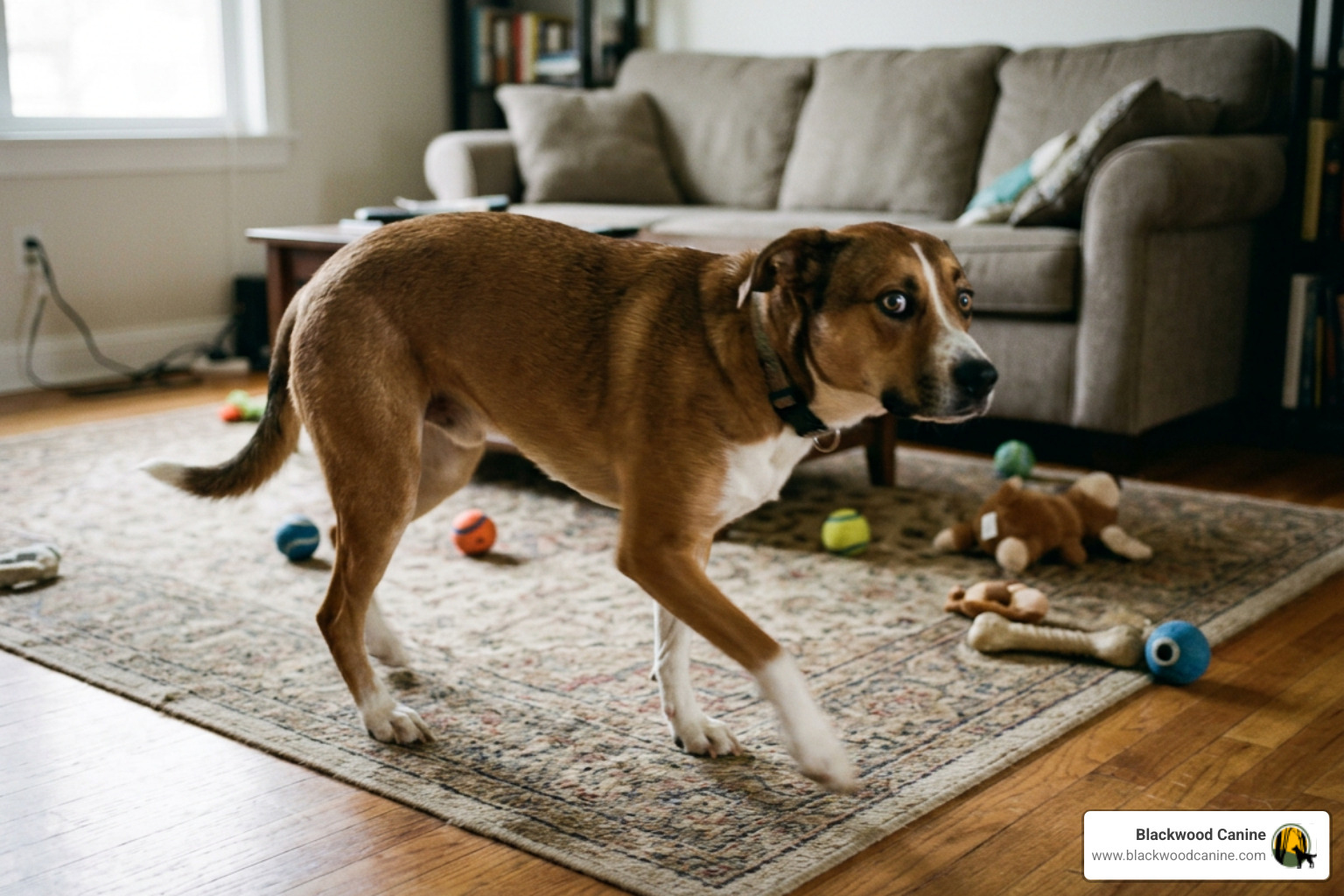
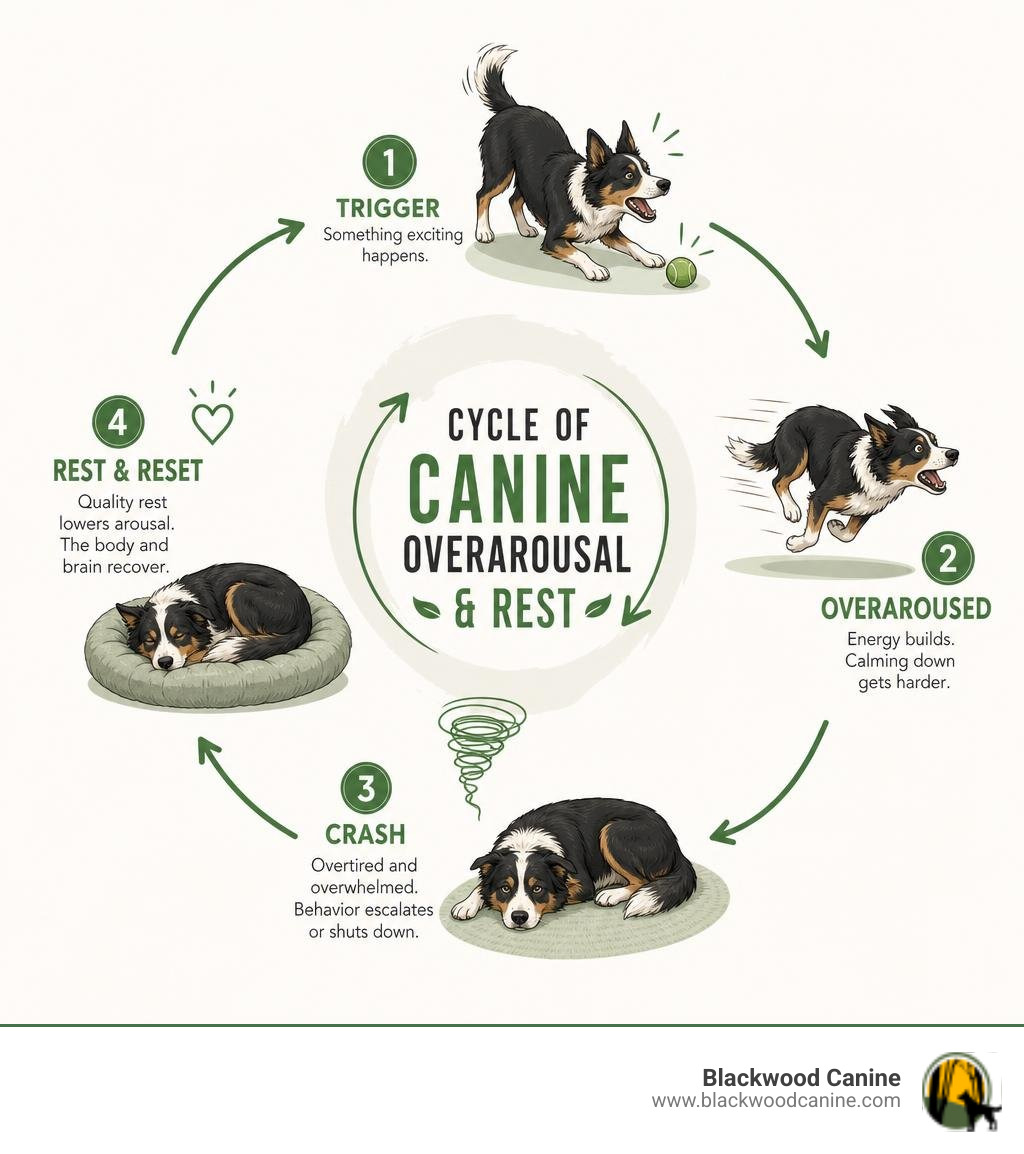
If your dog is bouncing off the walls, more running is not always the answer. Start with a short, structured game that lets them chase and think, then give them quiet time to sniff, chew, and settle. The goal is not to wear your dog out until they crash. It is to help their body and brain come back down so they can actually rest.
Living with a dog that cannot sit still can make your home feel like a nonstop circus. You sit down after a long workday, only to have your dog bounce off the sofa, sprint down the hallway, whine at the back door, and chew on the rug. For busy dog owners in Scappoose, St. Helens, Warren, Bethany, Hillsboro, Beaverton, Portland, Vancouver, and nearby Oregon or Washington areas who feel frustrated, embarrassed, guilty, or stuck, this constant state of motion is exhausting.
Many owners assume their dog just needs another mile of running or another hour at the dog park. When that extra exercise only makes the dog faster, more demanding, and harder to handle, pet parents start to lose hope. High drive and true restlessness require channeling instincts and supporting nervous system recovery rather than building endless physical stamina.
Understanding Canine Hyperactivity vs. High Drive
There is a huge difference between a dog with high working drive and a dog trapped in a state of chronic overarousal. High drive dogs have plenty of gas in the tank. They love having a job, chasing a ball, or working through puzzles. Once their work is done, however, a balanced high drive dog can lie down and take a nap.
A hyper dog cannot switch off. Most adult dogs need between 12 and 14 hours of sleep a day, while puppies and senior dogs often need even more. When high energy dogs miss out on that essential rest, cortisol and adrenaline build up in their system. This creates an endurance trap where more running simply produces an athlete who is constantly overtired and wired.
As noted in Dogs Trust research on hyperactive and restless dog behavior, dogs often use frantic, silly behaviors to discharge stress rather than genuine surplus energy.
| Trait | Normal High Energy Dog | Chronically Hyperaroused Dog |
|---|---|---|
| Response to Exercise | Plays hard, then rests calmly | Becomes more wired and vocal after play |
| Focus During Training | Highly engaged by rewards and tasks | Easily distracted, grabs food frantically, skips cues |
| Daily Sleep Total | Hits 12 to 14 hours easily | Struggles to sleep, wakes at tiny noises, paces |
| Recovery Time | Calms down minutes after excitement | Stays agitated, pants heavily, whines for hours |
| Environmental Reaction | Notices novel sounds with mild curiosity | Reacts to minor sounds, sights, or movement |
Recognizing Signs of True Hyperarousal
True hyperarousal is a physical fight or flight state. When a dog reaches this threshold, adrenaline and cortisol flood their bloodstream. In this zone, dogs may display up to 11 classic symptoms of hyperarousal, including:
- Dilated pupils and wide, frantic eyes
- Inability to focus on known cues
- Persistent leash reactivity and lunging
- Heavy panting that does not match the room temperature
- Constant physical motion and room to room pacing
- Mouthing hands, clothes, or leashes
- Frantic whining or demand barking
- Slow recovery times after excitement
- Inability to eat or grabbing food with hard teeth
- Sensitivity to sudden environmental sounds
- Restless sleep or sudden waking
When a dog lives in this heightened state, they are far more prone to reactivity on neighborhood walks. If you are struggling with outbursts outside the home, our guide on reactive dog training explains how trigger stacking pushes dogs past their breaking point.
The Critical Role of Rest and Natural Self-Settling
Rest is a biological requirement for emotional stability. Overtired puppies and adolescent dogs throw behavioral tantrums just like human toddlers. Instead of lying down when exhausted, their brains push past normal limits, leading to zoomies, biting, and destructive chewing.
A crate can be a very helpful tool for a restless dog, but only when the dog has been taught what the crate means first. The goal is not to shove a worked up dog behind a door and hope they figure it out. With the right foundation, the crate becomes a quiet place to chew, decompress, and practice settling. Pair it with calm routines, safe chew items, and clear release rules so your dog learns that crate time is not punishment. It is a predictable place to relax after their needs have been met.

Why Traditional Exercise Fails: The Intensity and Drive Solution
"A tired dog is a good dog" is one of the most misleading phrases in modern pet care. Taking a high energy dog on endless two hour neighborhood walks does not satisfy their brain. It simply builds cardiovascular stamina. You end up creating an Olympic marathon runner who now requires four miles of running just to take the edge off.
Endless fetch sessions often cause similar issues. Throwing a ball fifty times in a row spikes adrenaline without giving the dog a sense of mental closure. High drive dogs are genetically hardwired with a complete predatory motor pattern: orient, stalk, chase, capture, possess, and dissect. Mindless fetch forces the dog to chase over and over, keeping them stuck in high arousal.
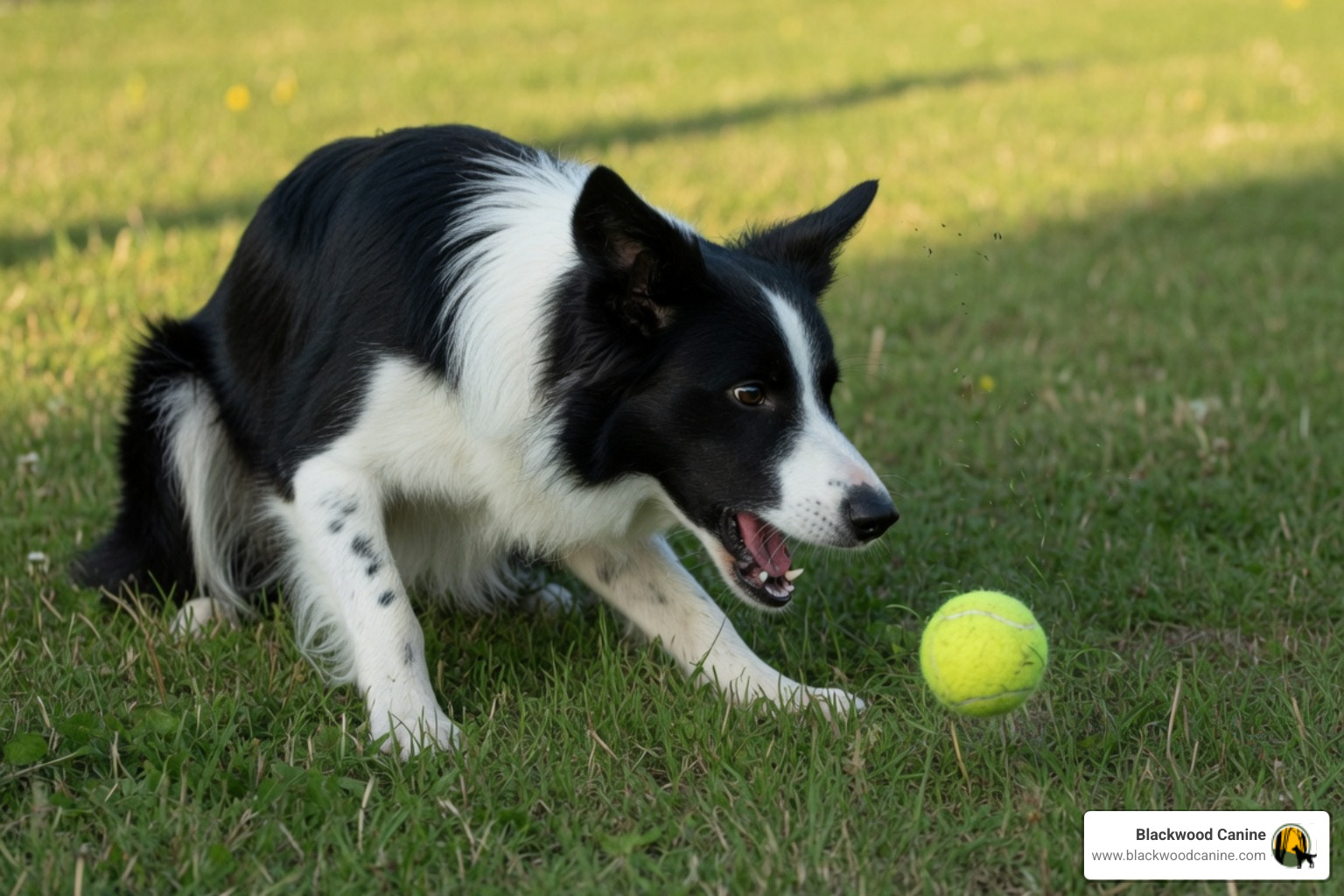
As we discuss in our article on how your dog has more drive than your current training is using, unlocking calm behavior requires channeling natural working instincts into structured outlets.
Using Flirt Poles for Fast Drive Resolution
A flirt pole is essentially an oversized cat wand for dogs: a long, flexible shaft with a soft lure attached by a cord. It allows you to move a lure along the ground in rapid sprint and cut patterns that mimic natural prey movement.
A 5 to 10 minute structured chase session with a flirt pole produces more fatigue than 45 minutes of steady walking. In fact, research shows that replacing 110 minutes of daily walking and mindless fetch with two structured 7 minute flirt pole sessions can produce a measurably calmer dog inside three weeks.
To make flirt pole work successful, you must build in clear rules and impulse control:
- The Wait: Ask your dog for a sit or down while the lure rests motionless. Release them with a clear marker word before the chase begins.
- The Chase: Move the lure low to the ground in wide arcs to protect your dog's joints.
- The Catch: Allow your dog to catch and grip the lure every few repetitions to complete the predatory drive cycle.
- The Out: Ask for a clean drop, reward with praise or a treat, and start the next repetition.
- The Deliberate Finish: Say "all done," put the pole away out of reach, and guide your dog to their bed for a calm chew.
For growing puppies under 12 months, keep lure movements low and smooth to avoid hard twisting or jumping until growth plates fully close.
Decompression and Sniff Walks
Once high intensity drive work is complete, switch gears entirely. Replace hurried leash walks with slow decompression walks. Allow your dog to explore quiet parks, trails, or open fields on a long line.
Olfactory stimulation is a natural sedative for dogs. A dog's brain dedicates immense processing power to scent analysis. Sniffing lowers heart rates, reduces cortisol, and allows the nervous system to shift into a calm, resting state. Twenty minutes of uninterrupted sniffing in a quiet area will calm a busy dog far better than miles of fast pavement walking.
Core Strategies in Dog Training for Hyper Dogs
Successful dog training for hyper dogs requires more than just teaching basic commands. It relies on clear expectations, strong management, fair boundaries, consistent reinforcement, and handler follow through.
Dogs mirror the energy around them. If an owner yells, rushes, or reacts with frustration, an excitable dog views that commotion as permission to dial their own energy even higher. Training requires human calm, precise reward timing, and clear markers.
Understanding how different training tools and reward structures interact with a dog's emotional state is vital. We break down these frameworks in our look at dog training methods comparing positive reinforcement and dominance.
Essential Impulse Control and Focus in Dog Training for Hyper Dogs
Impulse control is the mental muscle that stops a dog from acting on every sudden urge. You can build this muscle daily through simple, non frantic routines:
- Doorway Boundaries: Teach your dog to wait at open doors until released, rather than bolting outside.
- Food Bowl Manners: Require a calm sit and eye contact before setting down the food dish.
- The Place Command: Teach your dog to stay on a dedicated cot or mat while daily life moves around them.
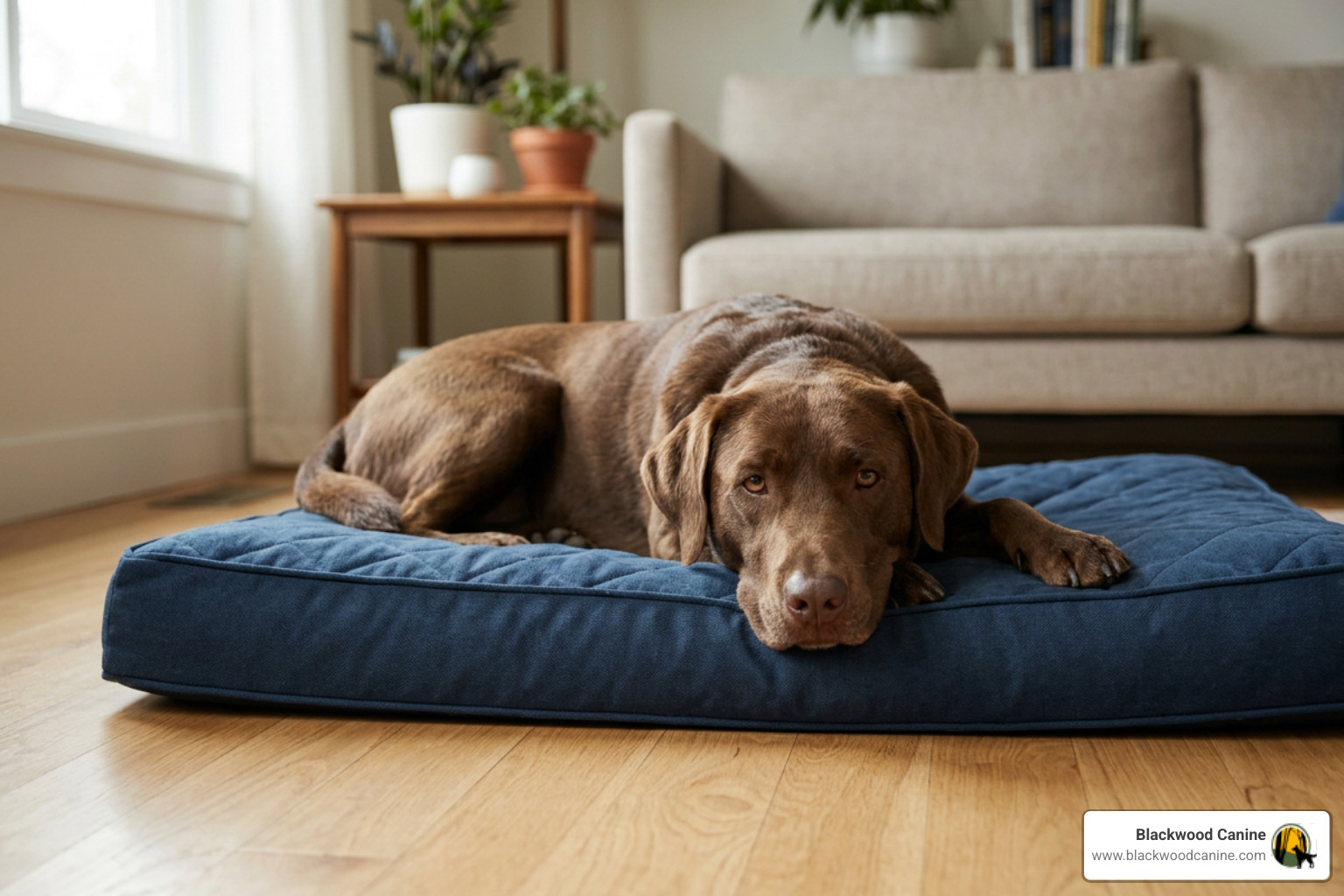
The place cue is an absolute game changer for hyper dogs. It gives them a clear physical boundary and a predictable job: lie down, relax your body, and stay there until released.
Teaching rock solid impulse control takes patience and consistency. At Blackwood Canine, our basic obedience foundation training starts at 4 weeks, giving dogs the time they need to master these focus skills under progressive distractions.
For supplemental natural relaxation approaches, the HolistaPet guide to calming hyper dogs naturally shares helpful insights on combining low stress training environments with daily routines.
Mental Stimulation: Puzzles and Scent Games
Cognitive effort burns mental energy without amping up the nervous system. Hyper dogs thrive when they have to use their brains to solve problems.
Try these simple mental enrichment games at home:
- The "Find It" Scent Game: Place your dog in a stay, hide pieces of kibble or high value treats around a room, release them with the cue "find it," and let their nose do the heavy lifting.
- Single Ingredient Chew Bones: Natural marrow bones or bully sticks provide extended chewing sessions that release calming endorphins.
- Slow Feeders and Snuffle Mats: Ditch the standard food bowl. Feed all daily meals through puzzles, snuffle mats, or frozen food toys to turn mealtime into a 20 minute brain workout.
When to Seek Professional Guidance for Severe Hyperarousal
Sometimes hyperactivity is more than excess drive or lack of training. If your dog exhibits persistent aggression, extreme separation distress, severe leash lunging, or an inability to calm down despite thorough daily management, professional support is necessary.
Sudden personality shifts, pacing at night, or frantic behavior can also stem from underlying medical issues, chronic pain, or dietary intolerances. In these cases, we always advise scheduling a thorough veterinary exam to rule out physical discomfort before starting an intensive training plan.
For severe, entrenched behavioral challenges, short term training fixes are rarely enough. Complex habits require structured, progressive rehabilitation. Blackwood Canine uses 6 week and 8 plus week timelines for complex behavior modification training to ensure real, lasting stability in challenging dogs.
In rare scenarios where a dog's high working drives or behavioral issues completely conflict with a family's safety or lifestyle, an honest assessment of rehoming to an appropriate working home may be the kindest choice for both dog and owner.
Common Mistakes to Avoid During Dog Training for Hyper Dogs
When dealing with a high energy dog, small handler errors can accidentally make frantic behaviors worse. Avoid these common traps:
- Repeating Commands: Saying "sit, sit, sit, sit!" turns cues into background noise and teaches the dog they do not need to listen the first time.
- Relying on Physical Punishment: Scolding or physical corrections add stress and panic to an already overstimulated nervous system, often creating fear or defensive aggression.
- Overexercising: Running a hyper dog for hours simply creates an elite athlete with higher endurance demands and sustained cortisol levels.
- Skipping Enforced Rest: Letting a dog stay awake all day leads to chronic sleep deprivation and behavioral meltdowns.
- Inconsistent Boundaries: Allowing jumping on weekdays but punishing it on weekends confuses the dog and ruins impulse control.
Frequently Asked Questions About Hyperactive Dogs
Why does walking for miles fail to tire out my hyper dog?
Walking is a low intensity exercise that builds cardiovascular stamina rather than mental fatigue. It fails to satisfy a dog's natural predatory drives or challenge their brain. Without mental stimulation and impulse control practice, a long walk leaves the dog physically conditioned but mentally bored and restless.
How much daily sleep does a hyperactive dog actually need?
Adult dogs require 12 to 14 hours of daily sleep, while puppies and senior dogs often need 16 to 18 hours. When dogs miss these sleep quotas, adrenaline builds up, causing frantic, overtired behaviors that owners frequently mistake for surplus energy.
Can hyperactive dogs become calm family companions?
Yes. With structured impulse control, clear communication, consistent daily management, and proper fulfillment of their working drives, hyper dogs can learn to relax reliably at home. After several weeks of structured training, high energy dogs can achieve dependable focus, loose leash manners, and solid recall even around everyday distractions.
Finding Lasting Peace and Focus for Your Dog
Living with an overstimulated dog can leave you feeling completely overwhelmed. When every knock at the door, walk around the block, or quiet evening on the couch turns into a chaotic wrestling match, it is easy to feel stuck.
Busy dog owners across Scappoose, St. Helens, Warren, Bethany, Hillsboro, Beaverton, Portland, and Vancouver do not need to struggle through this alone. You do not need endless hours of running or complicated tricks to see real change in your home. You need clear communication, predictable management, fair boundaries, and proven training systems that teach your dog how to settle.
If you are ready to build a reliable, stress free relationship with your dog, Blackwood Canine is here to help guide the way. Our comprehensive immersion dog training programs give high energy dogs the structured foundation they need to thrive in the real world.
The best next step for your family is our Good Dog Game Plan. Connect with our team today to set up your consultation and start building the calm, focused companion you deserve.