
Private Dog Training Survival Guide
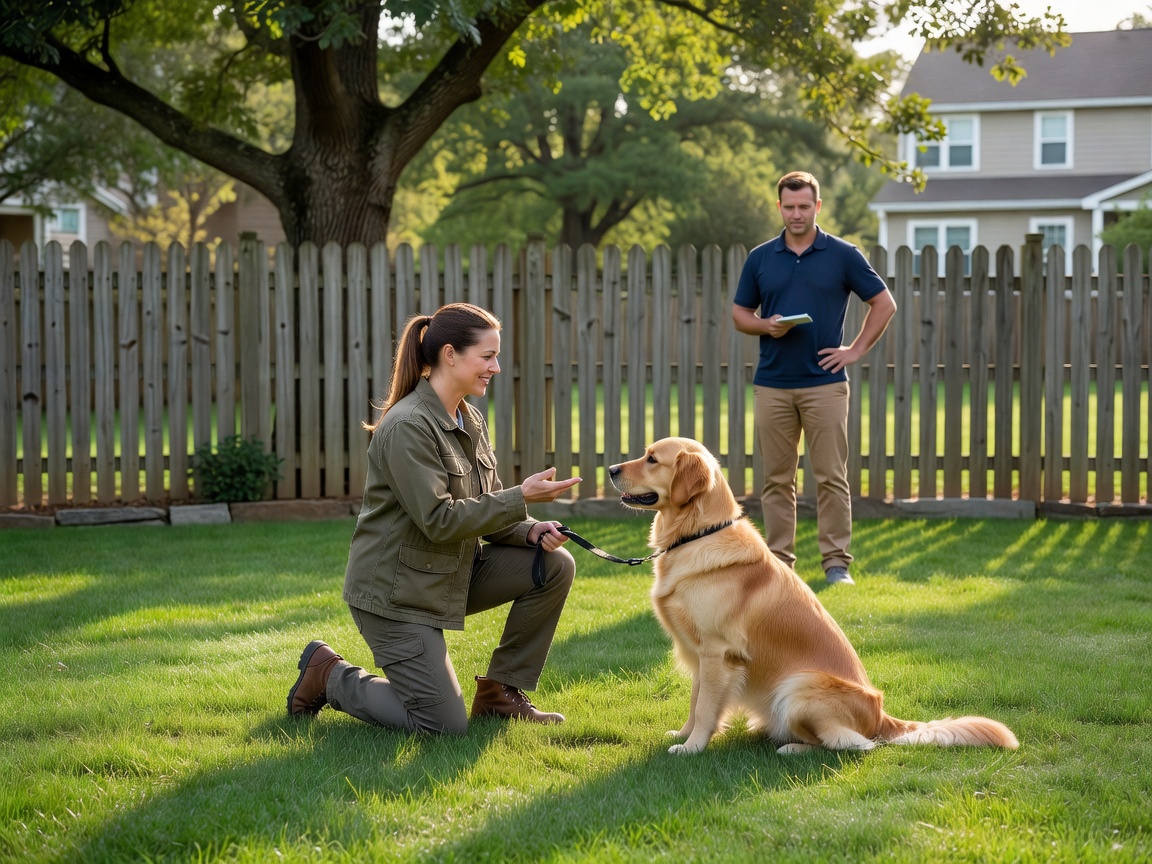
Group classes have their place, but they are built around a general curriculum meant for many dogs at once. In a group class, your dog sits in a room full of distractions while an instructor demonstrates a skill to the whole room. If your dog is pulling hard on the leash, barking at other animals, or completely overwhelmed, you spend most of your time managing stress rather than learning.
Private dog training flips that structure. You get direct, one on one attention focused strictly on your home environment and individual goals. We assess how your dog acts in real world settings, like your living room, front yard, or neighborhood sidewalk. Pacing is customized to your speed and your dog's learning curve. If your dog masters a skill quickly, we move forward. If a specific exercise needs more practice, we slow down and refine it.
To understand how individual coaching stacks up against group settings, reading about the Top 6 Benefits of Private Dog Training Lessons can help you decide which setup fits your household.
Benefits of In Home Private Dog Training
Training in your own environment allows us to target exact triggers where they occur. Household dynamics, family schedules, front door layout, and backyard fences all play a huge role in daily behavior.
With our In Home Private Lessons, we address problem behaviors directly at the source:
- Managing doorway commotion when visitors arrive at your front entrance.
- Setting clear boundaries around dinner tables, couches, or home offices.
- Stopping persistent fence barking or yard reactivity.
- Establishing consistent daily routines for resting, feeding, and leash walks.
Comparing Private Dog Training to Board and Train Options
Choosing between private instruction and immersion style training comes down to your personal schedule and how much hands on practice you want from day one.
| Feature | In Home Private Dog Training | Board and Train Programs |
|---|---|---|
| Primary Location | Your home, yard, and local neighborhood | Professional training facility |
| Owner Involvement | Active coaching during every weekly session | Hands on handling taught during transfer lessons |
| Initial Foundation Build | Built gradually by owner with trainer guidance | Built daily by professional trainers |
| Daily Habit Building | Applied immediately in your home environment | Built at facility, then transferred to your routine |
| Best For | Owners who want to learn alongside their dog | Busy owners seeking intensive foundation work |
Both paths require owner consistency. A board and train program builds strong foundations quickly, but you must maintain those boundaries at home. Private lessons teach you how to handle and guide your dog step by step from the very beginning.
Key Behavioral Issues Addressed Through Customized Coaching
Many dogs struggle because they lack clear expectations and practical management structures. When rules are confusing, stress rises for both ends of the leash. Private coaching tackles these common issues directly:
- Leash pulling: Teaching your dog to walk calmly beside you without dragging you down the block.
- Resource guarding: Stopping possessive behavior around food bowls, high value treats, furniture, or toys.
- Separation anxiety: Helping overly attached dogs build confidence when left home alone.
- Destructive behavior: Replacing unwanted chewing, digging, or scratching with productive routines.
For dogs needing a controlled environment to practice off leash skills or recall away from public distractions, visiting private space rentals like Deer Island, OR Dog Parks provides a safe, fully fenced location for focused field work.
Managing Leash Reactivity and Aggression
Leash reactivity, such as lunging, barking, or growling at passing dogs, is one of the most common reasons owners seek professional guidance. Working on reactivity requires a deliberate approach to safety and trigger exposure.
We find the distance threshold where your dog can notice a trigger without completely losing composure. From there, we work on impulse control, build handler focus, and use structured safety protocols. Successful behavior modification is never about quick tricks. It relies on fair consequences, clear rules, reliable reinforcement, and persistent follow through. If a behavior issue stems from a severe underlying medical condition or sudden neurological shift, we recommend a thorough veterinary evaluation alongside behavioral work.
Building Home Manners and Public Reliability
A dog that behaves perfectly in the kitchen still needs practice to act calmly in public. Private training helps bridge that gap step by step.
We start by building doorway manners and quiet resting behavior inside your living room. Once those skills are solid, we move practice to front yards, quiet neighborhood sidewalks, and eventually busy spots around town like local coffee shops.
The Private Training Process: Consultations, Costs, and Timelines
Starting private instruction begins with looking closely at your dog's habits and your home layout.
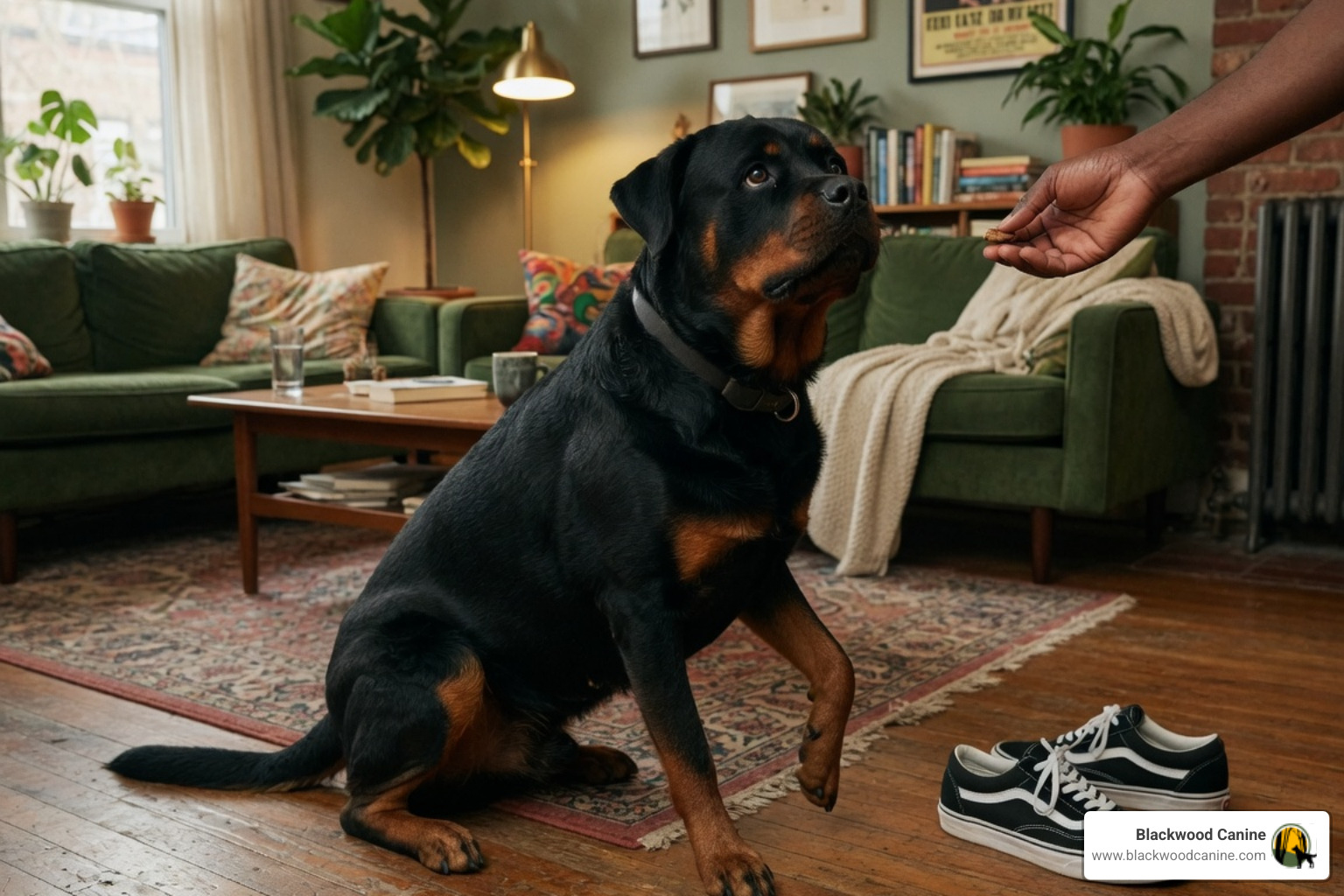
During an initial consultation, we conduct a complete behavioral assessment. We look at daily routines, evaluate handler mechanics, and introduce basic management strategies you can implement right away to stop unwanted behaviors from getting reinforced. If you are weighing whether this format fits your family budget, reviewing whether Is Private Dog Training Worth the Investment offers helpful clarity on long term value.
Understanding Package Costs and Follow Up Structure
Across the professional dog training industry, pricing structures reflect the level of direct trainer time, travel, and ongoing owner support included:
- Initial In Home Consultation: Typically ranges around $265 for a detailed 1.5 hour assessment and immediate management strategy plan.
- Follow Up Private Lesson Packages: Multi session packages often start around $600 for three targeted follow up sessions, going up to $1,775 or more for extensive eight session real world programs.
- Phone or Remote Consultations: Available around $100 per hour for troubleshooting specific questions or preparing your home before bringing a dog home.
These sessions are structured around skill transfer. We coach you on exact leash mechanics, body language, and timing, giving you clear homework to practice between meetings.
How Long Training Takes to See Lasting Results
Real behavior change takes time, repetition, and routine. There are no instant fixes when rewriting long standing habits.
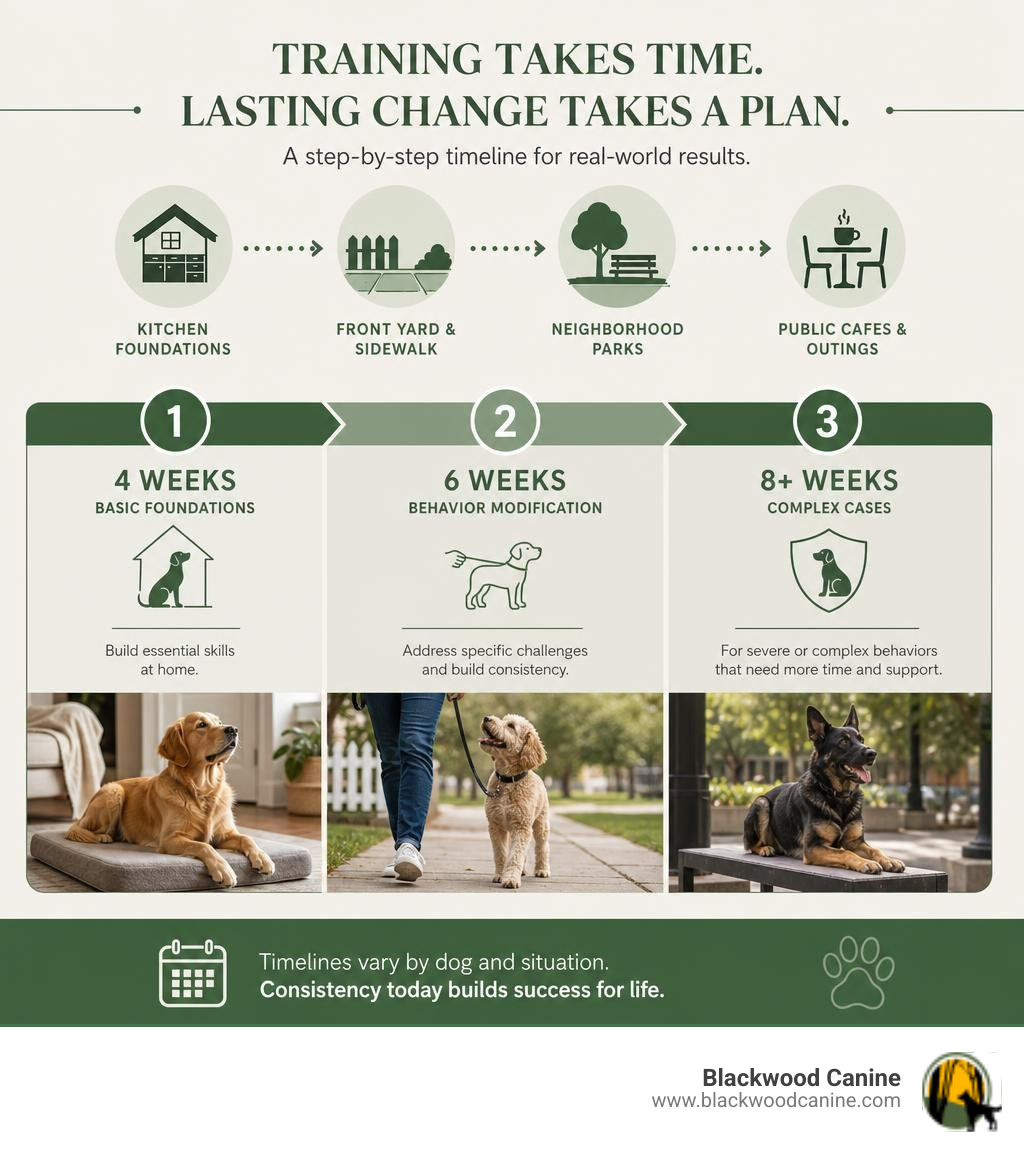
- 4 Week Foundation Minimum: Basic obedience foundation training starts at 4 weeks. We do not offer training programs shorter than 4 weeks because dogs and owners need time to build muscle memory.
- 6 Week Modification Timelines: Issues like moderate leash reactivity, door rushing, or persistent jumping usually require at least 6 weeks of consistent practice.
- 8 Plus Week Complex Cases: Severe fear, resource guarding, or multi dog household aggression frequently require 8 plus weeks of sustained guidance, structured exposure, and steady management.
What to Look for in a Professional Dog Trainer
Not all training methods or trainers are identical. When choosing a professional to work with your family and dog inside your home, look for practical experience, clear handling skills, and transparent communication.

Your trainer should explain the exact reason behind every exercise. Effective training balances clear boundaries, fair consequences, proper reinforcement, and strict management. You can read more about our background, experience, and core philosophy by visiting our Trainers page.
Customizing Programs for Specific Breeds and Ages
Training must account for age, drive level, and physical development:
- Puppy Foundations: Focuses on bite inhibition, crate confidence, potty routines, and age appropriate social manners.
- High Drive Breeds: Working breeds need clear mental jobs, structured play, and firm impulse control rules so their energy is directed constructively.
- Adolescent and Adult Dogs: Focuses on breaking ingrained nuisance habits, boosting focus around distractions, and refining reliable recall.
Ongoing Support and Integrated Living After Lessons End
Training does not end when your final lesson wraps up. True success means integrating these habits seamlessly into your normal life, whether that involves weekend hikes, neighborhood walks in Beaverton, or quiet evenings at home in St. Helens.
We provide ongoing guidance between sessions and long term support to ensure your progress stays on track as new life situations arise.
Frequently Asked Questions About Private Coaching
What happens during an initial consultation?
An initial consultation involves a direct evaluation of your dog's behavior, living environment, and baseline obedience. We discuss your primary goals, establish immediate safety and management protocols, and coach you through foundational exercises you can practice right away.
Is in home private training better than virtual or group options?
In home private training offers direct observation in the exact environment where your dog displays problem behaviors. While virtual options work well for basic advice and group classes provide social exposure for stable dogs, in home sessions give you immediate hands on feedback in real world conditions.
How do I know if my dog needs private coaching instead of group classes?
If your dog lunges frantically at other animals, shows fear in busy environments, guards resources, or cannot focus around mild distractions, a group class will cause frustration. Private coaching lets you address those challenges safely without overwhelming your dog.
Taking the Next Step for Your Dog's Daily Life
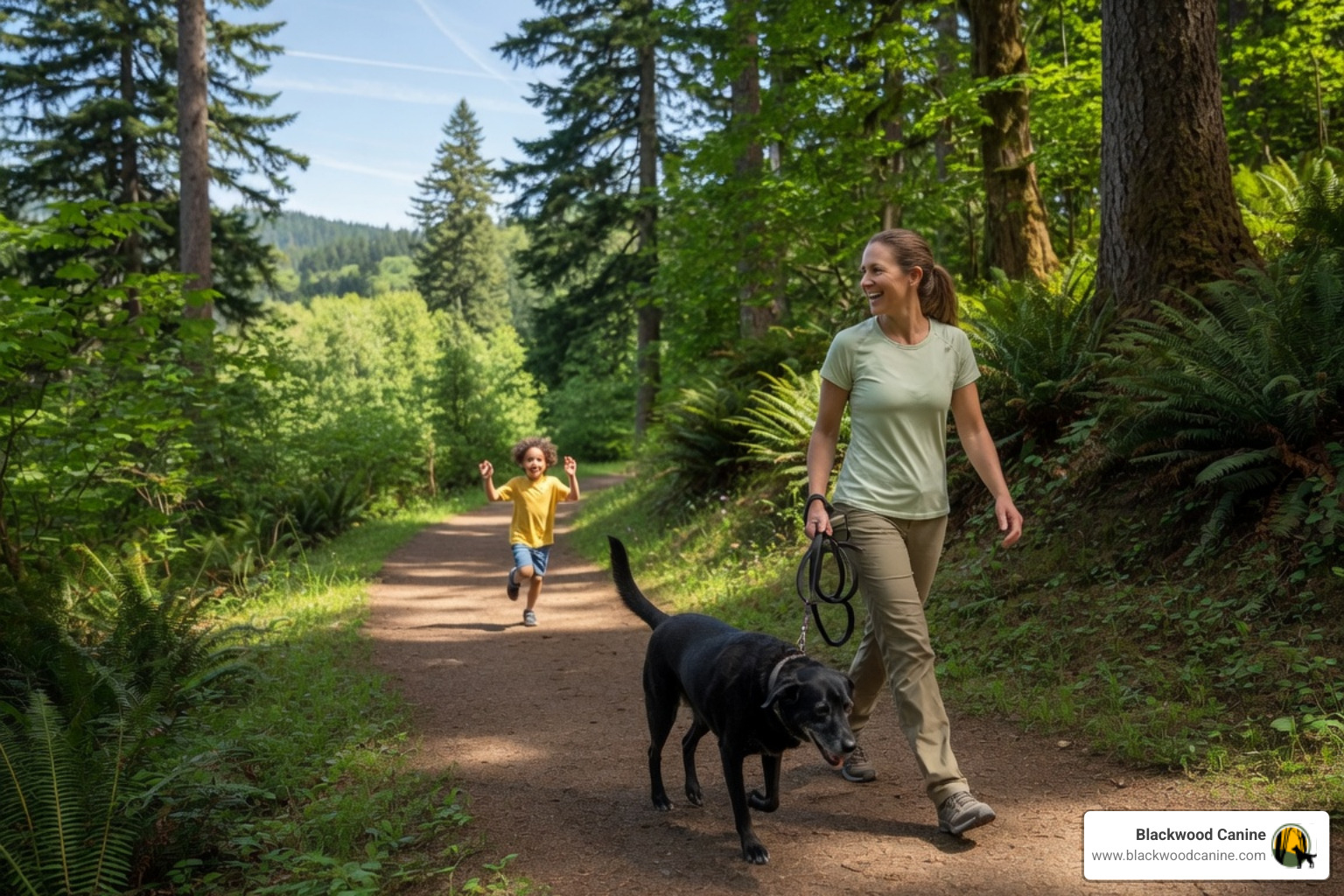
Living with a dog should bring comfort and enjoyment, not persistent stress or embarrassment. If walking through your neighborhood in Scappoose, Warren, Hillsboro, Portland, or Vancouver feels frustrating, clear structure and consistent management can change that dynamic.
At Blackwood Canine, we act as your guide, giving you practical tools to establish balance, direct communication, and mutual respect with your dog.
- Explore full program details on our Learn More About Immersion Dog Training page to see how intensive training compares to individual private lessons.
- Ready to build a calmer routine? Contact Us today to start your Good Dog Game Plan and get your home back on track.