
Start Early: Discover the Best Time to Potty Train a Puppy
The Best Time to Potty Train a Puppy by Age and Developmental Stage
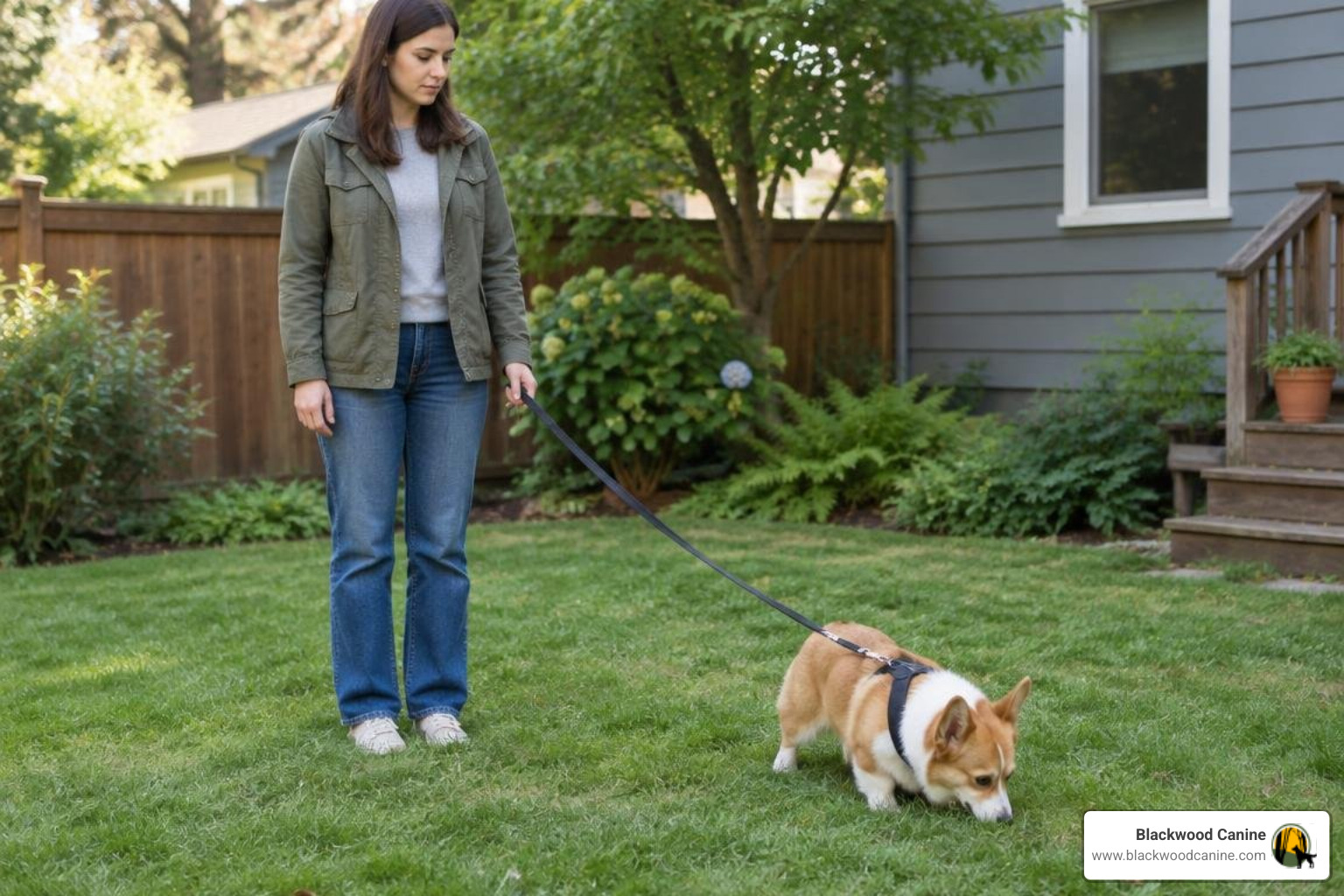
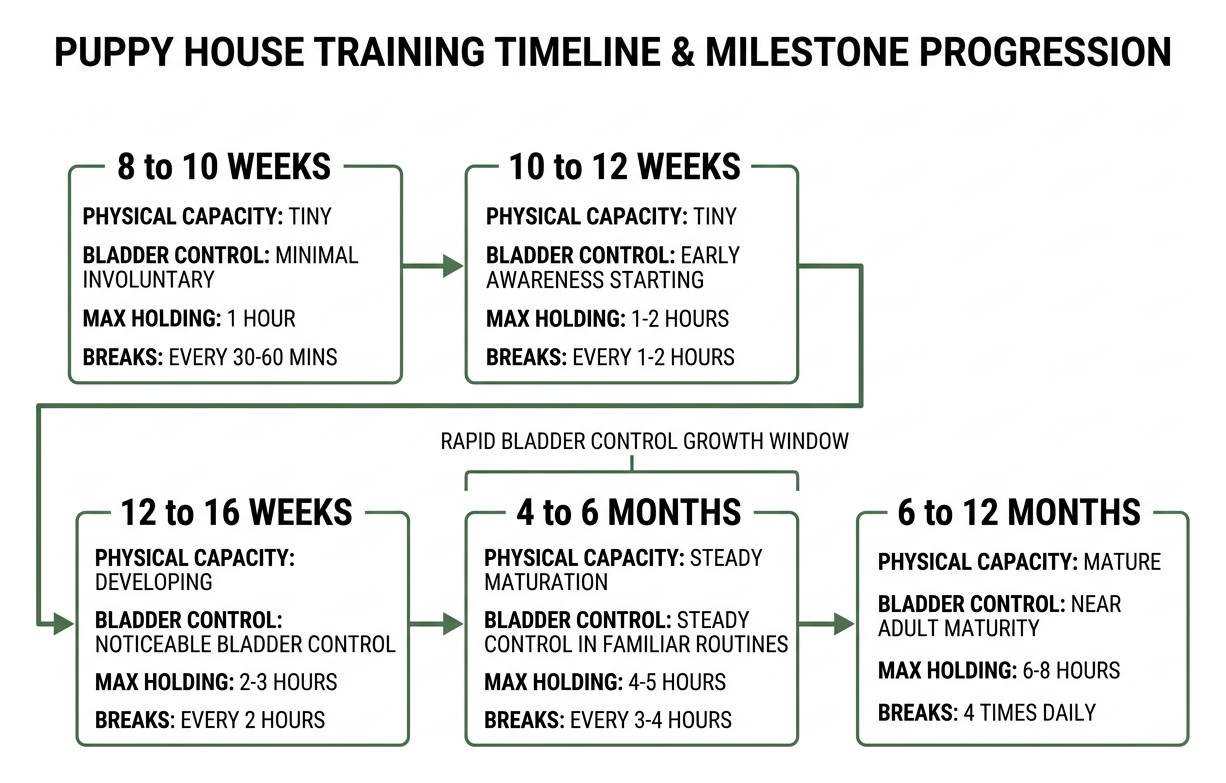
Understanding physical development helps set fair expectations for house training. Young dogs do not have the muscular control to hold their bladder for long stretches. Bladder muscle control develops in stages alongside their nervous system.
When you bring a puppy home around 8 to 12 weeks old, their physical capacity is tiny. Expecting them to hold it for hours sets everyone up for failure. Professional resources like the AKC puppy house training guide point out that deliberate house training begins the moment your dog arrives, but physical holding ability matures gradually over several months.
| Puppy Age | Estimated Max Holding Time | Recommended Break Frequency | Physical Control Level |
|---|---|---|---|
| 8 to 10 Weeks | 1 hour | Every 30 to 60 minutes | Minimal involuntary control |
| 10 to 12 Weeks | 1 to 2 hours | Every 1 to 2 hours | Early awareness starting |
| 12 to 16 Weeks | 2 to 3 hours | Every 2 hours | Noticeable bladder control developing |
| 4 to 6 Months | 4 to 5 hours | Every 3 to 4 hours | Steady control in familiar routines |
| 6 to 12 Months | 6 to 8 hours | 4 times daily | Near adult bladder maturity |
When Is the Best Time to Potty Train a Puppy for Fast Results?
Foundational habits start the day your puppy steps across your threshold at 8 weeks old. While their bladder cannot hold much liquid, their brain is an active sponge soaking up environmental associations. Starting day one teaches your puppy that outdoor surfaces like grass, dirt, or gravel are the right places to eliminate.
Between 12 and 16 weeks of age, puppies experience rapid growth in physical bladder control. If you have built solid routines between weeks 8 and 12, this stage is where results happen quickly. Scent association, a designated spot, and consistent timing connect smoothly during this window.
Puppy Bladder Capacity and Age Milestones
A reliable guideline for puppy bladder capacity is the month plus one rule. Take your puppy's age in months and add one to estimate the maximum number of hours they can physically hold their urine during daytime rest periods. An 8 week old puppy (2 months) can hold it for roughly 3 hours under resting conditions, while an active 3 month old needs a break every 2 to 3 hours.
Toy breeds often require more frequent outings due to faster metabolisms and smaller bladders compared to larger breeds. Most puppies do not achieve dependable, steady bladder control until around 5 months of age. Dogs reach full bladder capacity and adult physical maturity around 12 months.
How to Build a Predictable Puppy Potty Schedule
A predictable routine prevents accidents before they occur. Dogs thrive on rhythm, and their digestive systems operate on a clock. When meals, water, and outdoor trips happen at set times, bathroom breaks become completely predictable.
Following preventive veterinary advice on puppy potty schedules means removing free feeding habits. Offer food at scheduled times and pick up the bowl after 15 minutes. For nighttime routines, remove water bowls roughly two hours before bedtime to help your puppy sleep through the night without emergency trips.
Recognizing the Best Time to Potty Train a Puppy Throughout the Day
Knowing exactly when to take your puppy outside keeps you ahead of accidents. Take your dog outside during these essential transition moments:
- Immediately when they wake up in the morning
- 10 to 15 minutes after eating a meal
- 10 minutes after vigorous play sessions
- Immediately after waking from any daytime nap
- Right before bedtime confinement
High Priority Bathroom Triggers to Watch
Puppies communicate their physical needs through body language before an accident occurs. Learn to read these subtle behavioral signals:
- Sudden sniffing of the floor or rug
- Abruptly stopping play or walking away from you
- Circling or pacing near doors and gates
- Restless wandering or low whimpering
- Squatting posture or sudden frantic movement
Step-by-Step Guide: How to House Train Your Puppy Successfully

Reliable house training is built on management, clear expectations, repetition, and consistent reinforcement. It is never about quick tricks or extreme training ideologies. Success comes from showing your dog what you want, supervising closely, and following through every day.
Step 1: Designating a Spot and Cue Words
Always take your puppy out on a leash to the exact same outdoor spot. The existing scent tells their brain what to do. Stand calmly in one place without turning the trip into playtime.
As soon as your puppy begins eliminating, say a consistent cue word like "go potty" or "business" in a calm tone. Using the cue while the act is happening helps them associate the phrase with the physical action.
Step 2: Immediate Positive Reinforcement
Timing is everything when rewarding your puppy. Deliver a high value treat and sincere verbal praise within three seconds of them finishing outside. Rewarding them while still outdoors connects the reward to the outdoor location. If you wait until you walk back inside the kitchen, the puppy thinks they are being rewarded for crossing the doorway.
Once they finish and receive their reward, you can offer a minute of free sniffing or play in the yard as an extra bonus before heading indoors.
Step 3: Crate Training vs. Puppy Pads
Crate training uses a dog's natural den instinct to avoid soiling their sleeping quarters. A properly sized crate should only have enough room for the puppy to stand up, turn around, and lie down comfortably. If the crate is too large, the puppy may eliminate in one corner and sleep in the other.
Puppy pads can complicate outdoor house training. They teach puppies that soft, absorbent indoor surfaces are acceptable bathroom areas, which easily leads to confusion with rugs, mats, and carpets. For dog owners in urban apartments without immediate yard access, a dedicated balcony grass patch is a clearer option that maintains the correct outdoor texture preference.
Handling Accidents and Common Training Mistakes
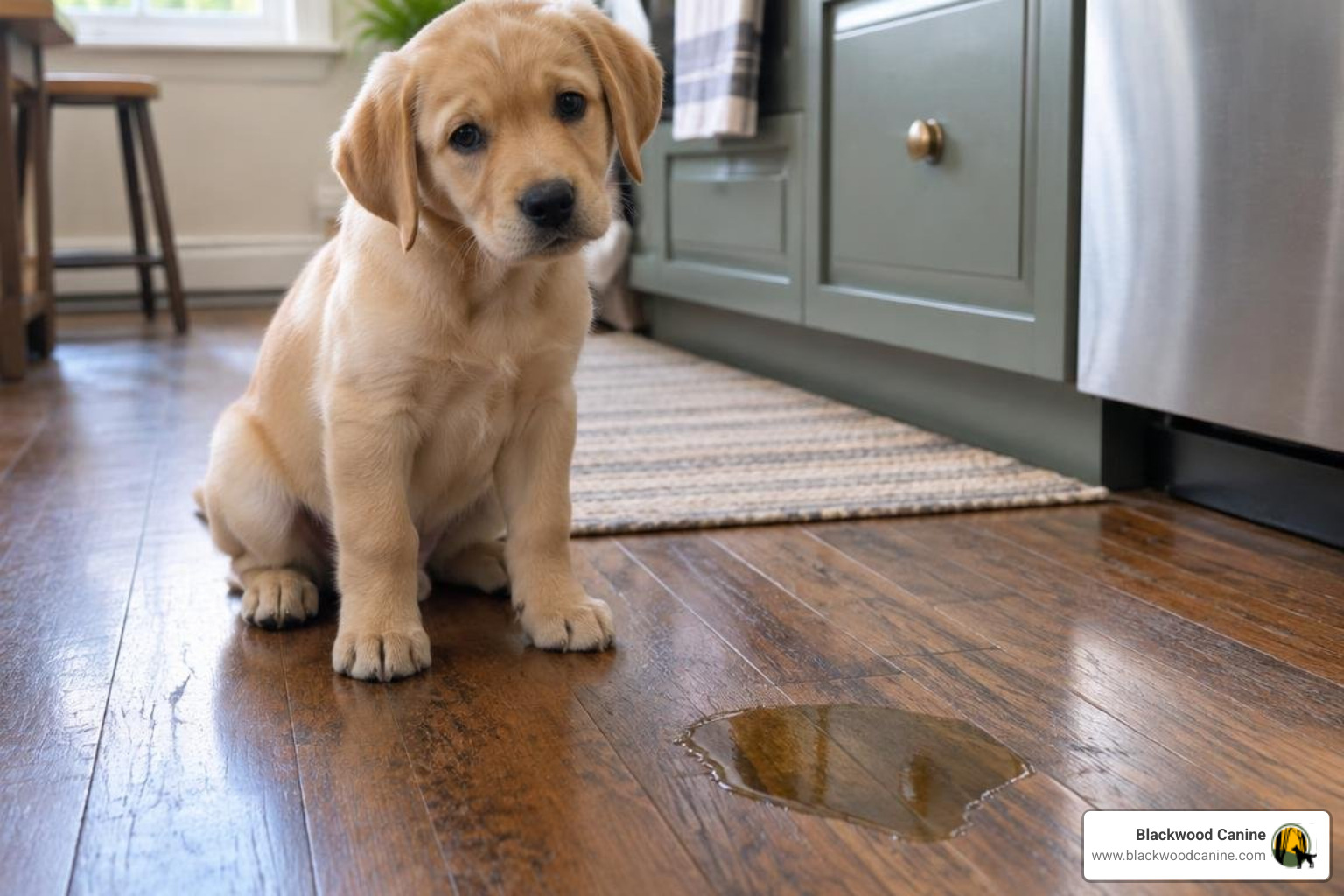
Accidents are a normal part of raising a young dog. How you handle them determines how quickly your puppy learns. Frustration is understandable, but reacting with anger slows down progress and damages trust.
What to Do When Accidents Happen Indoors
If you catch your puppy in the middle of an accident, interrupt them with a calm, neutral sound to pause the behavior. Immediately guide them outside to their designated potty area. If they finish outside, reward them calmly.
When cleaning indoor messes, always use an enzymatic cleaner. Standard household cleaners or ammonia based sprays do not break down the microscopic uric acid crystals. To a puppy's sensitive nose, the spot still smells like a bathroom, triggering repeated accidents in the same location.
Avoiding Costly House Training Errors
Avoid these common pitfalls to keep your training on track:
- Misapplying punishment or corrections: Misusing discipline or yelling out of frustration does not teach a puppy where to go. Improper application creates confusion and leads puppies to hide when eliminating, resulting in covert accidents behind furniture. Disciplinary methods and training tools should always be applied properly and under professional guidance.
- Granting too much unsupervised freedom: Giving a new puppy free run of the house invites hidden accidents. Use baby gates, playpens, or leashes to maintain close supervision.
- Inconsistent feeding schedules: Free feeding creates unpredictable digestion times and random bathroom needs.
- Delayed rewards: Giving treats inside the house after coming in from the yard confuses the association.
- Skipping the potty log: Tracking meal times, sleep cycles, and bathroom breaks helps you spot natural rhythms and adjust intervals before accidents occur.
Frequently Asked Questions About House Training Puppies
How long does it typically take to potty train a puppy?
Most puppies take 4 to 6 months to become dependable in the home, with full maturity settling in around 12 months. Factors like breed size, consistency, and daily routine impact this timeline. Around 6 to 9 months of age, some puppies experience a brief phase of adolescent regression where they test boundaries or have minor setbacks. Sticking to baseline management quickly resolves these phases.
What are the earliest signs that my puppy needs to go potty?
The earliest signs are subtle shifts in focus. A puppy might suddenly drop a toy, break eye contact, begin sniffing the baseboards, or wander toward a doorway. Catching these early cues prevents the circling and squatting that follows seconds later.
When should I consult a veterinarian or professional trainer?
If your puppy urinates very frequently in tiny amounts, strains while eliminating, shows blood in their urine, or experiences sudden regression despite a solid routine, consult your veterinarian for an assessment to rule out urinary tract infections or bladder issues.
For ongoing behavioral challenges, working with a professional trainer provides clarity. Blackwood Canine offers structured basic obedience foundation training starting at 4 weeks, as well as 6 week and 8 plus week programs for complex behavior modification to help families build reliable habits.
Clear Habits for a Clean, Stress Free Home
Raising a puppy takes patience, clear communication, and solid daily management. By matching your expectations to your puppy's physical age, keeping a regular schedule, and rewarding outdoor success, you set your dog up for lifelong house manners.
If you are a busy dog owner in Scappoose, St. Helens, Warren, Bethany, Hillsboro, Beaverton, Portland, Vancouver, or nearby Oregon and Washington communities feeling overwhelmed by the puppy stage, you do not have to figure it out alone. Explore our easy puppy training guide to learn more about our balanced training approach, or reach out to Blackwood Canine to set up a Good Dog Game Plan and build a reliable, enjoyable relationship with your dog.