
How to Stop Puppy Biting in 3 Simple Steps
Your 3 Month Old Puppy Is Biting Because They Need Clear Rules
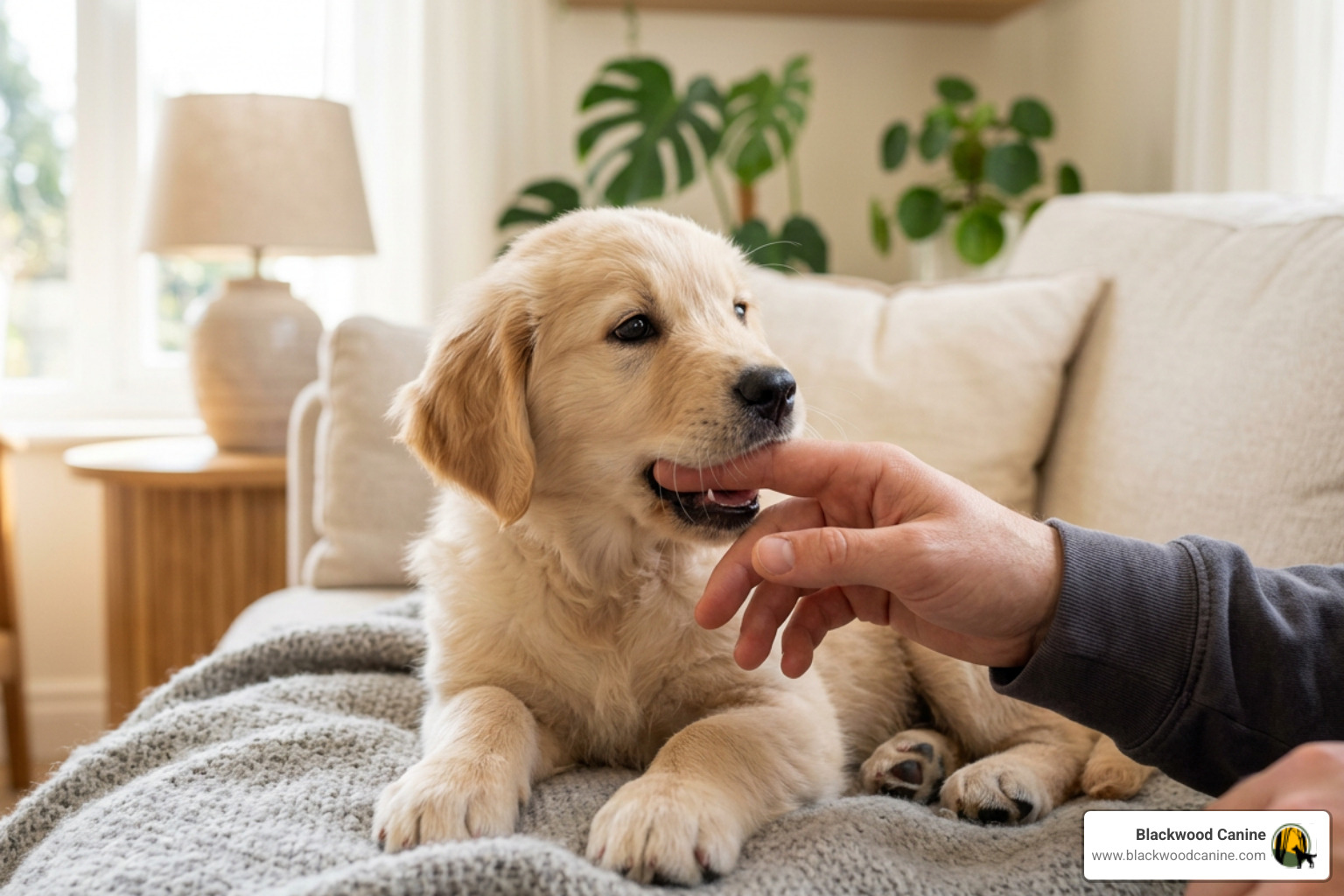
If your 3 month old puppy won't stop biting, start doing the same three things every time: stop play the instant teeth touch skin, offer a safe chew toy, and briefly remove your attention if the biting continues. Keep your hands still rather than pulling away, reward your puppy for choosing the toy, and make sure they get enough sleep.
This is frustrating, but it is usually normal. Puppy biting often peaks around 12 to 13 weeks, when teething, excitement, and weak impulse control collide. Adult teeth also begin coming in around 12 to 16 weeks, which can make sore gums and chewing urges worse.
You are not teaching your puppy to never use their mouth. You are teaching bite inhibition: how to control pressure and choose toys instead of human hands, feet, sleeves, and pant legs. With consistent responses, many owners see clear improvement within two to four weeks.
I am David Wright. After learning how much better clear training can work than guesswork, I have spent years helping owners handle problems like a 3 month old puppy won't stop biting with practical play and obedience skills.
Why Your 3 Month Old Puppy Won't Stop Biting
Puppies explore their environment with their mouths. When a puppy is 12 weeks old, they possess 28 needle sharp baby teeth, and their jaws are learning how pressure works. When puppies wrestle with their littermates, an overly hard nip results in a loud yelp and an abrupt end to play. This natural feedback is how young dogs begin discovering the strength of their bite.
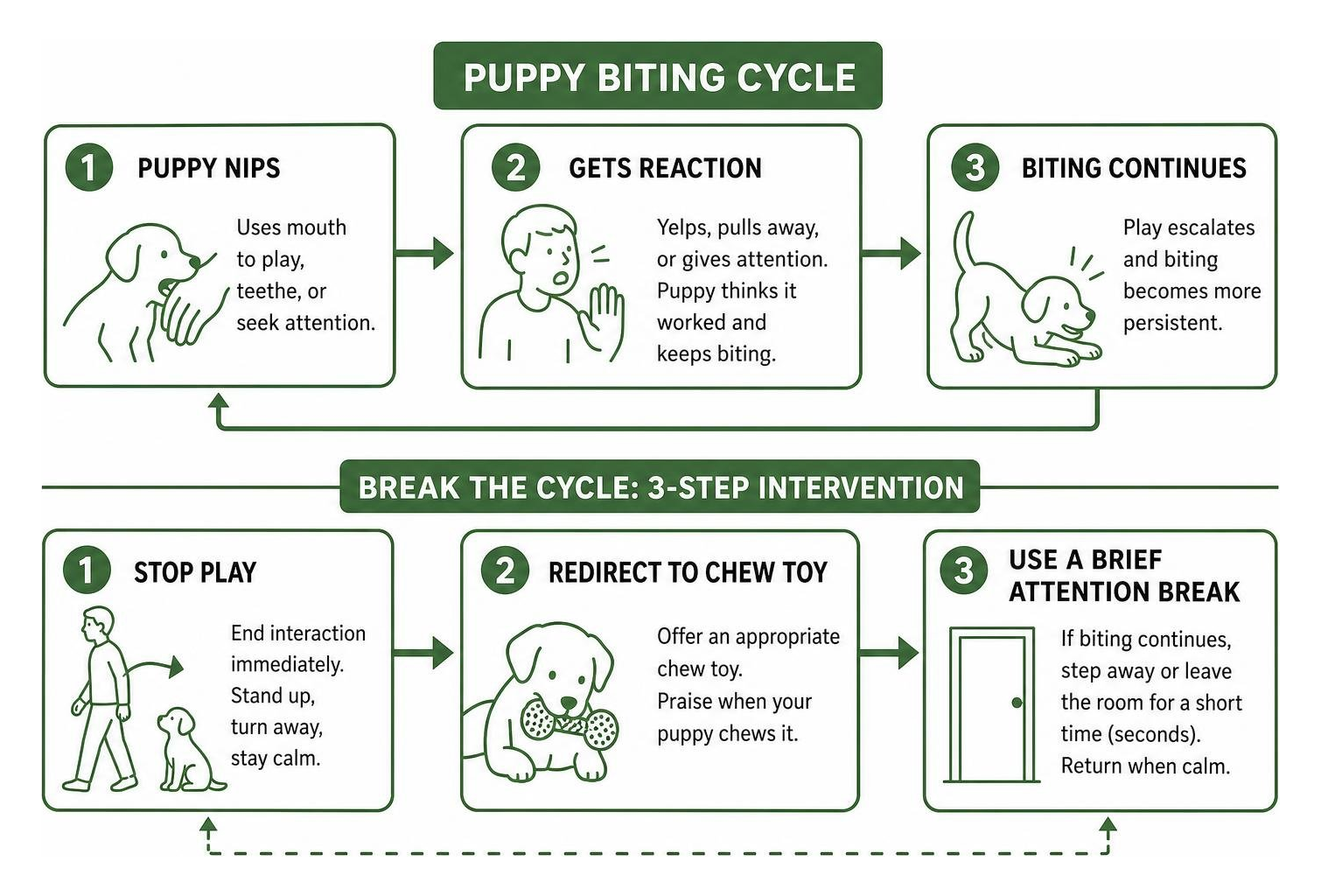
In our homes, however, humans often give mixed signals. Pulling your hands away quickly or squealing can trigger predatory chase drives. To a puppy, sudden movements look like fun prey. Medical insights on veterinary advice on puppy teething confirm that physical development heavily influences oral fixation at this age.
It is helpful to differentiate normal puppy play from potential behavioral concerns:
| Behavioral Signal | Playful Mouthing / Teething | True Aggression / Warning |
|---|---|---|
| Body Posture | Loose, wiggly, bouncing movements | Stiff posture, frozen stance, hard staring |
| Vocalizations | Playful growls, yips, or silence | Deep guttural growling, snarling, snapping |
| Context | During active play, greetings, or fatigue | Guarding food, toys, sleeping spaces, or fear triggers |
| Facial Expression | Soft eyes, open relaxed mouth | Tense muzzle, lip curling, exposed front teeth |
The Peak Teething Window at 12 to 16 Weeks
Puppy biting tends to hit its peak when a pup is about 13 weeks old (around 3 months). During this developmental stage, baby teeth begin loosening to make way for adult teeth.
Adult dog teeth start to grow in when your puppy is 12 to 16 weeks old, and your puppy’s gums may be a bit sore during this time. Chewing creates counter pressure against the gums, which temporarily relieves pain and inflammation. If appropriate chew toys are not readily available, your hands, feet, and baseboards become the default replacements.
Overtiredness and Impulse Control Lapses
A common reason a puppy turns into a relentless biter during the evening is exhaustion. Young dogs require 16 to 18 hours of sleep per day. When they do not get enough rest, their ability to regulate excitement collapses.
When your pup enters hyperactive biting mode, darting across the room and snapping at your clothes, they are rarely displaying dominance. They are typically overtired. Implementing structured naps in a quiet crate or playpen gives their developing nervous system the downtime it needs.
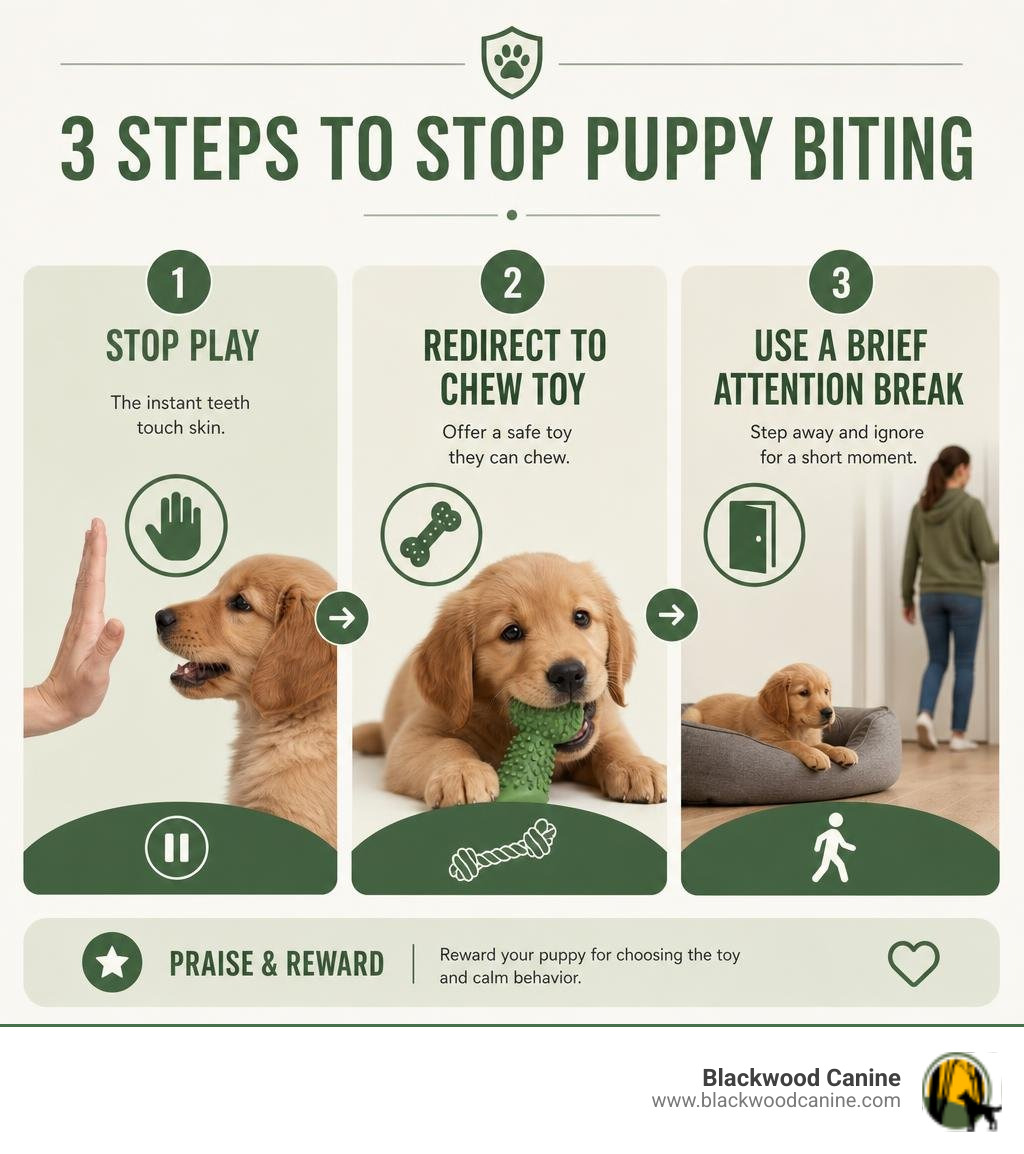
How to Stop Puppy Biting in 3 Simple Steps
Stopping unwanted nipping does not require harsh measures or complex routines. It requires clear communication, immediate feedback, and strict consistency from everyone in your household. If Is Your Pup a Nipper? Try These Puppy Trainer Tips to Stop Biting has shown us anything, it is that clarity and calm structure win every time.
Step 1: Teach Bite Inhibition with Calm Feedback
Bite inhibition is the ability of a dog to control the force of its jaws. We want puppies to learn that human skin is fragile before their adult teeth and stronger jaw muscles fully develop.
When your puppy places their teeth on your skin with uncomfortable pressure:
- Give a brief, high pitched "Ouch!" or a calm verbal marker like "Too bad!"
- Immediately let your hand go limp. Do not jerk away, because sudden movement encourages chasing.
- Pause all interaction for 5 to 10 seconds.
- Resume calm interaction once they relax.
The AKC guide on puppy bite inhibition highlights that teaching pressure limits helps ensure safety as the dog grows. If a high pitched sound makes your specific puppy more excited, use a quiet, calm verbal marker instead.
Step 2: Redirect Immediately to an Appropriate Chew Outlet
Puppies need to bite something, so your job is to direct that physical need toward acceptable objects. Practice proactive redirection during every interaction using principles of Easy Puppy Training.
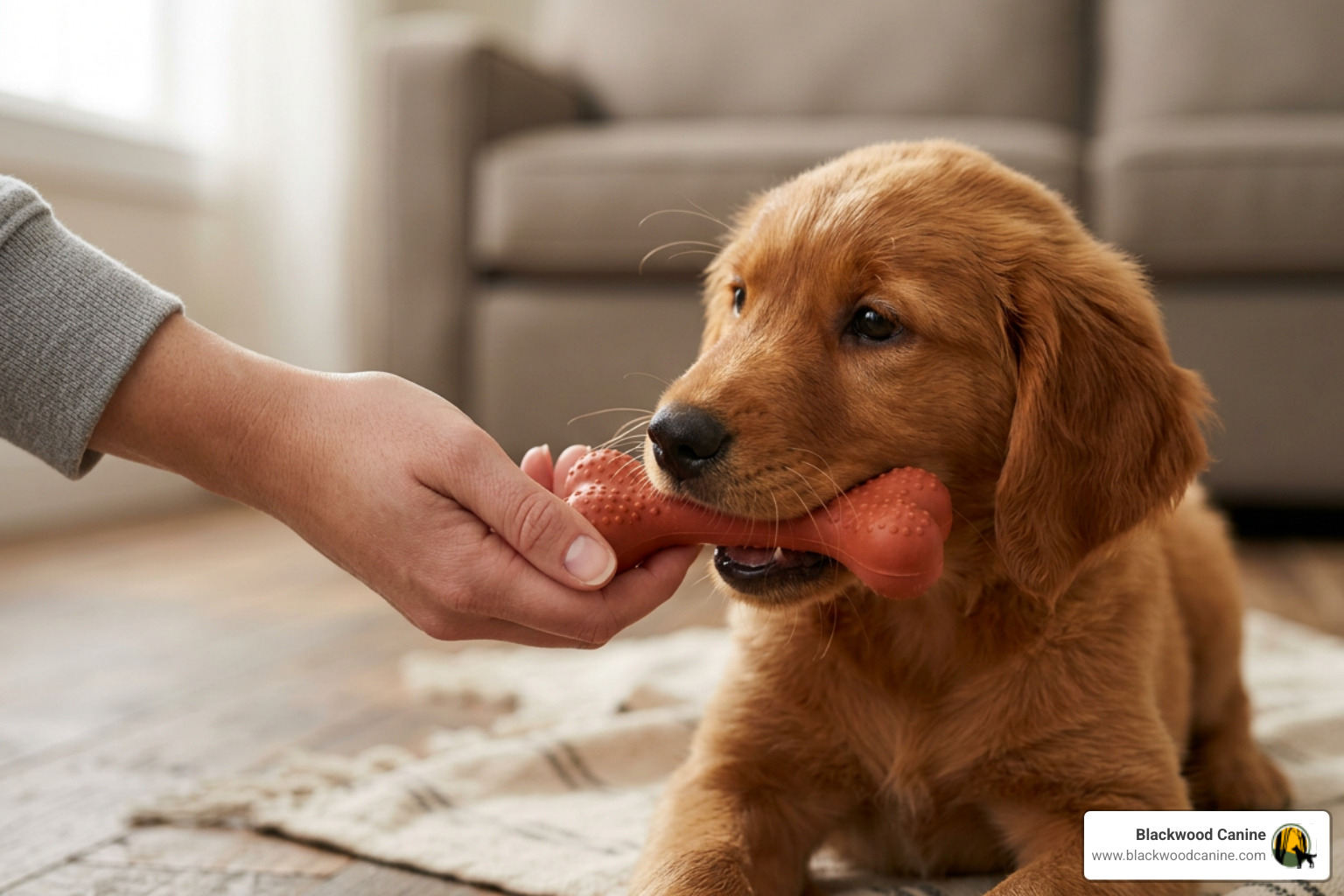
Keep durable rubber toys, textured chew rings, or frozen washcloths stationed around your living area. When your puppy approaches you for affection or play:
- Present a toy before they target your fingers.
- If teeth touch your skin, pause, then immediately present the toy.
- Praise your pup the second their teeth engage the toy surface.
- Rotate through different textures to keep their interest high and soothe tender gums.
Step 3: Enforce Brief Time-Outs for Escalated Nipping
If your puppy ignores verbal feedback and continues latching onto skin or clothing, end the game entirely. Social isolation for a few seconds communicates that biting makes the fun vanish.
Use a reverse time out:
- Stand up, cross your arms, turn your back, and tuck your hands into your armpits.
- If the puppy continues biting your ankles or pants, step over a baby gate or exit the room for 10 to 20 seconds.
- Return calmly. If the puppy remains overexcited, place them gently into their crate or exercise pen with a chew item for a nap.
- Keep time outs short and neutral. Avoid angry shouting, which adds excitement or confusion.
How to Handle Specific Biting Triggers
Different environments and daily events create specific biting triggers. Managing these moments prevents bad habits from hardening into adult routines. Adding foundational habits like 3 Things You Can Do to Have a Well-Mannered Puppy will keep your household running smoothly.

What to Do When Your 3 Month Old Puppy Won t Stop Biting During Play
Playtime often elevates arousal levels quickly. To prevent games from turning into painful biting matches:
- Use long tug toys rather than small balls to keep a safe distance between tiny teeth and your fingers.
- Keep play sessions short, pausing every 30 to 60 seconds to ask for a basic command like "Sit."
- If teeth graze skin, freeze in place. Moving hands invite predatory lunges.
- Resume play only when all four paws are on the floor and the puppy has stepped back.
Stopping Ankle, Foot, and Pant Leg Attacks
Moving feet and swinging pant legs mimic small animals running along the ground. To manage this behavior:
- Avoid running away or kicking your legs, which turns you into an interactive toy.
- Carry a soft fleece tug toy or pocket treats when walking through high risk zones like hallways.
- Drop a few treats on the floor ahead of you or offer the toy to focus attention away from your shoes.
- Stop walking immediately when teeth grab your clothing; move forward only when the puppy releases.
Common Puppy Biting Mistakes That Make Things Worse
Many well meaning puppy owners inadvertently reward or intensify biting. Reviewing What Dog Trainers Say Not to Do When Training a New Puppy can help prevent typical household missteps.
Key mistakes to avoid include:
- Hand wrestling: Roughhousing with bare hands teaches the pup that human skin is an authorized chew toy.
- Physical corrections: Pinning puppies, squeezing muzzles, or tapping noses creates defensive arousal, fear, or distrust. Proper training tools and consequences have their place in balanced development, but misuse without professional guidance damages the relationship.
- Inconsistent house rules: Letting the puppy mouth your hands on Monday but scolding them on Tuesday causes stress and slows learning.
- Ignoring exhaustion: Trying to train an overtired pup rather than placing them down for a scheduled rest leads to frustration for both of you.
- Overusing sprays without training: Bitter sprays can deter object chewing, but as the ASPCA guide on puppy mouthing notes, deterrents alone do not teach a puppy what behaviors are expected.
Frequently Asked Questions About Puppy Biting
Is It Normal If Your 3 Month Old Puppy Won t Stop Biting Hands and Feet?
Yes, it is completely normal. Around 12 to 13 weeks of age, puppy biting reaches its peak when the puppy is transitioning from baby teeth to adult teeth. They lack impulse control and naturally explore their world using their jaws. Clear boundaries and consistent redirection will systematically reshape the habit.
At what age do puppies naturally grow out of biting?
Puppy mouthing and biting usually begins to naturally subside when they’re around eight to 10 months old. Most puppies significantly reduce biting by 6 to 8 months when teething ends, but consistent training can make big improvements much earlier, often within 2 to 4 weeks. Most puppies show noticeable improvement within 2 to 4 weeks when training remains consistent across all family members.
When does puppy mouthing indicate actual aggression?
True aggression in young puppies is uncommon. However, if biting is accompanied by rigid body posture, sustained growling without play cues, resource guarding over food dishes, or fear driven snapping, an evaluation is warranted. If you notice these warning signs, or if you haven’t been able to moderate the behavior by the time they’re 6 months old, it’s a good idea to consult an experienced dog trainer or animal behavior specialist for an in person assessment.
Moving Forward With a Calm, Well-Mannered Puppy
Living with a mouthy three month old puppy can leave you feeling frustrated, bruised, and exhausted. Teaching jaw control and household manners takes steady repetition, fair consequences, and daily management. When you replace chaotic reactions with clear communication, your puppy learns exactly how to interact safely with the family.
If you are a dog owner in Scappoose, St. Helens, Warren, Bethany, Hillsboro, Beaverton, Portland, Vancouver, or surrounding areas and feel stuck, you do not have to figure it out alone. At Blackwood Canine, we provide structured private lessons and immersion programs designed to build clear communication and reliable habits from the ground up. Our basic obedience foundation training starts at 4 weeks, with 6 week and 8 plus week timelines for complex behavior modification.
Take a look at our professional dog training services to explore how our Good Dog Game Plan can help you guide your pup into a calm, reliable companion.