
Hillsboro Dog Training 101: Finding a Local Dog Trainer That's the Right Fit
Find Hillsboro Dog Training That Fits Your Real Life

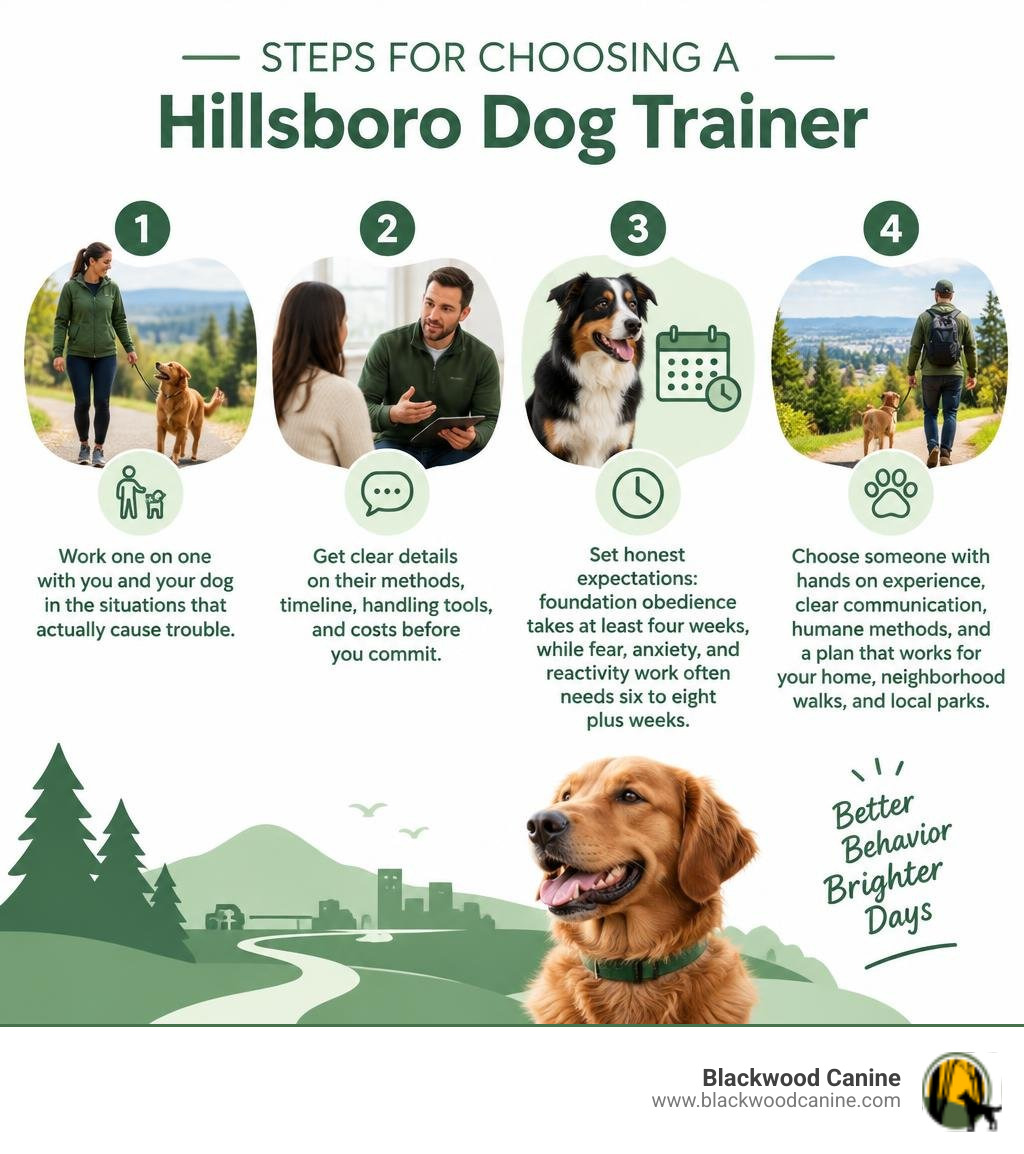
A stressful walk, nonstop barking at guests, or a dog that melts down near other dogs is not a problem you fix with a random tip and a bag of treats. For Hillsboro dog training, look for a trainer who will:
- Work one on one with you and your dog in the situations that actually cause trouble.
- Explain their methods, timeline, handling tools, and costs before you commit.
- Set honest expectations: foundation obedience takes at least four weeks, while fear, anxiety, and reactivity work often needs six to eight plus weeks.
The right fit is not the trainer with the loudest promises. It is someone with hands on experience, clear communication, humane methods, and a plan that works around your household, neighborhood walks, and Hillsboro's busy parks. According to the American Veterinary Medical Association, dog ownership keeps climbing across the country, which means more families are looking for practical help with everyday behavior.
I am David Wright, and my Hillsboro dog training perspective comes from years of apprenticeship and hands on work helping owners build practical obedience and address dog to dog and people related behavior issues. Next, we will break down the local training options, questions to ask, and what a realistic plan should look like.
Why Hillsboro Dog Training Matters for Local Families and Parks
Living in Oregon means sharing our lives with dogs. In fact, pet ownership in Oregon sits at 63 percent, well above the national average. Across the country, over 69 million households own a dog, and around 60 percent of those owners invest in training services. It is easy to see why. Data from the Association of Professional Dog Trainers shows that 94 percent of owners feel training improves behavior and strengthens the bond they share with their dog.
In Washington County, our daily routines are packed with community activities. Whether you are walking through the Orenco Station neighborhood, visiting the farmer market, or taking an afternoon trip to Rood Bridge Park, your dog encounters heavy distractions.
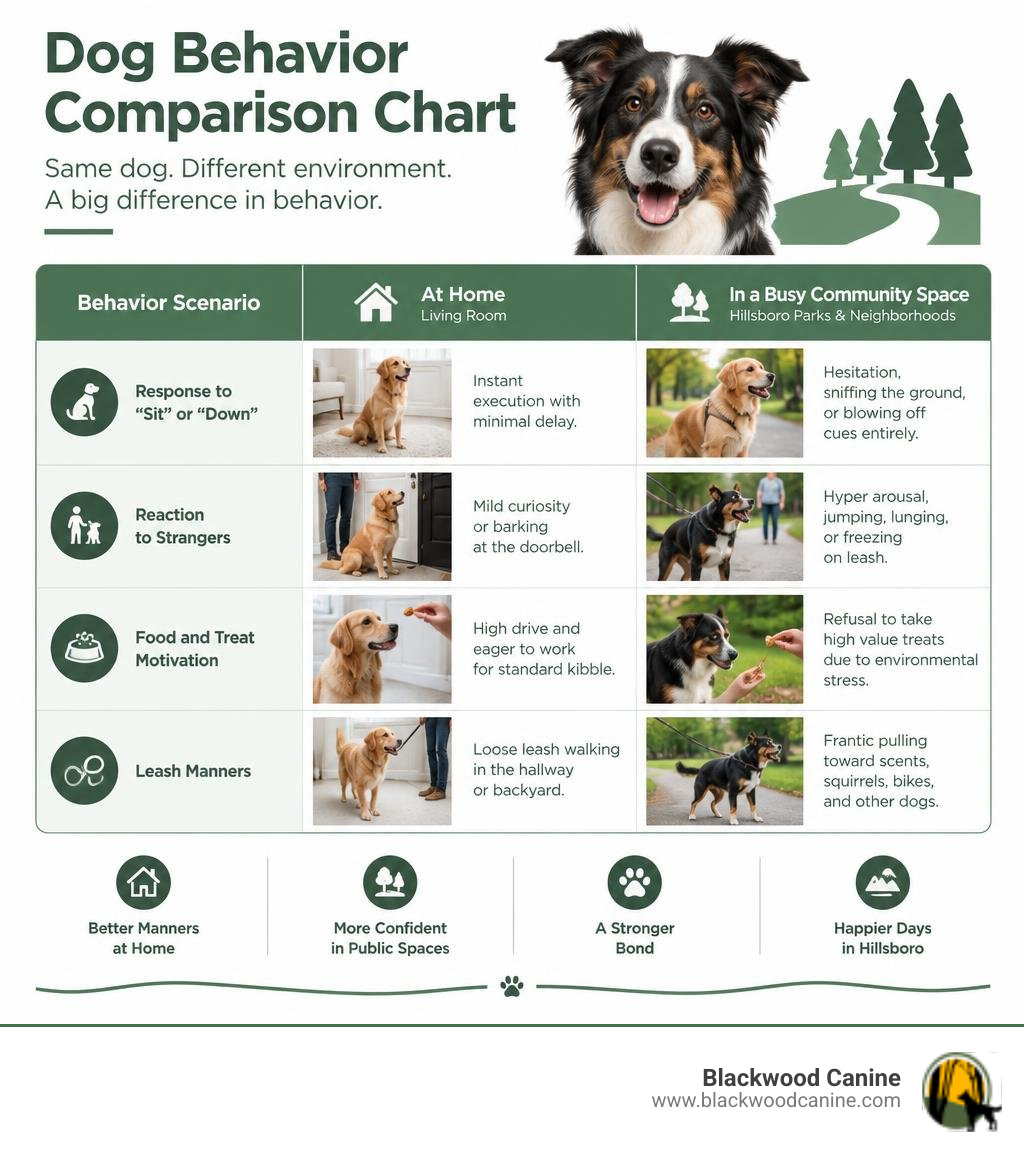
A quiet living room does not test a dog the way a busy park trail does. When a runner zooms past on the Rock Creek Trail, or another leashed dog rounds a blind corner at Orenco Woods Nature Park, polite household manners can fly out the window. Without clear boundaries and reliable obedience, walks turn into arm pulling contests or stressful shouting matches.
Teaching proper manners for public spaces is about building neutral focus. You do not need your dog to greet every stranger or play with every passing pet. You need them to listen, look to you for direction, and ignore the noise. Mastering basic obedience dog training allows your dog to navigate high traffic suburban settings without panic or outbursts.
| Behavior Scenario | At Home in the Living Room | In a Busy Hillsboro Community Space |
|---|---|---|
| Response to "Sit" or "Down" | Instant execution with minimal delay. | Hesitation, sniffing the ground, or blowing off cues entirely. |
| Reaction to Strangers | Mild curiosity or barking at the doorbell. | Hyper arousal, jumping, lunging, or freezing on leash. |
| Food and Treat Motivation | High drive and eager to work for standard kibble. | Refusal to take high value treats due to environmental stress. |
| Leash Manners | Loose leash walking in the hallway or backyard. | Frantic pulling toward scents, squirrels, bikes, and other dogs. |
Comparing Dog Training Services and Formats in Washington County

When your dog's behavior causes stress, you need practical instruction tailored to your real life. While some people look for quick fixes, real behavioral change requires deliberate practice in the places where your dog actually struggles.
Private In Home Instruction vs. Immersion Programs
Every family operates differently. The layout of your home, your work schedule, and your neighborhood dynamic all play a role in how your dog learns.
With in home private lessons, a professional coach comes directly to you. We look at your daily setup, front door greeting habits, yard boundaries, and neighborhood walking routes. This direct setup lets us coach you in real time so you understand the mechanics of handling your dog. Exploring private lessons dog training gives you dedicated attention without the distractions of a chaotic classroom. To understand why so many local owners prefer individualized coaching, review the top benefits of private dog training lessons.
Immersion programs, on the other hand, provide a comprehensive jumpstart. In an immersion setup, a professional trainer handles the heavy lifting of establishing initial obedience, handling clarity, and structure before transitioning those skills back into your hands.
Setting Realistic Timelines for Hillsboro Dog Training Success
Real learning takes time and repetition. Anyone promising to fix severe behavioral issues over a weekend is selling wishful thinking. At Blackwood Canine, we do not offer programs shorter than 4 weeks because dogs need time to build muscle memory, generalize commands, and form lasting habits.

Foundational obedience starts at 4 weeks. During this month of work, your dog learns foundational commands, leash pressure communication, impulse control, and basic household manners. We guide you through handler mechanics so you can reinforce these routines daily. For actionable advice on maximizing your practice between sessions, our private dog training tips guide outlines the daily homework that creates lasting reliability.
Tackling Complex Behavioral Issues in Suburban Environments

Suburban life comes with unique pressures. Tight property lines, delivery drivers walking up the driveway, barking neighborhood dogs behind fences, and crowded sidewalks create a gauntlet of triggers.
When dogs act out, pet owners often feel embarrassed or frustrated. We see well meaning owners fall into extreme training camps. Some try purely treat based approaches that fall apart the moment a squirrel runs past. Others resort to heavy handed dominance tactics that create confusion and fear.
Effective training avoids both extremes. Balanced, modern training relies on clear communication, healthy boundaries, solid reinforcement, and fair, humane guidance. Training tools are not evil, nor are they magical solutions. Misuse is where problems happen. When used properly under professional supervision, tools like slip leads, prong collars, or long lines provide clear communication so your dog understands what is expected. To see how these balanced principles create clarity, check out our guide on positive reinforcement versus dominance dog training methods.
Managing Reactivity and Hillsboro Dog Training for Fear
Fear and reactivity are among the most common reasons owners seek help. A dog barking wildly at the end of the leash is rarely trying to be a bully. In most cases, they are experiencing fear, insecurity, or massive frustration.
When a dog encounters repeated triggers without guidance, stress builds up. This process, known as trigger stacking, pushes a dog past their ability to think. They explode on leash because they feel trapped and do not know how else to create space.
Addressing severe fear and reactivity requires an extended timeline. Complex behavior modification takes 6 week to 8 plus week timelines. We must carefully peel back layers of fear, build confidence, teach emotional neutrality, and change your dog's response to everyday triggers. If your dog panics or cowers around new stimuli, our focused resources on fearful dog training in Hillsboro and broader fearful dog rehabilitation strategies provide clear paths forward.
Breed Specific Drives and Foundation Building
Hillsboro neighborhoods are full of high energy working breeds, herding dogs, and retrievers. An Australian Shepherd, German Shepherd, or Belgian Malinois has different instinctual drives than a companion breed.
When high drive dogs do not have a job, they invent their own. That often looks like chasing bicycles, nipping heels, fence fighting, or guarding resources. We work with your dog's genetics rather than fighting against them. By teaching impulse control and channeling energy into structured work, problem behaviors fade.
If you feel like your dog is ignoring you on purpose, learning how to handle dog training for stubborn dogs can turn things around. Often, the missing link is building motivation. By building engagement with food, you teach your dog that paying attention to you is far more rewarding than scanning the horizon for trouble.
Key Credentials and Questions to Ask Before Hiring a Trainer
The dog training industry is largely unregulated, which means anyone can print business cards and call themselves a dog behavior specialist. Finding the right professional for your family takes some homework.
Look for hands on experience, transparent methods, and someone who can clearly explain the why behind their program. Avoid trainers who make wild guarantees or claim they can solve multi year aggression issues in a single hour. A good trainer acts as your coach, guiding you through the messy process of behavior modification with honesty and support. Learn more about how to find the right trainer and review our trainer backgrounds and experience to see what professional standards look like.
Before hiring a trainer in Hillsboro or the greater Portland metro area, ask these essential questions:
- What is your direct hands on experience with dogs displaying my dog's specific behavioral challenges?
- What does your complete training system look like, including how you motivate good choices and address unwanted behavior?
- What tools do you utilize, and will you teach me how to handle them safely and humanely?
- How long are your programs, and what level of daily commitment is required from my household?
- How do you help transfer the training back into our normal home routine and public environments?
Frequently Asked Questions About Training Your Dog in Hillsboro
How much does professional dog training typically cost in Hillsboro?
Professional training costs vary depending on the severity of the issue, the format of instruction, and the duration of the program. Quality private coaching and comprehensive immersion programs represent an investment in your household peace of mind. For an in depth breakdown of local pricing structures, review our private dog training cost guide and learn how to weigh the long term value by evaluating your dog training investment.
How long does it take to resolve severe behavioral issues?
Complex behavioral problems like human aggression, intense dog reactivity, and severe separation anxiety cannot be resolved overnight. Meaningful rehabilitation requires 6 week or 8 plus week programs. This allows enough time to break ingrained behavioral patterns, build confidence, establish neutral coping mechanisms, and coach owners on consistent long term management.
Can older dogs benefit from one on one training programs?
Yes. While puppies absorb new information rapidly, adult and senior dogs are fully capable of learning new routines, boundaries, and communication systems. In fact, older dogs often have longer attention spans than energetic puppies. To understand how we adjust our handling for mature pets, check out our complete guide to adult dog training.
Next Steps for a Calm, Well Behaved Dog in Hillsboro
You do not have to spend your walks dreading other dogs, hiding behind parked cars, or feeling embarrassed when company comes over. Living with a dog should bring joy to your life, not daily frustration and stress.
At Blackwood Canine, we provide the structure, clear communication, and practical management tools you need to succeed. We help owners across Hillsboro, Beaverton, Bethany, Portland, Scappoose, and surrounding communities build reliable, real world obedience.
If you are ready to stop guessing and start making real progress, reach out today to build your custom Good Dog Game Plan through our Hillsboro dog training services.