
Training a Stubborn Dog with Patience and Irresistible Treats
Your Dog Is Not Broken, Just Misunderstood
Dog training for stubborn dogs starts with one uncomfortable truth: most dogs labeled "stubborn" are not being defiant. They are confused, under motivated, or working from instincts that were literally bred into them over hundreds of years.
Here is a quick answer if you are short on time:
How to train a stubborn dog:
- Stop repeating commands. Say it once, then follow through.
- Use high-value rewards your dog actually cares about, like chicken, cheese, or freeze-dried liver.
- Keep sessions short: 3 to 5 minutes, several times a day.
- Train in low-distraction environments first, then build up gradually.
- Be consistent. Every family member, every time, same rules.
- Rule out fear, pain, or confusion before assuming your dog is being difficult.
If your dog ignores "come" at Pier Park in Portland or tunes you out completely on a walk through Hillsboro, it does not mean they are a lost cause. It usually means there is a gap between what you are asking and what your dog understands, or a mismatch between the reward you are offering and the distraction in front of them.
That gap is fixable. But it takes more than a bag of treats and good intentions. Real progress comes from clear expectations, consistent follow-through, smart management, and training your dog actually finds worthwhile.
David Wright and Blackwood Canine, have spent years helping dog owners in the greater Portland and Vancouver area work through exactly these kinds of challenges, including dog training for stubborn dogs who their owners were convinced could never be taught. If that sounds like your dog right now, keep reading.
The Myth of the Stubborn Dog: What Is Really Happening?
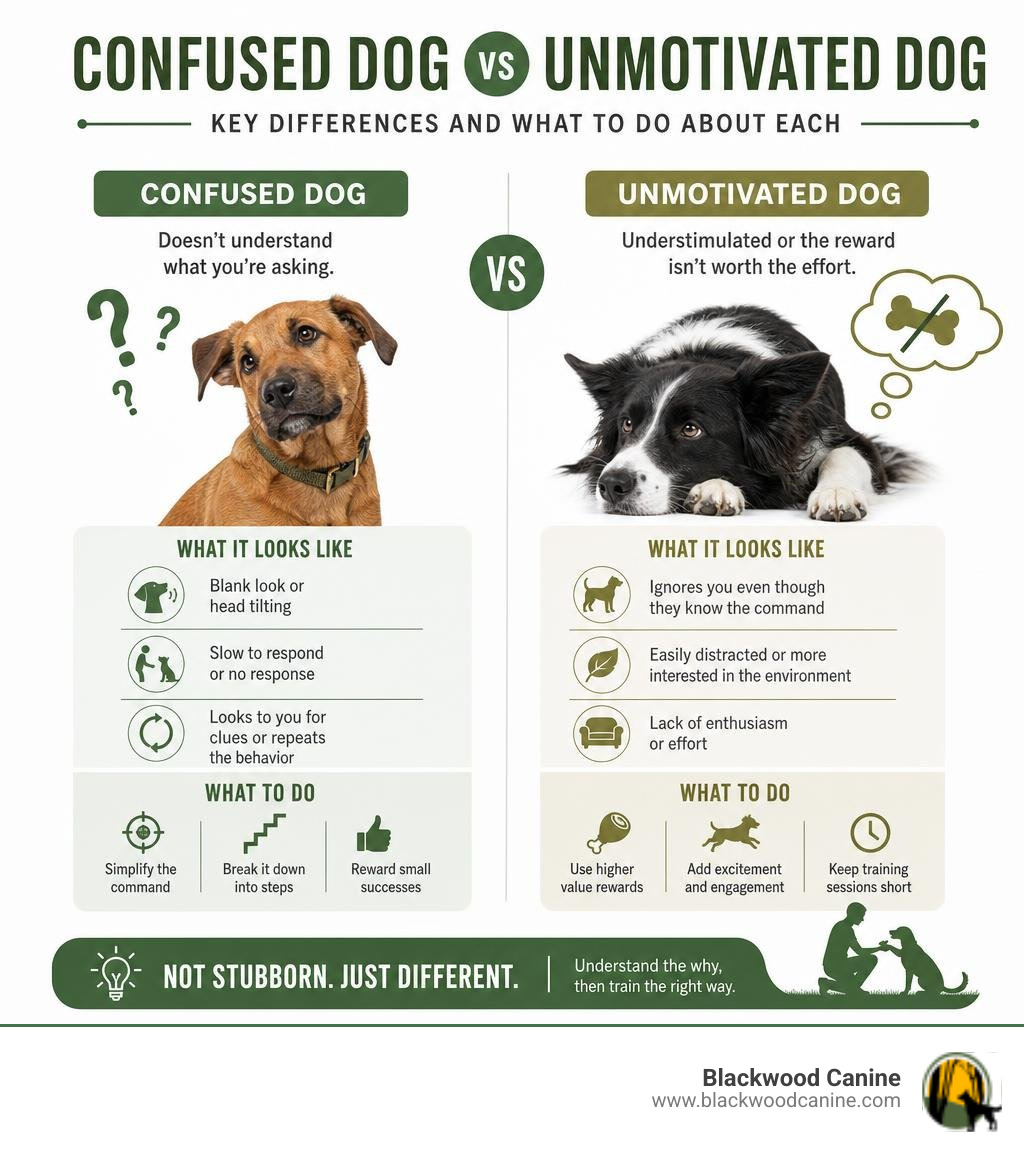
When a dog ignores a command, our human brain quickly jumps to labels like stubborn, spiteful, or dominant. We assume the dog knows exactly what we want and is actively choosing to blow us off. This is almost never the case.
Dogs are highly rational creatures. They do what works for them based on immediate consequences. If ignoring you pays off better than listening to you, they will choose to ignore you. It is not a personality flaw. It is simple math.
To understand why your dog is resisting your cues, we have to look at the underlying genetic and physical factors at play.
Genetic Independence and Breed Traits
A landmark scientific study published in the journal Cell showed that trainability is a highly heritable trait linked to breed ancestry. Herding and sporting breeds were developed to work in close partnership with humans, meaning they are genetically wired to look to us for direction.
On the other hand, breeds like hounds, terriers, and livestock guardians were bred for independent decision making. A Beagle tracking a scent or a Siberian Husky pulling a sled had to make split second choices without human input. When these dogs ignore a cue, they are simply acting on centuries of genetic programming.
You can read more about this in the Scientific research on breed trainability. Working with these independent thinkers requires us to adjust our expectations and find what truly motivates them.
Medical Issues and Pain Responses
Before you assume your dog is being difficult, you must rule out physical discomfort. A sudden refusal to perform a known behavior is often a cry for help.
For example, a dog with undiagnosed hip dysplasia or arthritis may refuse a "sit" or "down" cue because transitioning to those positions causes physical pain. An older dog might ignore your recall simply because age related hearing loss prevents them from hearing your voice. If your dog suddenly starts resisting basic commands, a thorough veterinary exam is always the best first step.
Fear, Anxiety, and Environmental Stress
When a dog is in a state of high arousal, fear, or anxiety, their nervous system goes into survival mode. In these moments, the brain is physically incapable of processing auditory commands.
If your dog freezes or ignores you when a loud truck passes in Beaverton, they are not being stubborn. They are terrified. For dogs struggling with deep seated fear or reactivity, traditional obedience training must take a backseat to specialized behavior plans. You can learn more about managing these complex emotional states by reading our guide on Reactive Dog Training.
Why Traditional Dog Training for Stubborn Dogs Often Fails
Many well meaning owners in Scappoose and St. Helens try to solve their training struggles by using methods that actually make the problem worse. If your current approach is not working, it is likely due to one of these common training traps.
Command Nagging and Repeating Cues
We have all done it. We say "sit, sit, sit, sit" until the dog finally lowers their rear. This is called command nagging, and it actively trains your dog to ignore you.
When you repeat a cue, you teach your dog that the command is not the single word "sit" but rather the entire repeated sequence. They learn that they do not need to respond to the first prompt, only to the fifth or sixth one when your tone becomes visibly frustrated.
Poisoned Cues
A poisoned cue occurs when a command becomes associated with an unpleasant outcome or high stress.
If you only call your dog to "come" when it is time to leave the fun at the dog park, take a bath, or get locked in a crate, they will quickly learn that responding to that word brings an end to their fun. Eventually, they will actively avoid you when they hear that cue.
Treat Bribes and Transactional Listening
There is a massive difference between rewarding a behavior and bribing your dog. If you have to show your dog a piece of cheese before they will agree to lie down, you are bribing them.
This creates transactional listening, where your dog constantly calculates the cost benefit ratio of the interaction. If the distraction in front of them is more exciting than the treat in your hand, they will choose the distraction.
To break this cycle, we must use balanced training systems that establish clear boundaries and reliable follow through. For a deeper look at finding this balance, explore our article on Blog: Dog Training Methods Positive Reinforcement vs Dominance Training.
Core Principles of Dog Training for Stubborn Dogs
To successfully train an independent dog, we have to move away from conflict and focus on clear communication, smart management, and consistent follow through.

Successful training is built on a simple framework: establish clear expectations, manage the environment to prevent self rewarding mistakes, and always follow through with fair consequences and consistent repetition.
| Training Element | Traditional Training | Short Burst Training |
|---|---|---|
| Session Length | 30 to 45 minutes | 3 to 5 minutes |
| Daily Frequency | Once a day (or less) | 2 to 5 times a day |
| Reward Delivery | Low value kibble, predictable | High value, variable |
| Distraction Level | Rushed into busy parks | Gradual, systematic exposure |
| Focus Level | High mental fatigue | Sharp, game like engagement |
Finding the Right Currency for Your Independent Thinker
If you want your independent dog to work with you, you have to find what actually motivates them. We call this a motivation audit.
Start by testing different rewards to see what your dog values most. For food motivated dogs, standard dry kibble rarely works in high distraction environments. You need to upgrade to high value rewards like freeze-dried liver, hot dogs, or string cheese.
If your dog is not food motivated, look for other outlets. A high energy terrier might work enthusiastically for a quick game of tug or a throw of their favorite tennis ball.
Once you identify their favorite rewards, use them strategically. Save your highest value "jackpot" treats exclusively for teaching difficult commands or working in challenging outdoor spaces. As the behavior becomes reliable, transition to a variable reinforcement schedule, rewarding only the best responses so your dog learns to perform even when they cannot see the food first.
For more hands on tips, you can read The Ultimate Guide to Dog Training for Stubborn Dogs to help refine your reward system.
Structuring Short Sessions for Maximum Focus
Independent dogs have a very low tolerance for boring, repetitive drills. If you try to force them through a traditional thirty minute training session, they will quickly tune you out, sniff the ground, or walk away.
Instead, keep your training sessions incredibly short. We recommend micro sessions that last only 3 to 5 minutes, repeated 5 to 8 times throughout the day.
Keep the energy high and the pace fast. A typical session should look like this:
- 30 Second Warm Up: A quick, easy behavior your dog knows well to build immediate focus.
- 2 Minutes of New Challenge: Working on a specific skill or adding a small distraction.
- 30 Second Success Ending: Reverting to an easy command to ensure the session ends on a positive, successful note.
By keeping sessions short, you prevent mental fatigue and leave your dog wanting more. If you want to learn how to transition these quick wins into daily habits, check out our 5 Week Fix program.
Step by Step Guide to Building Real World Reliability
Reliability is not built overnight. It is the result of systematic practice that gradually prepares your dog to listen when the world is busy around them.
To build a solid foundation, we use a systematic step by step approach.
Step 1: Start in a Low Distraction Environment
Begin training in the quietest room of your house, like your hallway or kitchen. There should be no other pets, active kids, or toys around. Practice your basic cues here until your dog can perform them perfectly ten times in a row.
Step 2: Introduce the Three Ds Gradually
Once a behavior is mastered indoors, you can begin proofing it using the Three Ds:
- Duration: Ask your dog to hold a position (like a stay) for a few seconds longer before delivering the reward.
- Distance: Take one small step away from your dog before rewarding them, gradually building up the distance.
- Distraction: Introduce very mild distractions, like bouncing a ball nearby or turning on the television, while keeping your rate of reinforcement high.
Crucial rule: Only increase one of these variables at a time. If you increase the distance, keep the duration short and the distractions low. If you push too fast and your dog fails, take a step back to the last successful level.
Step 3: Use the Tree Method for Leash Pulling
Leash pulling is a classic self rewarding behavior. Every time your dog pulls and you move forward, they learn that pulling gets them where they want to go.
To stop this, use the tree method. The exact second the leash goes tight, stop walking immediately. Stand completely still like a tree. Do not pull back or jerk the leash.
Wait for your dog to make the choice to look back at you or step back to create slack in the line. The moment the leash goes loose, mark it with an enthusiastic "Yes!" and reward them by walking forward again. This teaches them that a loose leash is the only thing that unlocks forward movement.
Step 4: Apply the 80/20 Rule for Recall
To prevent your recall cue from becoming poisoned, apply the 80/20 rule.
80% of the time you call your dog to you, reward them with a high value treat and immediately release them back to whatever fun activity they were doing. Only 20% of the time should the recall result in a negative outcome like leaving the park, going inside, or putting them in their crate. This ensures your dog always views coming to you as a highly rewarding choice.
For more helpful foundational strategies, you can explore the Humane society training tips.
How to Apply Dog Training for Stubborn Dogs in Public Spaces
It is easy to have a well behaved dog in your living room. The real challenge is maintaining that focus when you step out onto the streets of Portland or visit a busy park in Vancouver.
The key to success in public is generalization. Dogs do not naturally generalize behaviors. A "sit" in your living room does not automatically mean "sit" when there is a squirrel running up a tree at a park in Hillsboro. You have to retrain the behavior in each new environment, starting with very close proximity and high value rewards.
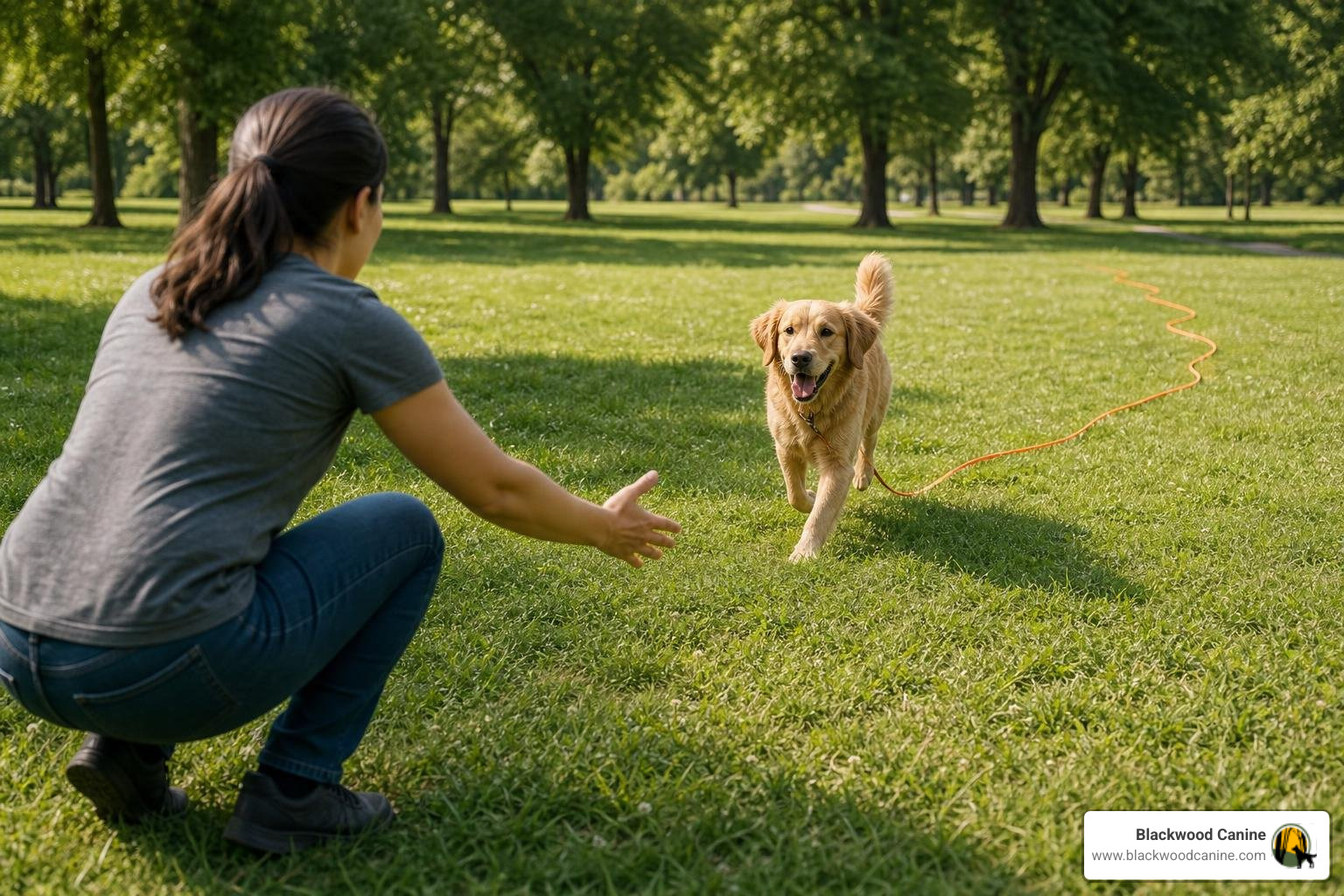
When training in public spaces, management is your best friend. Always use a long line leash (15 to 30 feet) to practice recall in open areas. This allows your dog to experience freedom while preventing them from self rewarding by running off to greet other dogs or chase birds.
If your dog ignores a cue, do not let them ignore you. Use your long line to gently guide them to complete the behavior, ensuring they learn that compliance is always non negotiable.
If you are struggling to bridge the gap between home training and public obedience, our professional team can help. Take a look at our In-Home Private Lessons to see how we build real world focus right in your neighborhood.
Frequently Asked Questions about Independent Dogs
Why does my dog only listen when I have treats visible?
This is one of the most common issues dog owners face, and it happens because the treat has become a bribe rather than a reward. If your dog has to see the food before they will cooperate, you have accidentally trained them to only work when they can verify the payoff beforehand.
To fix this, you need to hide your treats. Keep them in a treat pouch behind your back, in your pocket, or placed on a high counter nearby. Ask your dog for the command with empty hands.
Use your normal hand signal, and the moment they comply, mark the behavior with your success word (like "Yes!") and then reach for the hidden treat. This teaches your dog that even if they cannot see the reward, it is still coming if they choose to cooperate.
Once they understand this concept, transition to a variable reinforcement schedule. Start rewarding every second or third correct response instead of every single one, keeping your dog guessing and highly engaged.
You can also find useful tips on using markers effectively in this guide on Clicker Training Stubborn Dogs: a Step-by-Step Guide That Works.
How do I fix a command that my dog has learned to ignore?
If your dog has learned to tune out a specific word like "come" or "down" because of command nagging or negative associations, that cue is officially poisoned. Trying to force your dog to respect that specific word is an uphill battle that usually leads to more frustration.
The easiest solution is to retire that word completely. Throw it in the trash and start over from scratch with a brand new cue.
For example, if your recall word "come" is broken, switch to "here" or "close." When you introduce the new word, follow these strict rules:
- Never say the word unless you are 100% sure your dog will comply or you have a leash to gently enforce it.
- Reward every single correct response with a high value jackpot treat for the first few weeks.
- Never use the new word to summon your dog for something they dislike, like a bath or nail trim.
By starting fresh, you bypass all the old, resistant habits and build a clean, reliable association from day one.
When should I seek professional help for my independent dog?
While many stubborn behaviors can be managed with consistent practice at home, there are times when professional guidance is the safest and most efficient path forward.
You should consider seeking expert help if:
- Your dog shows any signs of aggression, resource guarding, or severe leash reactivity.
- Your training progress has completely stalled despite weeks of consistent effort.
- You feel so frustrated, embarrassed, or overwhelmed that you are avoiding walks or interactions with your dog.
- You are struggling to manage your dog's high energy or independent drive safely in public spaces.
When looking for professional help, avoid programs that promise instant, effortless results or rely on harsh, punitive methods that damage your bond with your dog. Look for experienced trainers who focus on clear communication, practical management, and customized plans that fit your lifestyle.
For dogs struggling with more complex behavioral challenges, our specialized Behavior Modification Training is designed to help you rebuild trust and restore peace to your home.
Conclusion
Training an independent, strong willed dog can certainly test your patience, but it is also one of the most rewarding challenges you can take on. By shifting your mindset from a battle of wills to a system of clear communication, consistent management, and fair follow through, you can build a reliable relationship with your dog.
At Blackwood Canine, we specialize in helping busy families in Scappoose, Hillsboro, Beaverton, Portland, and Vancouver turn frustrating resistance into steady reliability. We do not offer magic tricks or one size fits all promises. Instead, we give you practical management tools, clear communication strategies, and the hands on support you need to succeed.
If you are ready to stop struggling and start seeing real progress, the best next step is our Good Dog Game Plan. We will assess your dog's unique temperament, identify their true motivators, and build a clear roadmap tailored to your home and lifestyle.
Whether you prefer the personalized focus of our private lessons or want to fast track your progress, we are here to guide you every step of the way. Explore our Services page to find the perfect fit for your family, or Get started with our immersion dog training programs today.