
The Truth About Sending Your Aggressive Dog to Boot Camp
Is a Reactive Dog Boot Camp Actually Worth It?

A reactive dog boot camp is an intensive training program designed specifically to address behaviors like lunging, barking, and overreacting to triggers such as other dogs, strangers, or bikes. Unlike standard obedience classes, these programs focus on behavior modification, not just commands.
Here is a quick breakdown of what to know before you enroll:
| Question | Quick Answer |
|---|---|
| What does it address? | Lunging, barking, leash reactivity, fear based responses |
| Who runs it? | Specialized trainers with behavior modification experience |
| Main formats | Board and train, day program, group class, private lessons |
| Average cost | $4,000 to $7,000 for a board and train program |
| Duration | Typically 30 to 60 days for immersive programs |
| Biggest risk | Training does not transfer if the owner is not involved |
| Best outcome | Dog builds new habits and owner learns how to maintain them |
Most owners searching for a reactive boot camp are exhausted. The walks are stressful. Guests coming over feels like a hostage situation. You have watched the YouTube videos, bought the harness, tried the treats, and your dog still loses it the moment another dog appears down the street.
You are not imagining it. This is genuinely hard. And the promise of dropping your dog off somewhere for a few weeks and getting a calmer version back is very appealing.
But before you write a check, you need to understand exactly what these programs can and cannot deliver, how they differ from each other, and what your role is in making the results stick.
David Wright, founder of Blackwood Canine, experience with reactive dog boot camp style training started back in 2009 when I was working through dog to dog aggression with my own cane corso. That experience, followed by five years of apprenticeship under a seasoned professional, gave me a clear picture of where intensive programs work and where they fall apart. I will walk you through everything you need to evaluate your options honestly.
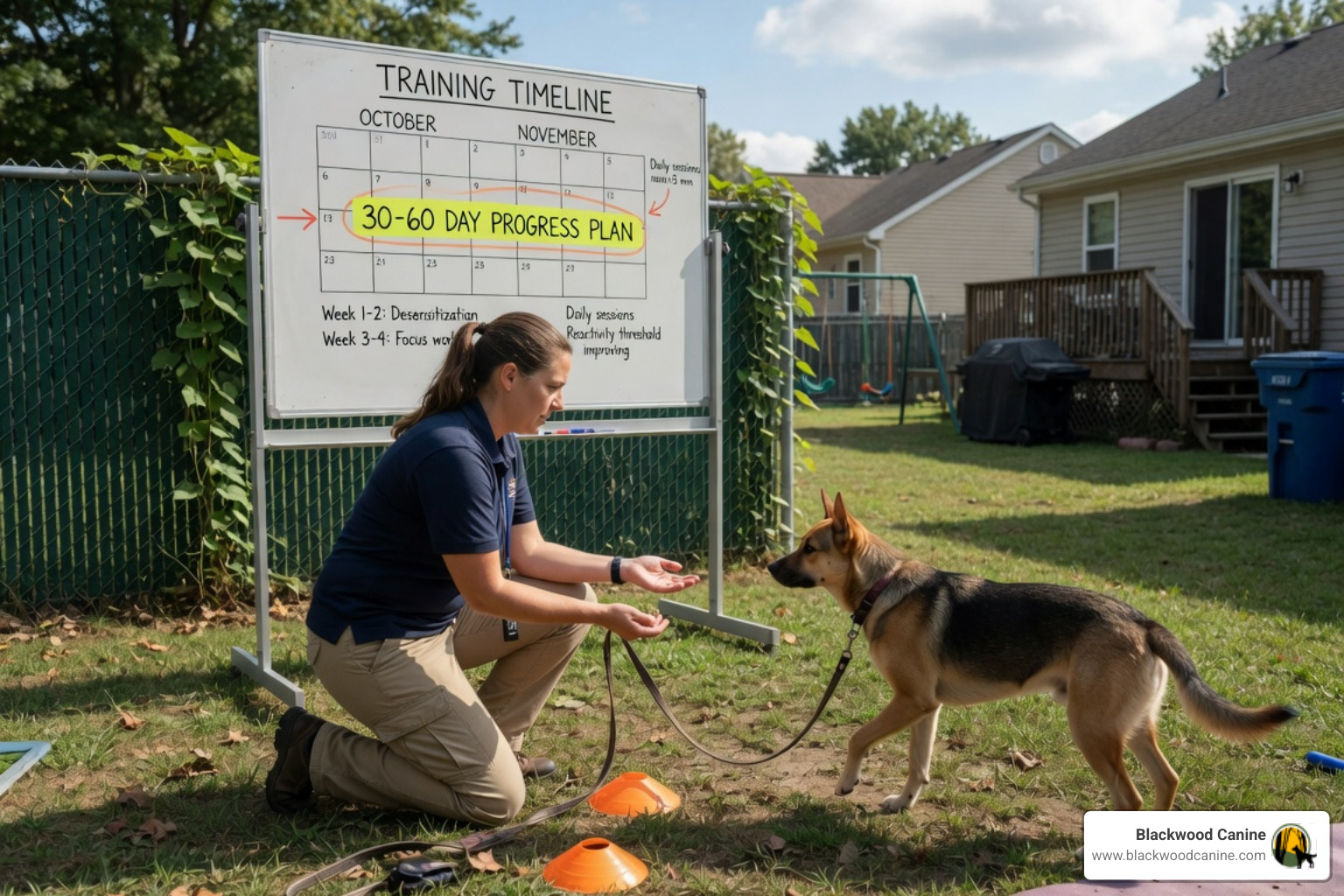
What Is a Reactive Dog Boot Camp and How Does It Differ From Obedience School?
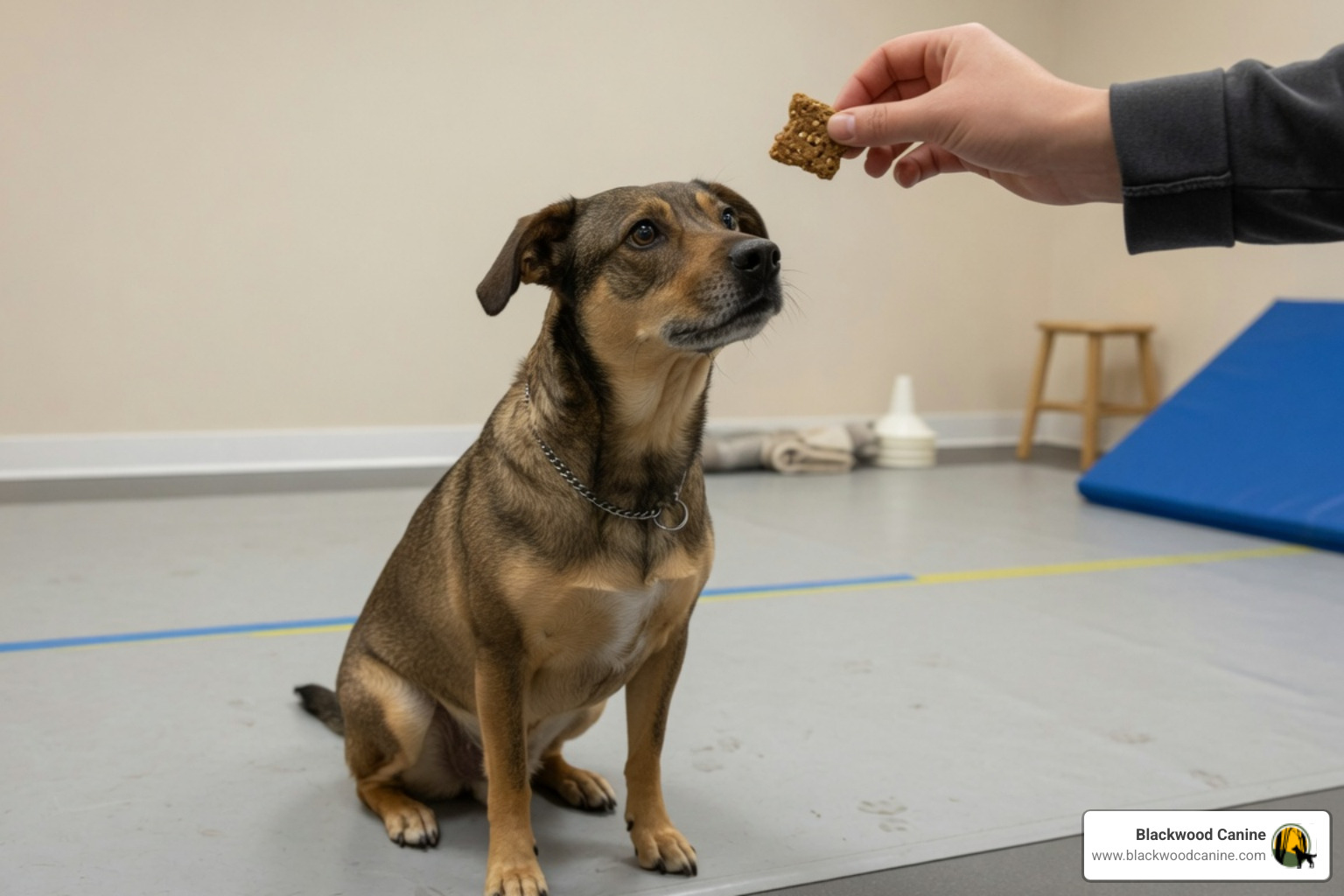
When your dog is barking and lunging at everything that moves, it is easy to assume they just need more obedience. You might think; if they only knew how to heel or sit on command, they would stop acting crazy.
But there is a massive difference between teaching a dog to perform a physical task and changing how that dog feels about its environment. A standard obedience school is designed to teach commands. A reactive dog boot camp is designed for behavior modification.
If you are looking for a deeper look at how immersive environments work, check out our guide on immersion dog training.
The Core Differences in Training Focus
Standard obedience programs focus on commands like sit, down, stay, and come. They operate under the assumption that the dog is in a calm, receptive state of mind.
A specialized program for reactive dogs focuses on the dog's emotional state and impulse control. We are not just teaching the dog to sit; we are teaching the dog how to exist in the presence of a trigger without exploding. This requires managing their arousal levels and building a communication system that works even when the dog is highly distracted.
For a detailed breakdown of what standard programs cover, read The Basics on Dog Boot Camp Programs.
Why Standard Obedience Camps Fail Reactive Dogs
Standard day school programs and basic obedience camps often exclude reactive dogs entirely. There is a good reason for this. In a standard camp, dogs are often trained in high energy, highly social environments. For a reactive dog, this is a recipe for overstimulation and trigger stacking.
Trigger stacking happens when a dog is exposed to multiple stressors in a short period. The dog might tolerate a barking dog, a passing car, and a stranger individually. But when they experience all three at once, their stress levels spill over, leading to an explosive reaction.
Standard obedience camps lack the structured management needed to keep a reactive dog under their threshold. Without clear communication and individual pacing, these environments can actually make reactivity worse.
To understand why standard setups are not built for behavioral issues, see The Ins & Outs of Dog Obedience School.
Evaluating the Formats: Board and Train vs. Day Programs vs. Private Lessons

If you live in Portland, Beaverton, Hillsboro, or the surrounding areas, you have a few different options for tackling your dog's reactivity. Let us look at how these training formats compare.
If you are considering an immersive option, you can read about 5 Good Reasons to Consider a Portland Dog Board and Train Program.
The Pros and Cons of a Board and Train Reactive Dog Boot Camp
A board and train program is the most intensive option. Your dog lives with a professional trainer for several weeks, receiving daily, structured training sessions in a controlled, neutral environment.
- Pros: The trainer can establish a strong behavioral foundation and set new habits quickly. They can control the environment, manage triggers precisely, and prevent the dog from practicing bad habits. This gives you a fresh slate when the dog returns home.
- Cons: These programs require a significant financial investment, typically costing between $3,000 and $5,000. Additionally, if the program is not paired with extensive owner education, the dog may behave perfectly for the trainer but return to their old habits the moment they step back into your living room.
For more help deciding if this path is right for your family, check out When Is Dog Boot Camp a Good Idea for Portland Pet Parents.
Why Group Classes and Daycare Environments Can Worsen Reactivity
Many owners think that because their dog is reactive to other dogs, they need more socialization. They sign up for a group class or drop their dog off at a local pet daycare.
This is a mistake. Socialization is a critical developmental window that occurs between 3 and 12 weeks of age. Once a dog is an adult, forcing them into close proximity with their triggers in a busy parking lot or a chaotic daycare room is not socializing them; it is flooding them.
Group classes often fail reactive dogs because the dogs never have a chance to decompress. They spend the entire hour reacting, which only rehearses the unwanted behavior.
To learn more about how reactivity develops and why standard environments fail, read Understanding and Transforming Reactive Dog Behavior.
The Power of Private Lessons for Handler Confidence
Private lessons offer absolute environmental control. Instead of sending your dog away, a trainer works with you one on one, teaching you the handling skills and mechanics needed to guide your dog through real world triggers in your own neighborhood.
This approach builds your confidence as a handler. You learn how to read your dog's subtle body language, how to use food and leash pressure clearly, and how to advocate for your dog when off leash dogs approach.
To see why many local families choose this route, read about the Top 6 Benefits of Private Dog Training Lessons.
How Reputable Camps Handle Stress and Overstimulation in a Reactive Dog Boot Camp
A high quality reactive dog boot camp does not just throw a dog into a room with other dogs and hope for the best. Reputable programs prioritize stress management, decompression, and threshold management.
For a deeper look at managing a reactive dog's stress levels, refer to our blog post on Understanding and Transforming Reactive Dog Behavior.
Structured Decompression and Crate Breaks
When a reactive dog enters a training facility, their cortisol levels; the hormone associated with stress; are incredibly high. A dog in a high state of arousal cannot learn effectively.
Reputable programs use structured decompression to lower these stress levels. This includes crate training and scheduled crate breaks throughout the day. The crate is not a punishment; it is a safe space where the dog can rest, process what they learned, and develop an off switch.
Between active training sessions, dogs need quiet down time to lower their heart rate and clear stress hormones from their system.
Controlled Exposure and Leash Neutrality
Training a reactive dog requires gradual, controlled exposure. We start in low stimulus environments, like a quiet indoor room with visual barriers.
We use distance management to keep the dog under their threshold; the point at which they lose control and react. If your dog reacts to another dog at fifty feet, we start training at sixty feet.
We also utilize neutral helper dogs. These are highly trained, calm dogs that ignore your dog's outbursts, allowing us to build leash neutrality safely.
You can learn more about how we structure these steps on our Behavior Modification Training page.
Training Methodologies: What Actually Works for Behavior Modification?
There is a lot of noise on the internet about dog training methods. Some advocate for purely positive reinforcement, while others promote dominance based training. The truth is, resolving severe reactivity requires a practical, balanced approach tailored to the individual dog.
We discuss these differences openly in Dog Training Methods: Positive Reinforcement vs Dominance Training.
The Role of Counter Conditioning and De Sensitization
The gold standard for changing a dog's emotional response is counter conditioning and de sensitization.
- De sensitization means gradually exposing the dog to their trigger at a distance where they do not react.
- Counter conditioning means pairing that trigger with something the dog loves, like high value food or structured play.
Over time, the dog learns that the appearance of a trigger predicts good things, shifting their emotional response from fear or frustration to calm anticipation.
To learn how to build this focus, see Building Engagement with Food.
Why Treats Only Redirection Is Insufficient for Severe Reactivity
While food is an incredible tool for building engagement, treats only redirection often fails when a dog's arousal levels spike.
If your dog is already lunging, barking, and spinning at the end of the leash, waving a piece of hot dog in front of their nose will not work. Their brain is in a fight or flight state, and they cannot process the reward.
True behavior modification requires a balanced approach that combines positive reinforcement with clear boundaries and fair consequences. At Blackwood Canine, we use a balanced training methodology. This means we pair high-value rewards with clear, humane communication tools—such as slip leads, prong collars, or electronic collars (e-collars)—to help the dog understand exactly what is expected of them. These tools are not used to punish, but to provide clear, low-level physical communication that cuts through the mental noise of a high-arousal state. The dog must learn that while calm behavior earns access to rewards, explosive behavior is not allowed. Practical management; like leashes, crates, and structured routines; ensures safety and consistency throughout this process.
The Importance of Veterinary Check Ups Before Training
Before you enroll your dog in any intensive behavior program, you must rule out physical pain or clinical anxiety.
Many sudden behavioral changes are fueled by undiagnosed health problems. If a dog is in pain, their threshold for stress is much lower, and their brain is not in a state to learn new coping skills. A comprehensive veterinary check up, or a consultation with a veterinary behaviorist, is a critical first step.
Generalization and Owner Transfer: Ensuring Success After a Reactive Dog Boot Camp
The biggest secret in dog training is simple: we train people, not just dogs. A dog can behave perfectly for a professional trainer at a facility, but if the owner does not change how they live with the dog at home, the behavior will regress.
If you are feeling overwhelmed by your dog's behavior, take a moment to read Stop Feeling Guilty About Your Reactive Dog.
Why Dogs Behave for the Trainer but Not the Family
Dogs are highly situational learners. They associate behaviors with specific people, environments, and cues.
A professional trainer has precise handler mechanics, consistent follow through, and calm body language. The dog quickly learns the patterns that work with the trainer.
When the dog returns home, they often fall back into old relationship dynamics with their owners. If the owner is nervous, inconsistent, or lacks clear communication, the dog will pick up on those cues and resume their reactive habits.
To understand the value of investing in your own education, read Is Private Dog Training Worth the Investment.
The Multi Step Transfer Process
A reputable boot camp must include a structured transfer process to transition the training to you.
This process should begin with owner coaching sessions where you learn the mechanics without your dog present. Next, you should practice in low pressure environments with the trainer guiding you. Finally, you should test your skills in real world settings, like a local park, to ensure you can handle triggers confidently.
You can read more about how we handle this transition on our Behavior Modification Training page.
Long Term Management and Consistency at Home
When your dog returns home, you must maintain a consistent routine. This includes:
- Establishing predictable feeding, sleeping, and training schedules.
- Setting clear boundaries, like keeping the dog off the furniture or crate training.
- Preventing the rehearsal of bad habits by blocking window views or using a leash indoors.
- Ensuring that freedom is earned through reliable behavior, not given unconditionally.
Consistency is not about being harsh; it is about making your expectations predictable so your dog feels safe and clear.
To learn more about building these long term habits, see our page on Advanced Re conditioning.
Program Logistics: Costs, Durations, and What to Look For
When evaluating a reactive dog boot camp, you need to understand the logistics and how to screen for a safe, reputable program.
Typical Costs and Durations of Reactive Programs
Behavior modification is a long term process; there are no quick fixes.
| Program Type | Typical Duration | Average Cost |
|---|---|---|
| Immersive Board and Train | 21 to 30 Days | $3,000 to $5,000 |
| Private Lesson Package | 6 to 12 Weeks | $800 to $1,800 |
| Specialized Group Class | 4 to 6 Weeks | $165 to $250 |
While a group class is the most affordable option, it offers the least amount of individual coaching and can be highly stressful for truly reactive dogs. Immersive programs offer the highest rate of initial success but require a larger financial investment and significant owner commitment during the transfer phase.
To help weigh these costs, read Is Private Dog Training Worth the Investment.
How to Evaluate a Reputable and Safe Boot Camp
Do not trust your dog's safety to just anyone. When screening potential training facilities in the Portland metro area, use the following checklist:
- Licensing and Insurance: Ensure the business is fully licensed, insured, and operating legally.
- Safety Protocols: Ask how they manage dog to dog interactions. Reputable facilities have strict double leashing policies, visual barriers, and do not allow uncontrolled group play for reactive dogs.
- Virtual Consultations: For dogs with human directed reactivity or a bite history, the initial consultation should be held virtually. This protects the trainer, the owner, and the dog from unnecessary stress and immediate trigger stacking.
- Trainer Credentials: Look for trainers with experience in behavior modification, canine ethology, and learning theory.
For more tips on finding a qualified professional, read How to Find the Right Portland Dog Trainer.
Frequently Asked Questions About Reactive Dog Boot Camp Programs
Can a boot camp fix severe leash reactivity or aggression?
A boot camp can establish a strong behavioral foundation, teach your dog healthier coping mechanisms, and lower their overall stress levels. However, it cannot permanently cure aggression or reactivity.
True behavior modification is a lifelong practice. The program gives you a fresh slate, but you must maintain the training, manage the environment, and follow through consistently at home to preserve those results.
Learn more about managing expectations on our Behavior Modification Training page.
Do reactive boot camps work with dogs that have a bite history?
Yes, many intensive programs work with dogs that have a bite history. However, these cases require strict safety protocols, including muzzle training and virtual assessments, before any hands on work begins.
If your dog has a history of severe human directed aggression, a standard boot camp is not appropriate; you will need a highly customized, specialist led program.
What happens if my dog regresses after returning home?
Regression is common if the home environment is inconsistent or if the owner stops practicing the daily routines.
Reputable programs offer follow up coaching, ongoing support, and clear guidance to help you get back on track. Consistency and clear communication are the keys to reversing regression quickly.
Ready to Reclaim Your Walks?
Living with a reactive dog is exhausting, but you do not have to navigate this alone. A reactive dog boot camp can be an incredibly powerful tool, provided you choose a program that prioritizes stress management, clear communication, and structured owner education.
At Blackwood Canine, we serve families across Portland, Beaverton, Hillsboro, Sherwood, Scappoose, St. Helens, and Vancouver, WA. We do not offer quick fixes or empty promises. Instead, we focus on clear communication, practical management, and consistent follow through to help you build a reliable, stress free relationship with your dog.
If you are tired of guessing and ready to build a clear plan for your dog, your next step is simple. Schedule a Good Dog Game Plan with us. We will look at your dog's behavior, your home environment, and what you have already tried, and help you decide what training approach actually makes sense for your family.