
5 Practical Ways to Solve Your Dog’s Car Anxiety Problems for Good
Car Anxiety vs. Motion Sickness: How to Identify Your Dog’s Stress Signals
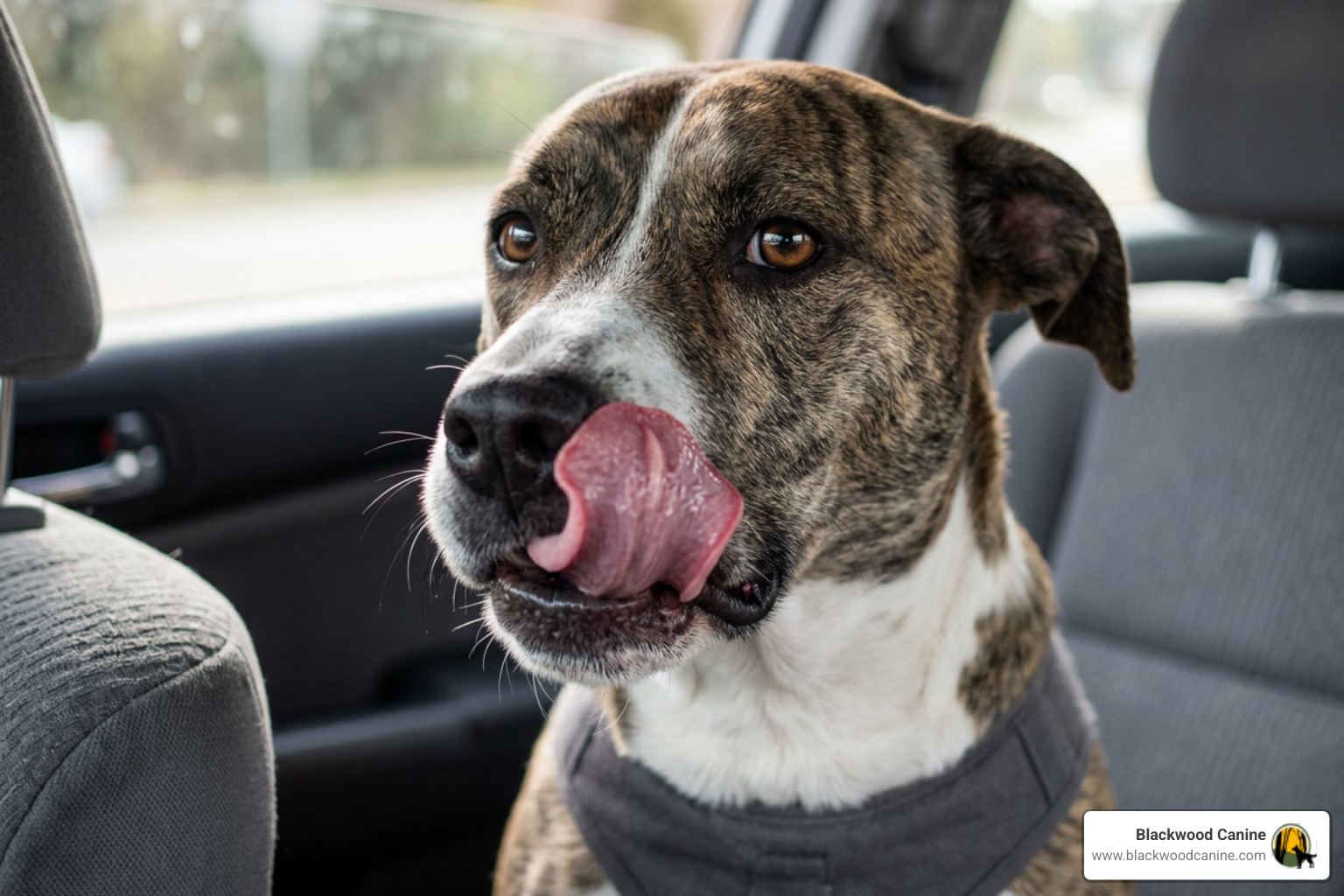
Before starting any training plan, you need to figure out what is driving your dog's distress. Dogs usually fall into two main categories: physical motion sickness or behavioral car anxiety. In many cases, these two issues feed off each other.
Motion sickness is a physiological issue. It is especially common in puppies and young dogs because their inner ear balance structures are not fully developed. Many puppies outgrow physical motion sickness by 12 to 14 months of age as their vestibular system matures. However, if a puppy vomits every time they ride in a car, they quickly learn to predict that the car makes them feel terrible. That physical nausea turns into conditioned behavioral fear over time.
Behavioral anxiety is driven by anticipation, negative associations, or sensory overload. Dogs who are transported exclusively to stressful destinations like the vet or groomer show negative responses at more than double the rate (46.4%) of dogs transported to varied or fun locations (22.7%).
To understand which issue primary drives your dog's distress, check the Canine Car Anxiety: Vestibular vs Behavioral guide. You can also watch for these distinct signs:
| Stress Signal Category | Motion Sickness (Vestibular) | Behavioral Car Anxiety (Psychological) |
|---|---|---|
| Onset | Begins after the vehicle starts moving. | Starts before entering the car (at the sight of keys, leash, or car). |
| Physical Symptoms | Heavy, excessive drooling, lip smacking, dry heaving, vomiting. | Trembling, rapid panting, dilated pupils, whale eye, pacing, whining. |
| Appetite | Refuses treats only after vehicle motion begins due to nausea. | Refuses high value treats on approach or while sitting in a parked car. |
| Post Trip Recovery | Dog stays lethargic or nauseous after exiting the vehicle. | Immediate relief, decompression sniffing, and energy rebound upon stepping out. |
Recognizing subtle stress signals early prevents you from accidentally pushing your dog past their coping limit. Watch for early stress cues such as repeated yawning, lip licking, turned-away head posture, and rigid body posture before overt distress like howling or scratching at windows takes over.
5 Effective Dog Car Anxiety Exercises using the Calm Car Ladder
Systematic desensitization works by breaking a scary experience into tiny, manageable steps. By keeping your dog below their stress threshold (the point where they stop taking food, freeze, or panic), you change their emotional response.
Combining gradual exposure with clear management, rules, and boundaries creates a solid foundation for stress-free travel. Check out our detailed Dog Trainer Advice on Dealing with Car Anxiety for extra background on resetting travel habits.
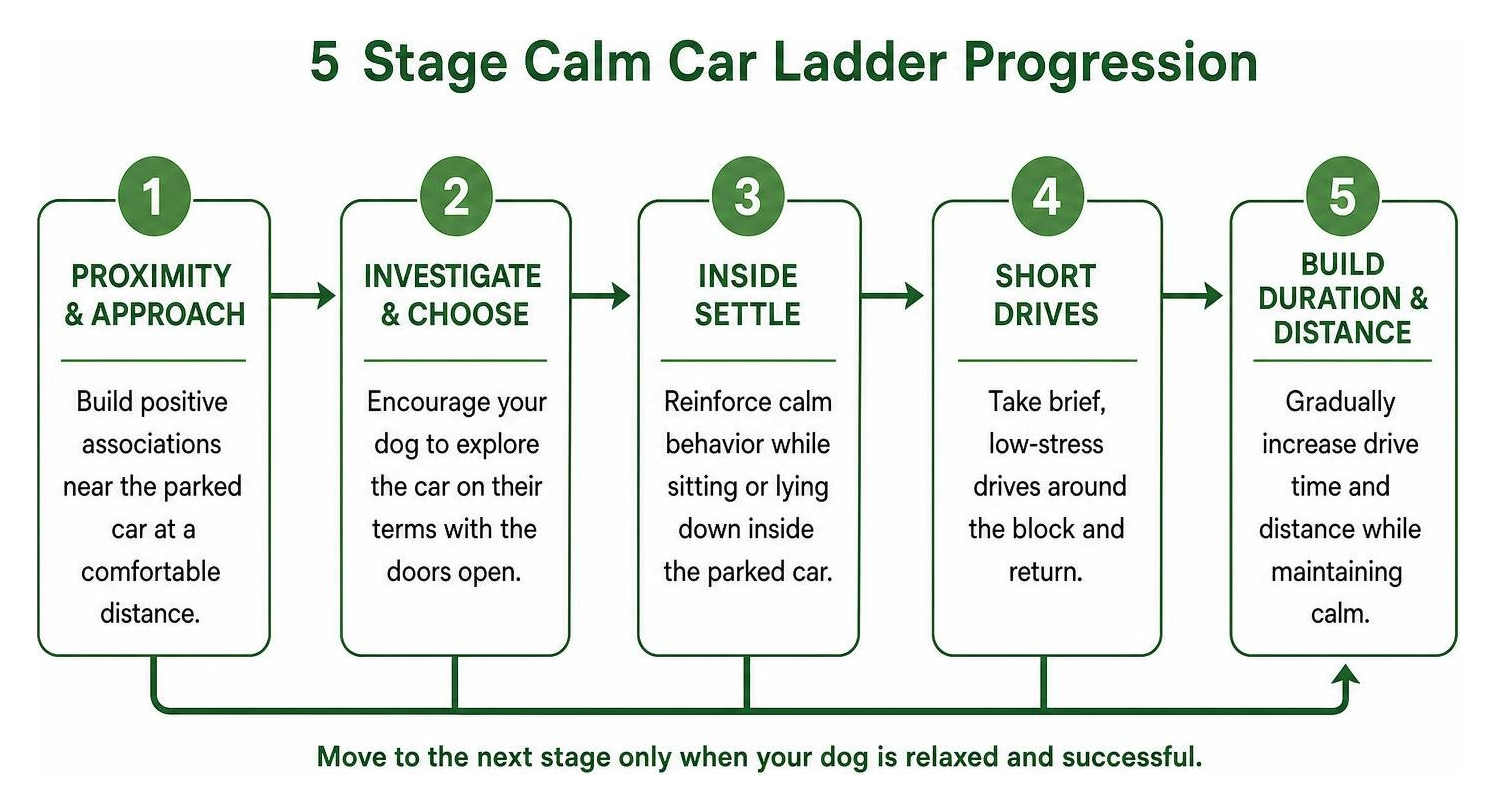
Exercise 1: Proximity and Approach Dog Car Anxiety Exercises
If your dog digs their heels in at the driveway, asking them to get inside the vehicle is a step too far. Start by working outside the car.
- Walk your dog on a leash toward the parked car, keeping enough distance that your dog stays relaxed.
- Scatter high value treats on the ground a few feet away from the car.
- Allow your dog to choose to walk closer to sniff the car on their own terms. Never drag or force them.
- If your dog hesitates, step back two paces, ask for a simple sit or eye contact, reward, and end the session.
If you are struggling to get your dog anywhere near the vehicle, review these helpful tips on How to Relieve Dog Car Anxiety to build low pressure driveway routines.
Exercise 2: Stationary Car Habituation Dog Car Anxiety Exercises
Once your dog happily approaches the parked car, move to working at the threshold of the open doors.
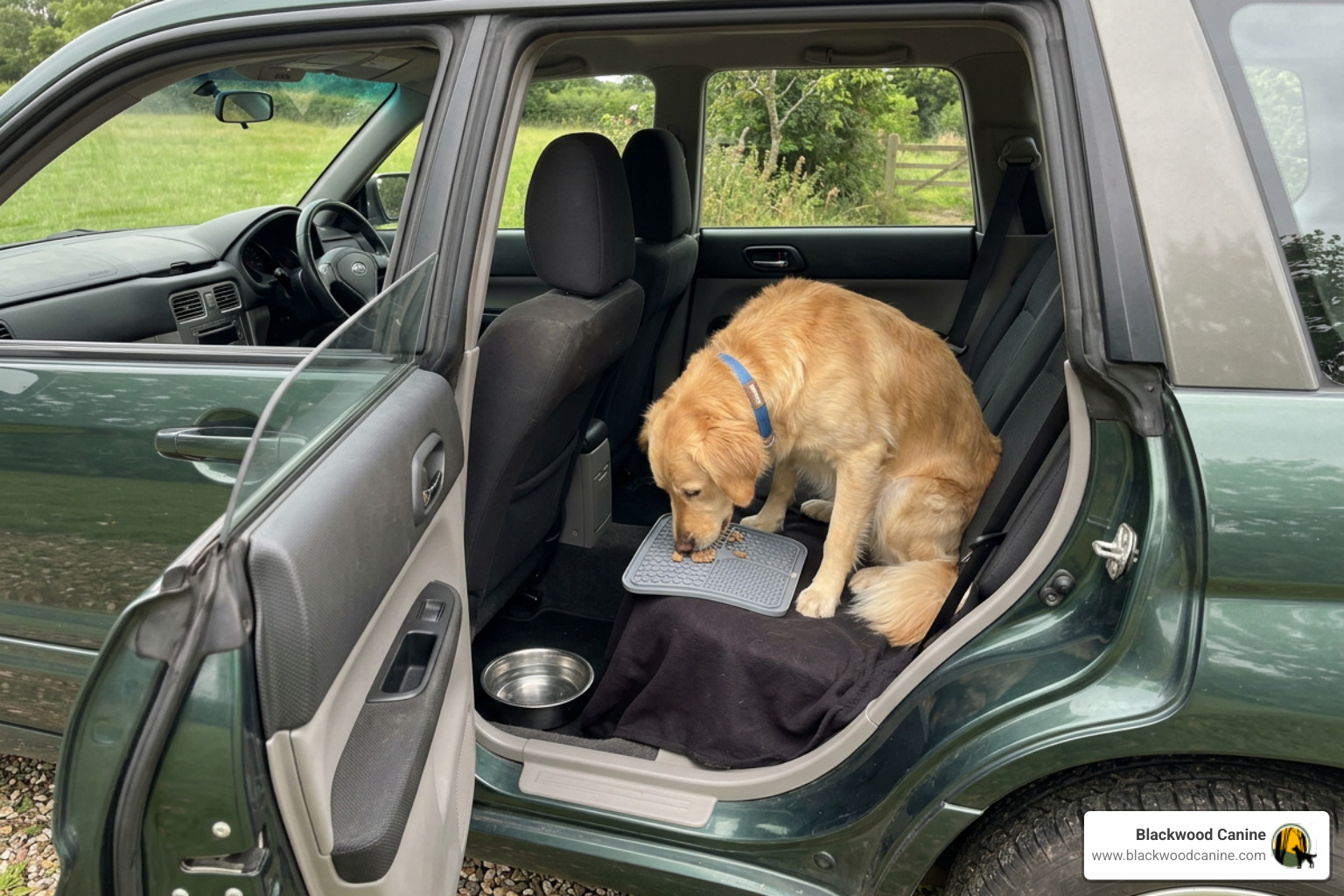
- Open the car doors wide with the engine completely off.
- Place a non-slip mat or rubber mat on the car seat or floor so your dog feels physically secure stepping up.
- Toss treats onto the floorboard or back seat. Let your dog put just two paws inside to grab the reward and step back out if they choose.
- Once your dog comfortably hops inside, sit on the back seat with them.
- Feed your dog their regular scheduled meal inside the parked car, or offer a lick mat smeared with wet food or peanut butter. Licking and chewing release soothing neurochemicals that naturally lower stress levels.
Exercise 3: Engine Vibration and Sound Exposure
Many dogs handle a parked car fine, but freeze the moment the motor starts. The transition from silence to engine noise, mechanical vibration, and exhaust notes can trigger panic.
- Place your dog in the car with a high value reward (like a stuffed Kong or lick mat).
- Have a family member start the engine while you stay next to your dog in the vehicle.
- Keep the car in park. Allow the engine to run for 30 to 60 seconds while your dog licks their treat.
- Shut the engine off before your dog finishes their food reward.
- Immediately exit the vehicle and take a brief 2 minute walk around the yard to reward calm behavior.
Exercise 4: Micro-Drive Reversals and Neighborhood Loops
The jump from a parked car to a 20 minute drive is too large for an anxious dog. Micro-movements let you introduce motion without causing panic.
- Secure your dog safely, start the engine, and slowly back up 5 to 10 feet down the driveway.
- Put the car back in park, turn off the engine, and reward your dog generously.
- Graduate to driving down to the end of your street and returning immediately.
- Pay attention to drive-day stress stacking. Multiple minor triggers (heat, noise, restraint, quick acceleration) accumulate during a ride. Keep early drives under 2 minutes so your dog stays calm.
For additional step-by-step guidance on breaking down driving milestones, consult this guide on How to Train a Dog With Car Anxiety.
Exercise 5: Destination Pairing and Decompression Walks
If 100% of your dog's car rides end at the vet clinic or groomer, their travel fear is logical. You must break that negative feedback loop.
- Drive 2 minutes to a quiet, local green space or neighborhood trail.
- Unload your dog and immediately go for a decompression sniffari walk (a slow walk on a long line where your dog leads the way by sniffing).
- Avoid taking your dog to overcrowded dog parks where high arousal levels can cause overstimulation.
- Practice mock trips where you drive to a quiet park parking lot, feed a meal or treat in the car, and return straight home without even getting out.
For more insights on building positive destination habits, read our guide on Calming Car Rides Dogs.
Creating a Safe Vehicle Environment and Calming Tools That Work
Your dog's physical setup inside the car directly impacts their emotional state. A dog sliding across slick leather seats or bracing against turns cannot relax.
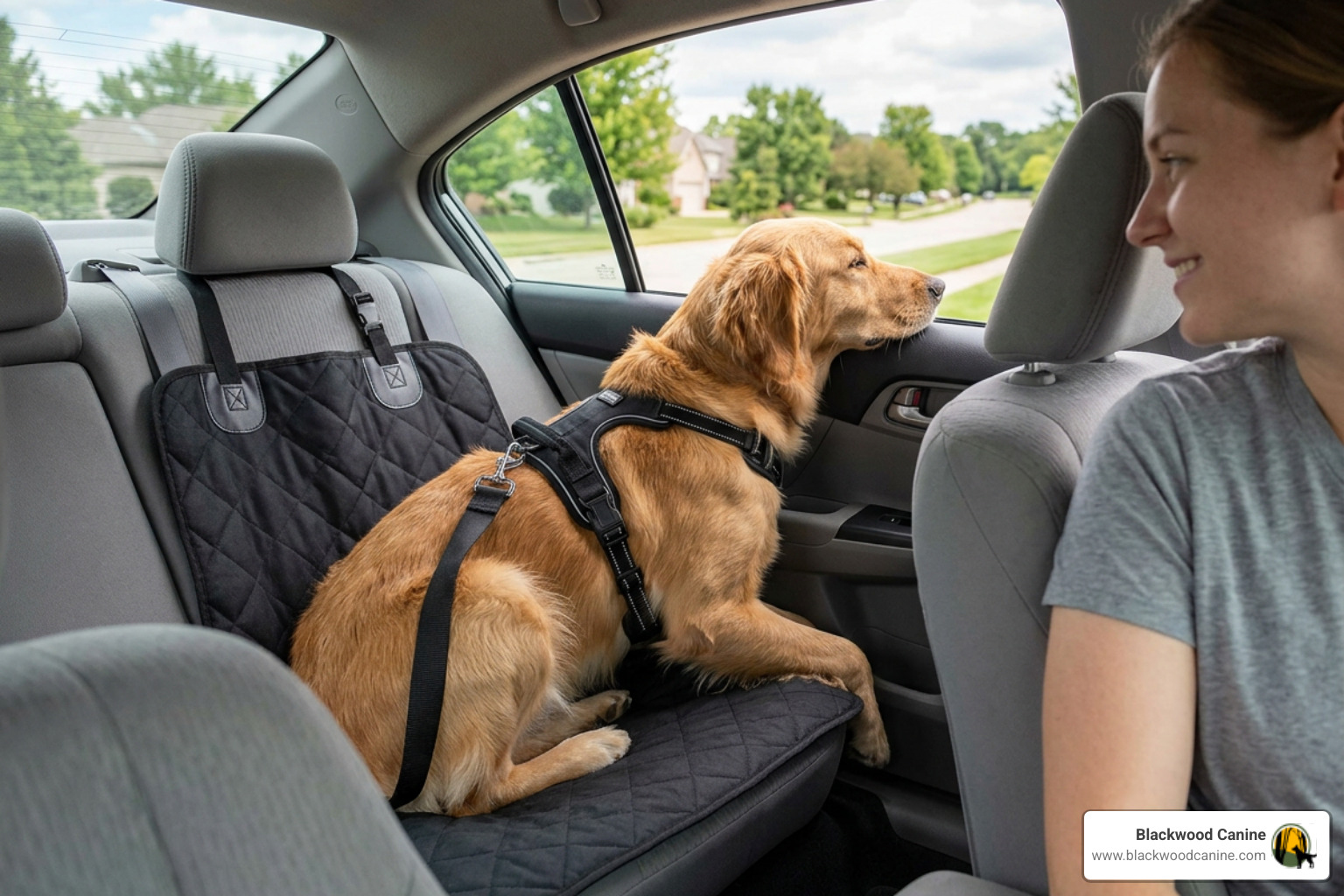
Vehicle Setup and Restraints
- Crash Tested Harnesses: Securing your dog with a crash tested seatbelt harness prevents them from pacing, tumbling during sudden stops, or interfering with the driver.
- Anchored Travel Crates: For dogs with severe visual reactivity (dogs that bark at passing cars or scenery), an anchored crate in the cargo area works best. Covering the sides of the crate with a light sheet blocks visually overwhelming movement outside the window.
- Footwell Blockers and Non-Slip Mats: Fill the floorboard gaps behind the front seats with travel cushions so your dog has a wide, flat platform to rest on.
Calming Aids and Products
- Pressure Wraps (ThunderShirt): Torso pressure wraps apply gentle, constant pressure around the dog's chest and midsection. Over 85% of owners report noticeable anxiety reduction when using pressure wraps during travel.
- Pheromone Therapy (Adaptil): Synthetic dog appeasing pheromone sprays mimic the calming scents produced by a nursing mother dog. Spray Adaptil on your dog's travel bedding or car seats 10 to 15 minutes before loading your dog into the car.
- THC-Free CBD Oil: A 2023 study found that THC-free CBD (administered at 4 mg/kg) significantly reduced serum cortisol levels and stress-related behaviors like whining in dogs during car trips.
Medical and Veterinary Interventions
When behavioral training alone is not enough, medical support can make desensitization possible.
- Maropitant Citrate (Cerenia): An FDA approved anti-nausea medication that targets the emetic center in the brain. Cerenia boasts success rates exceeding 85% in preventing motion sickness vomiting in dogs 16 weeks of age and older.
- Prescription Anxiolytics: Short term situational medications such as trazodone or gabapentin can lower baseline panic so your dog can actually learn during training sessions.
If your dog displays extreme panic, aggression, or unmanageable fear during travel, explore our dedicated Behavior Modification Training programs to work through complex behavioral stress safely.
Frequently Asked Questions About Dog Car Anxiety
How long does it take to see progress with dog car anxiety training?
Most dogs show noticeable improvement within two to six weeks of consistent practice. Mild cases may resolve faster, while dogs with long standing trauma or severe vestibular issues may require several months. Progress depends on keeping every session short, staying below your dog's stress threshold, and practicing daily.
What if my dog refuses to even approach the car?
Do not force, lure, or drag them. Start your training at a greater distance. If your dog stops moving 20 feet away from the vehicle, move back to 25 feet where they feel safe. Feed high value treats like boiled chicken or freeze dried liver at that safe distance. Gradually move closer over several days as your dog begins looking at the car with calm curiosity.
When should I consider medication or consult a veterinarian?
You should consult a veterinarian if your dog vomits every time the vehicle moves, displays extreme panic (such as chewing through seatbelts, frantic vocalizing, or trying to escape window openings), or remains completely shut down and unable to eat treats. Prescription anti-nausea medication like Cerenia or situational anti-anxiety medications can lower your dog's physiological distress so behavioral training can take hold.
Hit the Road with Confidence in the Pacific Northwest
Solving car travel issues requires patience, structural management, and fair, clear communication. Whether you are taking quick trips around Scappoose, St. Helens, and Warren, or commuting through Bethany, Hillsboro, Beaverton, Portland, and Vancouver, having a calm travel companion makes everyday life much easier.
At Blackwood Canine, we help owners replace chaos and frustration with reliable behavior habits. Real behavior modification for complex issues like severe car anxiety typically takes structured 6 week to 8 plus week timelines, while our foundational obedience work starts at 4 weeks minimum to build lasting habits.
If you are ready to stop guessing and start making real progress with your dog, check out our Reactive Dog Training page or reach out to set up your Good Dog Game Plan today.