
A Quick Start Guide to Overcoming Dog Fear in Hillsboro
When Your Dog Is Scared of Everything in Hillsboro
If Hillsboro dog training fear is something you are dealing with right now, here is what you need to know up front:
Quick answer for fearful dogs in Hillsboro:
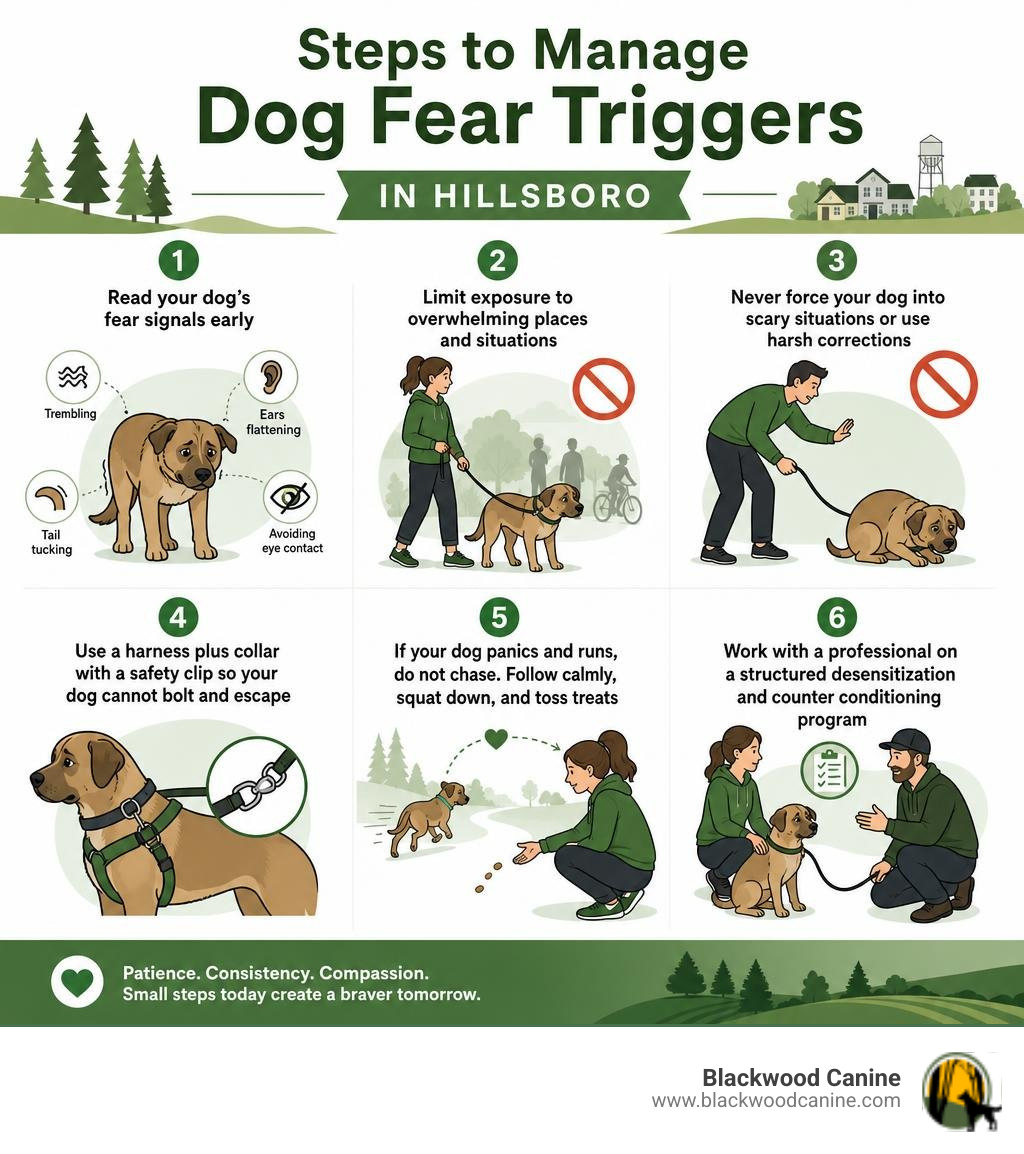
- Learn to read your dog's fear signals early (trembling, tail tucking, ear flattening, avoiding eye contact)
- Limit exposure to overwhelming places and situations until you have a plan
- Never force your dog into scary situations or use harsh corrections
- Use a harness plus collar with a safety clip so your dog cannot bolt and escape
- If your dog panics and runs, do not chase. Follow calmly, squat down, and toss treats
- Work with a professional on a structured desensitization and counter conditioning program
Living with a fearful dog is exhausting. Walks feel like a gamble. Guests coming over becomes a whole event. And no matter what you try, your dog still freezes, shakes, or tries to bolt at the worst moments.
The hard truth is that fear in dogs is not just a training problem you can fix with a few commands. It takes clear management, consistency, and usually some professional guidance to make real progress.
Knowing where to start makes a big difference. This guide walks you through exactly that.
I'm David Wright, and my work with dogs started after a humbling experience training my own dog aggressive Cane Corso. That moment showed me how much most owners, myself included, do not know about what their dogs are actually communicating. That experience shaped everything I now use when working through Hillsboro dog training fear cases with real families. If you are ready to stop guessing and start making progress, keep reading.
Understanding Hillsboro Dog Training Fear and Stress Signals
Before you can solve fear based behavior, you have to recognize it early. Dogs communicate their discomfort long before they freeze, growl, or bolt down the sidewalk. Most dog owners miss the early warning signs because they are subtle. By learning what your dog is telling you, you can intervene before their panic takes over.
Fear in dogs comes from several root causes. It can stem from genetics, a lack of early exposure during critical development stages, or a single traumatic event. Regardless of how it started, addressing hillsboro dog training fear starts with paying attention to subtle body language cues.
When a dog experiences fear, their physiological system shifts into high alert. You might notice subtle indicators like panting when it is not hot, flattening their ears backward against their skull, or turning their head away to avert eye contact. A tucked tail, trembling muscles, and a rigid stance are classic indicators that your dog feels trapped or unsafe. To read more about how fear displays in different situations, check out our guide on Blog: Dog Training for Fearful Dogs.
Identifying Physical Fear Signs
As fear builds, physical signs become much more extreme. Recognizing these escalations helps you prevent full blown panic.
- Panting and Excessive Salivation: Heavy breathing or drooling when the dog has not had physical exertion.
- Whining and Vocalizing: High pitched vocal stress signals used to communicate distress.
- Crouching and Freezing: Dropping low to the ground or stopping completely in place, unable to take movement cues.
- Loss of Bodily Control: Extreme fear can cause sudden loss of bladder or bowel control.
- Frantic Looking Around: Scanning the environment rapidly to find an escape route.
- Lunging and Barking: When fleeing is not an option, fear turns offensive to create distance from the trigger.
When a dog freezes or lunges, they are no longer in a learning state of mind. Pushing a terrified dog past their threshold damages trust and escalates dangerous behaviors.
How Environment Impacts Hillsboro Dog Training Fear
Where you walk and train matters just as much as what you do. Hillsboro and the surrounding metro area offer great outdoor spaces, but crowded locations like Forest Park or busy outdoor markets can completely overwhelm a fearful dog.
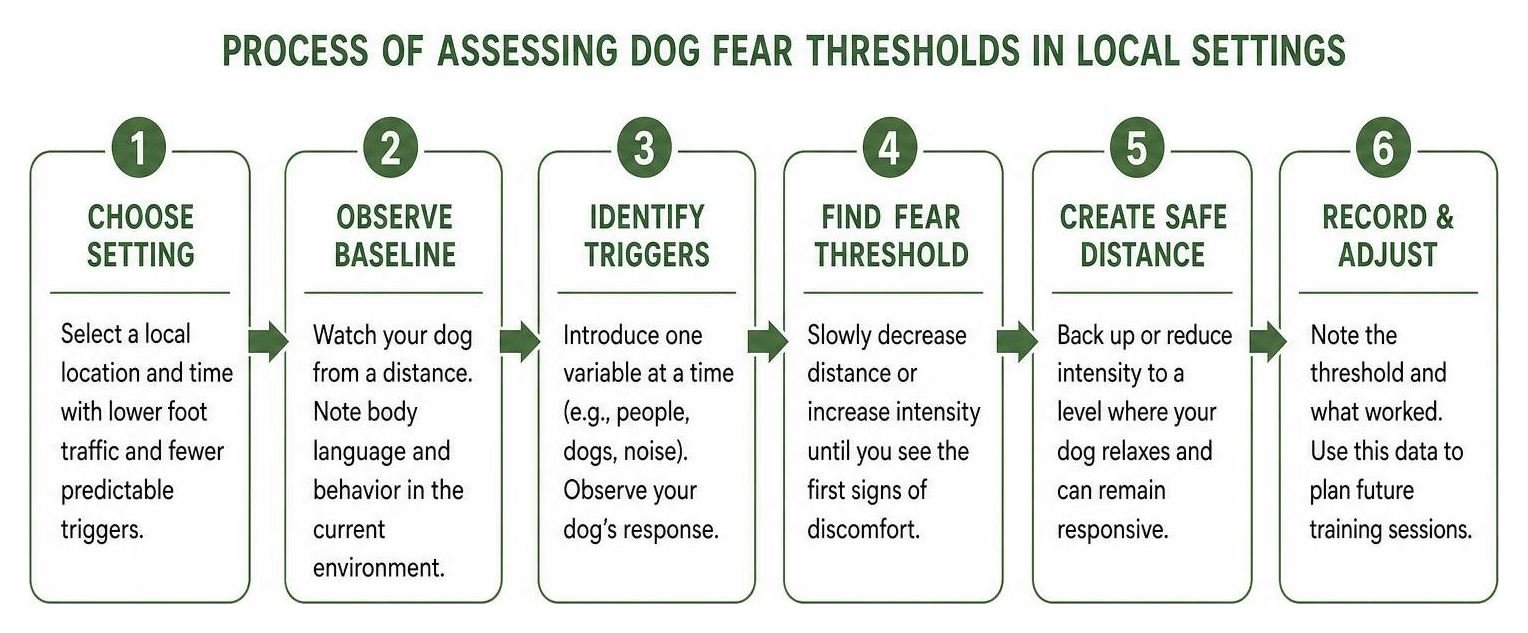
Taking a fearful dog into crowded environments exposes them to unpredictable triggers like fast moving bicycles, loose dogs, loud children, and strange noises. Managing your dog's environment is not quitting; it is giving them the safety buffer they need to learn. If you feel frustrated by your dog's struggles in public, you did not break them. Learn how to let go of guilt in our piece on Blog: Stop Feeling Guilty About Your Reactive Dog.
Practical Steps to Handle Fear Triggers and Emergency Bolting
Managing a nervous dog requires practical equipment and clear emergency protocols. When a dog panics on a walk, their survival instinct is to flee. If your equipment fails or you react incorrectly, a scary moment can quickly turn dangerous.

To prevent escapes, never rely on a single leash attached to a flat collar or standard harness alone. A frightened dog can back out of a harness or slip a collar in seconds. Use a double point connection: a well fitted harness paired with a flat collar, joined together with a safety backup clip. If one piece fails, the backup keeps your dog attached to the leash.
Emergency Escape Protocol
If your dog panics and slips the leash or bolts, your instinct will be to run after them. Doing this usually makes things worse, causing the dog to run faster into traffic or unfamiliar areas.
If your dog escapes, follow these key safety rules:
- Do Not Chase: Running after a panicked dog validates their panic and drives them further away.
- Follow Calmly: Keep your dog in sight while moving at a calm walking speed to track their direction.
- Call for Support: If you have someone with you, ask them to secure the area or watch for traffic ahead.
- Drop Your Center of Gravity: Stop, squat down low to the ground, and turn your body slightly sideways to look non threatening.
- Toss High Value Treats: Gently toss high value treats near the dog without making sudden movements toward them.
- Speak Softly: Use a calm, low tone of voice instead of yelling panic commands.
Setting Boundaries with Strangers
Well meaning strangers often make fearful dogs uncomfortable by staring, reaching out, or approaching quickly. As an owner, your primary job is to advocate for your dog's personal space.
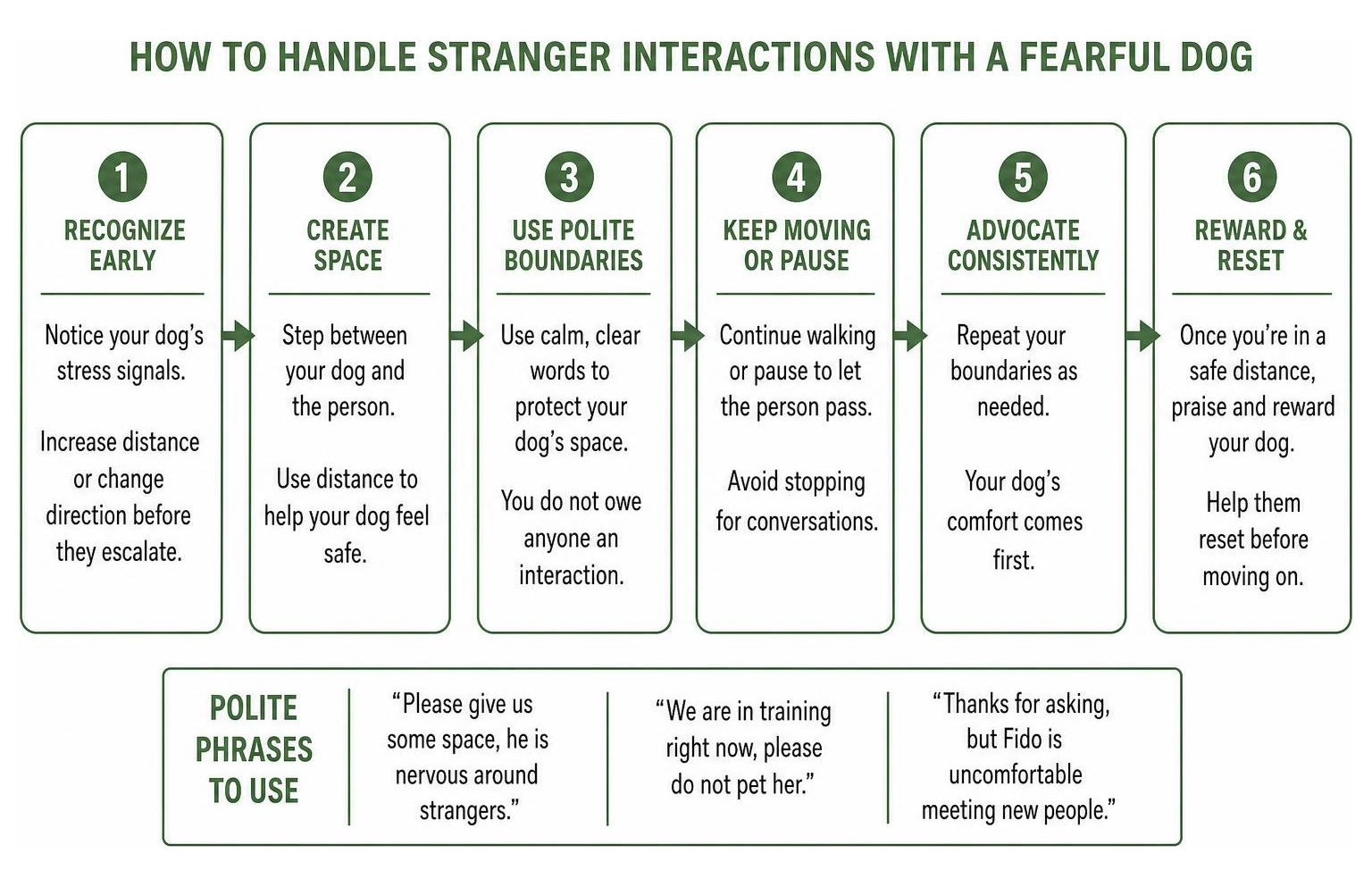
You do not owe anyone an interaction. Practice direct, polite statements to protect your dog's space before a stranger gets close:
- "Please give us some space, he is nervous around strangers."
- "We are in training right now, please do not pet her."
- "Thanks for asking, but Fido is uncomfortable meeting new people."
Creating physical distance gives your dog confidence that you will protect them, reducing their urge to bark or lunge to create space themselves.
Proven Training Methods for Fearful Dogs
Helping a timid dog regain confidence requires structured behavioral modification rather than forced exposure. Flooding, or forcing a dog to endure a scary situation until they stop reacting, increases fear and breaks trust.

The gold standard for overcoming fear includes desensitization and counter conditioning. Desensitization involves exposing the dog to a scary trigger at a low intensity from a safe distance where they feel calm. Counter conditioning pairs that safe exposure with something high value, changing the emotional response from panic to positive expectation.
Building confidence takes time, repetition, and clear structure. If you are looking for local community discussions and guidance on force free approaches, you can check out Positive dog training classes in Vancouver, WA? . To understand the balance between structured guidance and clear expectations, read our breakdown on Blog: Dog Training Methods Positive Reinforcement vs Dominance Training.
When to Seek Professional Hillsboro Dog Training Fear Solutions
If your dog's fear leads to lunging, biting, destructive behavior, or extreme distress, self guided internet tips are not enough. Working with an experienced professional ensures a safe, effective program tailored to your family.
First, always schedule a vet visit to rule out underlying medical issues. Sudden fear or sudden changes in aggression often stem from physical pain, thyroid imbalances, or neurological distress.
Once medical causes are ruled out, professional behavioral training provides the path forward. At Blackwood Canine, our basic obedience foundation training starts at a minimum of 4 weeks to establish clear communication and reliable habits. For complex behavior modification involving deep seated fear or reactivity, we use dedicated 6 week and 8 plus week timelines to build lasting change. We do not offer quick fix training programs shorter than 4 weeks because true behavioral shifts take genuine time and repetition.
Explore our dedicated programs for complex cases:
Frequently Asked Questions About Dog Fear
What should I do if my dog panics and bolts during a walk?
Do not run after your dog. Chasing drives them further away and increases the risk of accidents. Stay calm, track their movement from a distance, squat down low to make yourself look smaller, and toss high value treats near them. Use a safety backup clip linking a harness and collar on future walks to prevent slips.
How do I tell strangers not to pet my nervous dog?
Be direct and advocate for your dog immediately. Say clearly, "Please give us space, my dog is fearful and in training." You can also step in front of your dog to create a physical buffer between the stranger and your dog.
Can sudden fear in dogs be caused by a medical issue?
Yes. Sudden behavioral changes, unprovoked fear, or unexpected aggression can stem from underlying medical problems such as joint pain, ear infections, vision loss, or endocrine disorders. Always consult a veterinarian for a thorough checkup before beginning a behavior modification program.
Helping Your Dog Feel Safe Right Here in Hillsboro
Overcoming severe fear takes patience, clear boundaries, practical management, and expert guidance. You do not have to figure out how to handle unpredictable panics or stressful neighborhood walks on your own.
At Blackwood Canine, we focus on clear communication, structured management, and honest support to help families build reliable, stress free relationships with their dogs across Bethany, Beaverton, Hillsboro, Scappoose, and the wider Portland metro area.
Ready to establish structure and help your dog feel safe? Learn more about our local training solutions at our Hillsboro hub, or reach out to set up your Good Dog Game Plan today.