
Windows Up or Down? Solving the Dog Anxiety Car Windows Dilemma
Why Dog Anxiety Car Windows Issues Are More Common Than You Think

Dog anxiety at car windows affects a surprising number of pets. Studies suggest roughly 24 to 25% of US dogs experience some form of car or travel anxiety, and window triggered reactivity is one of the most common complaints dog owners bring to trainers.
Quick answer: What causes dog anxiety at car windows?
- Barrier frustration - the car window blocks a dog's natural urge to flee or investigate, which ramps up stress fast
- Territorial instinct - the car acts like a moving den, and dogs feel compelled to guard it from strangers or other animals
- Sensory overload - fast moving scenery, sudden sounds, and unfamiliar smells all pile up inside a confined space
- Motion sickness - physical nausea from the car's movement can trigger fear and anticipatory anxiety over time
- Learned associations - if past car trips ended somewhere stressful, the whole experience becomes a trigger
The problem is not just annoying. A dog barking and lunging at the window is a distracted, stressed animal, and that stress does not disappear when you park. It builds.
What makes window anxiety tricky is that it looks different from general car anxiety. Your dog might be perfectly calm on an empty road, then erupt the moment a pedestrian walks past the window. That pattern points to something specific: the window itself is the trigger zone.
I'm David Wright, a professional dog trainer and founder of iWorkDogs Dog Training Co., with years of experience helping reactive dogs, including navigating dog anxiety at car windows with my own dogs. In this guide, I'll walk you through exactly what's happening and how to fix it.
The Root Causes of Dog Anxiety Car Windows Reactions
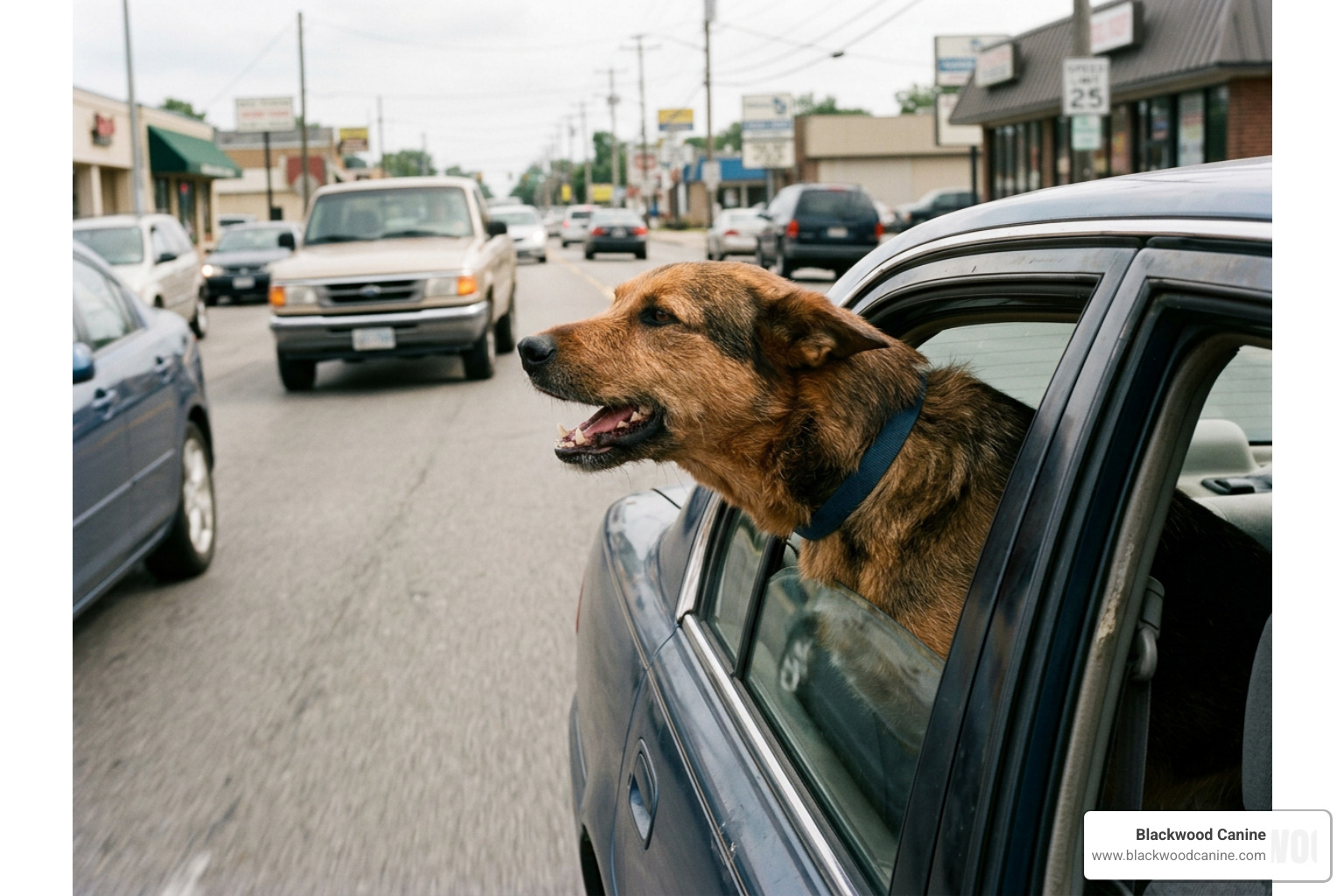
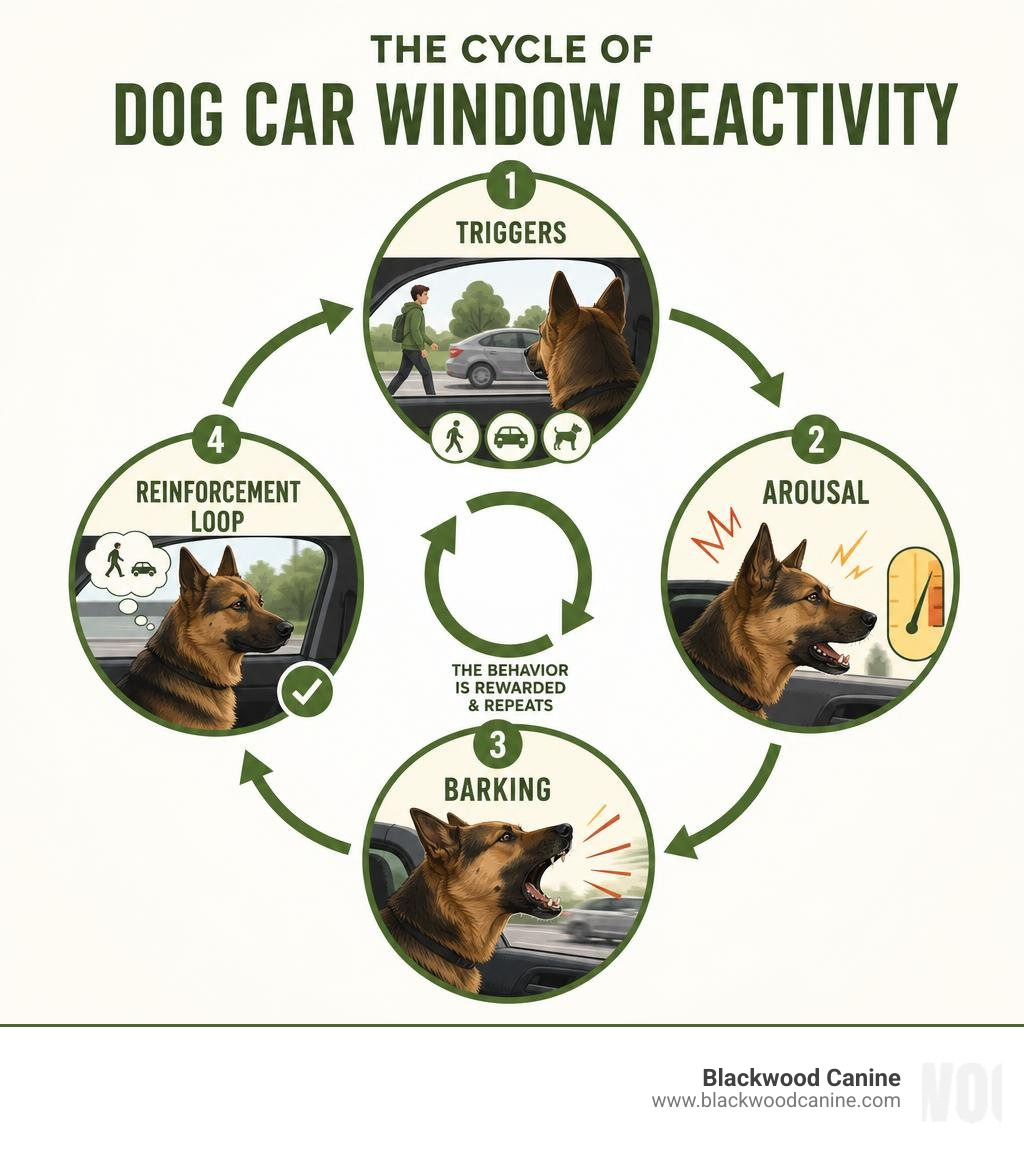
When we see a dog lunging at a car window, it is easy to assume they are just behaving badly. In reality, their brain is being flooded with stress hormones like cortisol and adrenaline. To help them, we must first understand why the window causes such a powerful emotional reaction.
Barrier Frustration and Territorial Instincts
A vehicle is essentially a mobile den. For many dogs, their natural territorial instinct kicks in the moment they enter the cabin. They see the surrounding area as their territory to patrol. When a stranger, another dog, or a cyclist enters this trigger zone, the dog feels a biological drive to warn them away.
This is where barrier frustration enters the picture. In a normal outdoor setting, a dog can walk toward a trigger to investigate or move away to create space. Inside a vehicle, the glass window acts as a physical barrier. The dog is trapped in a confined space, unable to access the outside world. This lack of control causes arousal levels to skyrocket.
Every time a pedestrian walks past the car and continues on their way, classical conditioning occurs. Your dog barks, the person walks away (because they were already going to), and your dog thinks, "Excellent, my barking made that threat disappear." This self rewarding cycle makes the behavior stronger over time. To learn more about how these patterns develop, you can read our guide on Understanding and Transforming Reactive Dog Behavior.
Differentiating Motion Sickness from Dog Anxiety Car Windows Stress
It is incredibly common for pet parents to confuse physical motion sickness with behavioral window anxiety. In many cases, the two issues overlap. A puppy with an underdeveloped vestibular system (the inner ear balance system) gets nauseous on early rides. They quickly learn to associate the visual movement outside the window with feeling physically ill. Even after they grow older and their ears mature, the anticipatory anxiety remains.
To help your dog, you must figure out whether you are dealing with a physical stomach issue, a behavioral fear response, or a combination of both.
| Symptom | Primary Motion Sickness | Primary Window Anxiety |
|---|---|---|
| Trigger | Physical movement of the vehicle | Visual triggers outside the window (dogs, people, cars) |
| Onset | Begins after the car starts moving | Can begin while parked if triggers are visible |
| Physical Signs | Heavy drooling, vomiting, inactive pacing, lip licking | Shaking, hyper vigilance, lunging, high pitch whining |
| Treat Acceptance | Refuses all treats due to physical nausea | May refuse treats only when triggers are nearby |
| Post Ride Recovery | Recovers slowly, may remain lethargic | Recovers quickly once triggers disappear |
Signs of Car Window Distress in Dogs
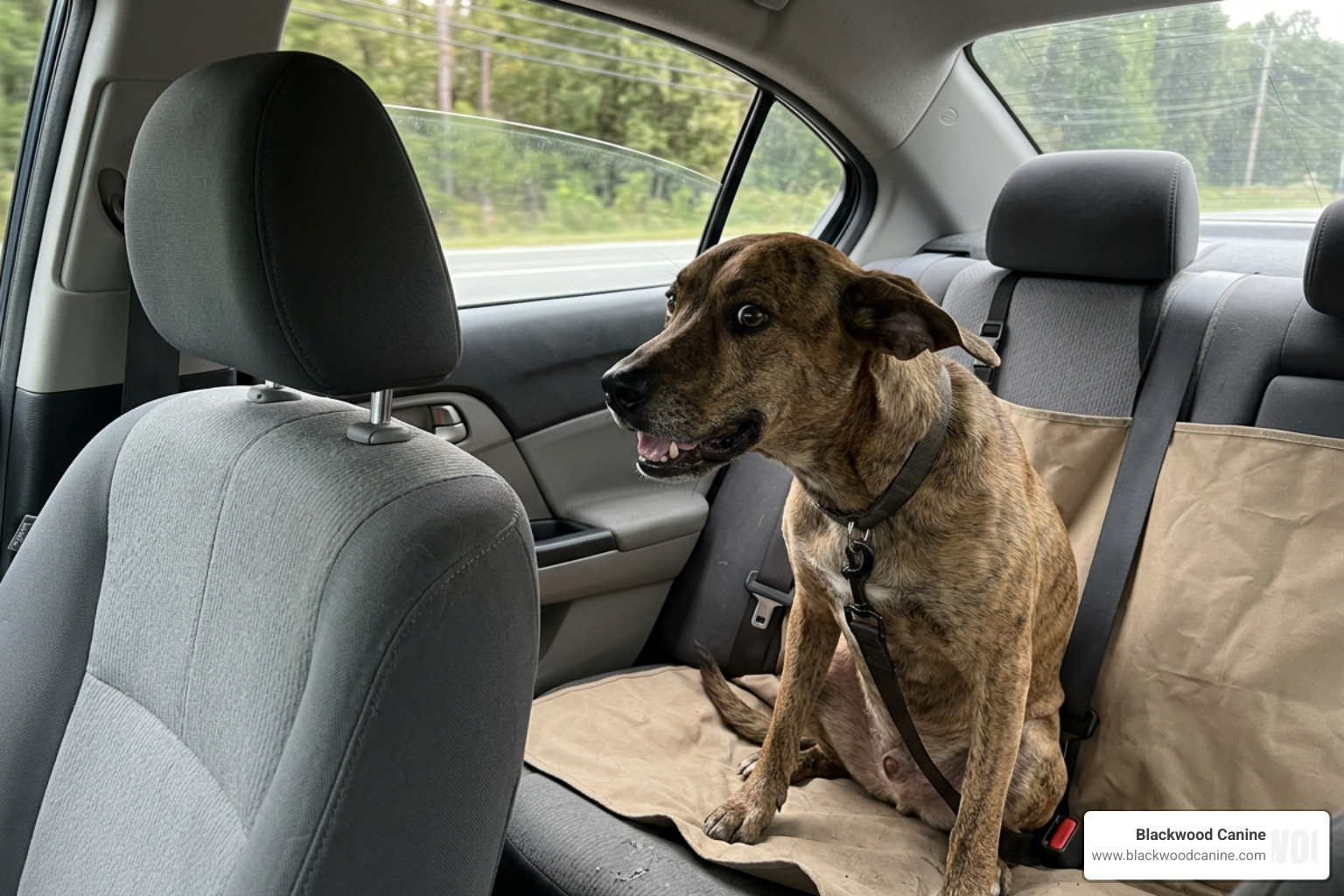
Anxiety does not always look like explosive barking. Many dogs suffer in silence, displaying subtle signs of distress long before they reach their breaking point. If you miss these early warning signals, your dog's stress will continue to stack until they erupt.
When riding in the car, watch for these common signs of travel distress:
- Excessive drooling - This is a classic sign of both nausea and extreme fear. If your dog is not normally a drooler but leaves puddles on your car seats, their stress levels are too high.
- Lip licking and yawning - These are displacement behaviors. Dogs use them to self soothe when they feel conflicted or anxious. A car yawn is not a sign of sleepiness; it is a sign of stress.
- Pacing and restlessness - An anxious dog cannot settle. They will walk back and forth across the seat, scratch at the doors, or try to climb into your lap.
- Whining or high pitch vocalizations - This is a clear expression of distress and barrier frustration.
- Trembling or shaking - This indicates a severe, full body panic response.
- Whale eye - This is when a dog turns their head slightly away but keeps their eyes locked on a trigger, showing the whites of their eyes.
If your dog displays these symptoms, they are telling you that the visual stimulation from the windows is too much for them to handle. You can read more about identifying these signals in this detailed guide on Dog Car Anxiety: Signs, Causes, and Treatment Steps.
How to Desensitize a Dog to Passing Traffic
To resolve dog anxiety car windows reactions, we must change how the dog feels about the things they see outside. This requires systematic desensitization (gradually exposing the dog to triggers at a distance where they remain calm) and counterconditioning (pairing those triggers with wonderful things).
The golden rule of behavior modification is to keep your dog below their stress threshold. If your dog is already barking and lunging, they are over threshold. Their brain is offline, and no learning can take place. We must start in a controlled environment. For professional insights on setting up this process, check out our Dog Trainer Advice on Dealing with Car Anxiety.
A Step by Step Counterconditioning Protocol
Before you begin, gather some high value treats that your dog only gets during car training. Think roasted chicken, hot dogs, or squeeze cheese.
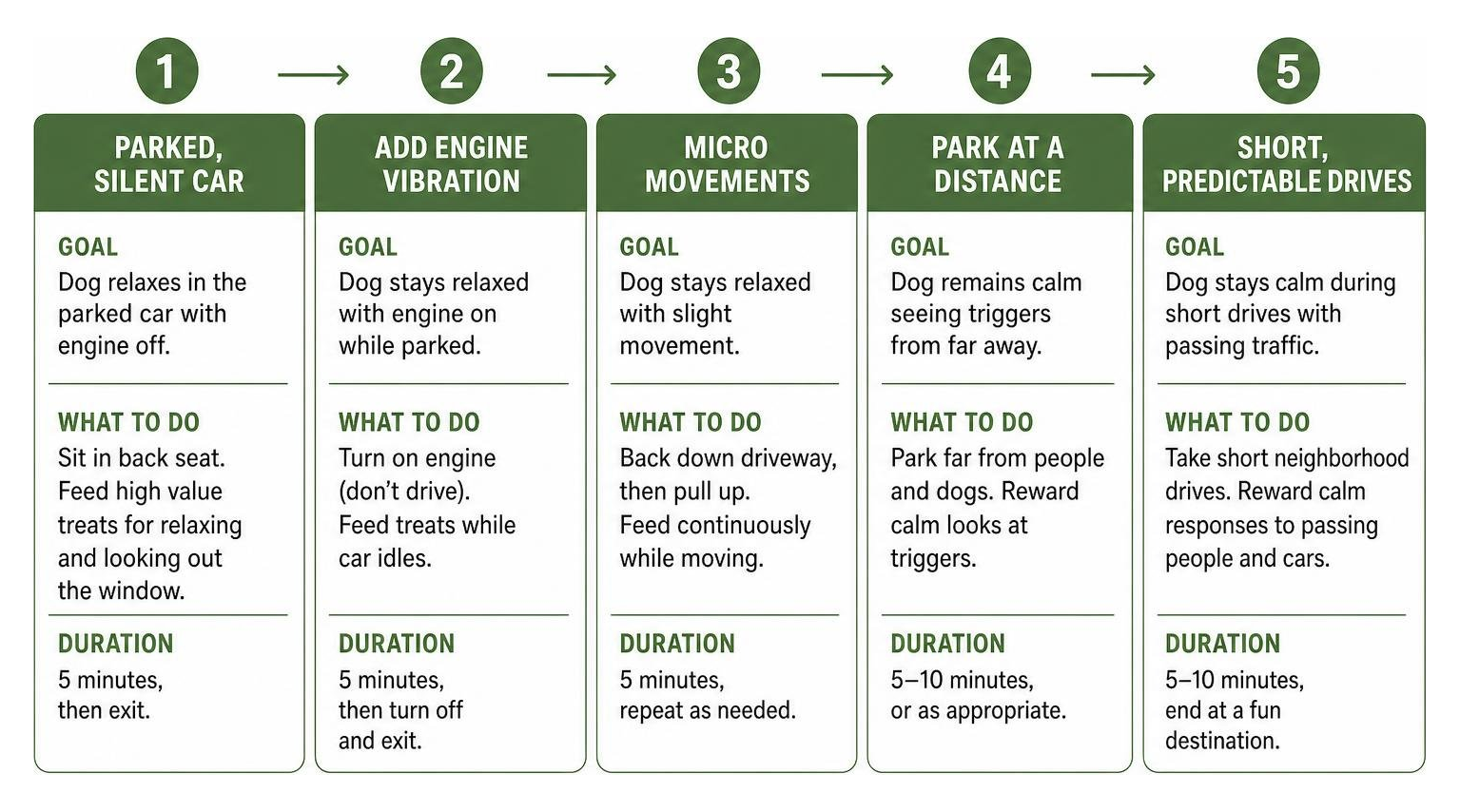
- Step 1: The Parked, Silent Car - Start with the car parked in a quiet area of your driveway, with the engine off. Sit in the back seat with your dog. Feed them high value treats just for relaxing. If they look at a window, give them a treat. Do this for five minutes, then exit.
- Step 2: Add Engine Vibration - Once your dog is happy to hang out in the silent car, turn the engine on. Do not drive anywhere. The sound and vibration can be a trigger for some dogs. Feed them their favorite treats while the car idles, then turn it off and go inside.
- Step 3: Micro Movements - Back up down your driveway, then pull back up. This introduces the visual movement of the scenery changing. Feed your dog continuously while the car is moving.
- Step 4: Park at a Distance - Drive to a quiet corner of a park or a grocery store parking lot in your local area, whether you are in Beaverton, Hillsboro, or Vancouver WA. Park far away from the action where people and dogs are barely visible. Every time your dog looks at a person in the distance and remains calm, click or say "yes," and feed them a treat.
- Step 5: Short, Predictable Drives - Take a five minute drive around your neighborhood. Have a helper sit in the back seat to feed your dog treats every time a car or person passes by. Always end the drive at a fun destination, like a quiet park trail, rather than just the vet or the groomer.
When to Seek Professional Help for Dog Anxiety Car Windows Issues
Some dogs experience such severe panic that they risk injuring themselves or causing an accident by distracting the driver. If your dog is thrashing, biting at the seatbelts, urinating in the vehicle, or showing zero progress after a month of consistent training, it is time to bring in the professionals.
At Blackwood Canine, we specialize in helping families navigate these exact challenges. If you live in Portland, Lake Oswego, Tigard, or any of our surrounding service areas, we can help. We offer Private Dog Training Lessons to teach you the mechanics of behavior modification, In-Home Private Lessons for personalized coaching, and dedicated Behavior Modification Training for severe reactivity and fear. For dogs that are highly reactive to strangers, we can even start with a virtual consultation to keep your pup stress free.
Environmental Tools and Products for Window Anxiety
While you are working through your training protocol, you still need to live your life. Management tools are essential to block visual stimulation and keep your dog from practicing the unwanted behavior on daily trips.
Window Film and Visual Barriers
One of the most effective, budget friendly management tools is temporary window film. You can purchase static cling frosted window film online and apply it to the lower half of your car's rear side windows.
This is a game changer for reactive dogs. It allows natural light into the vehicle but completely blocks your dog's view of passing pedestrians, dogs, and traffic. If they cannot see the trigger, they cannot react to it. This immediately lowers their arousal levels and prevents the self rewarding barking cycle from continuing. It is also highly effective for dogs that struggle with separation anxiety or barrier frustration when left in a parked car for brief moments.
Calming Aids and Veterinary Medications
For dogs with severe travel stress, training alone is often not enough because their brains are too flooded with panic to process new associations. In these cases, situational medication can make behavior modification possible.
A landmark clinical study published in the journal Frontiers | Acute trazodone administration reduces behavioral and physiological indicators of travel-induced anxiety in dogs in a road travel model demonstrated that a single dose of trazodone significantly reduced physiological and behavioral signs of travel stress, including lowering serum cortisol levels, reducing lip licking, and decreasing overall restlessness. Interestingly, the study found that gabapentin did not show the same level of statistical efficacy for acute travel anxiety, highlighting the importance of working with your vet to find the right pharmaceutical support.
If your dog's anxiety is rooted in motion sickness, your vet may prescribe Cerenia (maropitant citrate). Cerenia is an FDA approved antiemetic that blocks the vomiting reflex in the brain without sedating your dog, allowing them to ride comfortably and learn that the car is a safe place.
Preventing Window Anxiety in Puppies and New Dogs
The best way to solve window anxiety is to prevent it from ever developing. If you have a new puppy or a recently adopted dog, you have a golden opportunity to build positive associations with the car from day one.
The primary socialization window for puppies closes around 14 weeks of age. During this time, it is vital to introduce them to the car in a low stress way.
- Keep early trips short - Your puppy's first car rides should be no longer than two to three minutes. Drive around the block, park, feed them a handful of treats, and go back inside.
- Make the destination fun - Do not let their only car rides be to the veterinary clinic. Drive to a friend's house, a quiet park, or a drive thru for a tiny dollop of whipped cream.
- Focus on stability - Puppies easily slide around on leather seats, which can terrify them. Use a secure travel crate or a crash tested harness to keep them stable and secure.
Safety Considerations for Anxious Canine Passengers
When dealing with a dog experiencing dog anxiety car windows issues, safety must be your top priority. An unrestrained, panicked dog is a major distraction to the driver and can easily cause a serious accident.
Crash Tested Restraints and Secure Crates
In a sudden stop at 30 miles per hour, a 30 pound dog generates roughly 600 pounds of impact force. Letting your dog roam freely in the cabin or ride with their head hanging out the window is incredibly dangerous.
Look for restraints that have been certified by the Center for Pet Safety.
Here is our list of essential car safety gear for anxious dogs:
- Crash tested harness - These attach directly to your car's seatbelt system and prevent your dog from being thrown forward in a crash.
- Secured travel crate - A heavy duty, strapped down plastic or aluminum crate provides a safe, den like environment. It naturally limits their view of the windows, reducing visual triggers.
- Dog hammock - If using a harness, a back seat hammock prevents your dog from slipping onto the floorboards, giving them secure footing.
Preventing Escape and Heat Risks
Anxious dogs are flight risks. When stress levels are high, adrenaline tells the dog to run. Many dogs bolt out of the car door the second it is opened, leading to tragic situations on busy roads.
Always leash your dog before opening the car doors. Teach your dog a reliable "wait" cue, meaning they must sit and wait for your permission before exiting the vehicle.
Additionally, never leave an anxious dog unattended in a parked car. Even on mild days, temperatures inside a vehicle can reach dangerous levels in minutes, and a panicked dog will overheat much faster than a calm one. Ensure your pet is microchipped and wears an up to date ID tag at all times.
Frequently Asked Questions about Car Window Reactivity
Why does my dog only bark at people from the car and not on walks?
This is due to barrier frustration and the lack of a flight option. On a walk, your dog has space to move away from a trigger, and they can feel the open air. Inside the car, they are trapped in a tight, confined space. The glass window acts as a barrier, preventing them from investigating, which causes their frustration to boil over into barking and lunging.
Will rolling up the windows completely stop the barking?
No. While rolling up the windows can slightly reduce outside sounds, most dogs react to the visual movement of triggers. A dog will still bark at a person walking past the car even if the window is fully closed, because they can see the movement through the glass. To stop the reaction, you must block the view using tools like frosted window film.
How long does it take to resolve car window anxiety?
With consistent, daily training sessions, most owners see a noticeable improvement within four to eight weeks. However, every dog is an individual. The timeline depends on how long the behavior has been practiced, the severity of the anxiety, and how consistently you can manage their environment to prevent them from practicing the behavior between training sessions.
Let’s Make Car Rides Feel Easier
Solving dog anxiety car windows issues is not about forcing your dog to face their fears. It is about physical comfort, clear communication, and practical management. By blocking visual triggers with window film, using crash tested restraints for stability, and slowly building positive associations, you can transform your stressful car rides into calm, enjoyable adventures.
At Blackwood Canine, we are dedicated to helping families throughout the Portland metro area, Beaverton, Hillsboro, Lake Oswego, and Vancouver WA build reliable, stress free relationships with their dogs. You do not have to navigate this journey alone. Transform your reactive dog behavior with us today, and let us help you and your dog enjoy the open road together.