
How to Choose a Dog Behavior Camp That Won't Ruin Your Pup
Is a Dog Behavior Camp Right for Your Dog?

A dog behavior camp is an immersive, residential training program where your dog lives and trains with professional trainers for days or weeks at a time, rather than attending a one hour class once a week.
Here is what you need to know quickly:
- What it is: A live in training program (also called board and train) where dogs receive daily, repeated training sessions with a professional
- Who it is for: Dogs struggling with reactivity, anxiety, destructive behavior, resource guarding, or dogs that simply never learned solid foundational manners
- How long it takes: Programs typically run 2 to 6 weeks depending on the dog's needs and the severity of the behavior issues
- What it costs: Expect to pay anywhere from $1,600 to $8,800 depending on program length and location
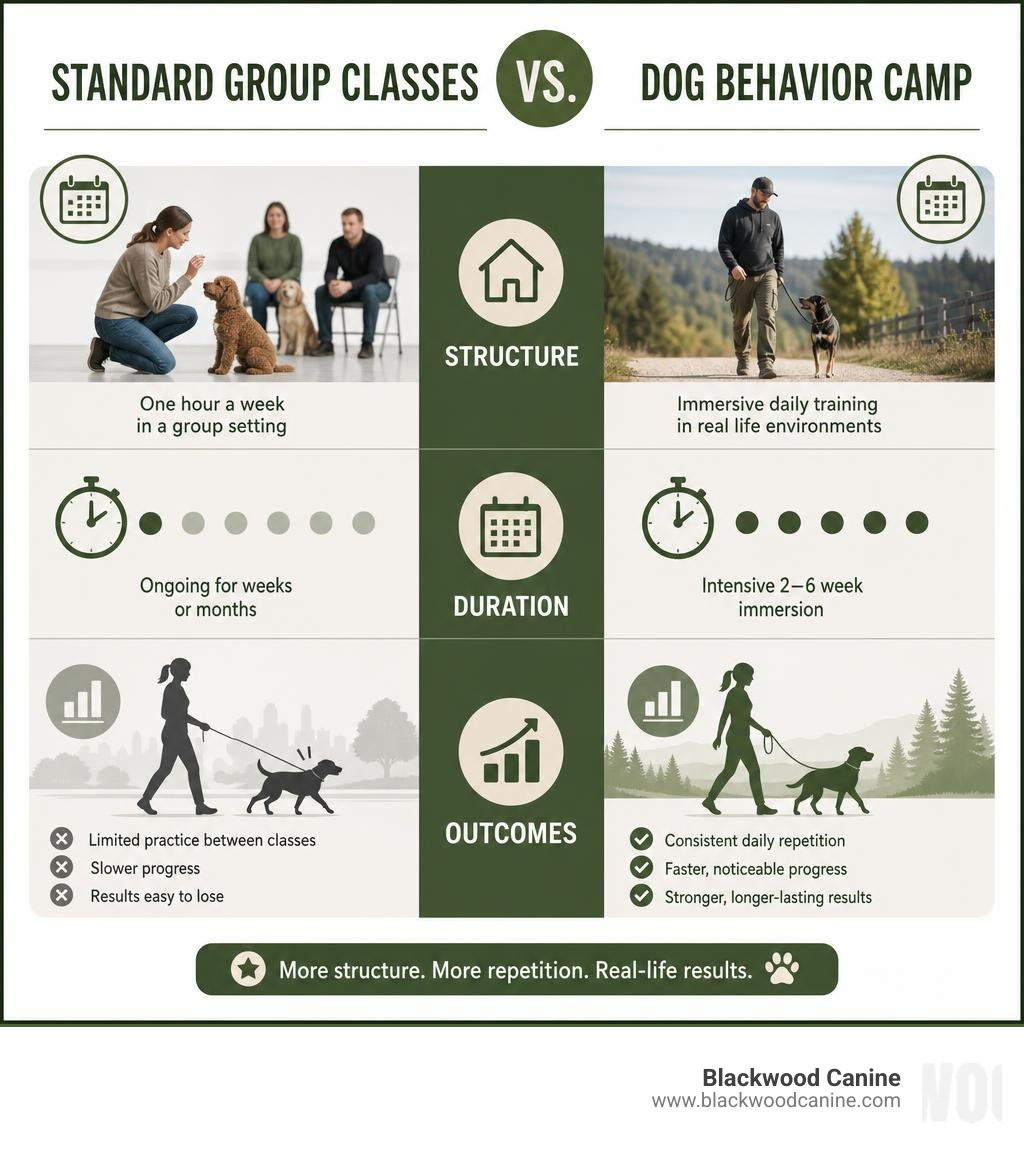
- What makes it different from group classes: Immersive repetition every single day, not once a week, and the training follows the dog into real environments, not just a classroom
- The key to lasting results: Owner coaching after camp is just as important as the training itself
If your dog is embarrassing you on walks, blowing up when guests arrive, or has already burned through group classes with little to show for it, behavior camp may be the reset you both need.
Many owners reach this point feeling defeated. You have tried the group class. You have watched the YouTube videos. You have been consistent, mostly. And your dog is still that dog on the street that everyone steps around. That experience is more common than you think, and it is exactly what behavior camp is designed to address.
I'm David Wright, founder of Blackwood Canine and a dog trainer who got his start working through real aggression challenges with his own dog before spending five years in apprenticeship under a seasoned professional. That hands on background is what shapes how I think about dog behavior camp and which programs actually deliver lasting change. In the sections below, I'll walk you through everything you need to evaluate a program with clear eyes.
What is a Dog Behavior Camp and How Does It Work?

At its core, a dog behavior camp is an intensive, residential training program. Instead of you trying to decode dog psychology after a long day at work, your dog lives in a structured environment with professional trainers. In our local Pacific Northwest communities, from Portland and Beaverton to Scappoose and Warren, this format is often referred to as a board and train or an immersion program.
The basic idea is simple: dogs are creatures of habit. When they stay in their normal home environment, they fall back into the same behavioral loops. By placing them in a new, highly structured setting, we can interrupt those unwanted patterns and build reliable new habits much faster. To understand the foundational structure of these programs, you can read more about the Dog Boot Camp Programs that we and other professionals use to design these immersive experiences.
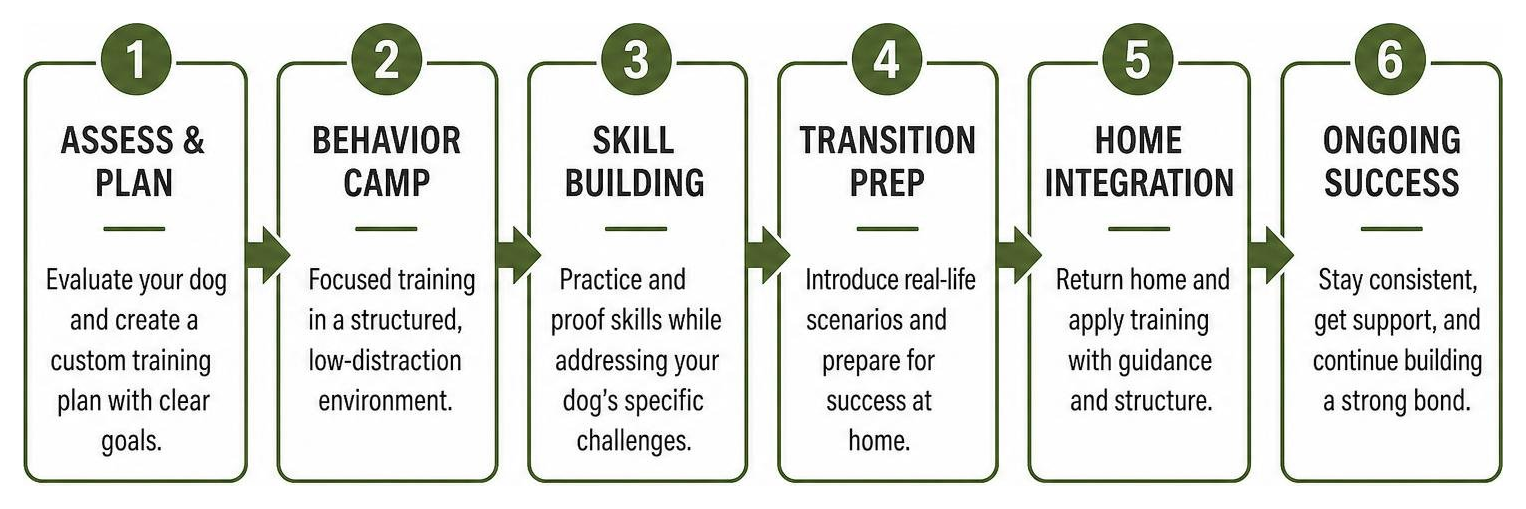
During camp, your dog does not just sit in a kennel waiting for their turn. A reputable program integrates training into every single aspect of the day. From waiting politely at doors to crate manners, loose leash walking, and place training, every interaction is a learning opportunity. The goal is to build a cooperative relationship based on clear communication.
Behavior Camp vs Standard Obedience Classes
The biggest difference between a dog behavior camp and standard obedience classes is the speed, consistency, and depth of the training. Standard group classes, such as those offered by local community organizations like Dog Training , are fantastic for basic socialization and teaching simple commands like sit or down in a controlled, low distraction room.
However, standard classes rely entirely on you doing the heavy lifting at home. If you make a mistake, or if your dog is highly distracted, you might spend weeks trying to fix a single issue. In contrast, an Immersion Dog Training program allows a professional to handle the initial, difficult phase of teaching and proofing behaviors.
Professionals know exactly when to reward, when to guide, and how to read subtle canine body language. We do the hundreds of repetitions needed to make a behavior second nature, so that when your dog returns home, you are simply maintaining a finished product rather than trying to build it from scratch.
Who is the Ideal Candidate for a Dog Behavior Camp?
Not every dog needs a full behavior camp, but for some, it is the only option that moves the needle. The ideal candidates are dogs experiencing:
- Severe leash reactivity (barking, lunging, and growling at other dogs or people)
- Separation anxiety and destructive behavior when left alone
- Resource guarding of food, toys, or sleeping spaces
- Fearfulness and lack of confidence in public spaces
- Adolescent dogs that are simply too strong or high energy for their owners to manage safely
If you are struggling with a dog that lunges at every trigger on the sidewalk, you may need specialized Reactive Dog Training. Behavior camp is particularly helpful for busy families in areas like Hillsboro, Tigard, and Lake Oswego who want a well behaved companion but lack the hours of daily free time required to rehab complex behavior issues on their own. It is also an excellent option for dogs that need a complete behavioral reset before their owners can safely handle them on walks.
Training Philosophies and Safety Standards

When you hand your dog over for several weeks, safety and training philosophy should be your top priorities. The dog training industry is unregulated, which means anyone can call themselves a behaviorist or run a camp. Understanding the methods a camp uses is vital to ensuring your dog returns home confident and happy, rather than shut down or fearful.
Positive Reinforcement and Balanced Approaches
Reputable camps generally fall into two categories: purely positive reinforcement programs and balanced training programs.
Purely positive reinforcement programs focus entirely on rewarding good behavior and ignoring or redirecting unwanted behavior. This is highly effective for building confidence, teaching new skills, and working with sensitive or fearful dogs.
Balanced training programs use all four quadrants of operant conditioning. They use positive motivation (treats, toys, praise) to teach new behaviors, but they also use clear, fair boundaries to interrupt unwanted behaviors like lunging or resource guarding. For off leash reliability, some balanced trainers in the Portland metro area utilize low level e collar stimulation paired with high value rewards.
No matter which philosophy you prefer, the camp should focus on clear communication and practical management. You can learn more about how these philosophies are applied to complex cases by exploring Behavior Modification Training. The best trainers customize their approach to the specific dog in front of them, rather than forcing every dog into a rigid, one size fits all system.
Safety Protocols and Real World Distraction Proofing
A great dog behavior camp does not keep your dog cooped up in a training room for three weeks. To make the training stick, the dog must practice their new skills in the real world. This means taking field trips to local parks, trails, and pet friendly shops in places like Vancouver, Beaverton, and Sherwood.
However, real world training requires strict safety protocols. Reputable camps maintain:
- Low dog to trainer ratios (often 4 to 1 or even lower) to ensure individual attention
- 24 hour supervision and secure, climate controlled sleeping quarters
- Strict stress monitoring policies, ensuring dogs are not pushed past their comfort thresholds
- Double leashing and secure safety harnesses during public outings
This careful exposure is especially important during seasonal transitions. For example, local weather changes can cause unexpected behavioral shifts, as detailed in our guide on Why Portland Dogs Get More Reactive in January. A professional trainer knows how to manage these environmental variables safely so your dog learns to remain neutral and calm, no matter what is happening around them.
What to Expect During and After the Program
Sending your dog to camp is a big step, and it helps to know exactly what their daily life will look like while they are away from you.
Typical Daily Schedule and Structure
A day at a professional behavior camp is highly structured, balancing physical exercise, focused training, and plenty of rest. Here is what a typical day looks like:
- Morning: Early potty break followed by a structured walk to practice loose leash walking. Breakfast is often worked for, meaning the dog earns their kibble by performing basic commands and focus exercises.
- Midday: Individual active training sessions with a professional trainer. Between sessions, dogs practice settling quietly in a crate on the training floor. This is called modeling, where dogs learn to remain calm while other dogs are being worked around them.
- Evening: Dinner, a final structured walk, and quiet wind down time in a comfortable, climate controlled suite.
This routine builds healthy habits and teaches dogs how to transition from high energy play to a calm, relaxed state of mind. For a deeper look at why this structure is so beneficial, check out our article on 5 Good Reasons to Consider a Portland Dog Board and Train Program.
The Crucial Role of Owner Coaching and Transition Training
Here is a hard truth: a trainer can make your dog perfect, but if you do not change your habits at home, your dog will eventually go back to their old ways. Dogs are highly situational learners. They need to know that the new rules apply to you, not just the trainer.
Because of this, the most important part of any dog behavior camp happens after the dog comes home. A high quality program will include:
- Detailed transition lessons where the trainer teaches you how to use the commands and tools
- Step by step homework and video guides to help you maintain the training
- Ongoing follow up lessons and lifetime support to troubleshoot any new issues that pop up
If you want to understand when this level of commitment is the right choice for your family, read our advice on When is Dog Boot Camp a Good Idea for Portland Pet Parents.
Evaluating Costs and Program Fit
Investing in a behavior camp is a significant financial and emotional commitment. To make sure you are getting the right fit for your budget and your dog, you need to understand how professional camps screen their clients and structure their pricing.
Screening Processes for a Dog Behavior Camp
A reputable camp will never accept a dog without a thorough screening process. This is for the safety of your dog, the other camp guests, and the training staff. The screening process typically includes:
- A Behavior Assessment: A one on one consultation to observe your dog's temperament, assess their triggers, and discuss your specific goals.
- Health and Vaccination Checks: Verification of up to date vaccines, including Rabies, DHPP, and Bordetella, as well as flea and tick preventative.
- Customized Planning: Ensuring that your dog's specific issues (like severe fear or resource guarding) can actually be resolved in a camp environment, or if private, in home lessons are a safer starting point.
If a camp accepts any dog over the phone without asking questions or requiring an assessment, look elsewhere. For more details on what we look for during these initial evaluations, you can view our Immersion Dog Training services.
Program Lengths and Financial Considerations
The cost of a behavior camp varies widely depending on the length of the program and the complexity of the training. In the Portland and Vancouver metro areas, typical programs include:
- 10 Day to 2 Week Foundations: Best for young dogs or puppies needing basic manners and leash skills. Prices generally range from $2,000 to $3,000.
- 3 to 4 Week Behavior Modification: Designed for dogs with moderate reactivity, anxiety, or resource guarding. Prices typically range from $4,000 to $6,000.
- 5 to 6 Week Elite Rehabilitation: For severe behavior cases, including aggression or deep seated fear. Our 5 Week Fix is an example of an intensive program designed to tackle these heavy challenges safely. Prices for these advanced programs can range from $6,500 to $8,800.
Many high quality camps offer financing options or payment plans to help make this essential care accessible. To explore more about the different program levels and their costs, you can browse through our Dog Boot Camp Category.
Frequently Asked Questions about Dog Behavior Camps
How long do behavior camp programs usually last?
Most professional programs run between 2 and 6 weeks. Basic obedience and manners can easily be established in a 2 week program, while complex issues like severe reactivity, separation anxiety, or aggression require 4 to 6 weeks. The extra time is necessary to safely desensitize the dog to their triggers and build lasting, reliable habits.
What happens if my dog does not show progress?
Training is a partnership, and every dog learns at their own pace. Reputable trainers do not force progress. If a dog needs more time to process their training, a professional will adjust the plan. True success depends on the support you receive after the program. Programs like our Complete Companion package are designed to provide the lifetime support and follow up lessons you need to ensure your dog continues to make progress at home.
Are there age or breed restrictions for behavior camp?
Most camps require puppies to be at least 5 or 6 months old so they are fully vaccinated before entering a residential environment. There is no maximum age limit, as long as your dog is in good physical health. All breeds, sizes, and temperaments are welcome, though dogs with a history of severe bites will require a highly specialized evaluation before they can be accepted into a group facility.
Find the Right Reset for Your Dog
Choosing a dog behavior camp is one of the most important decisions you will make for your dog. When done right, an immersion program provides a peaceful, structured reset that can transform a reactive or anxious pup into a calm, reliable companion.
At Blackwood Canine, our focus is always on clear communication, practical management, and helping families build stress free relationships with their dogs. Whether you live in Portland, Vancouver, Hillsboro, or Scappoose, we are here to help you find the fastest, safest route to your training goals.
If you are ready to hand off the hard work to a team of dedicated professionals, take the first step and explore our Immersion Dog Training programs today.