
The Complete Guide to Understanding Clicker Training Basics for Dogs
What Is Clicker Training for Dogs and Why It Actually Works

Repeating "sit, sit, SIT" while your dog stares at you blankly is frustrating. Most owners feel stuck because their dog genuinely does not understand which exact movement earned the treat.
What is clicker training for dogs? Here is the straightforward answer:
- A clicker is a small handheld device that makes a sharp, distinct clicking sound
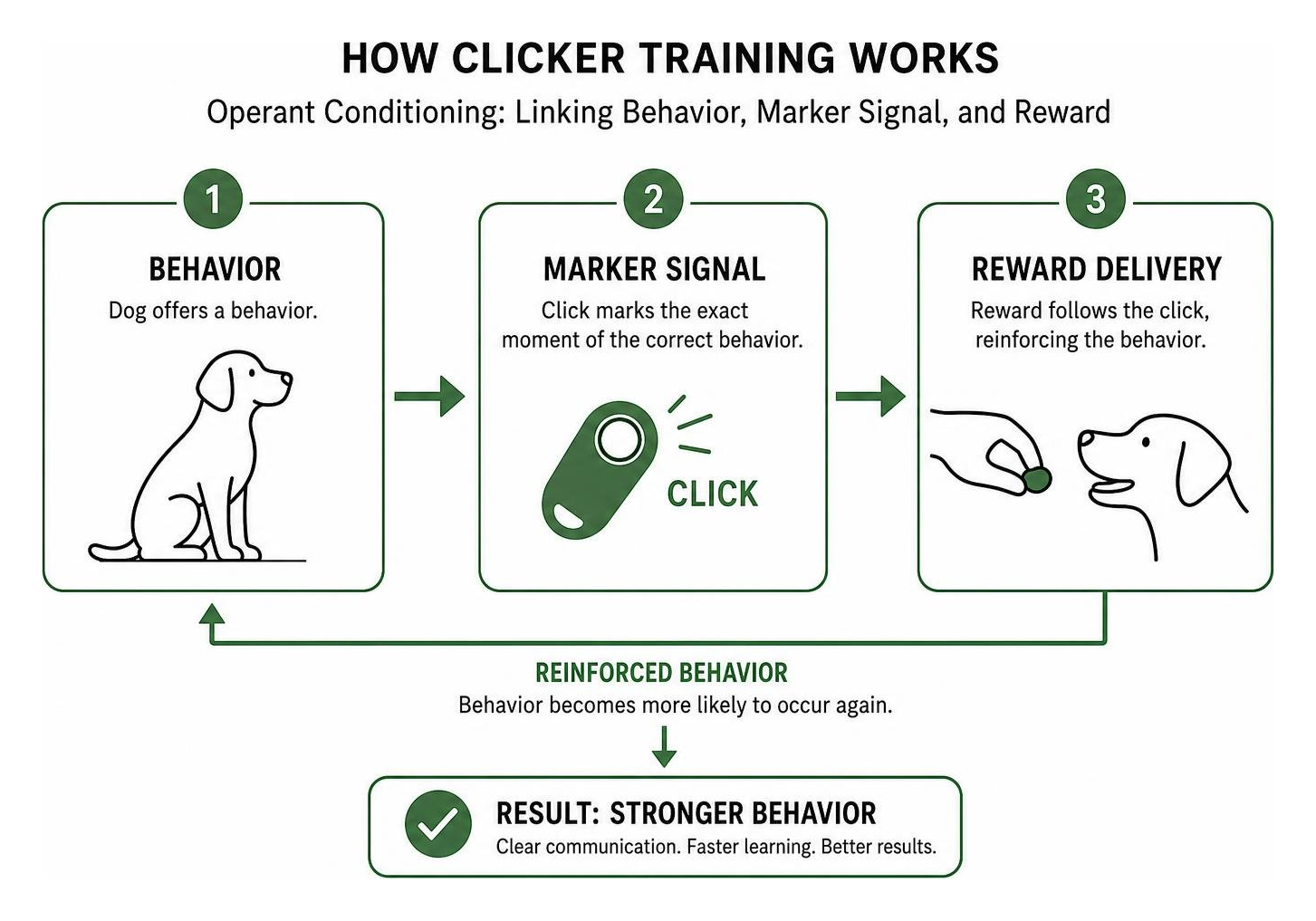
- You press the clicker at the exact moment your dog does something right
- That click tells your dog, "Yes, that behavior right there earns a reward"
- A treat follows immediately after the click
- Over time, your dog learns to repeat the behaviors that earn clicks
That is it. Simple in concept, but effective in practice.
The click works because it is precise. Your dog hears the same sound every single time with no emotional noise attached. It does not sound like your frustrated voice, your happy voice, or your tired voice. It means one thing: you got it right, and a reward is coming.
A lot of dog owners in Portland, Beaverton, Hillsboro, and surrounding areas have tried training before and felt like it just did not stick. Clicker training solves a big part of that problem by giving your dog crystal clear information at exactly the right moment.
I am David Wright, dog trainer and founder of Blackwood Canine. Understanding what is clicker training for dogs changed how I work with every dog I meet, starting with my own dog aggressive Cane Corso puppy years ago. This guide covers everything you need to get started, troubleshoot common problems, and build real results that hold up outside a quiet living room.
What Is Clicker Training for Dogs and How Does It Work?
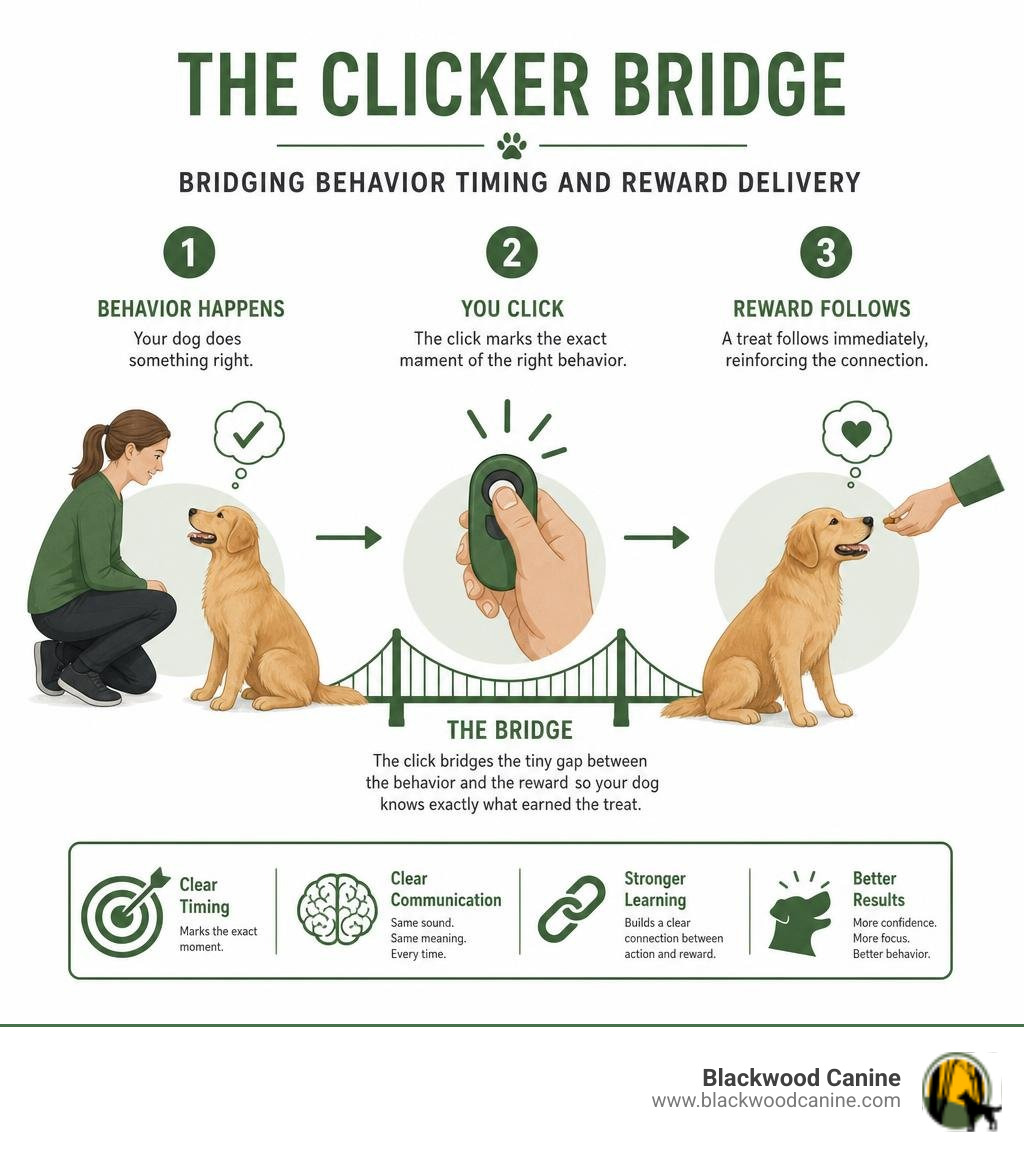
At its core, clicker training is just a super clear way to talk with your dog. It uses a marker sound to let your pup know the exact second they did something you like. When you first unwrap a clicker, the noise means nothing to your dog. It is just a neutral sound, like clicking a pen or snipping scissors. But once you pair that click with something delicious like freeze dried liver or real meat, that little noise instantly becomes the best sound in the world.
Think of the click as a bridge between the exact moment your dog sits and the moment you hand over a treat. If your dog sits, and you spend three seconds digging through your jacket pocket, your dog has already stood back up, sniffed a shoe, and scratched an ear. If you hand over the treat then, what did you actually reward? Sitting? Sniffing? Or scratching?
By using a clicker, you snap a mental picture of success right when it happens. As the team at Karen Pryor Clicker Training points out, this precision cuts out all the confusion so dogs learn new skills much faster. As we explain in our overview on how clicker training works, clickers fix the communication gaps between humans and dogs, taking the guesswork out of daily practice.
The Simple Psychology Behind Marker Signals
Clicker training comes from basic behavioral science. Dogs naturally repeat actions that lead to good things and skip actions that do not. Back in the middle of the twentieth century, animal trainers realized that giving a clear signal right before a reward makes learning almost effortless.
When your dog realizes a click always means food is on the way, their brain lights up with excitement. They are not just going through the motions. Their brain is actively connecting their choices with a fun payout.
Why Clickers Beat Verbal Praise for Clear Communication
Owners often ask me why they cannot just say "good boy" instead of carrying a plastic clicker around. You can definitely use a marker word like "yes," but a simple clicker gives you a big advantage when teaching brand new concepts:
- Sound Consistency: Our human voices constantly change tone, pitch, and emotion. A clicker sounds identical every single time.
- Environmental Noise Reduction: Your dog hears human chatter all day long. Verbal praise easily blends into background noise, but a sharp click stands out instantly.
- Faster Learning Loops: Because the signal is so clear, your dog figures out cause and effect in way fewer tries.
- Handler Timing Accuracy: Pressing a button takes a fraction of a second, making it way easier to mark fast movements than saying a multi syllable word.
Getting Started: How to Charge the Clicker and Build Engagement
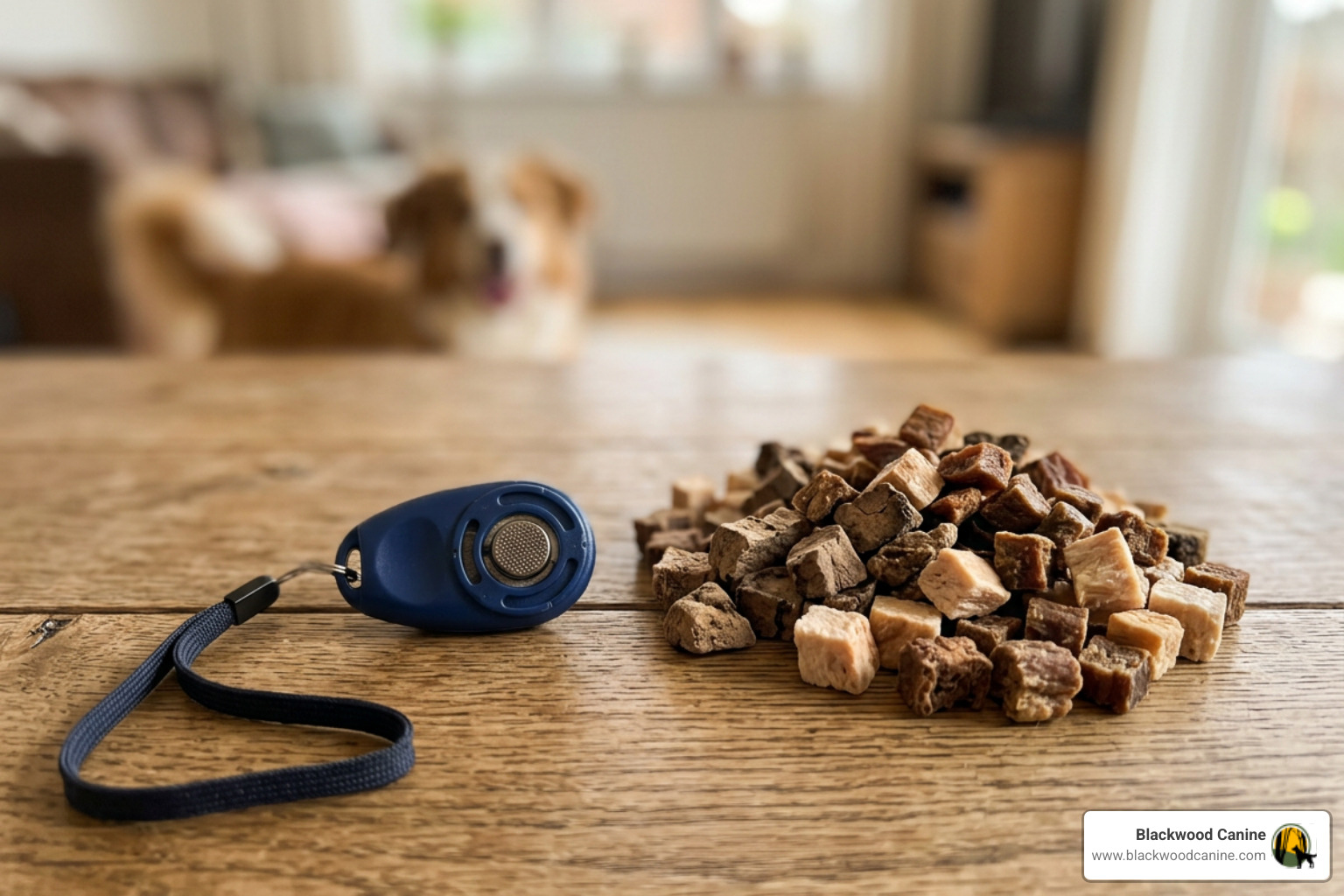
Before you can use a clicker to teach a sit, down, or place command, you must teach your dog what the noise means. Trainers refer to this initial conditioning process as loading or charging the clicker.
To build fast enthusiasm, pair the sound with soft, high value food. Our guide on building engagement with food covers how using real meat or high value treats creates focus before you ever add formal rules or boundaries.
Step by Step Guide to What Is Clicker Training for Dogs Setup
Charging a clicker is straightforward and takes less than five minutes across a few short sessions:
- Prepare your rewards: Cut soft, high value treats into tiny pieces, no larger than a fingernail.
- Find a quiet area: Go to a low distraction room in your house, like a hallway or kitchen, with your dog on a leash or off leash.
- Click and treat: Press the clicker once, then deliver a treat to your dog within one second.
- Pause and repeat: Wait ten to fifteen seconds so your dog is not mid chew, then click and treat again.
- Complete a set: Repeat this process 10 to 20 times.
You will know the clicker is charged when your dog hears the click and instantly turns their head or looks at your hands expecting food. Once that lightbulb turns on, you are ready to begin training real skills.
Troubleshooting Sound Sensitivity and Common Mistakes
Not every dog reacts to a loud clicker with instant confidence. Sensitive rescue dogs or young puppies can sometimes startle at sharp noises. If your dog flinches, backs away, or hides when you click, do not panic or force the issue.
- Soft Handheld Alternatives: Muffle standard box clickers by keeping them behind your back, wrapping them in tape, or using an adjustable soft clicker.
- Household Substitutes: A ballpoint pen click or a soft metallic bottle cap pop works great for noise shy dogs.
- Avoid Misusing the Clicker as a Recall Tool: Never click to get your dog's attention when they are ignoring you across the yard. If you click while your dog is looking away or barking at a squirrel, you just reinforced them for ignoring you.
- Withholding Rewards: Every single click is a contract. If you click by mistake, you must still deliver a treat. Breaking that promise ruins the clarity of the marker.
Core Clicker Training Techniques: Luring, Shaping, and Capturing
Once your clicker is loaded, you can apply three foundational techniques to get your dog to perform desired behaviors: luring, shaping, and capturing.
| Technique | How It Works | Best Used For | Primary Advantage |
|---|---|---|---|
| Luring | Guiding the dog's nose with a treat in hand | Basic positions like sit, down, and heel | Fast initial success for beginners |
| Shaping | Rewarding small step by step increments toward a final goal | Complex tricks, object interactions, mat work | Builds active problem solving minds |
| Capturing | Marking a naturally occurring behavior as it happens spontaneously | Calm settling, yawning, stretching, standing still | Teaches self control without physical pressure |
As the experts at the American Veterinary Society of Animal Behavior explain, combining these marking techniques with fair boundaries gives dogs clear expectations without any physical intimidation.
Mastering Food Lures and Shaping Behaviors
Luring is usually where most pet parents start. You put a piece of food in front of your dog's nose and move it slowly to guide their body into position. For a sit, move the treat slightly back over their head. As their head goes up, their rear end drops down. The millisecond their rear touches the floor, click, then release the treat. Read our detailed guide to mastering food lures for practical hand placement tips.
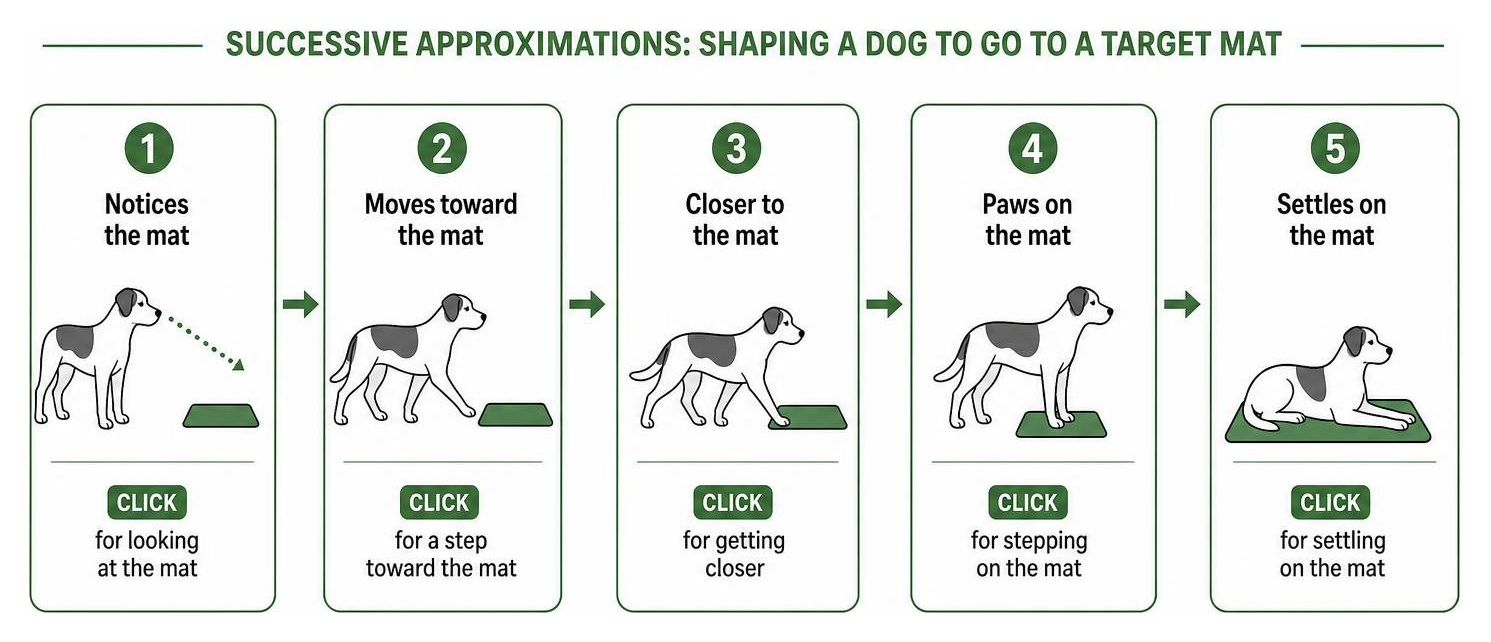
Shaping, on the other hand, breaks complex tasks into small, achievable steps. Think of it like the childhood game of hot and cold. If you want your dog to touch a target box across the room, you click when they turn toward the box, click when they take a step toward it, click when they approach it, and finally click when their nose touches it.
Capturing Natural Choices and Stationing
Capturing requires no food lures or physical guidance at all. You simply keep a clicker and treat pouch handy, waiting for your dog to offer good choices naturally.
- Capturing Calmness: If your dog wanders over to their bed and lies down quietly while you watch TV, click and reward them right on the mat.
- Stationing and Mat Work: Teaching a dog that staying on a designated place bed earns rewards prevents unwanted behaviors like door rushing, table begging, and jumpy greetings.
- Building Impulse Control: When dogs discover that offering calm, spontaneous behaviors unlocks rewards, they stop relying on pushy demands.
Behavior Modification, Anxiety, and Fading the Marker

Clicker training is far more than a tool for teaching parlor tricks. It plays a major role in structured behavior modification plans for nervous, fearful, or reactive dogs.
Our friends at VCA Animal Hospitals note how target training and clear markers help nervous pets gain focus and confidence in tricky environments.
Fading Out the Clicker Once Behaviors Are Learned
A common worry among dog owners is that they will have to carry a plastic clicker and treat bag in their pocket for the next decade. That is a myth. The clicker is a teaching tool, not a permanent crutch.
Once your dog reliably performs a behavior on cue in different environments, you fade the clicker out:
- Add your verbal cue: Say your word (like "sit" or "place") right before your dog performs the motion, click, and treat.
- Drop the clicker: Transition from the clicker to a verbal marker word like "yes" or "good."
- Variable reinforcement schedule: Stop rewarding every single sit. Start rewarding every third, second, or fifth success, turning rewards into a fun lottery system rather than a predictable payout.
- Transition to real world rewards: Replace treats with functional rewards like opening a door, releasing off leash, throwing a ball, or offering affection.
Check out our guide on fading food lures and markers for step by step transition timelines.
What Is Clicker Training for Dogs Doing for Anxious Pets?
Anxious dogs thrive on predictability. Unclear rules and emotional human reactions fuel anxiety, leaving dogs unsure of how to make things right.
When you use a clicker with anxious pets, you give them direct control over earning positive outcomes. You can mark minute physical changes, like a softening jaw, lowered ears, or a deep exhale. Rewarding these subtle micro behaviors actually shifts their internal emotional state, helping fearful dogs settle down in controlled settings.
Practical Skills and Manners You Can Teach
Now that you understand the mechanics, let us look at real world household applications for clicker concepts.
Everyday Manners and Household Boundaries
You can use marker timing to solve everyday household headaches and teach manners:
- Loose Lead Walking: Click and treat every time your dog stays by your hip with a slack lead. If they pull, stop, wait for them to look back, and mark the loose line.
- Door Etiquette: Require your dog to wait patiently in a sit at exterior doors, clicking and rewarding stability before opening the door.
- Preventing Jumping: Mark the instant all four paws hit the floor when guests walk into your home. See our guide on teaching dogs not to jump for complete greeting protocols.
Fun Tricks and Mental Exercise for Mind Games
Physical walks alone rarely tire out high energy breeds. Mental workouts built around clicker shaping burn excess energy fast:
- Hand Touches: Teach your dog to touch their nose to your open palm on command. This serves as a great distraction reset during crowded walks.
- Object Targeting: Teach your dog to push buttons, shut cabinet doors, or put toys into a basket using step by step shaping loops.
- Husbandry Care: Shape voluntary behaviors like placing paws on a scale, holding still for nail clips, or putting a chin in your hand for ear cleaning.
Frequently Asked Questions About Clicker Training
Can You Use a Clicker for Behavior Problems or Reactivity?
Yes, but with clear caveats. Clickers excel at marking calm choices and alternative behaviors during counter conditioning protocols. However, clicker training alone is rarely a total fix for severe leash reactivity, aggression, or resource guarding. Complex behavior issues usually require a professional trainer assessment to create a complete management structure, firm physical boundaries, stress reduction, fair consequences, and handler consistency across daily routines.
What Should You Do If Your Dog Ignores the Clicker Sound?
If your dog ignores a charged clicker, evaluate these three factors:
- Distraction Level: The environment is likely too loud, crowded, or overwhelming. Move back to a quiet room and rebuild focus.
- Value of Rewards: Kibble might work in your kitchen, but high distraction outdoor spaces usually require real meat, cheese, or freeze dried rewards.
- Physical Wellbeing: A dog that suddenly refuses high value food might be feeling sick, stressed, or physically uncomfortable. If you suspect physical pain or an underlying medical issue, get a veterinary evaluation to rule out health concerns.
How Is Clicker Training Different From Correction Based Methods?
Traditional correction based training relies heavily on physical pressure, leash pops, or mechanical correctors to stop unwanted behaviors. Clicker training focuses primarily on marking and building desired choices.
At Blackwood Canine, we believe successful long term training sits in the practical middle. Purely reward based methods often struggle when real world distractions pop up, while purely correction based methods create unnecessary stress. We blend clear marker communication with practical management, structured lifestyle boundaries, fair consequences, and follow through so your dog learns both what to do and what not to do.
Building Real World Reliability with Blackwood Canine
Understanding what is clicker training for dogs gives you a fantastic foundation for clear communication, but a plastic device alone will not resolve complex behavioral issues. Real world success takes clear expectations, everyday management, structured boundaries, fair consequences, and owner consistency.
Whether you live in Scappoose, St. Helens, Warren, Bethany, Hillsboro, Beaverton, Portland, or Vancouver, we are here to help you get practical results that hold up outside your kitchen. We offer tailored hands on guidance designed for busy owners who want clear answers and stress free relationships with their dogs.
Our structured programs are built around your dog's unique needs and history:
- Four Week Foundation Obedience: Perfect for young dogs and puppies starting at four weeks minimum timeline, establishing engagement, basic manners, house rules, and clear leash mechanics.
- Six Week Behavior Plans: Designed to address persistent issues like door rushing, leash pulling, selective listening, and mild reactivity.
- Eight Plus Week Modification Timelines: Exhaustive protocols tailored for complex cases including severe reactivity, fear, resource guarding, or historical aggression.
If you are tired of mixed signals, confusing methods, or training that falls apart the moment a squirrel runs past, let us help you create a clear roadmap. Reach out to Blackwood Canine today to set up your Good Dog Game Plan and build the reliable companion your family deserves.