
The Ultimate Guide to Dog Training Collar Options
Understanding Dog Training Collar Types and Options
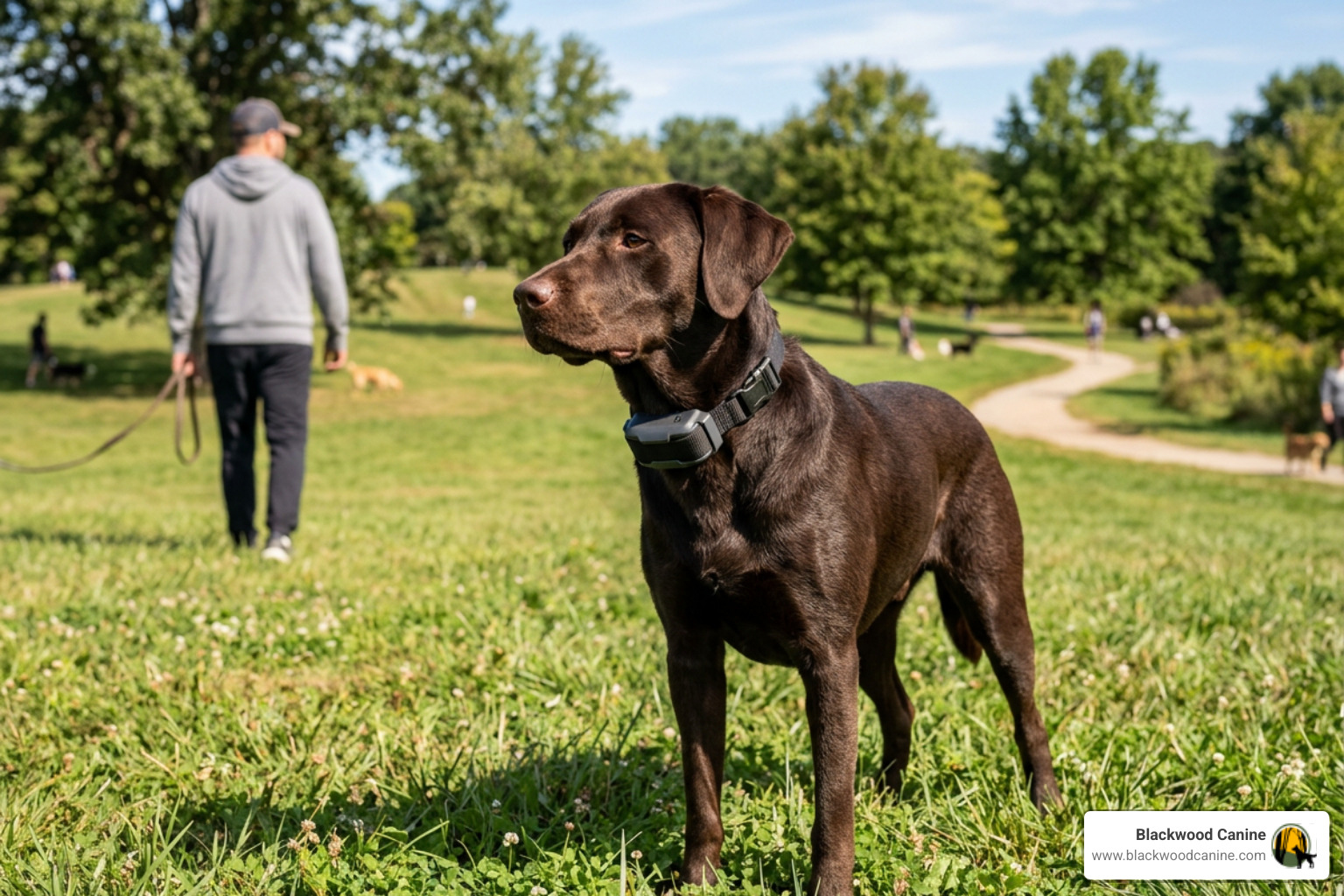
If your dog ignores you in the yard, blows off recall at the park, or barks until the neighbors stare, you are not alone. A dog training collar can help you communicate more clearly, especially when your dog is too far away for a leash to matter.
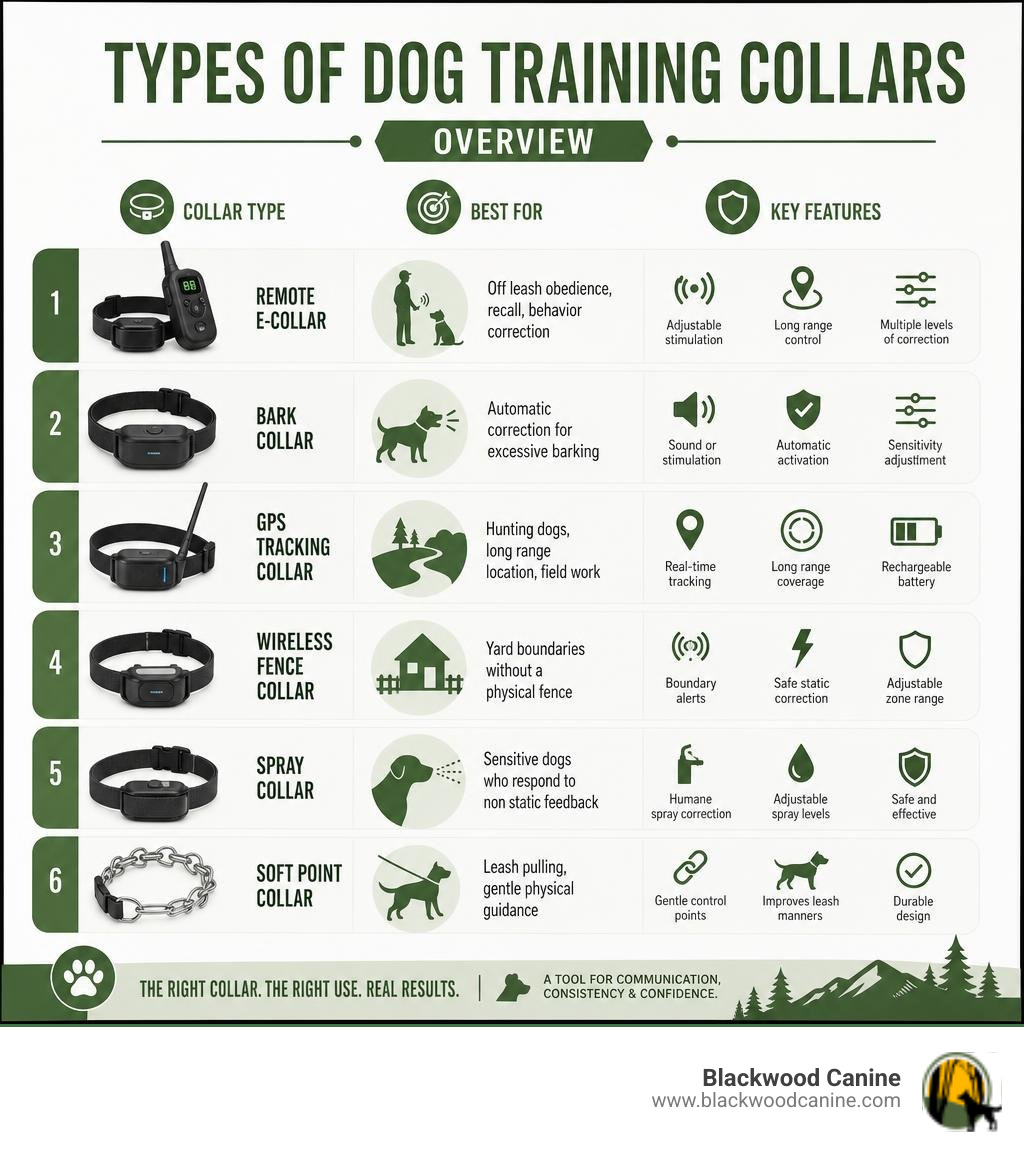
Here is a quick look at the main types and what each one is best for:
| Collar Type | Best For |
|---|---|
| Remote e collar | Off leash obedience, recall, behavior correction |
| Bark collar | Automatic correction for excessive barking |
| GPS tracking collar | Hunting dogs, long range location, field work |
| Wireless fence collar | Yard boundaries without a physical fence |
| Spray collar | Sensitive dogs who respond to non static feedback |
| Soft point collar | Leash pulling, gentle physical guidance |
Most dog owners searching for a training collar want one of three things. They want a dog that comes when called. They want a dog to stop an annoying behavior. Or they want a dog they can trust off leash.
The right collar can help with all three, but only when it is used with clear communication, management, and consistency.
A collar is a tool, not a fix. It will not make up for unclear rules, random follow through, or a dog that does not understand what you want. Successful training takes clear expectations, fair boundaries, reinforcement, fair consequences, repetition, and owner consistency.
I am David Wright, a professional dog trainer with more than 15 years of experience helping owners build real communication with their dogs, including work with dog training collars across many breeds, temperaments, and behavior problems. In this guide I will keep it practical and show you how to choose, fit, and use a training collar the right way.
How to Choose the Right Dog Training Collar for Your Dog

Choosing the best dog training collar starts with a straight answer to one question. What problem are you trying to solve?
A dog owner in Portland, Bethany, Hillsboro, or Beaverton walking a young retriever through a busy park needs different gear than someone in Scappoose, St. Helens, or Warren working a high drive dog across wooded property.
When we look at collars, we care about four things: range, stimulation style, build quality, and fit. If you want gear we trust, you can browse our curated Store/P/Training Collars section.
Essential Features of a Remote Dog Training Collar
Not all training collars hold up in real field use. Before you buy, check these details:
- Remote Range: Manufacturers list maximum line of sight distance over flat ground. Trees, hills, buildings, and weather can cut that distance fast. For a backyard or neighborhood walk, a 1000 foot range unit like the Core Dog Trainer with Remote | PetSafe® can work well. For open fields or hiking, look for half mile to 3/4 mile units like the ARC X 1 DOG UNIT | Dogtra.com or 200iQ TEAL SLIP RESISTANT | Dogtra.com . Tactical models like the BLACKDOG Military Dog Shock Collar Dark blue | Blackdog reach up to 4200 feet.
- Stimulation Levels and Precision: Look for fine control. Standard e collars may offer anywhere from 15 to 124 stimulation levels. Educator systems offer 100 levels of patented blunt pulse output, while units like the INVIROX SPARK K9 offer 124 levels across tone, vibration, and static modes. More levels help you find the lowest setting your dog notices without over correcting.
- Waterproofing Standards: If you live in Oregon or Washington, water matters. Look for IP67 submersible ratings or IPX9K standards that protect against heavy rain, mud, and deep puddles. Models like the 1900X 1 DOG UNIT | Dogtra.com carry severe environment protection built into the housing.
- Battery Life and Charging: Fast charging lithium ion batteries with magnetic or USB C ports save time. Some transmitters offer 20 hours of constant runtime, while others offer up to 90 days of standby time on a single 2 hour charge.
Sizing and Fit for Small and Large Dogs
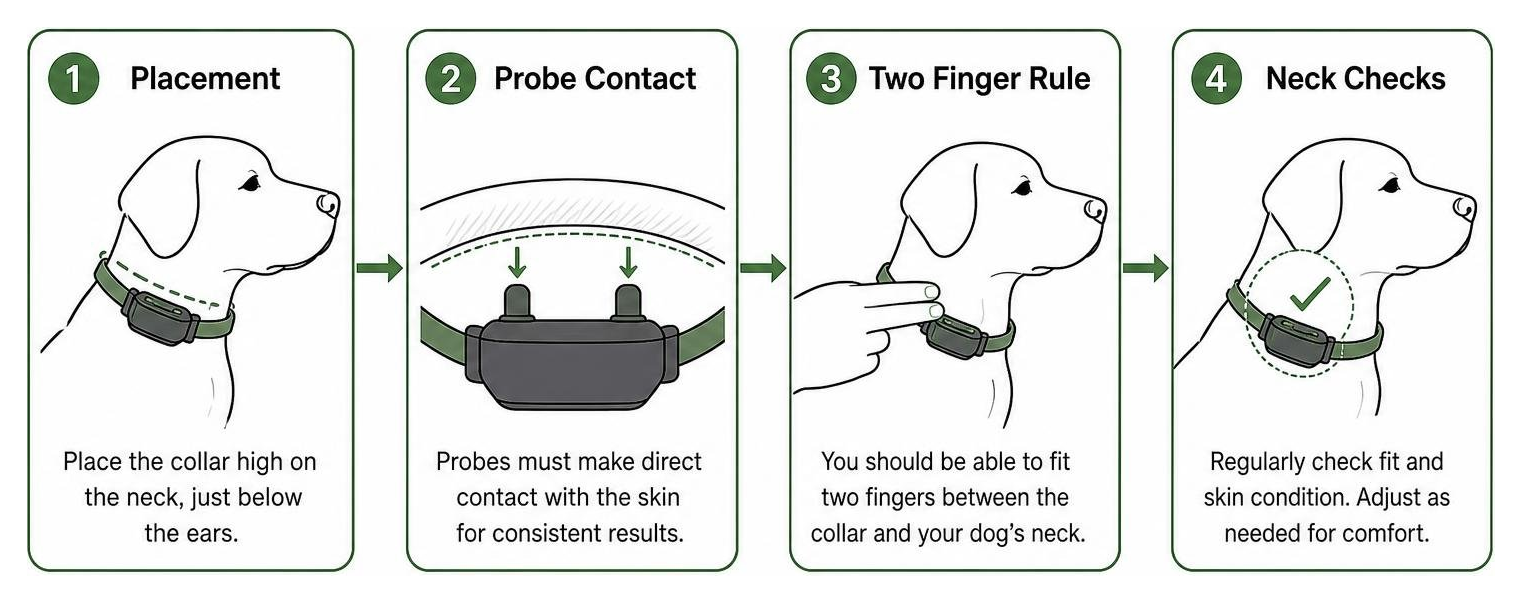
A collar can only give clear information if it fits correctly. The contact points on an electronic receiver must touch the skin. If the collar is loose, the probes slide across fur. That creates mixed signals and makes training harder for you and your dog.
When sizing a collar for dogs from 5 lbs up to 150 lbs, follow these rules:
- Neck Diameter: Measure around the upper third of your dog's neck, right below the ears. Standard straps fit neck sizes between 10 and 22 inches, though compact models like the 200iQ TEAL SLIP RESISTANT | Dogtra.com fit down to 7 inches for smaller breeds starting at 10 lbs.
- Weight Requirements: Check the minimum dog weight. Heavy receiver units over 5 oz can be too much for small dogs. Compact receivers weighing 2.4 oz to 2.75 oz are made for small to medium dogs.
- Contact Point Selection: Short haired dogs usually do fine with standard 5/8 inch contact points. Long fur dogs may need longer probes or bungee TPU straps to keep steady contact without pulling hair.
You can explore full gear options in our main store or check specific training tools in store/tools.
How Remote Electronic Collars Work Safely and Effectively
A lot of owners in Beaverton, Vancouver, Portland, and nearby areas worry that an electronic dog training collar means shocking a dog into fear. Used that way, it is the wrong tool in the wrong hands.
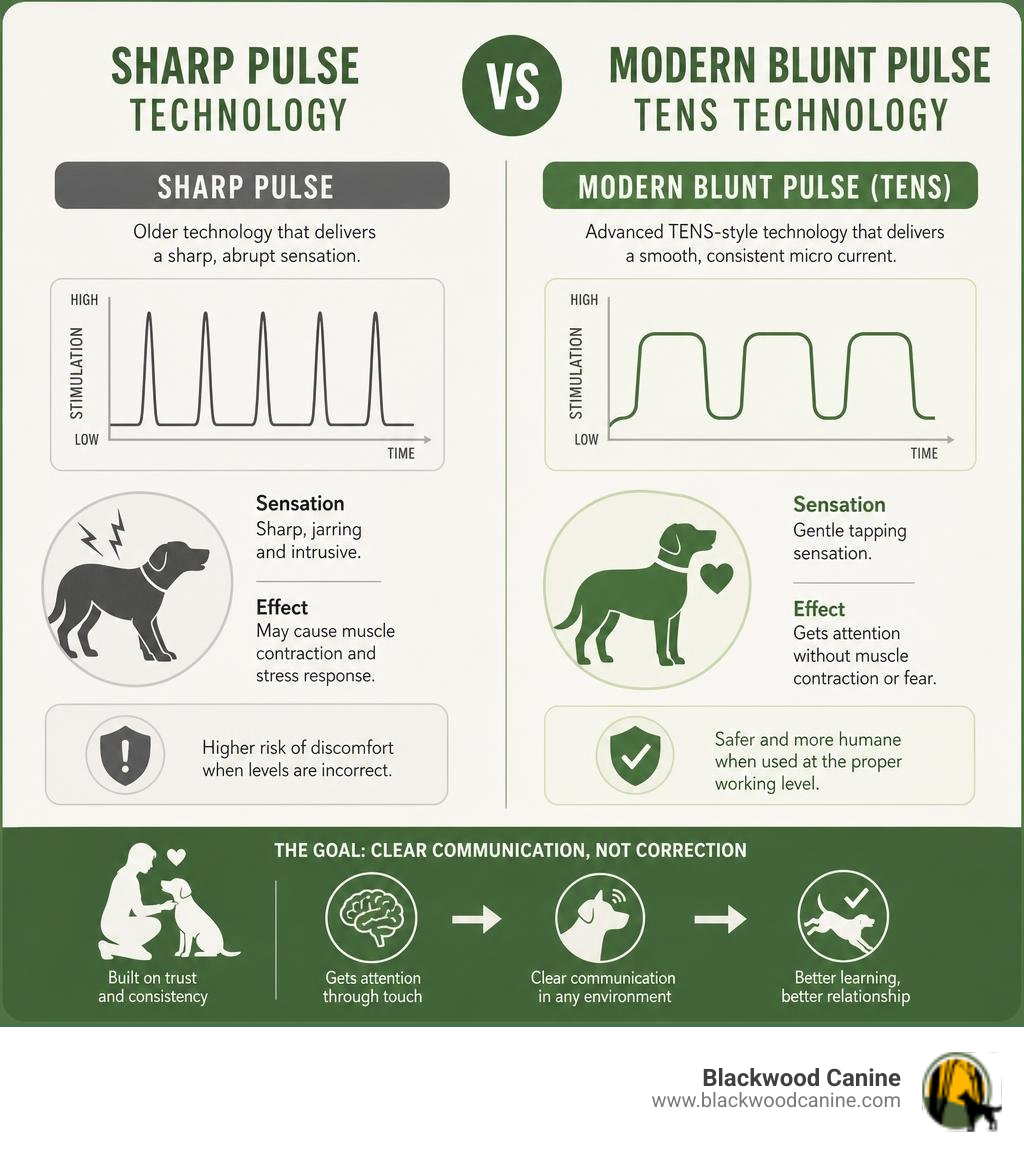
Modern professional grade e collars use blunt pulse stimulation, similar to a physical therapy TENS unit. The goal is not pain. The goal is a clear tap on the shoulder that gets your dog's attention when voice or leash pressure is not enough.
That only works when the collar is fitted right, the level is low, and the dog already understands the command. You can read more about tested designs in the Best Dog Training Collars of 2026, Tested publication.
Finding Your Dog's Recognition Level
Every dog has a different sensitivity threshold. Your goal is to find your dog's Recognition Level. That means the lowest setting your dog notices.
To find the Recognition Level safely:
- Fit the collar correctly and turn the transmitter to level 1.
- Press the continuous stimulation button while watching your dog closely.
- Look for small signs: an ear flick, a head turn, an eye blink, or a mild neck scratch.
- If your dog shows no reaction, move up one level at a time and test again.
- Stop when you see a small response without fear, panic, or vocalizing.
Once you find that level, you can pair tone or vibration with low level stimulation. With repetition, many dogs learn to respond to the tone first. Static stimulation can then be saved for higher distraction moments or safety situations. You can find lightweight e collars suited for this work in our store/p/ecollars section.
Safety Rules and Skin Health Protection
Even a good e collar can cause skin irritation if it is left on too long or fitted poorly. The most common problem is pressure necrosis, which is often mistaken for an electrical burn. It happens when contact points press on the same spot for too many hours and cut off circulation.
Follow these safety rules:
- Limit Daily Wear: Do not leave a training collar on your dog for more than 12 hours total in a 24 hour period.
- Rotate Position: Move the receiver on your dog's neck every 1 to 2 hours during training sessions.
- Check Skin Daily: Look at your dog's neck each day for redness, rash, or irritation.
- Clean Equipment Weekly: Wipe the neck area and clean the metal contact probes weekly with a damp cloth and warm water.
- Never Attach a Leash Directly: Do not clip a leash to an electronic training collar strap. Pulling puts too much pressure on the contact points. Use a separate flat collar or harness for leash restraint.
For alternative physical options like non electronic gentle point guidance, check out the Store/P/Starmark Pro Training Dog Collar or review traditional equipment on Dog Training Collars.
Using Tools for Obedience and Behavior Correction

A dog training collar should work like an extension of your voice and leash. It is not a shortcut around teaching. It is not a button that creates obedience.
Whether you are working in a backyard in Hillsboro, walking trails in Forest Grove, or managing a dog near busy streets in Vancouver, electronic collars are best used for instant, fair feedback at a distance.
Teaching Basic Commands with an E Collar
Before you use e collar stimulation with commands like Sit, Stay, or Come, your dog needs to understand those words on leash. The e collar reinforces known commands. It should not be used to teach brand new behaviors from scratch.
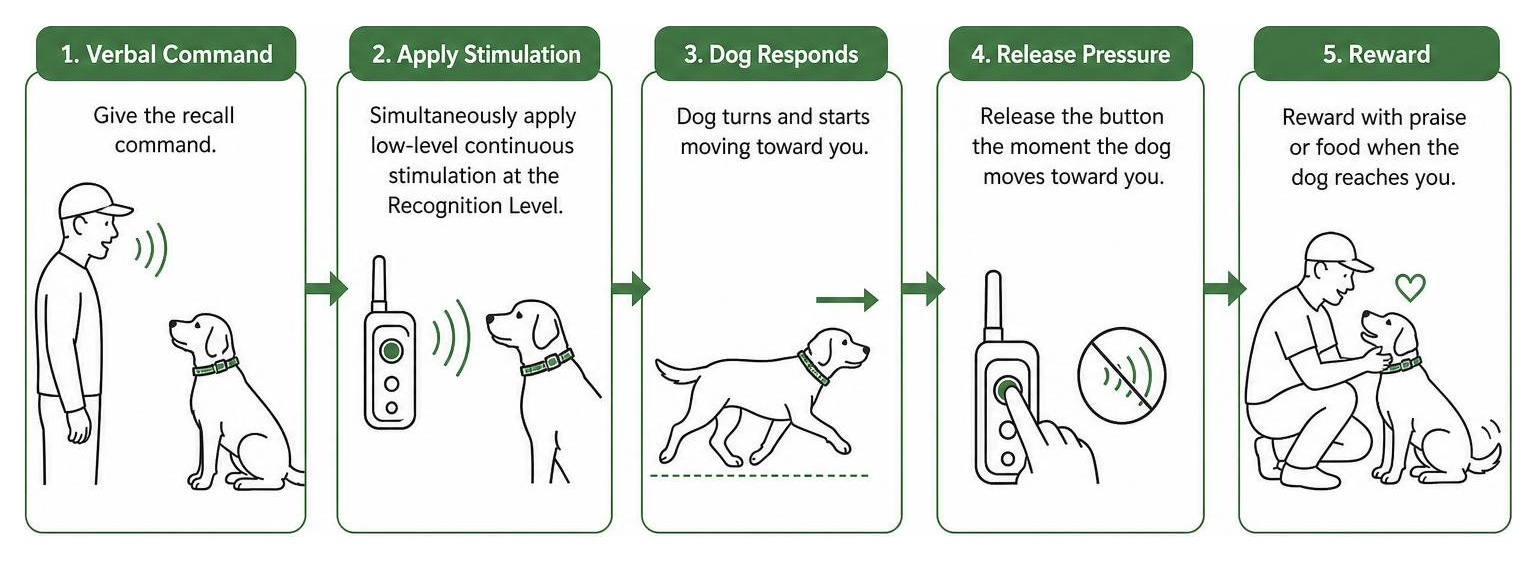
Here is how we introduce recall off leash using low level stimulation:
- Put your dog on a 15 to 20 foot long line attached to a regular buckle collar while wearing the fitted e collar.
- Give your verbal recall command, such as "Come," and activate low level continuous stimulation at your dog's Recognition Level.
- Gently guide your dog toward you with leash pressure.
- The second your dog turns and moves toward you, release the remote button.
- Reward your dog with praise or food when they reach you.
With repetition, your dog learns that turning toward you turns off the pressure. Then you can slowly remove leash pressure and build off leash communication at greater distances.
E collars can also interrupt unwanted behaviors like yard digging, trash raiding, or counter surfing. Timing matters. If feedback comes too late, your dog will not understand what caused it.
For serious behavior issues like aggression, fear, severe reactivity, sudden behavior changes, or possible pain, do not guess. Get a professional assessment. If the behavior may have a medical cause, involve your veterinarian.
Special Uses for GPS Tracking and Hunting
For sporting dogs, field trials, and deep wilderness tracking in rural parts of Oregon and Washington, standard remote trainers are often combined with satellite GPS tracking systems. High end units can track multiple dogs across long distances.
GPS systems help field handlers track dog location in dense cover, receive alerts when a dog goes on point, and give low level corrections across distances where standard line of sight signals may fail.
Frequently Asked Questions About Dog Training Collars
How do I properly fit a dog training collar?
Place the collar high on your dog's neck, just below the base of the skull and ears. Set the receiver box under the neck, centered near the windpipe. Tighten the strap until you can slide two fingers between the contact points and your dog's skin. If the collar shifts when your dog shakes its head, it is too loose and contact will be inconsistent.
Are static collars safe and humane for daily use?
They can be safe when modern units are used correctly, at low working levels, and with clear training. The goal is not fear or pain. The goal is clear communication. Many daily sessions use tone, vibration, leash guidance, food, praise, structure, and fair consequences. Static should not replace teaching, management, or owner consistency.
Can e collars help stop aggressive dog behavior?
Do not use an e collar to correct aggressive behavior without professional guidance. Static stimulation on a fearful, reactive, or aggressive dog can raise arousal and make the problem worse. Aggression needs a hands on assessment. If pain, illness, or sudden behavior change may be involved, talk with your veterinarian too.
Neighborly Guidance for Lasting Success Beyond the Collar
A dog training collar can be a wonderful helper, but it will not run your home for you. It will not set clear boundaries on its own or make up for mixed signals from family members.
Real training goes way beyond simple commands. Most dogs thrive when they have clear expectations, helpful management, positive reinforcement, fair consequences, and steady owner consistency day after day.
At Blackwood Canine, we love helping dog owners across Scappoose, St. Helens, Warren, Bethany, Hillsboro, Beaverton, Portland, Vancouver, and nearby Oregon and Washington communities build genuine trust and clear communication with their dogs. We do not sell magic fixes. We sit down with you as neighbors and experts to help you understand what your dog is communicating, what needs adjustment, and how to follow through with confidence.
If you are working through basic obedience or working past tough behavior challenges, we offer hands on programs designed around realistic timelines:
- 4 Week Foundation Training: Basic obedience foundation training starts at a minimum of 4 weeks so you and your dog have plenty of time to build real habits together.
- 6 Week Behavior Modification: Designed for moderate behavior challenges, leash reactivity, and everyday communication bumps in the road.
- 8 Plus Week Advanced Programs: Designed for complex behavior work, high arousal issues, and patterns that need extra time, care, and structure.
We do not offer programs shorter than 4 weeks because true habit change takes practice and patience. Whether you are aiming for reliable recall on local hiking trails or peaceful afternoons in your own backyard, consistent effort makes all the difference.
If you are ready to take the guesswork out of training, your next step is easy. Visit our main Store/P/Training Collars page or reach out to us today to schedule a friendly training assessment.