
Understanding Travel Distress: Motion Sickness vs. Behavioral Fear
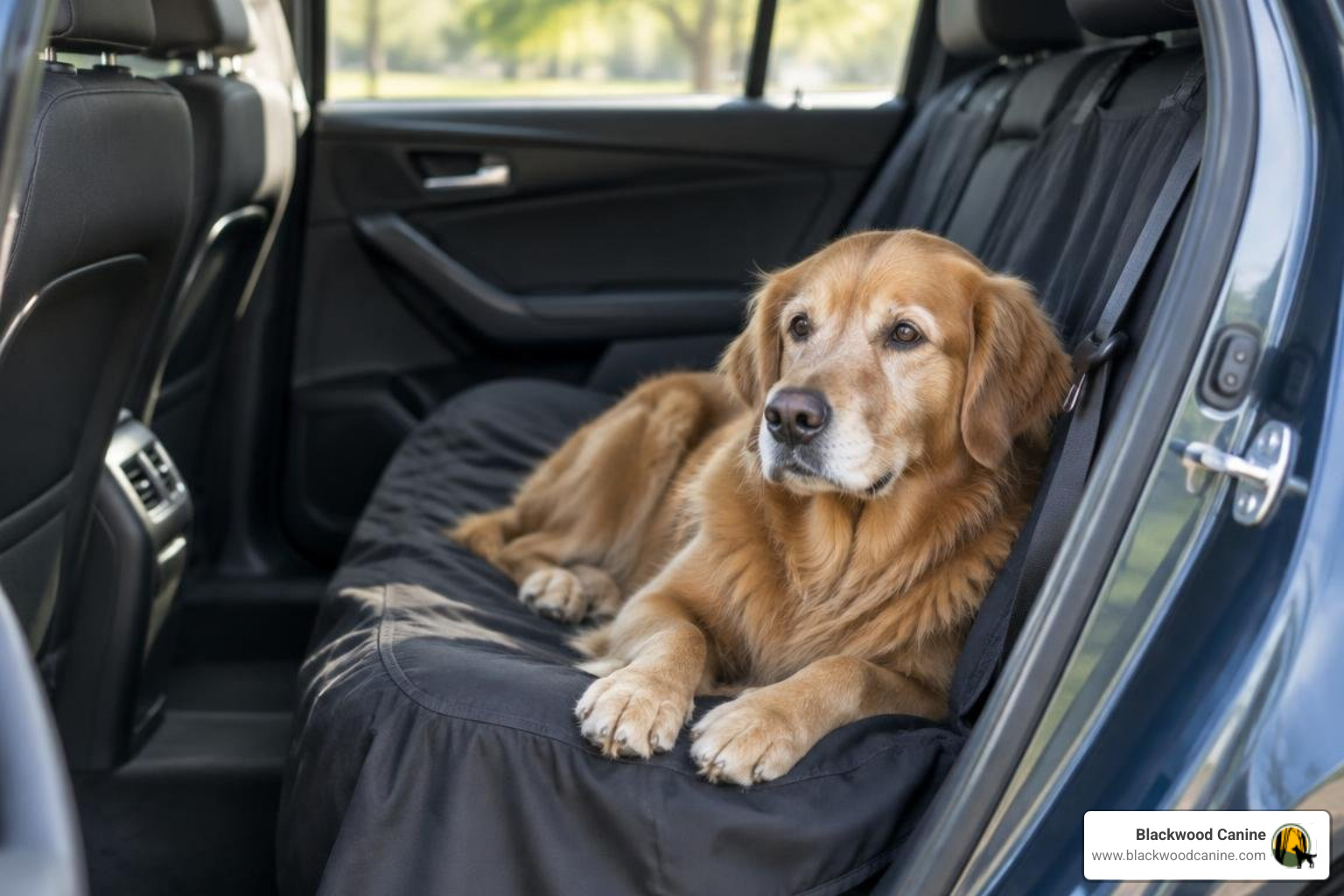
Managing dog car anxiety starts with a clear plan: figure out whether you are dealing with physical nausea or learned fear, then use short, calm practice sessions that keep your dog below their panic threshold. Pair that with secure travel gear, cool airflow, and the right calming support when needed. Quick fixes rarely work, but a step by step approach does.
Figuring out why your dog struggles in the vehicle is the first real step toward solving the problem. Travel issues usually fall into two categories: a physical reaction in the inner ear or a learned emotional fear. Treating nausea with obedience cues will not help, and giving an anti vomiting pill will not automatically fix sheer panic.
The easiest way to tell the difference is symptom timing. Does your dog begin to tremble the moment you pick up your car keys or walk toward the driveway? That points toward anticipatory distress. Does your dog jump in happily but begin drooling puddles ten minutes into the drive? That points directly to physical nausea. For deeper clinical context, veterinary research on travel distress confirms that physical motion sickness and psychological panic require distinct interventions.
| Feature | Vestibular Motion Sickness | Behavioral Travel Anxiety |
|---|---|---|
| Primary Trigger | Physical vehicle movement and inner ear disturbance | Anticipation, vehicle sight, engine noise, or confinement |
| Symptom Timing | Begins several minutes after the car starts rolling | Begins before entering the vehicle or at engine ignition |
| Key Physical Signs | Heavy lip licking, excessive drool, active vomiting, yawning | Trembling, pacing, panting, dilated pupils, whale eye |
| Response to Treats | Refuses food due to genuine stomach nausea | Refuses food due to high stress, but takes it away from the car |
| Destination Impact | Happens on every drive regardless of destination | Often worse on trips to the vet or unfamiliar places |
Physical Signs and Vestibular Nausea
True motion sickness is physiological. The vestibular system inside the inner ear regulates balance and spatial orientation. When the inner ear senses movement that does not match what the eyes see, the brain triggers a nausea response.
Common physical symptoms include:
- Excessive drooling that leaves wet patches on the seats
- Repetitive lip licking and sudden yawning
- Active vomiting or dry heaving
- Lethargy and dull body posture while moving
Puppies are especially prone to this issue because their inner ear structures are still developing. While many young dogs outgrow the nausea, untreated motion sickness can quickly become a learned fear if every ride results in an upset stomach.
Behavioral Signs and Conditioned Fear
Behavioral car anxiety is rooted in emotion rather than inner ear signals. A dog might develop this fear after a scary event, such as a sudden stop, or because they associate the car only with unpleasant experiences like veterinary exams or nail trims.
Typical behavioral symptoms include:
- Trembling or body shaking before getting inside
- Pacing relentlessly across the back seat
- Whining, barking, or howling
- Balking at the car door and refusing to load
- Showing whale eye where the whites of the eyes become visible
If your dog displays these stress signals, you can explore effective ways to reduce dog anxiety in the car to help reset their mindset before setting out on your next drive.
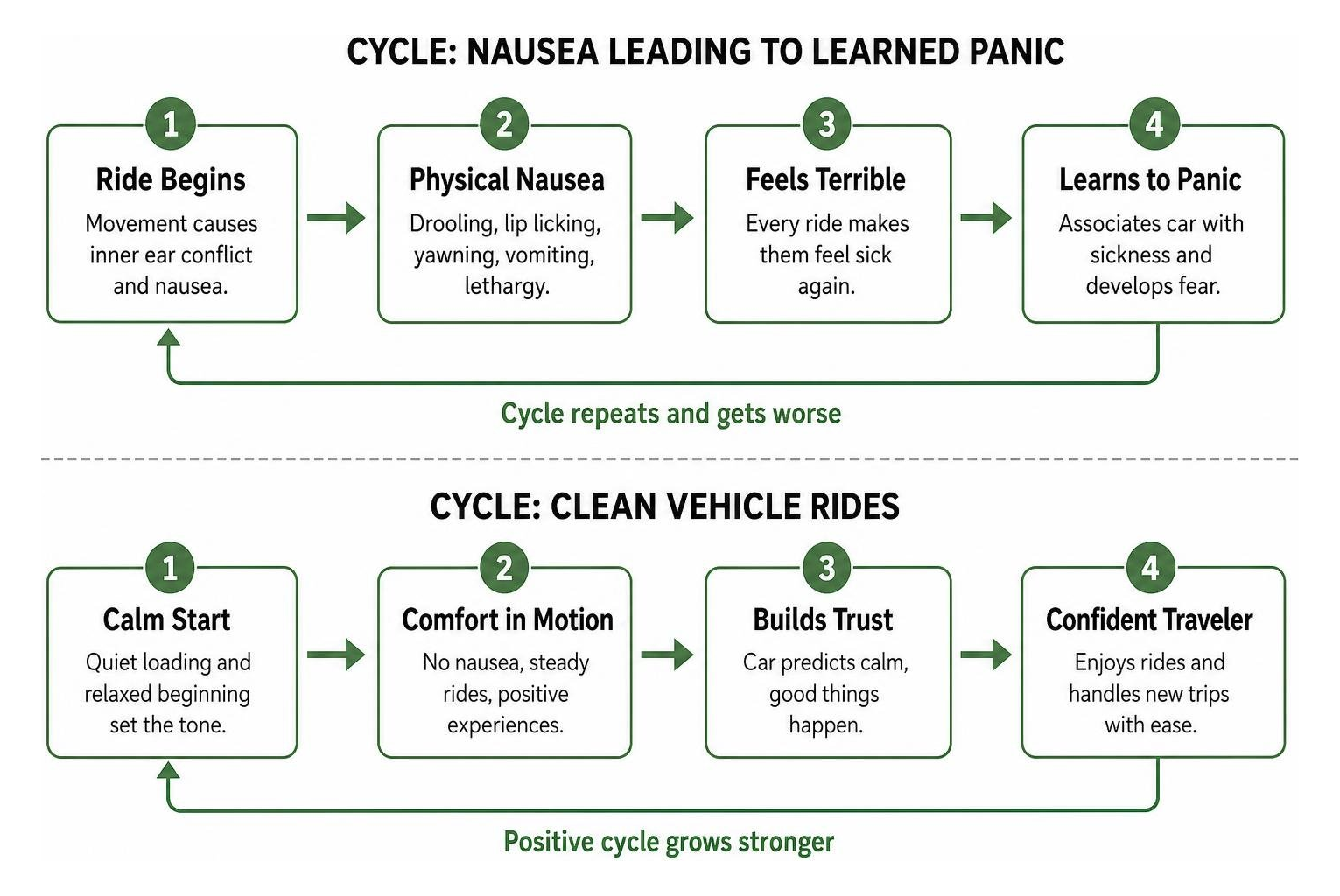
A Step by Step Protocol for Dog Car Anxiety Management
Helping a dog overcome travel stress requires patience, clear boundaries, and structured training. Flooding a dog by forcing them into a vehicle for a two hour drive when they are already terrified only reinforces their panic. Instead, we use systematic desensitization to keep your dog below their stress threshold at every step.
When you need a structured game plan, professional dog trainer advice on dealing with car anxiety offers clear guidance on balancing structure with calm reassurance.
Why Dog Car Anxiety Management Starts with Root Causes
Car trouble rarely happens in a vacuum. It usually stems from specific underlying factors:
- Lack of early habituation: Puppies that never experience the car during their early development find the movement, sound, and vibration overwhelming later in life.
- Destination bias: Research shows dogs driven only to stressful places, like the vet clinic, display negative reactions at more than double the rate (46.4%) of dogs driven to fun locations (22.7%).
- Past trauma: A minor fender bender or sliding across a slick leather seat can create lasting fear.
- Confinement claustrophobia: Feeling trapped in a tight footwell or loose inside a sliding crate creates insecurity.
Successful dog car anxiety management addresses these root issues directly through clear communication, sensible management, and consistent routines.
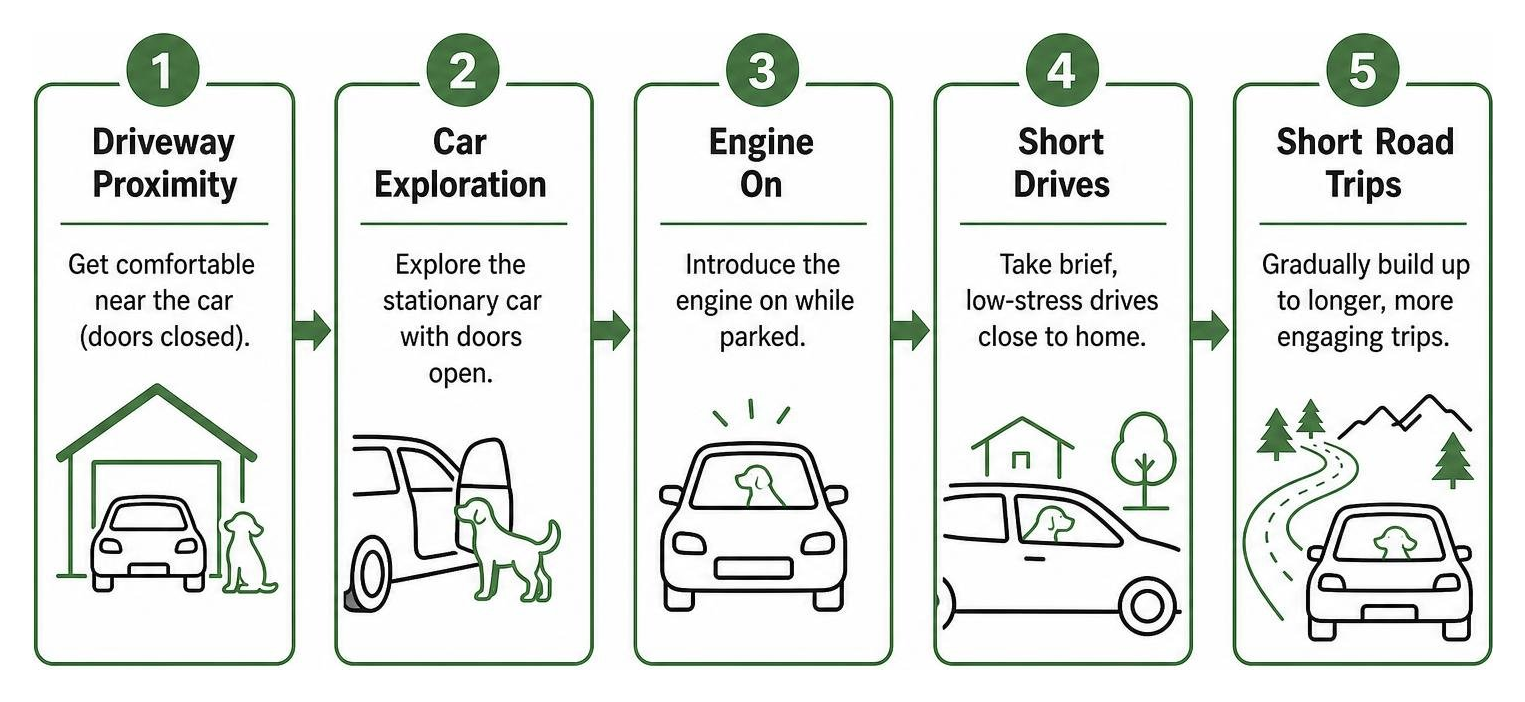
The Five Stage Desensitization Process
Work through these five stages at your dog's own pace. Only advance to the next step when your dog is completely relaxed during the current one.
- Stationary Proximity: Walk your dog on a leash around the parked car with the engine off. Scatter high value treats on the ground nearby. Reward calm body language and walk away before any stress appears.
- Engine Off Boarding: Open the car doors wide. Allow your dog to hop in voluntarily to eat a meal or enjoy a special chew, then let them exit immediately. Never trap them inside during this stage. Following positive association training guidelines helps build this confidence step by step.
- Engine Idle Conditioning: Have your dog sit calmly in their secured travel spot. Turn the engine on without moving the vehicle. Offer praise and high value rewards while the engine runs for one to two minutes, then turn it off and exit. You can also follow structured dog car anxiety exercises to reinforce this calm baseline.
- Short Low Speed Drives: Back down the driveway and pull right back in. Progress to driving around the block at low speeds. Keep sessions under three minutes.
- High Value Destination Pairing: Drive three to five minutes to a fun location, such as a quiet park trail, play a quick game, and drive home. This breaks the pattern of car rides always ending in something unpleasant.
Environmental Adjustments and Visual Triggers
Small changes to the car environment can make a big difference in how your dog feels. Keep the cabin cool with plenty of fresh airflow from vents or a cracked window. Dogs process heat and stress poorly in stuffy cars.
Visual motion overload is another hidden trigger. Watching scenery whip past side windows at high speeds can trigger dizziness and anxiety. You can manage this by installing window shades, using a covered travel crate, or learning how handling dog anxiety around car windows can keep your dog grounded and relaxed.
Supportive Aids, Calming Supplements, and Medications
For dogs with severe panic or persistent motion sickness, behavioral training alone may stall because the dog is too distressed to learn. In these situations, combining environmental tools, supplements, and veterinary medication can help lower your dog's stress levels. Reviewing proven dog car anxiety tips for 2026 will help you pair training tools with practical calming support.
Calming Aids and Non Pharmaceutical Tools
Non medical aids can provide gentle support for mild to moderate travel worries:
- Pressure Wraps: Anxiety garments apply gentle, constant torso pressure, helping many dogs feel more secure.
- Pheromone Sprays: Dog appeasing pheromone sprays applied to bedding 15 minutes before travel mimic natural calming signals.
- Calming Chews: Supplements containing L theanine or chamomile promote relaxation without sedation.
- THC Free CBD: A 2023 placebo controlled trial showed that THC free CBD (4 mg/kg) helped reduce serum cortisol levels and stress whining in dogs during car rides.
- Calming Sounds: Playing classical music or running a portable white noise machine helps buffer loud road and engine noises.
Prescription Anxiolytics and Antiemetic Medications
When fear or motion sickness is intense, speak with your veterinarian about prescription support:
- Maropitant Citrate (Cerenia): The primary FDA approved medication for canine motion sickness. It works directly on the vomiting center in the brain with success rates above 85%, completely avoiding the heavy sedation seen with older drugs.
- Trazodone: A short acting serotonin antagonist and reuptake inhibitor used to ease situational panic.
- Gabapentin: An effective option for situational stress, especially for dogs that experience physical discomfort or stiffness while traveling.
- Dexmedetomidine Oromucosal Gel (Sileo): An FDA approved gel for noise aversion that veterinarians also prescribe off label to manage acute travel fear.
Never use human medications without clear veterinary direction. Drugs like acepromazine should also be used with care; while they may sedate the dog physically, they do not resolve underlying fear. Keeping a step by step car anxiety training checklist helps you track your dog's responses to both training and medical support.
Travel Gear and Equipment for Dog Car Anxiety Management
Proper travel equipment protects your dog and gives them physical stability on the road. A dog sliding across slick seats will naturally feel unstable and anxious.
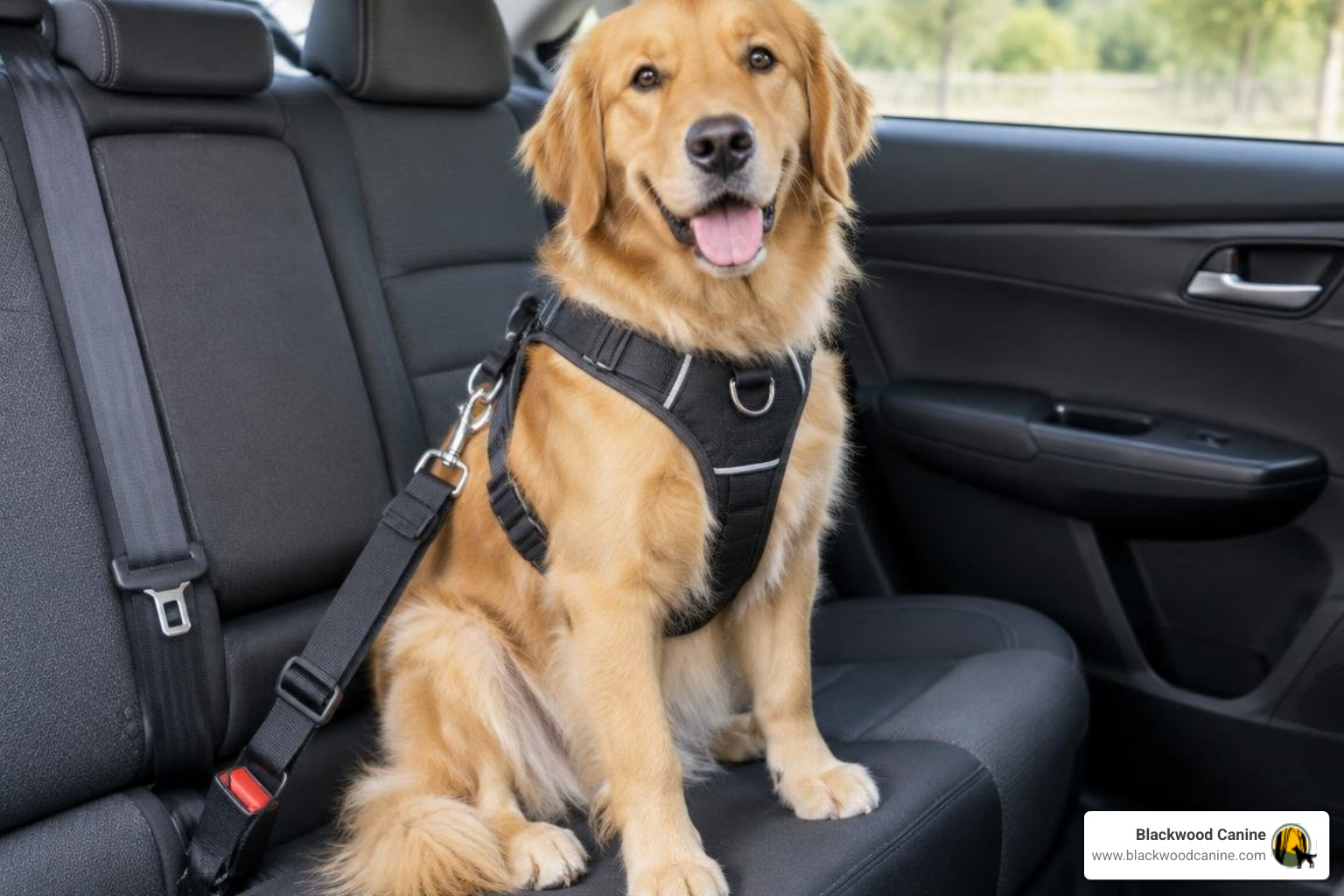
Crash Tested Harnesses and Secured Crates
Physics is unforgiving in a sudden stop. At 30 mph, a 30 pound dog generates roughly 600 pounds of projectile force. Thin leash clips and flimsy fashion harnesses will snap under that kind of load.
Look for equipment independently evaluated by the Center for Pet Safety (CPS). High quality crash tested harnesses spread impact forces evenly across the chest while keeping your dog secure in their seat. Heavy duty travel crates anchored directly to vehicle tie down points create a secure, den like space that shields anxious dogs from visual overload.
Long Distance Road Trip Preparation
Preparing for an extended drive requires good planning:
- Feed your dog a light meal three to four hours before leaving to minimize nausea.
- Plan bathroom breaks every two to three hours to let your dog stretch, drink fresh water, and relieve themselves.
- Pack familiar bedding and non slip mats so your dog has reliable footing.
- Stick to consistent departure routines, and follow established routines for calming car rides for dogs to make road trips easy and predictable.
Frequently Asked Questions About Dog Car Anxiety
How long does it take to desensitize a dog to car rides?
Rehabilitation timelines depend on how deeply rooted the fear is. Mild hesitation often improves in three to four weeks of consistent, short training sessions. Moderate to severe panic typically takes six to eight weeks or longer. Progress at your dog's pace, and step back to an easier stage if you notice signs of stress.
Can I give my dog human medications like Dramamine or Benadryl?
Never give over the counter human medications without consulting your veterinarian first. While drugs like diphenhydramine (Benadryl) or dimenhydrinate (Dramamine) are sometimes used for mild nausea, incorrect dosages or formulas with added decongestants can be dangerous for dogs. Modern veterinary options like Cerenia are much more effective and designed specifically for canine safety.
Will puppies outgrow car sickness on their own?
Many puppies outgrow motion sickness between 12 and 14 months of age as their inner ear and vestibular system mature. However, you should still manage their nausea early on. If a puppy gets sick on every ride, the physical nausea can turn into a lasting behavioral fear that persists long after the inner ear has fully developed.
Practical Steps for Calmer Travels Ahead
Living with a dog who panics in the car can feel isolating, especially when simple errands or weekend adventures become a source of dread for dog owners across Portland, Beaverton, Hillsboro, and Vancouver. Real progress comes down to clear communication, consistent management, fair expectations, and regular practice. Quick fixes rarely work, but a thoughtful, step by step approach delivers lasting results.
At Blackwood Canine, we guide families past road trip struggles through balanced, hands on coaching. Our foundation training starts at four weeks, while our six week and eight plus week behavior programs tackle complex challenges like severe fear and reactivity. If travel panic is holding you and your dog back, exploring our dedicated reactive dog training and setting up a Good Dog Game Plan is the practical next step to get your adventures back on track.