
How to Choose the Best Gear to Reduce Dog Anxiety in Car
Why So Many Dogs Struggle with Car Rides (And What Actually Helps)

The good news: there are proven ways to reduce dog anxiety in car rides, and the right gear is a big part of the solution.
Here is a quick overview of the most effective options:
| Approach | Best For | Example |
|---|---|---|
| Crash tested harness | Dogs who feel calmer with freedom of movement | Sleepypod Clickit Sport |
| Secured travel crate | Dogs who do better with less visual stimulation | Gunner Kennel G1 |
| Pressure wrap | Mild to moderate anxiety | ThunderShirt |
| Pheromone spray | Layered calming support | Adaptil spray |
| Calming chews | Pre trip anxiety edge | L theanine or L tryptophan blends |
| Vet prescribed medication | Severe anxiety or motion sickness | Trazodone, Cerenia |
Roughly 1 in 4 dogs experience some form of car or travel anxiety. That means if your dog shakes, drools, or refuses to get in the vehicle, you are far from alone.
Car anxiety can show up in different ways. Some dogs panic before the engine even starts. Others seem fine at first, then spiral during a long drive. A few vomit every single trip. And many owners try calming gummies or a pre walk and still end up with a stressed out dog on an 8 hour road trip, wondering what they are missing.
The answer is usually a combination of things: the right physical setup in the car, a gradual training approach, and sometimes targeted calming support. This guide covers all of it, starting with the gear that makes the biggest difference.
I'm David Wright, dog trainer and founder of Blackwood Canine, and over my career working with dogs of all temperaments, including fearful and reactive cases, I've seen how the right car setup can dramatically reduce dog anxiety in car travel before a single training session even begins. We will walk through every option so you can find what fits your dog.
Understanding Travel Distress and Motion Sickness
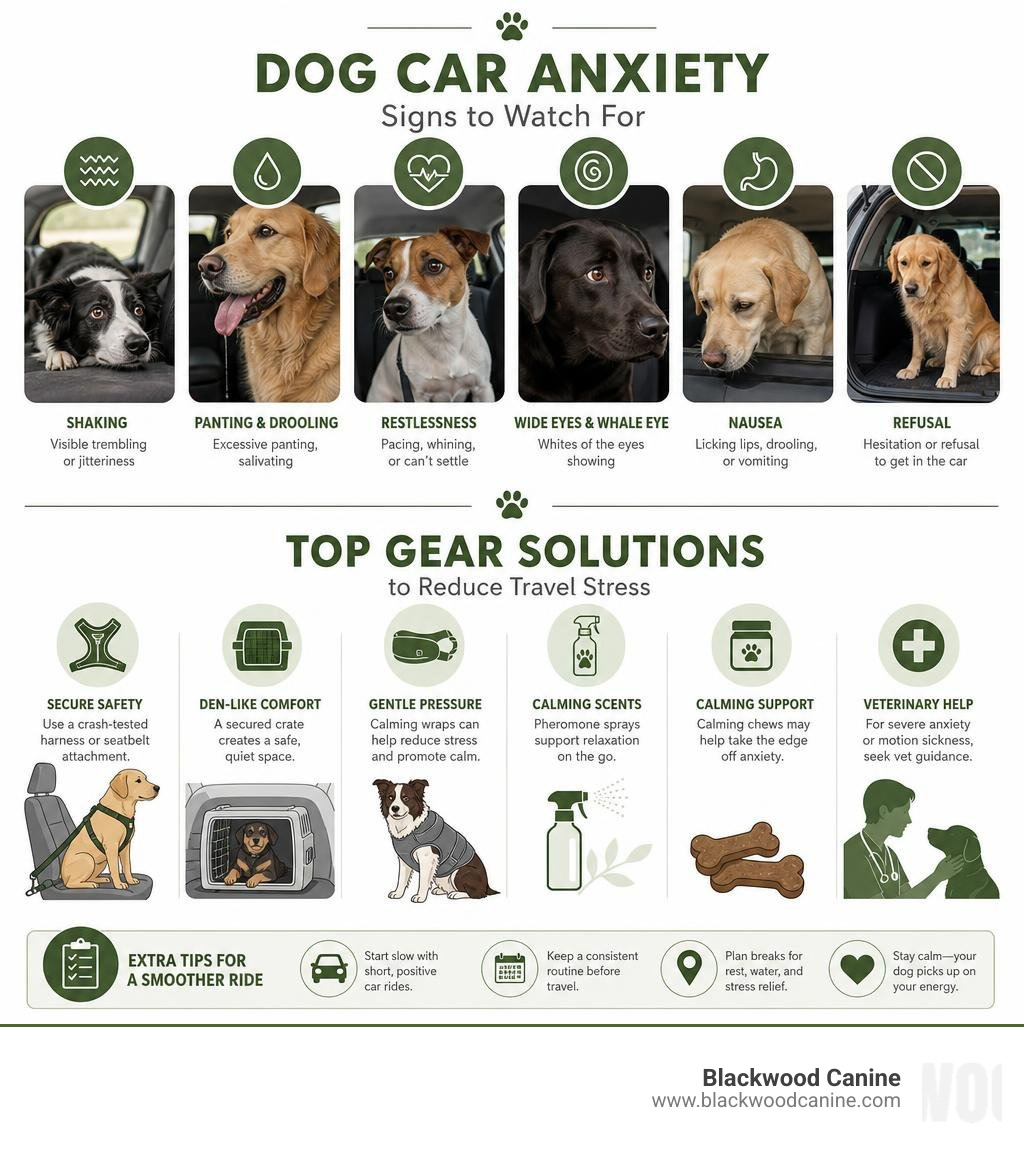
To effectively reduce dog anxiety in car rides, we first have to understand what is actually happening to our dogs when they travel. Many owners look at a panting, shaking dog and assume it is purely a mental panic. However, physical discomfort and psychological fear are deeply linked.
A major culprit behind travel distress is the canine vestibular system. This delicate system, located in the inner ear, controls balance and spatial orientation. In young puppies, these inner ear structures are still developing. Because of this, puppies are highly prone to true motion sickness.
While many dogs outgrow this physical imbalance as their vestibular system matures, usually between 12 and 18 months of age, the early memory of feeling nauseous can leave a lasting impression. If a puppy repeatedly gets sick in the car, they learn to associate the vehicle with feeling terrible. By the time they are an adult, the motion sickness might have resolved, but the anticipatory anxiety remains.
To read more about how physical discomfort translates into behavioral fear, check out the Pawxiety Guide on Dog Car Anxiety, which explores these physiological connections in detail.
Distinguishing Motion Sickness from Anticipatory Anxiety
How do you know if your dog is suffering from actual nausea or if they are just terrified of the ride? Distinguishing between the two is vital because the treatment plans are very different.
If your dog has motion sickness, you will typically see physical signs of nausea that start once the car is in motion. These include:
- Excessive, thick drool that hangs from their lips
- Frequent swallowing or lip licking
- Repeated yawning
- Dry heaving or vomiting
If your dog has anticipatory anxiety, the stress signals often start before the car even moves. Your dog might tremble when you pick up your car keys, refuse to walk down the driveway, or freeze at the car door. Once inside, they might pant heavily, pace restlessly, whine, bark, or look around with wide eyes.
Of course, many dogs suffer from both. A simple self check is to observe when the behavior starts. If your dog happily jumps into the car but begins drooling and vomiting ten minutes into the drive, motion sickness is the primary trigger. If they act like they are walking to the gallows before you even open the garage door, you are dealing with a heavy dose of behavioral anxiety.
Identifying Environmental and Sensory Triggers
Beyond physical motion, a car is a sensory overload machine for a dog. Understanding these triggers allows us to modify the environment to help them relax.
- Visual Overstimulation: Fast moving scenery, passing headlights, and flashing signs can overstimulate a dog. Their predatory instincts or fear responses can be triggered by seeing cars or objects whiz by at 60 miles per hour.
- Engine Vibration and Noise: The low frequency hum and vibration of the engine can feel unsettling under a dog's paws, especially if they do not have secure footing.
- Negative Associations: If the only time your dog gets in the car is to go to the vet clinic or the groomer, they quickly learn that the car is a portal to uncomfortable experiences.
- The Drive Day Stacking Problem: This happens when small stressors pile up. A rushed morning, a missed breakfast, a loud garbage truck outside, and then a sudden car ride can push an already sensitive dog over their stress threshold before you even pull out of the driveway.
Essential Gear to Reduce Dog Anxiety in Car
When we look at how to reduce dog anxiety in car environments, safety gear is not just about crash protection, though that is incredibly important. The right restraint actually reduces physical stress by providing stability.
When a dog is loose in a moving vehicle, they have to constantly tense their muscles to stay upright. Every turn, stop, and acceleration forces them to slide on the seats. This lack of secure footing makes them feel incredibly vulnerable and worsens both motion sickness and anxiety.
From a physics perspective, an unrestrained pet is also a major hazard. At just 30 miles per hour, a 30 pound dog generates roughly 600 pounds of force during a sudden stop. Securing your dog keeps them safe and keeps you focused on driving.
For a deep dive into choosing the right setup for your vehicle, you can read the Healers PetCare Restraint and Motion Sickness Strategies guide, which outlines how to match your dog's specific triggers to the right travel gear.
Selecting the Right Restraint for Your Dog
There is no one size fits all solution for car restraints. You will need to choose based on your dog's size, temperament, and primary anxiety triggers.
| Restraint Type | Pros | Cons | Best For |
|---|---|---|---|
| Crash Tested Harness | Allows dog to sit or lie down comfortably; keeps them securely in place on the seat. | Requires a high quality, certified harness; cheap tethers can fail. | Dogs who want to look out the window or feel close to you. |
| Secured Travel Crate | Blocks out visual triggers; provides a cozy, den like space; maximum safety. | Takes up a lot of cargo space; some dogs panic if they dislike confinement. | High anxiety dogs, escape artists, and dogs easily overstimulated by passing cars. |
| Booster Seat | Elevates small dogs so they can see out; keeps them secure. | Only suitable for small breeds; must be paired with a harness. | Small dogs who get restless when they cannot see their surroundings. |
If you choose a harness, look for options that have been independently certified by the Center for Pet Safety. Many standard car harnesses fail at low speeds, so investing in a high quality, crash tested harness is essential.

Optimizing Airflow and Cabin Temperature
Dogs run hotter than humans, and stress makes them even warmer. A panting, anxious dog generates a massive amount of heat, which can quickly lead to nausea and increased panic.
To keep the cabin comfortable:
- Max out the Air Conditioning: Keep the car cooler than you normally would. Ensure vents are pointed directly at your dog, especially if they are in the back seat or inside a crate.
- Use Window Shades: Block direct sunlight with mesh shades to prevent your dog from overheating.
- Add a Cooling Mat: A pressure activated cooling mat placed in their crate or on the seat can help lower their body temperature.
- Crack the Windows: Fresh, moving air can do wonders to reduce nausea. A slight breeze helps clear out any stuffy, anxiety inducing odors.
Behavioral Training and Calming Protocols
No piece of gear can completely solve car anxiety if your dog has a deep, emotional fear of the vehicle. To achieve lasting success, we must combine the right gear with behavioral training.
At Blackwood Canine, we focus on practical management and clear communication to help families build reliable, stress free relationships with their dogs. You can read our expert Dog Trainer Advice on Dealing with Car Anxiety to learn more about our approach to rebuilding confidence in fearful dogs.
Step by Step Training to Reduce Dog Anxiety in Car
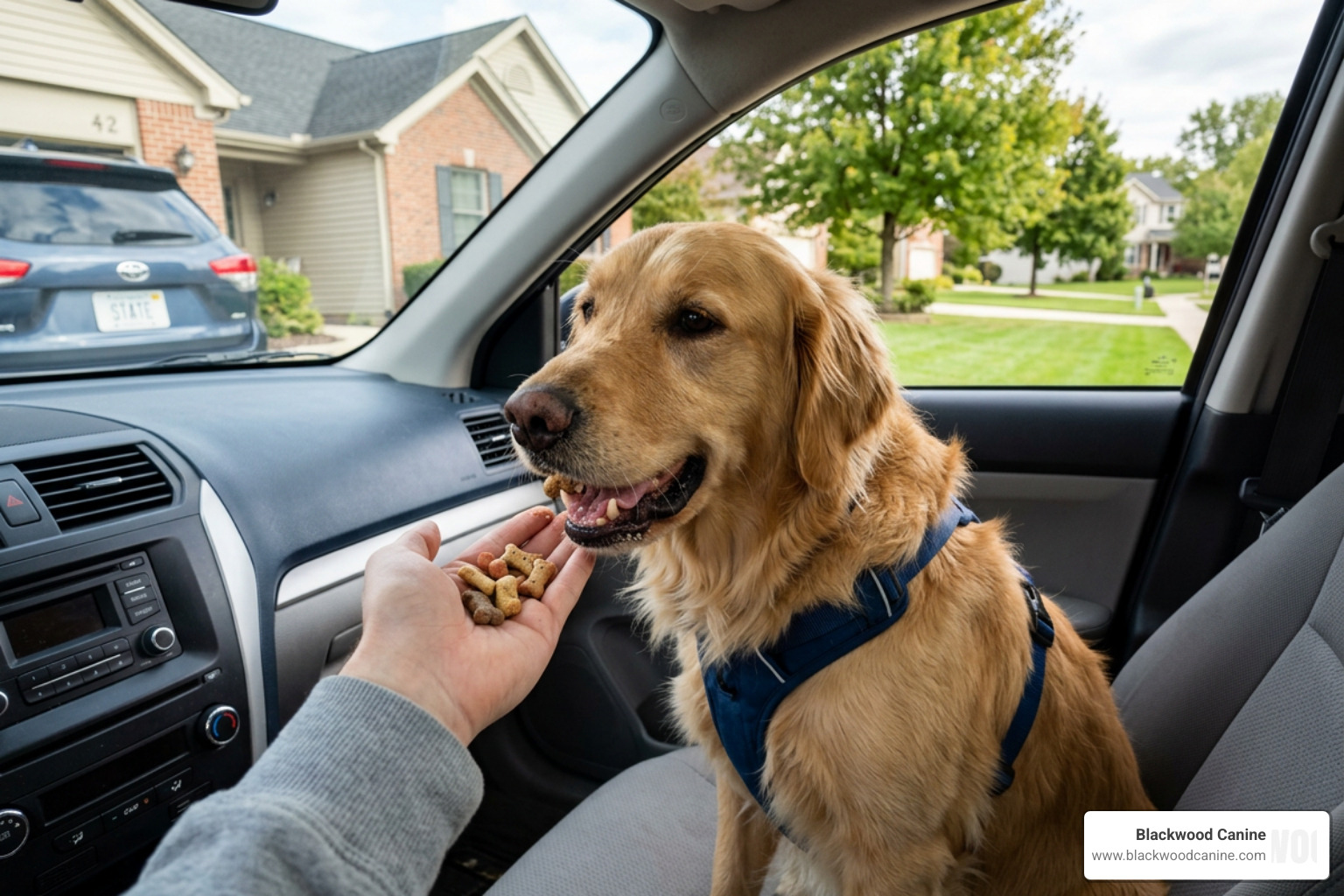
Desensitization and counter conditioning are the gold standards of behavior modification. The goal is to slowly introduce your dog to the car at a pace they can handle, always pairing the experience with high value rewards like chicken, cheese, or their favorite toy.
Never rush this process. If your dog shows signs of stress, you have gone too fast. Simply take a step back and try again tomorrow.
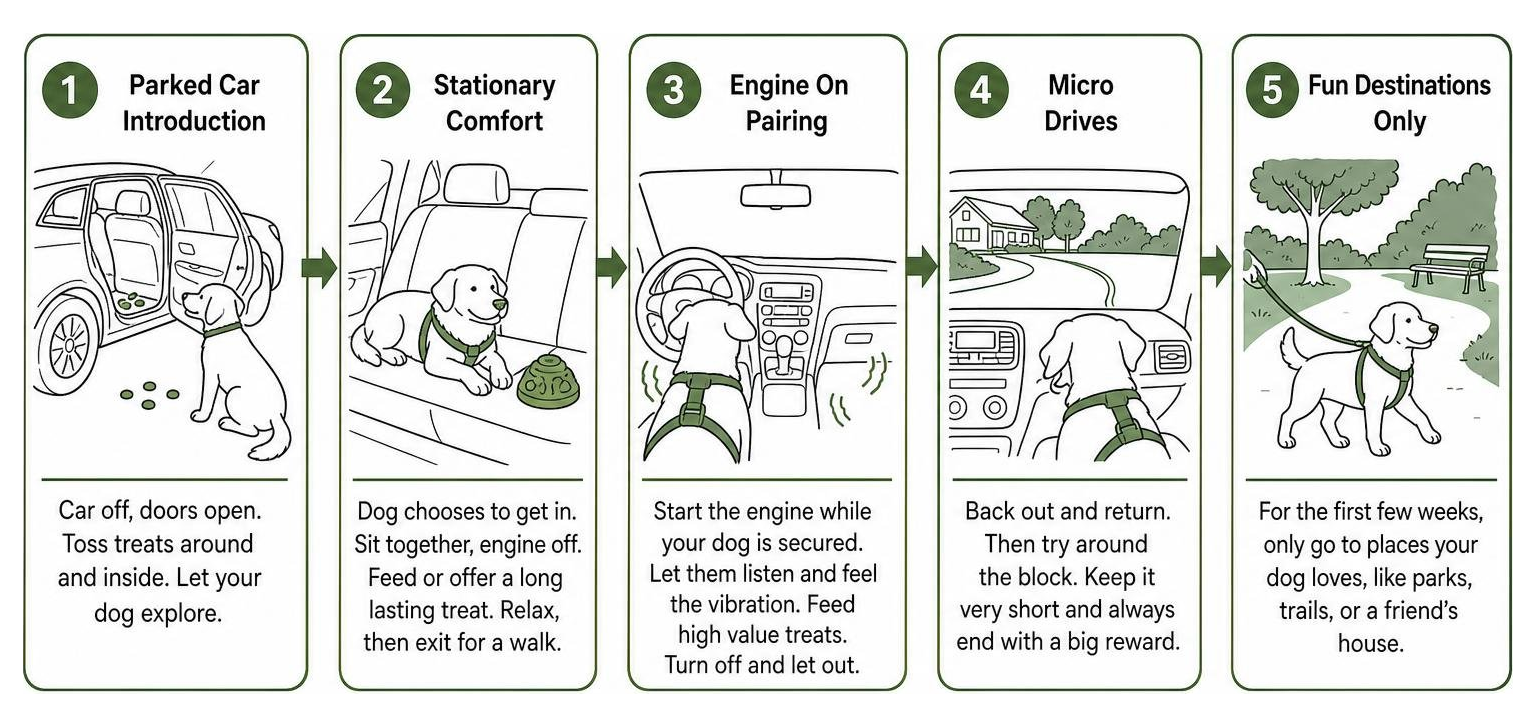
- The Parked Car Introduction: Start with the car turned off and the doors wide open. Walk your dog near the vehicle. Toss high value treats around and inside the car. Let them explore at their own pace without forcing them inside.
- Stationary Comfort: Once your dog voluntarily climbs into the car, get in with them. Sit together with the engine off. Feed them their regular meals or a long lasting treat like a stuffed Kong. Spend five minutes just relaxing, then exit and go for a fun walk.
- Engine On Pairing: With your dog secured in their harness or crate, start the engine. Do not drive anywhere. Simply let them listen to the sound and feel the vibration while you feed them high value treats. Turn the engine off and let them out.
- Micro Drives: Back out of your driveway and pull right back in. That is it. If your dog remains calm, progress to driving around the block. Always end the ride with a massive reward, like a game of fetch or a special treat.
- Fun Destinations Only: For the first few weeks of driving, only go to places your dog loves, like a quiet park, a trail, or a friend's house. Break the association that the car only leads to the vet.
Using Calming Aids to Reduce Dog Anxiety in Car
While you are working through your training plan, non medication calming tools can help lower your dog's stress levels.
- Pressure Wraps: Products like the ThunderShirt apply constant, gentle pressure to your dog's torso, which has a calming effect on their nervous system. Test surveys show that over 85% of owners see improvement when using a pressure wrap.
- Pheromone Sprays and Collars: Dog appeasing pheromones mimic the natural calming scents produced by mother dogs. Spraying this on your dog's bedding or inside their travel crate 15 minutes before departure can help soothe their nerves.
- Calming Chews: Supplements containing L theanine, L tryptophan, chamomile, or melatonin can help take the edge off their anxiety. Always give these 30 to 90 minutes before your trip so they have time to kick in.
- Familiar Bedding: Bring along a blanket or dog bed that smells like home. Having a familiar scent in an unfamiliar environment provides immediate comfort.
- Soft Music or White Noise: Playing classical music or calming reggae can drown out scary road noises and help your dog settle.
When to Consult Your Veterinarian for Prescription Medications
For some dogs, the fear of the car is so severe that they enter a state of full panic. They might try to escape, claw at the windows, bark non stop, or injure themselves. In these cases, behavioral training alone is incredibly difficult because the dog's brain is too flooded with stress hormones to learn.
This is when you should consult your veterinarian. Fast acting, situational medications can be a game changer.
- Trazodone: A highly effective serotonin antagonist and reuptake inhibitor. A controlled Frontiers Study on Trazodone for Travel Anxiety demonstrated that a single dose of trazodone significantly reduced cortisol levels, lip licking, and overall anxiety scores in dogs during road travel.
- Gabapentin: Often paired with trazodone, this medication helps with situational anxiety and provides mild sedation to help your dog relax.
- Cerenia: If motion sickness is the primary trigger, Cerenia is an outstanding, FDA approved medication designed specifically to prevent vomiting. A single dose typically prevents vomiting for 24 hours without causing drowsiness.
A quick note on Acepromazine: While historically prescribed for travel, many modern vets discourage using acepromazine as a standalone treatment for anxiety. It is a tranquilizer that physically sedates the dog but does not reduce their internal fear. Your dog may look calm because they cannot move, but they are still terrified inside. Always ask your vet for anxiolytic medications rather than simple sedatives.
Frequently Asked Questions about Car Anxiety
How long does it take to desensitize a dog to car rides
There is no fixed timeline. For mild cases, you might see significant improvement in two to four weeks of consistent, daily training. For dogs with deep seated trauma or severe motion sickness, it can take several months.
Patience is key. Track your progress in a journal so you can celebrate the small wins, like your dog sniffing the car door without shaking.
Should my dog eat before a car ride
If your dog is prone to motion sickness, it is best to withhold food for three to four hours before your trip. Having an empty stomach greatly reduces the likelihood of vomiting. However, always ensure they have access to fresh water. If you are doing short training sessions, you can use high value treats, but keep the portions small.
Is a crate or a harness better for an anxious dog
It depends entirely on your dog's specific triggers.
A crate is often best for dogs who are easily overstimulated by visual triggers, such as passing cars or changing light patterns. It provides a secure, den like environment where they can curl up and sleep.
A crash tested harness is better for dogs who feel panicked when confined in small spaces or those who feel calmer when they can see you and adjust their position on the seat.
Helping Your Dog Feel Safer on Every Ride
Helping your dog overcome travel anxiety is a journey that requires patience, consistency, and the right approach. By combining proper safety gear, environmental management, and a gradual training protocol, you can transform the car from a place of terror into a gateway for fun adventures.
At Blackwood Canine, we are dedicated to helping families build strong, stress free relationships with their dogs. If you live in the Pacific Northwest, including Portland, OR, Vancouver, WA, Beaverton, OR, Hillsboro, OR, Tigard, OR, or Lake Oswego, OR, and need professional help with your dog's behavior, we are here for you.
Explore our Professional reactive dog training programs today, and let us help you turn stressful car rides into enjoyable, peaceful journeys for both you and your dog.