
The Ultimate Guide to Dog Car Anxiety Solutions
Stop the Car From Becoming Your Dog's Worst Place

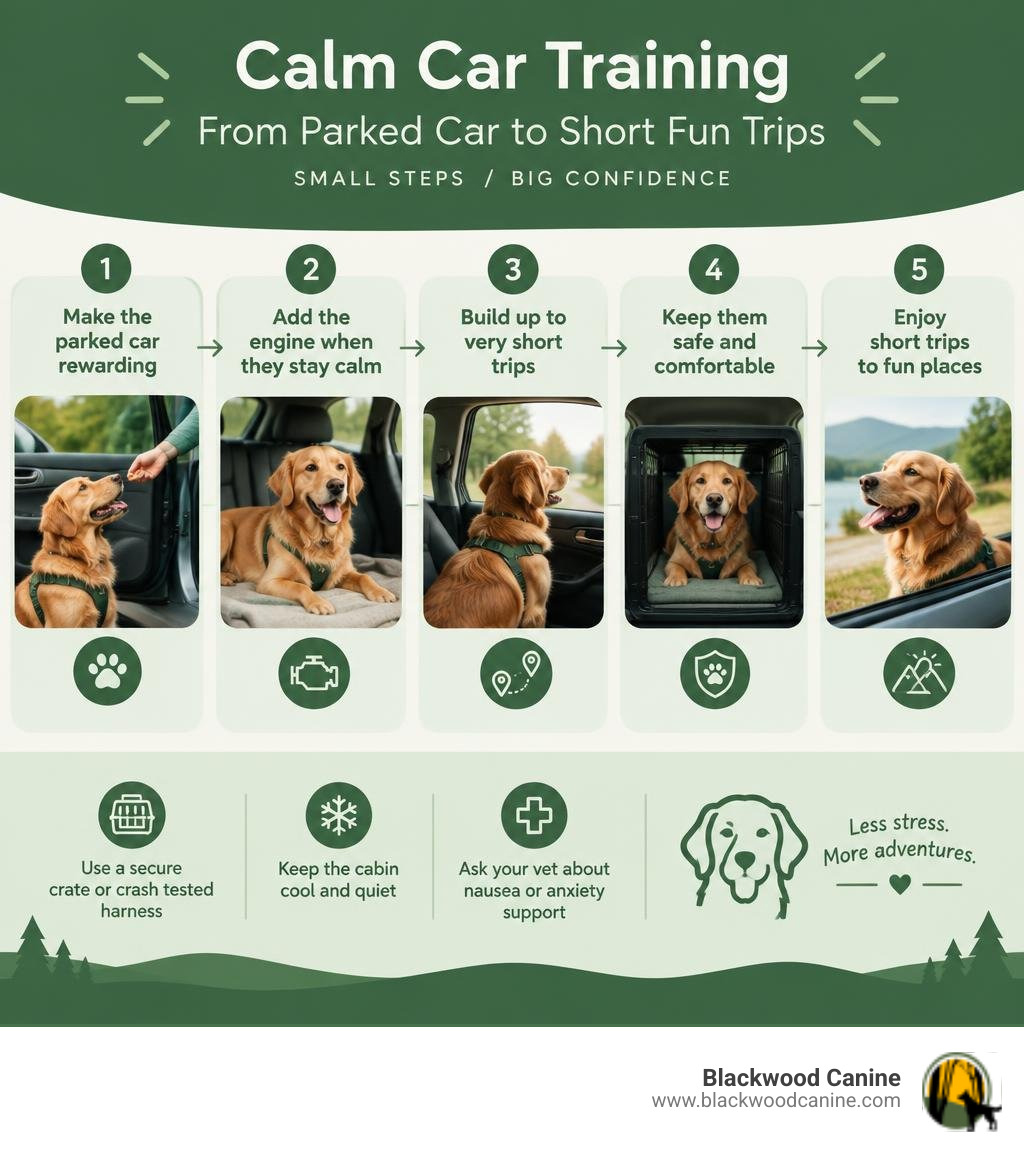
If your dog shakes, drools, refuses to jump in, or turns every drive into a backseat meltdown, do not force longer rides. Start smaller: make the parked car rewarding, add the engine only when your dog stays calm, then build up to very short trips to places they enjoy. Use a secure crate or crash tested harness, keep the cabin cool and quiet, and ask your vet about nausea or anxiety support if your dog panics or vomits.
This is the core of dog trainer advice on dealing with car anxiety: find out whether the problem starts before the car moves, which points to fear, or after movement begins, which may point to motion sickness. Many dogs have both, because repeated nausea can teach a dog that the car predicts feeling awful. About 24% of dogs show problem behaviors during travel, so this is common, frustrating, and very fixable with the right plan.
At Blackwood Canine, our work focuses on practical management, clear communication, and obedience skills, including dog trainer advice on dealing with car anxiety without pushing dogs past their limit.
Understanding the Root Causes: Dog Car Anxiety vs Motion Sickness
When a dog hates the vehicle, owners often assume their pet is simply stubborn or nervous. In reality, travel distress usually splits into two separate issues: vestibular motion sickness and psychological fear. Treating one while ignoring the other is why so many quick fixes fail.
Vestibular motion sickness is a physical reaction. The inner ear balance center senses movement that does not match what the eyes see or what the body feels. This sensory mismatch causes dizziness and nausea. Puppies are especially vulnerable because their inner ear structures are still developing. While many young dogs outgrow physical sickness around twelve to fourteen months of age, the memory of nausea lingers. A puppy that feels sick on early rides quickly learns that the car makes them feel terrible.
That physical discomfort turns into conditioned fear. Even after the inner ear matures, the sight of your keys, the sound of the garage door, or the smell of the upholstery triggers a fight or flight response. Research on motion sickness in dogs shows that dogs lacking early positive car exposure develop travel distress at a rate of 24.1%, compared to only 6.3% of dogs habituated early.
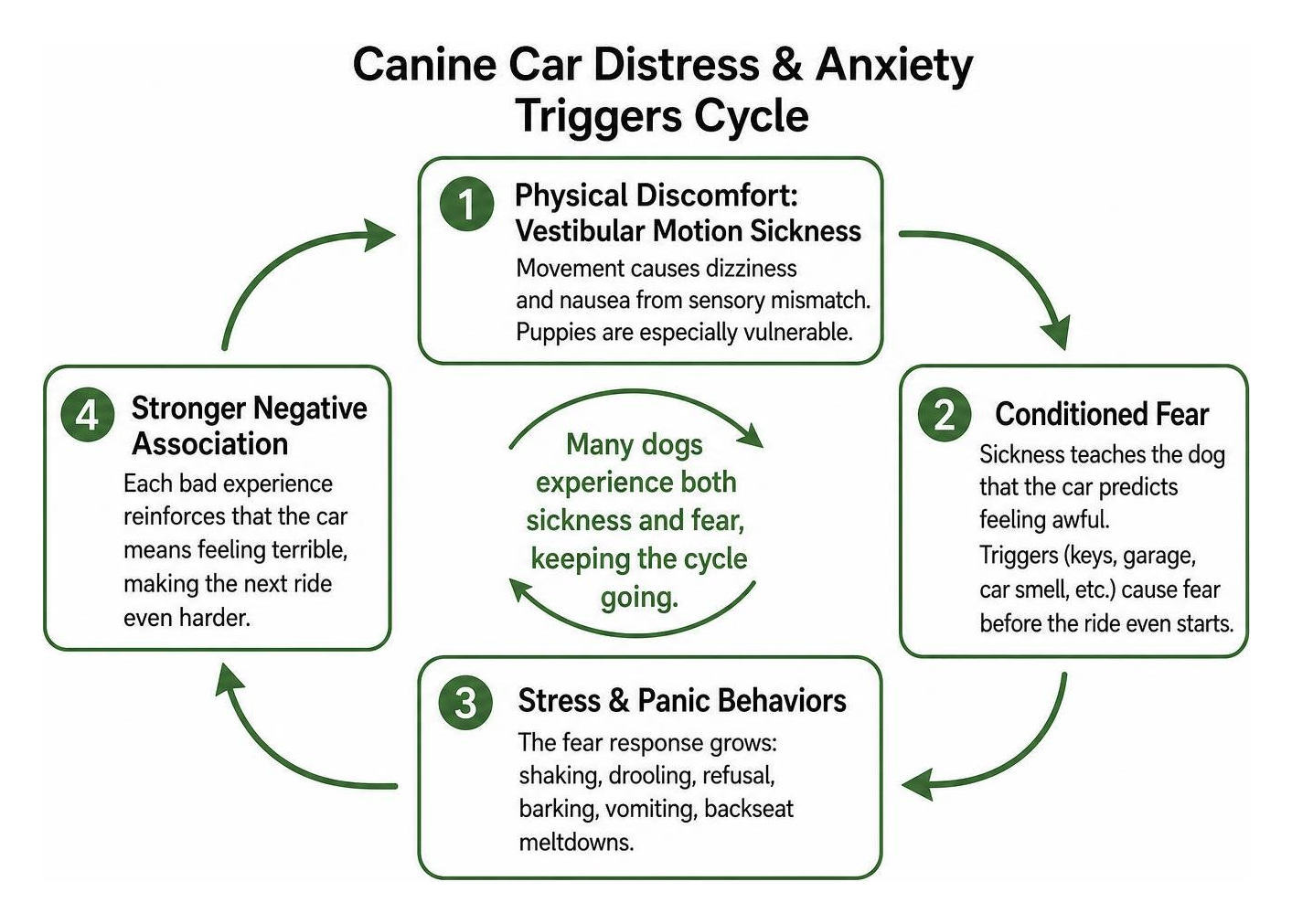
To create a real fix, you must identify what starts the problem. Does your dog panic while standing in the driveway, or do they only start panting and drooling after ten minutes on the highway? Answering this helps us build a plan for calming car rides for dogs that targets the exact root cause.
Early Stress Signs vs Severe Car Panic
Dogs rarely jump straight from calm to full blown panic. They offer subtle warning signals long before they start barking or vomiting. Recognizing these early tells allows you to intervene before your dog crosses their stress threshold.
| Category | Mild Car Stress Signs | Severe Motion Sickness & Panic Signs |
|---|---|---|
| Onset Timing | Driveway, parked car, or first 2 minutes | Mid drive, high speeds, or winding roads |
| Physical Signals | Lip licking, excessive yawning, head turning away | Heavy puddle drooling, dry heaving, vomiting |
| Postural Signs | Stiff body, whale eye, low tail carriage | Whole body trembling, frantic pacing, immobility |
| Behavioral Signals | Hesitation to load, mild whining, ignoring treats | Screaming, clawing at doors, bladder accidents |
| Primary Root Cause | Anticipatory fear, learned negative association | Vestibular mismatch, overwhelming motion nausea |
When stress goes unmanaged, dogs push past their coping limits. If your dog refuses high value food or freezes completely, they are no longer learning. Pushing forward during a panic state only deepens the negative association.
Professional Dog Trainer Advice on Dealing with Car Anxiety
Fixing car fear requires more than just forcing your dog into the back seat and hoping they get used to it. Flooding a dog with overwhelming fear makes the phobia worse. Instead, professional behavior modification relies on clear communication, strong management, structured desensitization, and counter conditioning.
Successful training requires clear expectations, boundaries, consistent management, fair consequences, and owner follow through. We do not rely on purely positive bribing, nor do we use senseless punishment. Tools and corrections have a place in balanced training when used properly under professional guidance, but fear must be reshaped through progressive success. When teaching dog training for fearful dogs, we break large, overwhelming environments into small, manageable pieces.
Dog Trainer Advice on Dealing with Car Anxiety Through Step by Step Desensitization
Desensitization means exposing your dog to the vehicle at an intensity so low that it does not trigger fear. Counter conditioning means changing the emotional response by pairing that low level exposure with high value rewards.
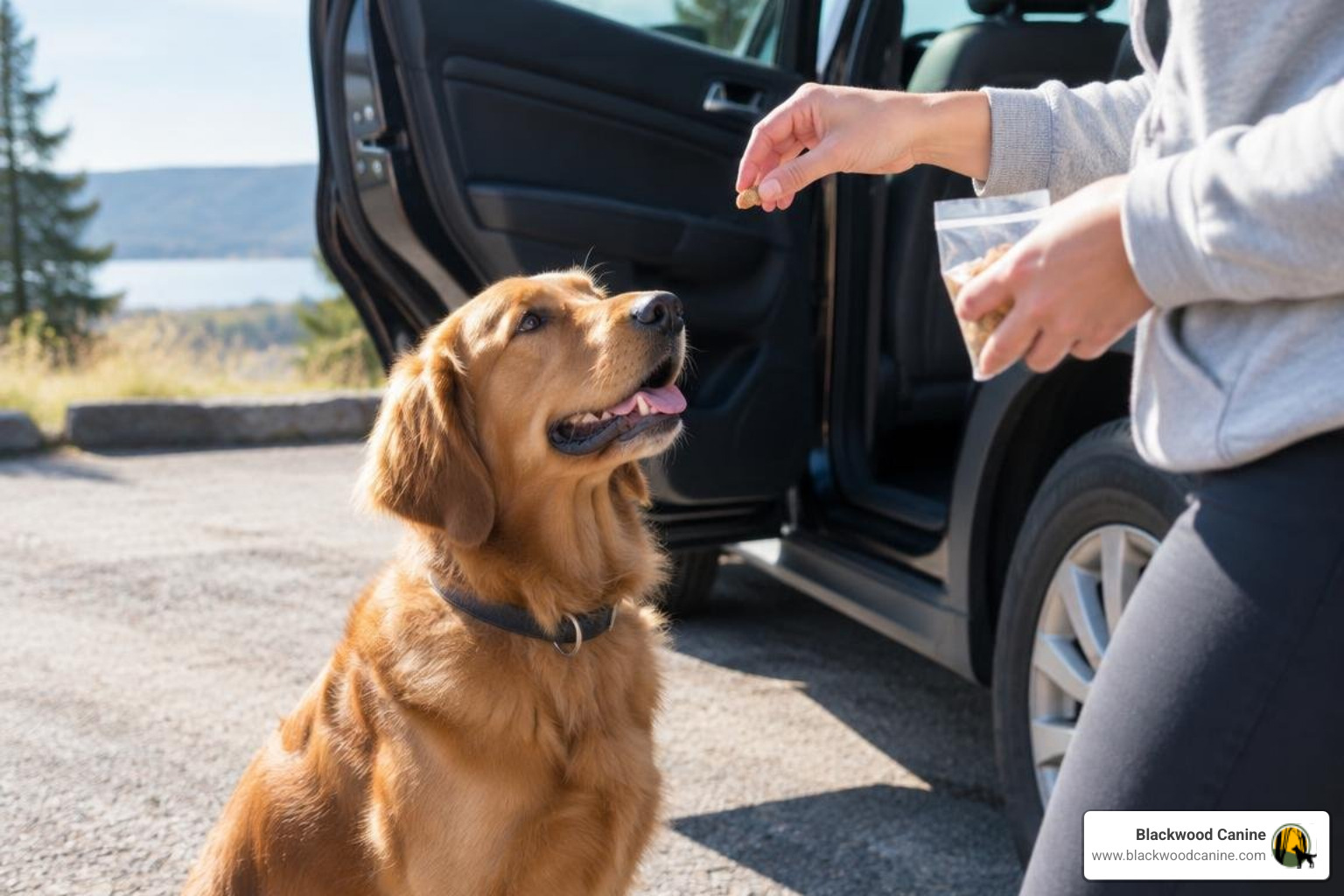
- Approach and Proximity: Walk your dog toward the parked car with the engine off. Stop ten feet away. Reward calm engagement, loose body language, and eye contact. If your dog stays relaxed, feed their regular meals next to the vehicle over several days.
- Stationary Car Habituation: Open the car doors wide. Encourage your dog to hop in freely without closing the doors. Scatter premium treats on the floorboard or seats. Spend five minutes hanging out with the engine completely off, then let the dog exit calmly.
- Engine and Vibration Exposure: Load your dog into their travel spot, secure them, and start the engine without putting the car in gear. The goal is habituating them to the rumble, cabin air flow, and mechanical noise. Offer high value rewards, praise calm breathing, turn the vehicle off, and unload.
- Short Driveway Rollouts: Put the car in gear and roll down the driveway at five miles per hour. Stop, shift to park, reward your dog, and walk back inside.
- Graduated Low Stress Travel: Drive around the block once. Keep the route flat, avoid sudden braking, and return home immediately. Slowly extend your driving radius over multiple weeks as your dog shows zero signs of anxiety.
Applying Dog Trainer Advice on Dealing with Car Anxiety for Visual Overstimulation
Many dogs do not fear the car itself. Instead, they suffer from barrier frustration and sensory overload. Watching cars whiz past at sixty miles per hour or spotting pedestrians they cannot reach sends their arousal through the roof.
You can stop this reaction by managing dog anxiety from car windows through visual management. Use window static cling shades, position crates below window level, or use solid side travel crates to block outside sightlines. If your dog barks aggressively at passing vehicles, explore understanding and transforming reactive dog behavior to address barrier frustration directly. Pair visual barriers with structured boundary work so your dog learns that the vehicle cabin is a resting zone, not an observation deck.
Management Tools and Travel Setup for Anxious Dogs
Letting an anxious dog pace freely across the back seat is dangerous and increases stress. Unstable footing makes motion sickness worse because the dog constantly fights for balance.

A proper travel setup provides physical stability and safety:
- Crash Tested Crates: A durable travel kennel strapped down in an SUV cargo area or across the back seat offers the highest level of physical protection. Crates provide a den like environment that reduces visual triggers and movement sway.
- Crash Tested Harnesses: If a crate does not fit your vehicle, a certified safety harness attached to the seatbelt system keeps your dog secure. Position your dog in the middle of the back seat facing forward, where vehicle sway is minimized.
- Cabin Airflow and Temperature: Stress panting causes dogs to run five to eight degrees hotter than the cabin air. Keep the air conditioning running cool and crack windows slightly to equalize cabin pressure.
- Pheromones and Pressure Wraps: Calming sprays like dog appeasing pheromones and snug pressure shirts can take the edge off mild jitters when combined with training.
- Calming Aids and Supplements: Natural chews containing L theanine, chamomile, or vet approved CBD can lower baseline arousal.
Structured behavior modification training ensures your dog accepts these containment tools without stress. Clear boundaries combined with reliable gear keep everyone safe on the road.
Changing What the Car Predicts: Destination Conditioning
What does your car predict to your dog? For many family pets, getting into the vehicle happens only for vet exams, nail trims, or grooming appointments.
Research reveals that dogs driven exclusively to stressful locations show anxiety at more than double the rate (46.4%) of dogs driven to varied or fun spots (22.7%). When the car always leads to something unpleasant, the ride becomes a trigger.
To break this pattern, take low stress trips that build good memories instead of dread:
- Drive two blocks down the road, let your dog sniff a quiet grassy patch for three minutes, and drive home.
- Take a quick ride to a local drive thru window for a tiny piece of unseasoned plain meat or dog friendly treat.
- Park at a scenic overlook, sit together quietly for five minutes, and return without any high stress events.
By making at least four out of every five trips uneventful or enjoyable, you break the cycle of dread.
Veterinary Support and Medication for Travel Distress
Behavior modification takes time and repetition. If your dog suffers from severe vestibular nausea or reaches extreme panic, training alone cannot fix the issue. A dog in active panic or physical sickness cannot process new learning.
Veterinary intervention can bridge this gap:
- Maropitant Citrate (Cerenia): This prescription medication targets the vomiting center in the brain. It stops motion sickness nausea without causing sedation, making it the top choice for dogs with physical travel sickness.
- Situational Anxiolytics: Medications such as trazodone, gabapentin, or dexmedetomidine oromucosal gel (Sileo) help lower severe panic and anticipatory dread. They allow the dog to stay under their panic threshold during training rides.
- Multi Modal Treatment: Combining anti nausea medication, short term anxiolytics, and gradual desensitization produces the fastest, most reliable long term results.
Talk to your veterinarian if your dog vomits regularly, harms themselves trying to escape, or shows extreme distress. Using temporary medication is not a failure. It is a humane tool that creates a workable baseline for training.
Frequently Asked Questions About Dog Car Anxiety
How long does it take to resolve car anxiety in a dog?
Resolving car anxiety depends on whether the issue is mild nervousness or a severe phobia. Mild jitters often improve in four to six weeks of daily five minute sessions. Severe panic or deep seated trauma can take several months of consistent management, veterinary support, and step by step counter conditioning.
Should I withhold food before taking my dog in the car?
Yes, withholding full meals for two to three hours before travel reduces nausea and vomiting for dogs prone to motion sickness. However, you can still use small, high value training treats during your desensitization exercises if your dog is comfortable enough to eat.
Can puppies naturally outgrow motion sickness and car nervousness?
Many puppies outgrow physical motion sickness by twelve to fourteen months of age as their inner ear structures fully develop. However, they do not automatically outgrow the learned fear caused by early sick rides. You must actively rebuild positive car associations to prevent early nausea from turning into lifelong anxiety.
Next Steps for Peaceful and Safe Travel with Your Dog
Living with a dog that hates the car is stressful. Whether you are driving past Forest Grove, commuting through Beaverton, or taking a weekend trip out to the Oregon coast, car rides should not feel like an emotional battle.
Fixing travel distress requires patience, structure, and consistency. Training is more than just running through commands. It requires clear boundaries, reliable management, fair consequences, and consistent follow through from the owners. When you balance physical comfort with behavioral training, your dog learns that the vehicle is a safe, calm space.
If you are dealing with persistent travel panic, reactivity, or complex behavioral roadblocks, our in home private lessons and structured programs provide the step by step guidance your family needs. Blackwood Canine offers foundational training starting at 4 weeks, with dedicated 6 week and 8 plus week programs for complex behavior modification. We work with dog owners across Scappoose, St. Helens, Warren, Bethany, Hillsboro, Beaverton, Portland, Vancouver, and nearby communities to build reliable, real world clarity.
Take the next step with our Good Dog Game Plan to turn stressful travel into calm, confident adventures. Learn more by exploring our professional reactive dog training and start building a relaxed travel routine today.