
What Is a Dog Training Camp and How Does It Work?

A dog training camp, often referred to as a board and train or an immersion program, is a setup where your dog lives on site with professional trainers. Instead of you struggling through thirty chaotic minutes of practice after an exhausting ten hour workday, your dog lives inside an environment structured around clarity, clear communication, and immediate feedback.
If you are just beginning your research, exploring the basics on dog boot camp programs will help you understand how this immersive format actually functions. In an immersion setting, learning happens all day long rather than during isolated training sessions. Every single interaction matters. From waiting politely at doorways and holding place while dinner is cooked, to walking past high value distractions without losing their mind, your dog learns how to navigate the human world calmly and reliably.
We do not rely on trendy, one dimensional training ideologies. Real world dog training requires a complete, balanced toolkit. It is never treat only, correction only, force free, or dominance based. We use positive reinforcement to teach new behaviors and build enthusiasm, clear boundaries so your dog understands what is expected, and fair consequences when rules are broken. Training tools and corrections are not evil monsters; misuse is the real issue. When used properly under professional guidance, balanced tools provide clear communication that keeps dogs safe, confident, and secure in their daily routines.
How an Immersive Program Differs from Weekly Practice at Home
Most dog owners in Portland, Beaverton, and Hillsboro try tackling behavior problems through solo practice at home. You read conflicting advice online, try to squeeze in fifteen minutes of leash drills after work while juggling dinner and family chores, and quickly find yourself feeling completely overwhelmed. Your dog picks up on your stress, old household habits take over, and progress stalls.
Immersive learning removes that friction by resetting the daily environment entirely. A structured camp setting allows for hundreds of clean, controlled repetitions every single week.
| Feature | DIY Weekly Practice at Home | Immersive Dog Training Camp |
|---|---|---|
| Primary Handler | Busy owner guessing handling mechanics | Professional trainer building clear foundations |
| Distraction Control | Unpredictable neighborhood triggers | Methodical, step by step exposure |
| Repetition Volume | Inconsistent sessions around busy schedules | Hundreds of consistent daily repetitions |
| Speed of Progress | Slower learning curve with mixed signals | Accelerated understanding of rules and expectations |
| Environmental Reset | Dog stays trapped in old habit patterns | Fresh environment with zero bad behavioral habits |
General training principles show that consistency creates long lasting habits. Industry research shows that roughly 65 percent of dogs attending a structured training camp show significant improvement in obedience within the first two weeks alone because mixed signals and human frustration are removed from the learning equation.
Core Benefits of an Immersive Program
Living with an unruly dog is emotionally draining. You feel embarrassed when walking through your neighborhood in Scappoose, Warren, or Bethany, guilty that you cannot seem to fix the problem, and frustrated that your living room has turned into a constant management battlefield.
There are many practical reasons to consider an immersion board and train, including:
- Better Socialization Habits: Over 70 percent of owners report improved social manners around other dogs and people within the first month of camp.
- Significant Behavior Reduction: Programs combining clear positive rewards with solid boundaries see up to a 90 percent reduction in nuisance habits like door dashing, jumping on guests, leash pulling, and counter surfing.
- Long Term Stability: Dogs with solid behavioral foundations are 40 percent less likely to be surrendered to shelters later in life because clear expectations prevent severe behavioral breakdowns.
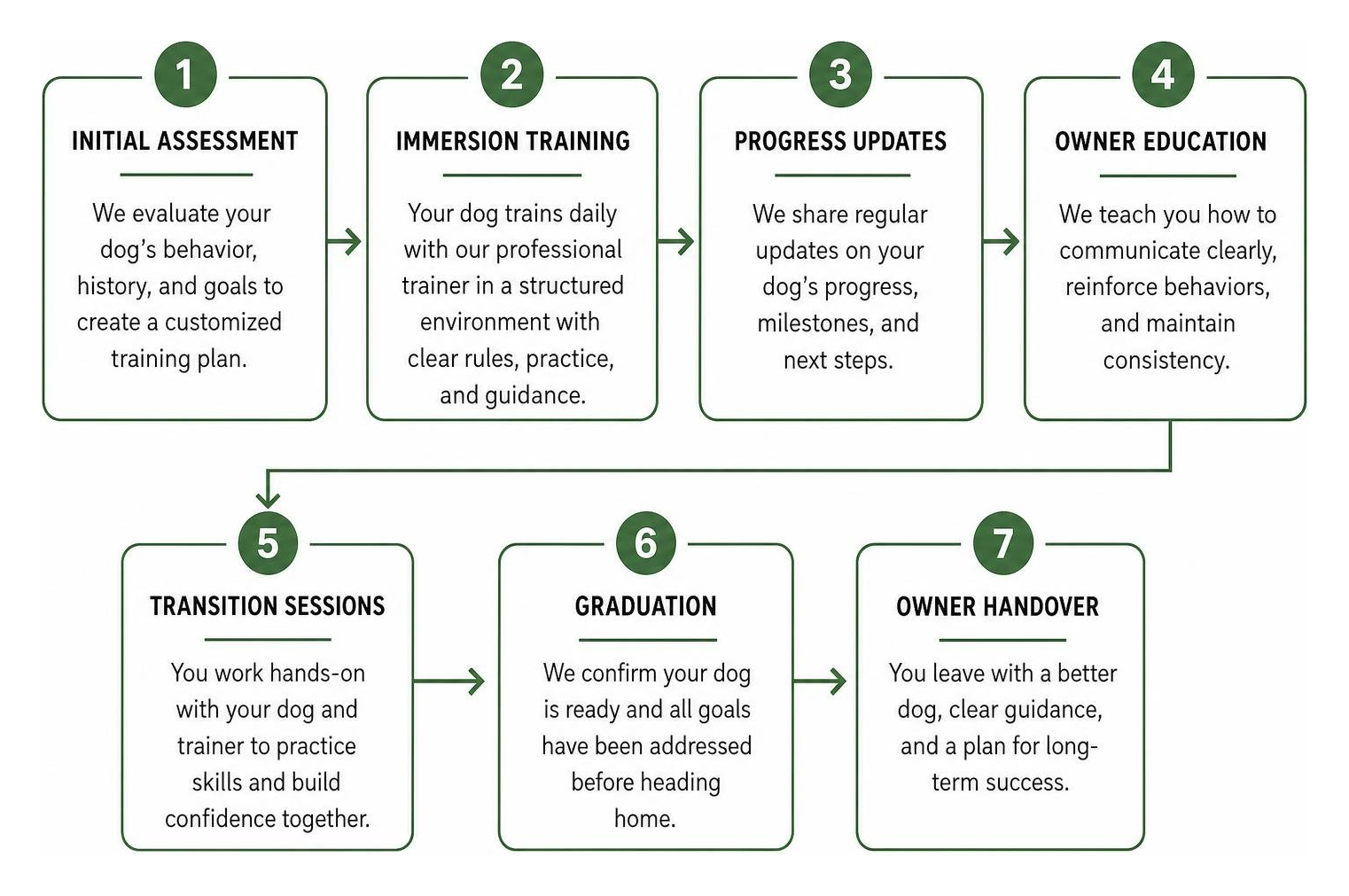
What to Expect During the Immersion Training Process

Sending your dog away to camp can feel nerve wracking. You love your dog and want to know exactly what happens behind the scenes. Knowing the daily structure helps set realistic expectations for what immersion training looks like from start to finish.
Intake, Evaluation, and Daily Structure
Day one begins with a comprehensive intake process. We review health and medical records, discuss your specific daily struggles at home, and perform a thorough baseline behavioral evaluation. This assessment reveals where your dog lacks clarity, what triggers their unwanted behaviors, and how they handle environmental pressure.
Your dog then transitions into a clear, predictable daily routine. They receive dedicated one on one training sessions, structured walks, physical exercise, and intentional crate rest so their brain has time to decompress and process what they learned. Regular updates and video check ins keep you informed throughout their stay so you are never left wondering how your dog is progressing.
Tackling Reactivity, Anxiety, and Severe Behaviors
Living with a reactive dog makes simple neighborhood walks in Vancouver, St Helens, or Rainier feel like running an unpredictable obstacle course. If your dog barks hysterically or lunges at other dogs, enrollment in a reactive dog program provides the controlled space and professional handling needed to reshape that emotional response.
For deeper behavioral challenges like separation panic, resource guarding, or fear based aggression, a dedicated dog behavior camp digs directly into the root cause of the behavior rather than just slapping a temporary bandage over the symptoms. We teach alternative responses, develop impulse control, and eliminate confusion through consistent, fair handling. By using balanced methods, we ensure your dog learns emotional regulation without feeling overwhelmed or shutdown.
Program Timelines, Realistic Costs, and Choosing the Right Fit

Not every camp fits every dog, and not every timeline fits every behavioral struggle. Choosing the right program means matching your goals with the correct length of stay and a qualified, transparent training team. If you are weighing your options, consider whether an immersive camp fits your family needs before moving forward.
How to Select a Qualified Dog Training Camp
Do your homework before handing over your leash. You want a trainer who is transparent about their methods and dedicated to long term success. Ask these critical questions:
- What is your training philosophy? Look for trainers who explain both reinforcement and boundaries clearly without hiding behind marketing buzzwords or rigid, dogmatic rules.
- What safety and facility protocols are in place? Ask about clean facility standards, sanitation practices, emergency care plans, and crate resting safety.
- How do you transfer the skills to me? If a trainer does not include extensive, hands on turnover lessons for owners, walk away. Training the dog is only half the job; training the owner is what makes the results stick.
Duration and Investment Breakdown
Nationally, short two week board and train programs cost between $1,000 and $3,000. However, quick two week fixes rarely create lasting behavioral changes because new neural pathways take time to solidify. At Blackwood Canine, we do not offer programs shorter than 4 weeks because true habit change and reliable impulse control require dedicated repetition.
- 4 Weeks: Our baseline program for foundational obedience, leash manners, threshold manners, and basic impulse control. Read more about timelines for immersion training.
- 6 Weeks: Ideal for moderate reactivity, stubborn behavioral patterns, intense pulling, and dogs that need deeper environmental neutrality.
- 8 Plus Weeks: Dedicated to complex behavior modification, severe fear, and serious aggression cases. Check our comprehensive immersion training guide for details on deep behavioral work.
Frequently Asked Questions About Dog Training Camps
Will my dog forget me while away at camp?
No. Dogs possess excellent associative memory and strong emotional bonds with their families. Your dog will not forget you, and they will be thrilled to see you at graduation. More importantly, when you apply the new handling mechanics during your turnover lessons, your dog will view you with newfound respect and clarity as their leader.
How do I maintain training progress after coming home?
Camp builds the foundation; you maintain the house. If you return home and immediately allow old bad habits to slip back into your daily routine, your dog will regress. You must follow the management plan, enforce household rules, and use the training tools properly. We provide comprehensive hands on owner turnover lessons and ongoing support to keep your household on track.
What are the risks of training camp and how are they mitigated?
The main risks in the dog training industry stem from inexperienced handlers, poor hygiene, or unmonitored environments. Reputable programs mitigate these concerns through strict sanitation schedules, vetted social exposure, dedicated resting spaces, and professional handlers who understand canine body language and balanced communication.
Next Steps for a Calmer Home
You do not have to spend the next ten years dreading walks or apologizing for your dog's behavior. A structured immersion dog training program can break bad habits and establish the clear communication your household needs.
If you live in Scappoose, Warren, Hillsboro, Portland, or surrounding communities, let us help you map out a clear path forward. Reach out today to set up your Good Dog Game Plan and take the first step toward a more reliable dog.