
How Calming Dog Treats for Car Rides Actually Work

The best calming dog treats for car rides combine L theanine, chamomile, valerian root, L tryptophan, passion flower, ginger root extract, elemental magnesium, and vitamin B complex. These active ingredients support GABA and serotonin while blocking nausea signals in the gut. For most dogs, give the treat 30 to 45 minutes before departure so it can enter the bloodstream before the engine starts.
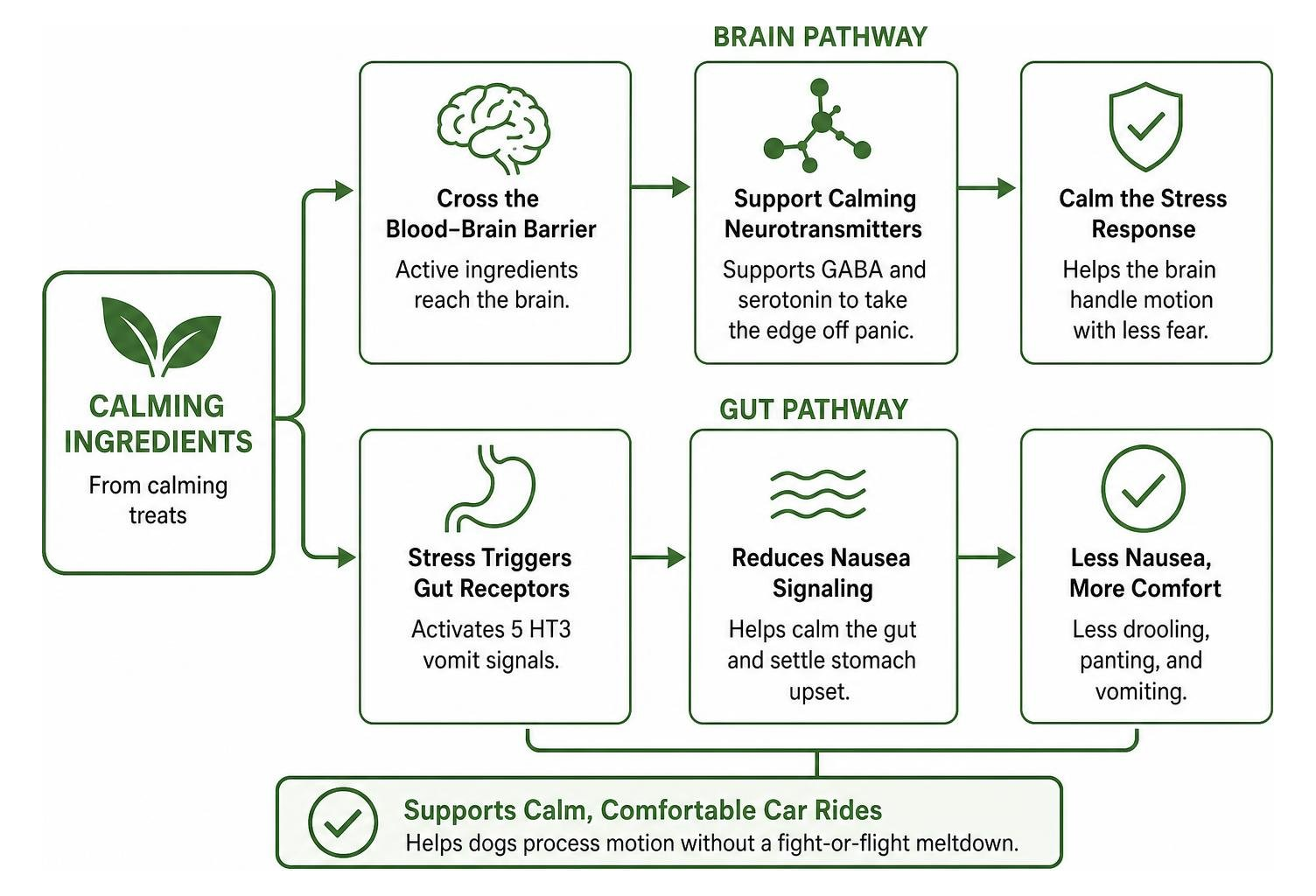
When a dog steps into a moving vehicle, their sensory systems take a beating. The landscape rushes past their eyes while their inner ear registers turns, acceleration, and sudden stops. This sensory mismatch triggers a vestibular amygdala conflict. The brain perceives a balance problem and sends an immediate alert to the nervous system, flooding the bloodstream with cortisol and adrenaline.
At the exact same time, stress stimulates gut receptors, specifically the 5 HT3 vomit signals. This biological chain reaction explains why so many dogs begin drooling excessively, panting, and vomiting within minutes of leaving the driveway. You can read more about how canine stress physiology works when fear and physical balance collide.
Calming treats intervene in this process through targeted nutrition. Active ingredients cross the blood brain barrier to support neurotransmitters like GABA and serotonin, effectively taking the edge off acute panic. When you pair these nutritional tools with proven techniques to reduce dog anxiety in car rides, your dog can process movement without spiraling into a fight or flight meltdown.
Reddit's Favorite Active Ingredients in Calming Dog Treats for Car Rides
Dog owners across online communities frequently discuss specific compounds that deliver noticeable results without turning a dog into a zombie. The top natural ingredients include:
- L Theanine: An amino acid found in green tea that stimulates alpha brain waves, encouraging focused relaxation without heavy sedation.
- Chamomile and Passion Flower: Classic botanicals that bind to nervous system receptors to ease muscular tension and mental restlessness.
- Valerian Root: A potent herb traditionally used to quiet racing thoughts and curb situational panic during noisy events.
- L Tryptophan: A necessary building block for serotonin, which regulates mood, emotional balance, and impulse control.
- Ginger Root Extract: A critical component for car travel that blocks nausea signals in the gut before they trigger vomiting.
- Elemental Magnesium and Vitamin B Complex: Essential micronutrients that support nervous system stability and cellular energy during stressful events.
CBD vs. Non CBD Options: What Reddit Communities Recommend
The debate between CBD and traditional herbal formulas is a regular topic among traveling pet parents. Broad spectrum hemp extract and CBD isolate work directly with the canine endocannabinoid system to regulate stress responses. A 2018 Cornell University study and a 2022 study published in Frontiers in Veterinary Science both confirmed that CBD measurably lowers stress markers in dogs facing environmental triggers.
Quality CBD options contain zero detectable THC, making them non intoxicating and safe when dosed correctly. Non CBD chews rely primarily on amino acids like L theanine and botanicals like chamomile. For evening road trips, some owners select formulas featuring low doses of melatonin to encourage sleep.
For daytime drives, non sedating formulas are ideal because they preserve your dog's normal personality and awareness while simply filtering out panic.
Key Types of Calming Dog Treats and Top Rated Formulations
| Treat Category | Primary Active Compounds | Onset Window | Duration | Best Travel Scenario |
|---|---|---|---|---|
| Air Dried Meat Chews | Hemp seed, L theanine, casein | 30 to 45 minutes | 4 to 8 hours | Sensitive stomachs and picky eaters on day trips |
| Neuro Vestibular Tablets | Gingerols, L theanine, magnesium | 45 minutes | 4 to 6 hours | Dogs prone to motion sickness and heavy drooling |
| Botanical Soft Chews | Chamomile, valerian root, passion flower | 30 to 60 minutes | 4 to 6 hours | Mild restlessness, whining, and pacing |
| CBD Isolate Chews | Pure CBD, L tryptophan | 45 to 60 minutes | 6 to 8 hours | Moderate to severe travel distress on long drives |
| Daily Cumulative Formulas | Ashwagandha, B vitamins, probiotics | 2 to 4 weeks | Ongoing baseline | Chronic travel anxiety requiring long term support |
Choosing the right format depends heavily on your dog's specific symptoms. Air dried meat formulas avoid starch fillers, making them easy to digest for dogs that refuse standard biscuit style treats. For dogs dealing with nausea alongside mental stress, tablets containing concentrated gingerols offer dual action relief. Reviewing our dog car anxiety tips 2026 will help you pair the right treat category with your travel schedule.
How to Choose Calming Dog Treats for Car Rides by Size and Sensitivity
Never guess a supplement dose. Reliable brands provide weight based charts so you can deliver the exact milligrams needed for your dog's frame. Most calming supplements are formulated for adult dogs and puppies older than six months. For young puppies, their developing organ systems require clearance from your veterinarian before introducing active herbs.
If your dog suffers from food sensitivities, look for single protein bases like pure chicken or duck, and check for grain free formulations. Always confirm that the manufacturer carries third party lab testing results and displays the National Animal Supplement Council (NASC) quality seal on the packaging to ensure ingredient purity.
Pre Trip Timing and Administration Protocols for Smooth Travel

Timing makes or breaks the effectiveness of any calming aid. Active ingredients must be fully digested and circulating in the bloodstream before the car engine starts. If you offer a chew while your dog is already trembling in the back seat, elevated adrenaline will overpower the supplement.
Administer the treat roughly 30 to 45 minutes before departure. If your dog tends to get an upset stomach in the car, avoid giving the treat on a completely full stomach. A tiny spoonful of food or offering the chew as a standalone snack works best.
For cross country travel spanning over six hours, plan a rest stop where you can offer a secondary dose according to label directions. For dogs with deep rooted nervous habits, establishing a daily baseline dose for four to six weeks builds nutritional support in their system. Check our car anxiety training checklist to organize your pre departure routine smoothly.
Combining Calming Chews with Environmental and Behavioral Support
Supplements provide biological support, but they cannot do the heavy lifting alone. Practical vehicle management transforms the physical environment so your dog feels secure. Pair your calming chew with:
- Crash Tested Travel Crates: A secure, covered crate limits visual motion blur and keeps your dog physically stable during turns.
- Pressure Wraps: Snug fitting vests apply gentle, constant torso pressure that naturally lowers heart rates.
- Pheromone Sprays: Synthetic calming pheromones applied to car bedding 15 minutes prior to loading provide an extra layer of comfort.
- Visual Management: Window shades or crate covers help with dog anxiety car windows by blocking fast moving objects and passing traffic.
Relying purely on treats without setting boundaries or routines rarely solves deep fear. When you combine supplements with clear communication and consistent handling, travel becomes far more manageable. For step by step guidance on building vehicle confidence, explore our dog trainer advice on dealing with car anxiety.
Frequently Asked Questions About Calming Dog Treats for Travel
How long before a car ride should I give my dog a calming treat?
Give the supplement 30 to 45 minutes before you plan to leave. This window allows the canine digestive system to break down the active compounds and absorb them into the bloodstream. The calming effects generally last between four and eight hours, depending on your dog's age, size, and metabolism.
Can calming treats help with both car sickness and travel anxiety?
Yes. Many dogs get nauseated purely because their anxiety levels spike, while others feel anxious because they feel physically sick. Formulas that combine brain soothing ingredients like L theanine with stomach settling herbs like ginger root address both ends of the problem at once.
Are calming treats safe for daily use and what are the common side effects?
High quality calming treats made with natural botanicals and amino acids are generally safe for daily use in healthy adult dogs. Mild side effects can occasionally include loose stool, gas, or mild lethargy. Always speak to your veterinarian before introducing supplements if your dog takes prescription medications, especially sedatives or MAO inhibitors.
Practical Help for Real Travel Freedom
Supplements and calming chews are helpful tools to lower stress, but they cannot replace clear leadership, structured routines, and proper training. If every trip down Highway 30 or across the bridge into Portland feels like an ordeal, your dog needs a structured training plan that addresses the root cause of their anxiety.
At Blackwood Canine, we provide private lessons and immersion programs designed to build clear communication between you and your dog. Real behavior change takes time and commitment. That is why our basic obedience foundation programs start at 4 weeks, while complex behavior modification plans follow dedicated 6 week and 8 plus week timelines. We do not offer short cut programs under four weeks because lasting habits require steady repetition and consistent guidance.
Whether you live in Scappoose, St. Helens, Warren, Bethany, Hillsboro, Beaverton, Portland, or Vancouver, our team is here to help you move past frustration. Explore our reactive dog training options and get started with a Good Dog Game Plan to make every car ride safe and manageable.