
Why Crate Training Works: The Den Instinct and Housebreaking
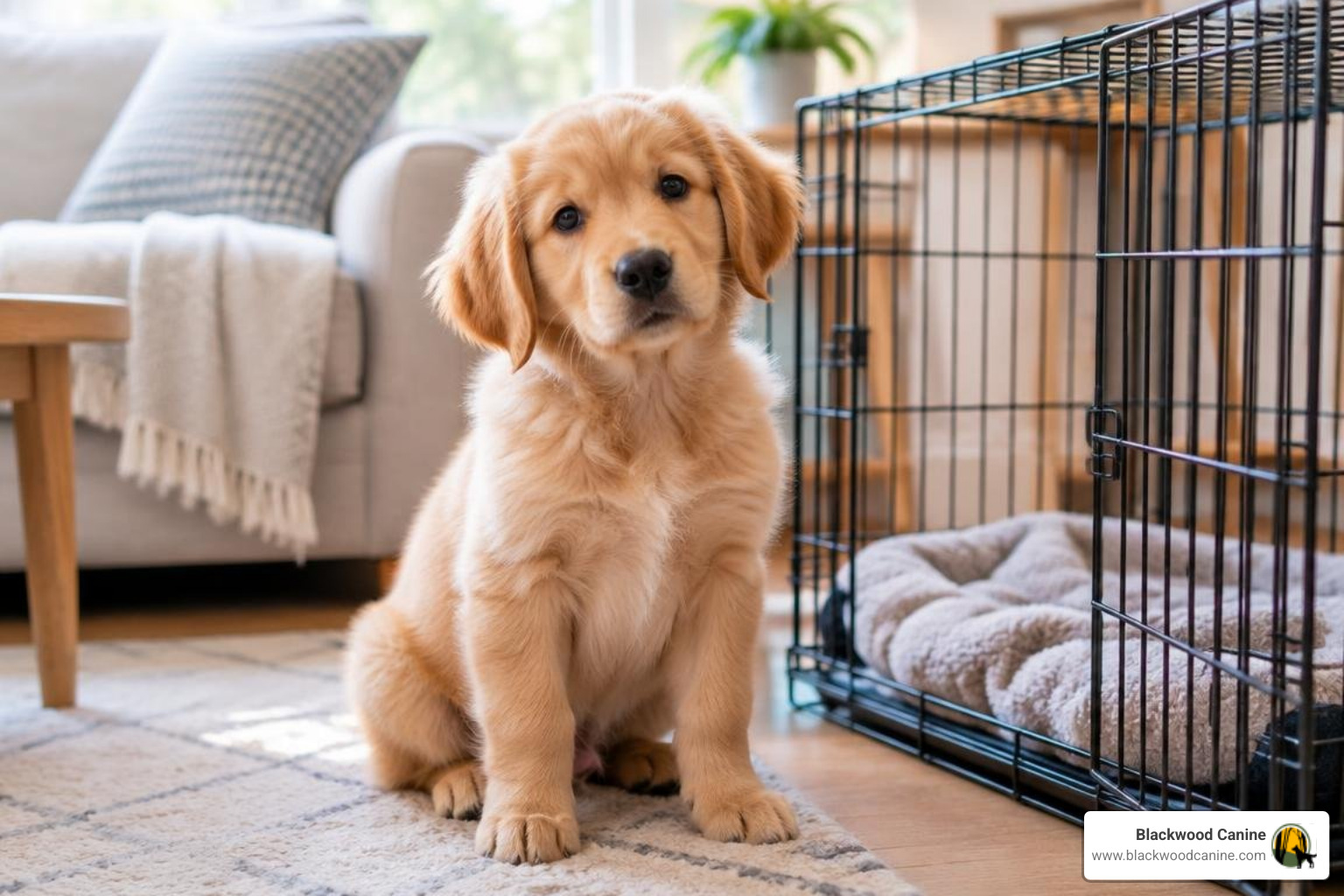
Crate training a new puppy starts with open door exploration, feeding meals inside, and gradually building closed door duration. Set up the kennel in an active room, scatter treats near and inside the entrance, and let your puppy walk in and out freely. Over several meals, move the food bowl deeper toward the back wall. Once your puppy eats comfortably inside, close the door briefly while they eat, then open it before they finish. From there, extend closed door sessions with a long lasting chew while you sit nearby, then add distance and short out of sight intervals. This steady process builds a calm, reliable kennel routine without panic or protest.
Dogs naturally look for small, secure dens when they need deep sleep or a quiet break from the world. A properly introduced crate taps into this ancient behavior. It gives your dog a personal room where outside chaos cannot follow.
Beyond comfort, the den instinct plays a central role in clean living habits. Puppies instinctively avoid eliminating where they sleep. When you provide a properly sized kennel, your puppy naturally works to hold their bladder, which accelerates potty learning.
Confinement also prevents common puppy problems like destructive chewing, eating foreign objects, and wandering into dangerous household spots. It prepares your pup for low stress veterinary visits, grooming appointments, and road travel.
Before diving into complex routines, focus on setting up a solid foundation. Our guide on bringing home a puppy breaks down early management steps. You can also review the Humane Society crate training guidelines for more insight on using natural den instincts effectively.
Choosing the Right Setup Before Crate Training a New Puppy
The right equipment prevents early setbacks and keeps your dog safe.
- Crate Type: Wire crates offer excellent airflow and visibility, making them ideal for living areas. Plastic airline crates offer darker, more enclosed quarters that soothe nervous pups.
- Sizing and Dividers: Choose a crate sized for your puppy's adult weight, but always use an adjustable divider panel. Your puppy should have just enough room to stand up, turn around, and lie down flat. Excess space encourages them to sleep at one end and use the other end as a bathroom.
- Bedding: Use durable, chew proof options. A Kuranda Standard PVC Dog Bed keeps pups elevated and comfortable without providing fabric to shred or ingest. If your puppy chews or soils soft blankets, remove them until house training is reliable.
- Collar Safety: Always remove your puppy's collar, harness, and tags before placing them inside the crate to prevent strangulation or snagging hazards.
The Step by Step Guide to Crate Training a New Puppy
Crate training works best as a clear, phased process. Rushing ahead creates friction, while steady repetition builds lasting confidence.
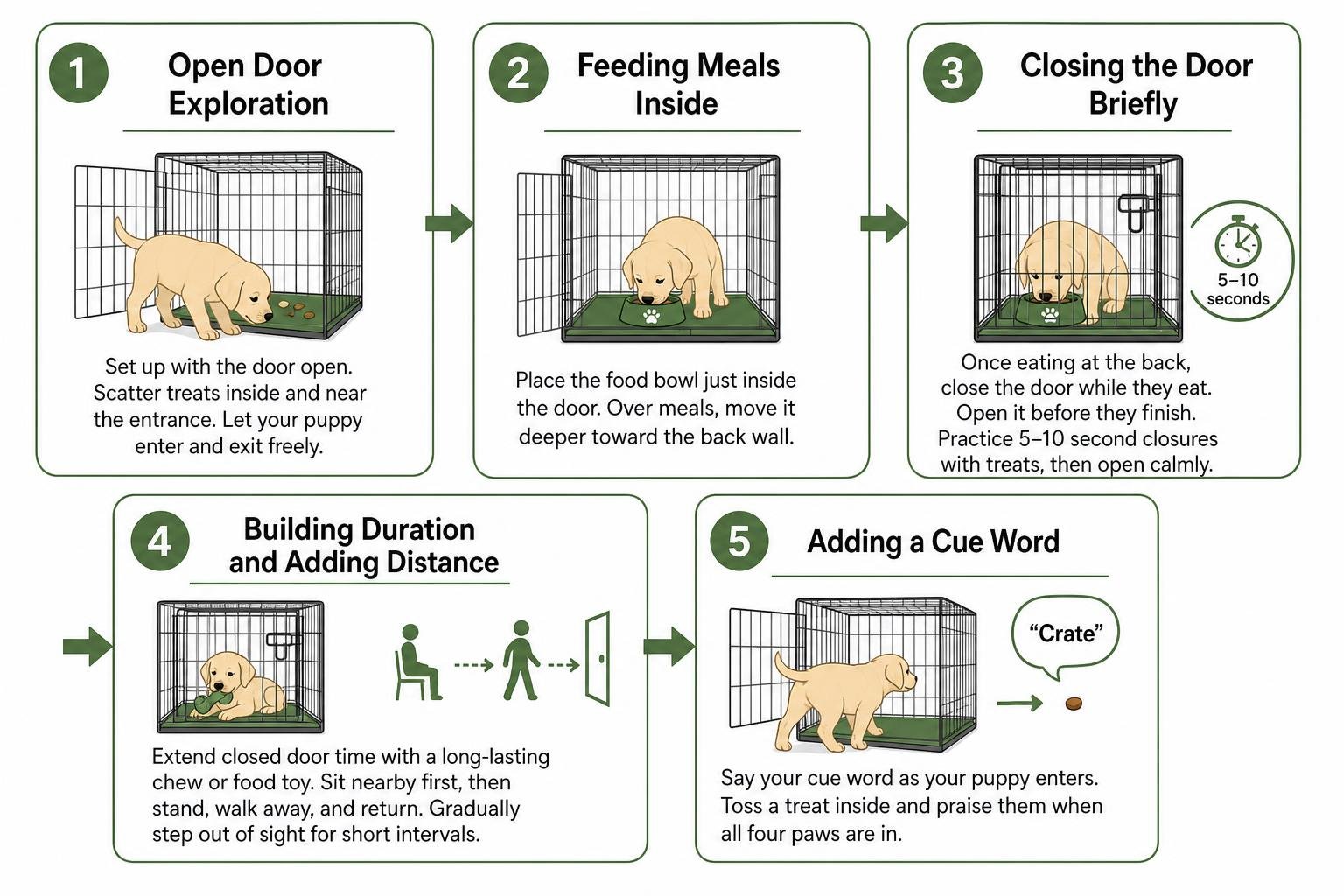
- Open Door Exploration: Set up the kennel in an active room with the door propped wide open. Scatter high value treats near the entrance and inside. Let your puppy walk in, eat the food, and leave freely. Never push or trap them inside during this initial stage.
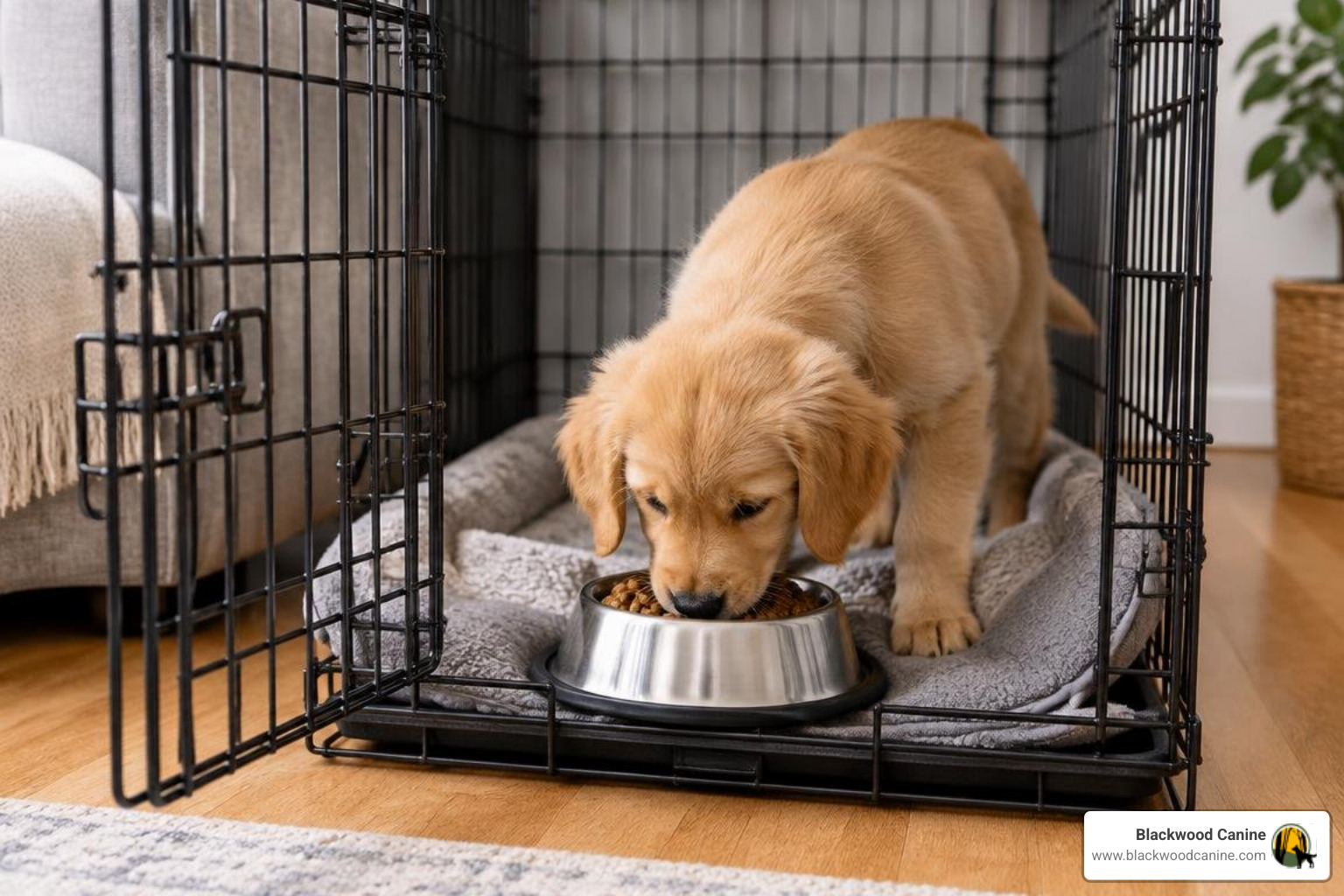
- Feeding Meals Inside: Place your puppy's food bowl just inside the door. Over subsequent meals, move the bowl deeper toward the back wall. This pairs the crate with daily nutrition and satisfaction.
- Closing the Door Briefly: Once your puppy eats comfortably at the back of the crate, close the door while they eat. Open it immediately before they finish their meal. Practice closing the latch for five to ten seconds while dropping small treats through the wire, then open the door calmly.
- Building Duration and Adding Distance: Extend closed door sessions while your puppy enjoys a long lasting chew or a food stuffed rubber toy. Sit near the crate first, then stand up, walk across the room, and return. Gradually step out of sight for short intervals.
- Adding a Cue Word: Once your puppy readily steps inside, pair the action with a verbal marker like "kennel" or "crate." Say the word, toss a treat inside, and praise them when all four paws cross the threshold.
For a broader look at everyday obedience routines, check out our guide on easy puppy training strategies. You can also reference the AKC crate training steps to reinforce these core stages.
Daytime Schedules and Age Based Crate Limits
A puppy's physical bladder capacity dictates how long they can stay confined during the day. A reliable rule of thumb is the month plus one guideline: a puppy can generally hold their bladder for one hour per month of age during daytime hours, with an eight week old puppy topping out around two to three hours.
Never leave a puppy under six months old crated for more than three to four hours during the daytime without a physical exercise and potty break.
| Puppy Age | Maximum Daytime Crate Stretch | Overnight Potty Needs |
|---|---|---|
| 8 to 10 Weeks | 30 to 60 minutes (up to 2 to 3 hours for naps) | 2 to 3 breaks |
| 11 to 14 Weeks | 1 to 3 hours | 1 to 2 breaks |
| 15 to 16 Weeks | 3 to 4 hours | 0 to 1 break |
| 17+ Weeks | 4 to 5 hours | Sleeps through the night |
To build a balanced daily routine, explore our sample 3 month old puppy schedule and our detailed 4 month puppy schedule guide.
Nighttime Protocol: Surviving the First Week
Night one is an emotional hurdle. Your puppy has just left the warmth and scent of their mother and littermates. When placed alone in the dark, their instinct is to sound an alarm call.
Place the crate right next to your bed for the first week. Being able to hear your breathing and smell your presence dramatically cuts down on separation stress. If your puppy fusses, lower your hand near the wire so they know they are not abandoned.
Expect an extinction burst around night two or three. As your puppy realizes that crying does not immediately open the door, they may vocalize louder and longer for a brief window. Stay consistent.
Keep all nighttime bathroom breaks strictly business. Take your puppy out on a leash in low light, give them two minutes to eliminate, offer quiet praise, and place them directly back into the crate without play or conversation. For more nighttime routines, read our 5 month old puppy sleep guide.
Connecting the Crate to Potty Training and House Manners
The crate is the ultimate management tool for housebreaking. Puppies operate on a simple internal clock: sleep, potty, eat, potty, play, potty.
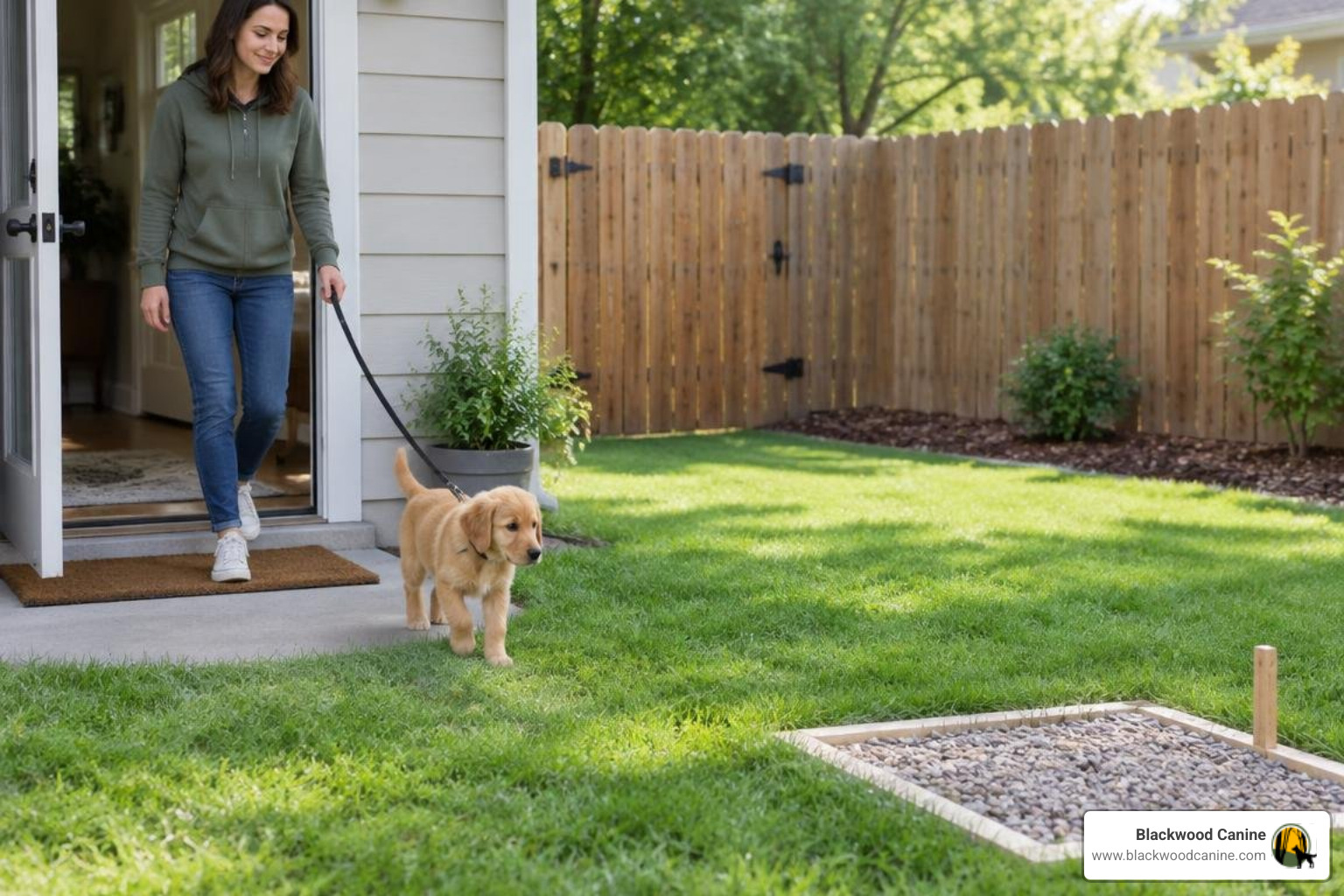
Whenever you take your puppy out of the crate, carry or walk them directly on leash to their designated outdoor bathroom spot. When they eliminate, mark the behavior and reward them immediately. If they do not go within five minutes, bring them back inside, place them in the crate for ten to fifteen minutes, and try again. This prevents accidents on carpets and teaches clear cause and effect.
For custom planning, see our easy way to potty train a puppy, use our interactive housebreaking schedule generator, or follow our milestones in the 6 month puppy potty guide.
Common Pitfalls When Crate Training a New Puppy
Avoid these frequent mistakes to keep training on track:
- Using Confinement as Emotional Punishment: Never throw your puppy into their crate in anger. The kennel must remain a safe retreat. While short, calm timeouts can help an overstimulated puppy settle, the crate should not be associated with owner frustration. Any corrections or management tools should always be used fairly and under professional guidance.
- Rushing the Process: Moving from open door exploration to multi hour isolation in a single afternoon leads to panic and vocal resistance.
- Oversized Sleeping Areas: Giving a young puppy a full size adult crate without a divider invites them to soil corners.
- Letting Them Out Mid Tantrum: If you open the crate door while your puppy is actively barking or scratching, you teach them that noise equals freedom. Wait for at least three to five seconds of silence before opening the latch.
- Leaving Collars On: Snags on wire mesh present severe strangulation risks.
- Skipping Pre Crate Exercise: A puppy bursting with physical and mental energy cannot settle. Provide age appropriate play and sniffing time before crating.
For additional missteps to watch out for, read about mistakes to avoid when training a puppy.
Normal Whining vs. Genuine Panic and Confinement Phobia
Learning to read your puppy's vocalizations saves you from unnecessary stress while protecting your dog's welfare.
- Normal Protest Whining: Intermittent whimpering, mild pacing, or brief barking that subsides within ten to fifteen minutes as the puppy settles into a nap.
- Genuine Distress and Panic: Non stop screaming, heavy panting, wide dilated eyes, drooling, frantic clawing at the door, or attempts to bite through wire bars.
If your puppy shows true panic, do not force them into extreme confinement. Step back to open door training and consult a professional trainer or your veterinarian. For medical and welfare considerations, review veterinary advice from Warren House Vets.
Frequently Asked Questions About Puppy Crate Training
How long does it typically take to crate train a new puppy?
Most puppies adapt to resting in a crate within one to four weeks of consistent, positive practice. Nighttime settling usually improves noticeably between day three and day seven, while daytime comfort builds steadily as you increase duration.
What should I do if my puppy wakes up crying at 2 a.m.?
Assume an urgent physical need first. Carry your puppy outside on leash to their potty area with minimal light and zero playtime. If they eliminate, quietly praise them and place them back in the crate. If they do not go, place them back in the kennel and offer a calm hand near the door until they settle.
When can I start giving my puppy more freedom outside the crate?
Expand freedom gradually once your dog demonstrates reliable bladder control, settles independently on a dog bed, and shows zero interest in chewing household items. Most dogs earn broader house freedom between ten and eighteen months of age.
Building Lifelong Confidence and Routine for Your Dog
Crate training is not about locking a dog away. It is about practical management, clear communication, and giving your puppy a predictable routine. Setting clear boundaries early prevents bad habits from forming and sets your dog up for lifelong success in your home.
If you live in Portland, Beaverton, Hillsboro, Scappoose, or surrounding areas and need hands on help with early manners, housebreaking, and foundation obedience, connect with our team. Start with our Puppy Jump Start Program to build clear communication and reliable habits from day one.