
What to Do When Your Dog Shows Aggression to Family Members or Strangers
Understanding Dog Aggression Toward People and Its Root Causes
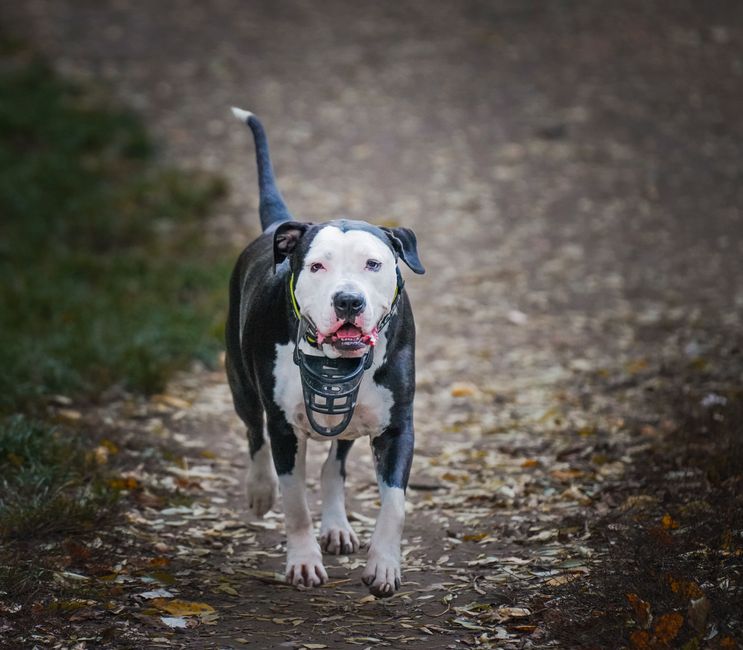
To address dog aggression toward people, start by creating immediate physical safety through leashes, gates, or a basket muzzle, ruling out medical pain with a vet, and managing trigger distances to prevent escalation. Pairing sub-threshold human exposure with structured rewards and clear boundaries helps rebuild safe habits. Living with an aggressive dog is exhausting, but understanding root causes is the first step toward regaining safety and trust.
Aggression is an outward behavioral symptom of an underlying emotional state or physical issue. According to a systematic review on risk factors for human directed aggression, human directed aggression stems from a complex mix of early handling, owner experience, environment, and communication breakdowns. When a dog displays aggression toward humans, they are usually trying to create space, protect a valuable item, or express pain or intense conflict.
Why Dogs Show Aggression: Fear, Pain, and Frustration
Fear is the single most common cause of aggression toward people. When a dog feels threatened, their sympathetic nervous system activates a fight or flight response. If fleeing is not an option because of a tight leash, a corner, or a closed room, fighting becomes their remaining defensive strategy. Misusing corrections or punishment without professional guidance can increase anxiety and conflict, whereas balanced training tools and techniques should always be applied under qualified professional supervision. If you are struggling with these emotions, stop feeling guilty about your reactive dog because guilt only distracts from clear, practical leadership.
Underlying medical conditions and physical discomfort are major hidden triggers for aggressive outbursts. Issues like osteoarthritis, dental disease, ear infections, cervical disc disease, and thyroid dysfunction can make a dog irritable or sensitive to handling. A sudden behavior change in an adult dog warrants a complete veterinary exam to rule out hidden pain or metabolic issues before starting behavior training.
Frustration also plays a substantial role. Barrier frustration occurs when a dog wants to interact with, chase, or escape a person but cannot due to a leash, window, or fence. Over time, that blocked arousal boils over into reactive lunging, snapping, or redirected bites toward whoever is closest.
The Critical Role of Early Socialization and Genetics
A dog's behavioral foundation is heavily shaped during their early development. Research on puppy early experiences and aggression demonstrates that experiences during the first six months of life, as highlighted in research on puppy early experiences and aggression, directly impact adult temperament and human directed bite risks. Puppies sourced from commercial breeding operations or pet shops often miss critical early handling, resulting in poorer coping mechanisms when faced with novel stimuli.
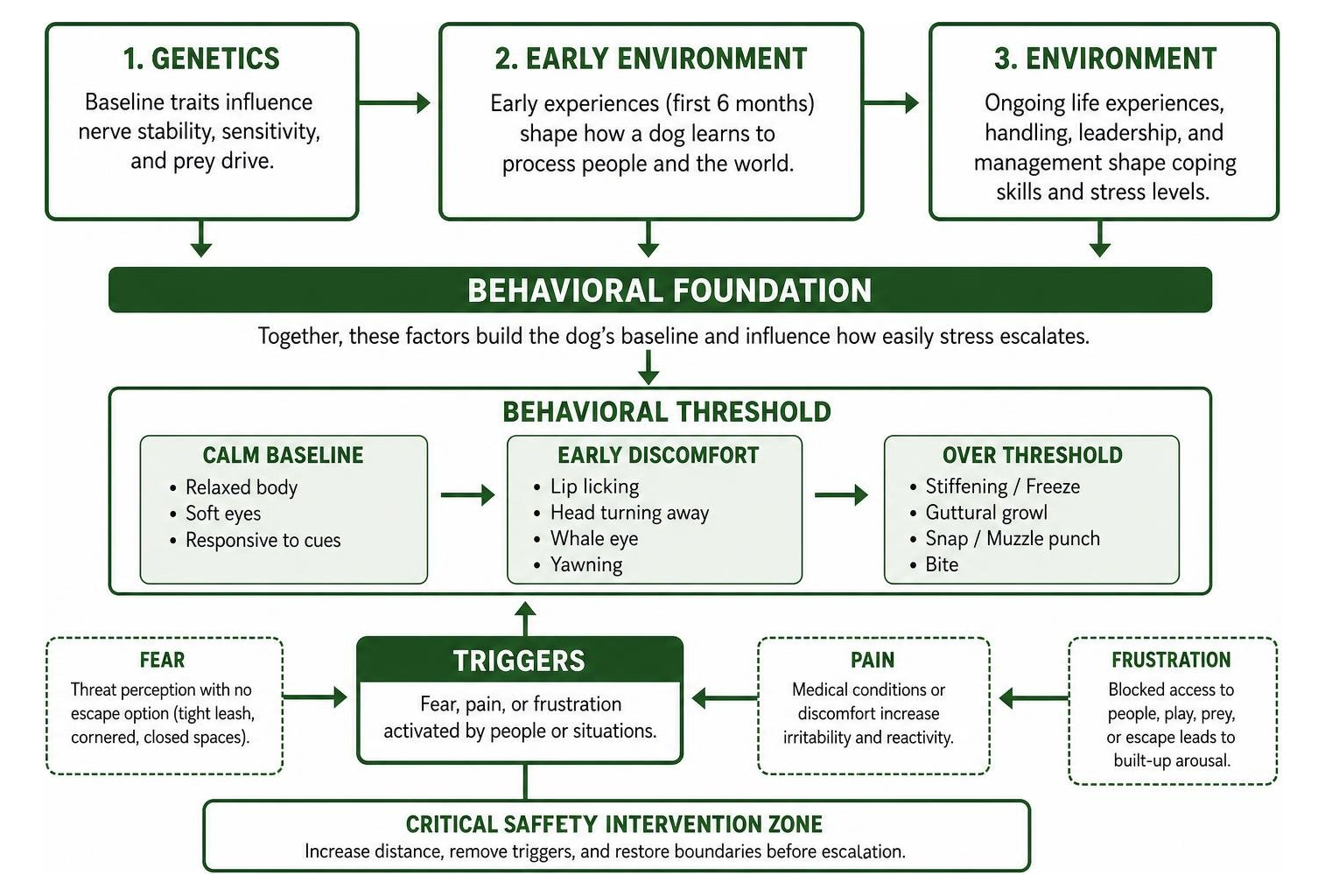
Genetics establish baseline traits like nerve stability, environmental sensitivity, and prey drive, while early socialization teaches a young dog how to process the world. When puppies are isolated from varied, positive human interactions during their primary socialization period, or when they experience traumatic handling, their threat detection system remains hyperactive into adulthood.
Types and Triggers: Recognizing Warning Signs Before a Bite
A dog rarely bites out of the blue. Dogs communicate their discomfort long before they resort to physical contact, as detailed in this clinical guide to canine aggression. The challenge is that human owners often miss subtle appeasement signals, only noticing the behavior when it escalates into a bark, growl, or snap.
| Aggression Type | Primary Motivation | Common Triggers | Typical Warning Behaviors |
|---|---|---|---|
| Fear Aggression | Self preservation and creating distance | Cornering, unfamiliar people, reaching hands, direct eye contact | Cowering, lip licking, whale eye, low growl, snapping upon retreat |
| Territorial Aggression | Defending perceived property or space | Mail carriers, visitors entering the home, people walking along the fence | Fence running, deep barking, charging the front door, rigid stance |
| Possessive Aggression (Resource Guarding) | Protecting high value items or resting spots | Approaching while eating, taking away chew toys, moving a resting dog | Freezing over item, hard staring, showing teeth, rapid muzzle punch |
Classifying Types of Dog Aggression Toward People
Canine aggression takes several distinct forms based on motivation and context, as outlined in the ASPCA aggression classifications:
- Territorial and Protective Aggression: Emerging during social maturity between one and three years of age, this involves defending property, vehicles, or handlers from approaching strangers.
- Possessive Aggression (Resource Guarding): Defensive behavior surrounding food, high value bones, toys, stolen trash, or specific resting spaces on furniture.
- Conflict Aggression: Stress reactions arising when handling, restraint, or grooming pushes a dog past their comfort zone, often worsened by confrontational training methods.
- Redirected Aggression: When an aroused dog is blocked from reaching their primary target (like a person across the street) and turns to bite the leash or the handler holding them.
The Ladder of Aggression and Subtle Body Language Clues
The canine ladder of aggression illustrates how dogs escalate their signals when lower level warnings are ignored. Recognizing early discomfort helps you de-escalate situations before they reach physical danger. For more guidance on reading these subtle shifts, check our guide on understanding and transforming reactive dog behavior.
A 7-Day Safety and Reset Plan for Aggressive Behavior
If you are dealing with aggressive outbursts, you need an immediate plan to halt bite risks, reduce household stress, and set clear boundaries. This seven day reset framework establishes environmental control, stabilizes your daily routine, and creates a clean baseline for long term training.
The 7-Day Reset Protocol
Step-by-Step Management: Tools, Space, and Routine
- Implement Secure Physical Barriers: Use sturdy baby gates, closed doors, and crates to isolate your dog from front doors, entryways, and meal areas.
- Condition a Basket Muzzle: A properly fitted basket muzzle that allows full panting, drinking, and treat acceptance provides safety without distress.
- Establish Indoor Leash Control: A lightweight leash attached to a flat collar or harness inside the home prevents you from needing to grab the dog's collar during tense moments.
- Manage Outdoor Distance: Avoid crowded sidewalks. Walk during quiet hours and cross the street well before your dog spots an approaching pedestrian. For structured leash support, explore our options for reactive dog training.
- Avoid Misuse of Corrections: Untrained physical confrontations, alpha rolls, or screaming when your dog growls escalate stress and confusion. Misuse of corrections is where problems arise; all training methods, tools, and consequences should always be introduced under professional guidance.
Assessing Risk Factors and Bite Predictability
Evaluating the long term safety of living with an aggressive dog requires looking at objective risk factors:
- Severity of Bite History: A dog that air snaps or delivers shallow nips exhibits bite inhibition. A dog that bites repeatedly, causes deep punctures, or clamps down carries a much higher safety liability.
- Predictability of Triggers: A dog that reacts reliably only when someone touches their food bowl is far easier to manage safely than a dog that explodes unpredictably with little contextual warning.
- Dog Size and Household Demographics: A fifty pound dog presents greater physical bite severity than an eight pound dog. Homes with young children, elderly family members, or active visitors face higher day to day risk.
Proven Behavior Modification and Long-Term Rehabilitation
Real, lasting behavioral change requires more than quick tips or basic obedience cues like sit and stay. Modifying aggression requires changing your dog's underlying emotional response to triggers while establishing clear communication, consistent management, and reliable boundaries.
Transforming Dog Aggression Toward People with Counter-Conditioning
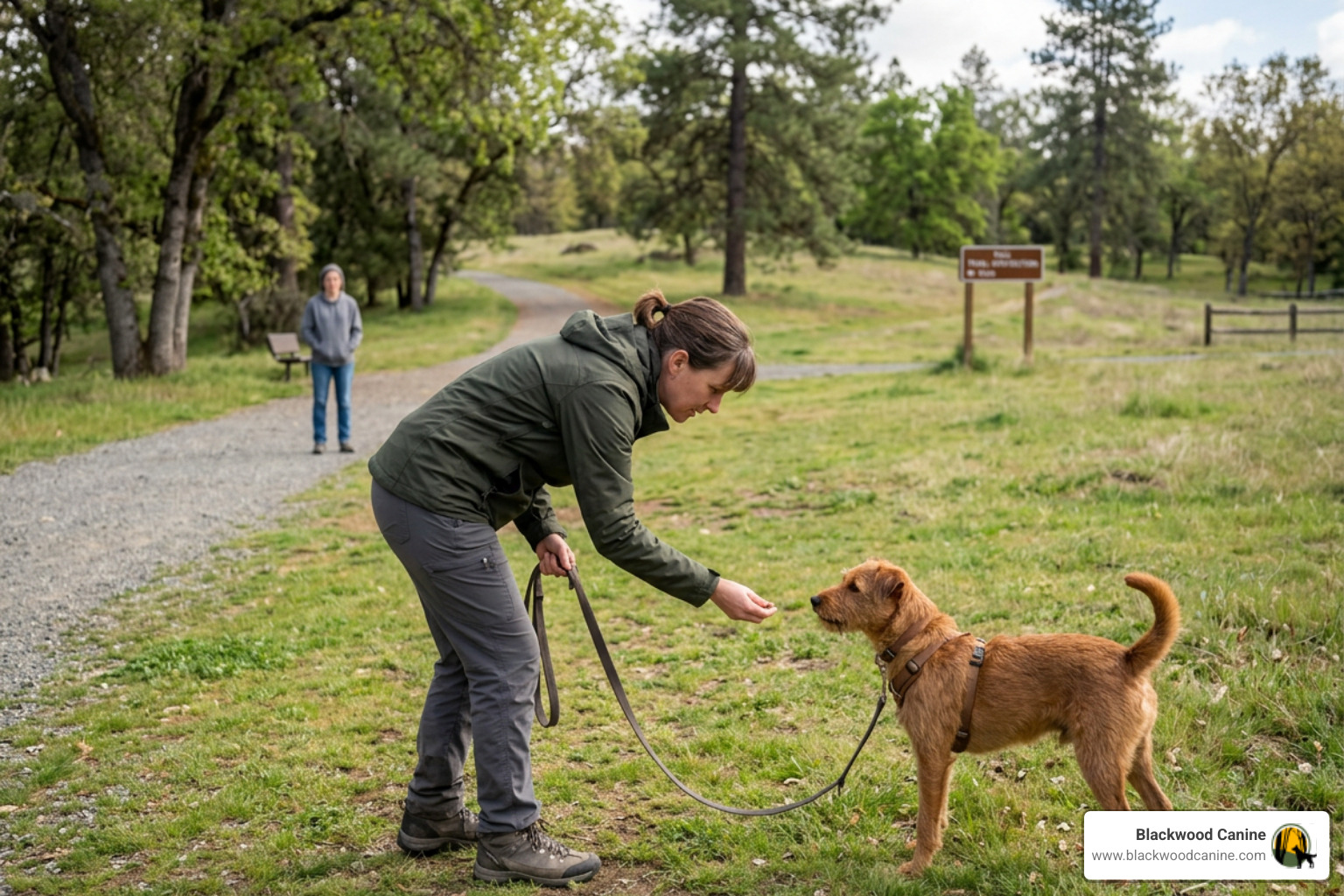
Systematic desensitization and classical counter-conditioning form the foundation of clinical behavior modification. We expose the dog to the trigger (such as a stranger at a distance) strictly below their reactive threshold—the distance at which they notice the person but remain calm and responsive.
By pairing the sight of a person at a safe distance with high value rewards, the dog's emotional state shifts from defensive fear to positive anticipation. Over time, we gradually close the distance while teaching alternative behaviors through advanced re conditioning. For complex behavioral cases, training is never about purely force free bribery or harsh corrections. Successful resolution relies on clear expectations, reliable boundaries, management, reinforcement, fair consequences, and owner consistency.
Professional Immersion vs. In-Home Training Timelines
Rehabilitating severe aggression is a long process that requires time, structure, and professional guidance. Basic obedience foundation training starts at four weeks, but complex behavior modification requires six week and eight plus week timelines to establish real, lasting reliability.
Shortcuts and quick fixes do not resolve ingrained aggression. Programs like our dog behavior camp and reactive dog boot camp provide structured immersion to reset dangerous patterns, build impulse control, and lay the foundation before transferring those critical handling skills back to the owner at home.
Frequently Asked Questions About Canine Aggression
Can an aggressive dog ever be 100% cured?
In behavioral medicine, responsible professionals avoid using the word cured. While a dog's frequency, intensity, and threshold of aggression can improve dramatically with structured training, their underlying genetic tendencies and learned bite history remain part of their behavioral makeup. Owners must maintain lifelong management, clear communication, and reasonable expectations to prevent regression during high stress situations.
Are certain dog breeds naturally more aggressive to people?
While working drives, guarding instincts, and bite power vary across breeds due to selective breeding, breed alone does not determine whether an individual dog will become human aggressive. Individual temperament, early socialization history, health status, and owner handling are far more reliable indicators of aggression risk.
When is it time to seek professional behavioral help?
You should seek professional support immediately if your dog has broken skin, displayed muzzle punches, stiffened over resources, or shown lunging behavior that you cannot comfortably control. Trying to manage serious aggression alone without structured professional guidance puts your family, the public, and your dog at risk.
Finding Peace and Moving Forward with Your Dog
Managing human directed aggression can feel isolating, but you do not have to handle it alone. Living with an unpredictable dog wears on your household, yet with clear communication, consistent environmental management, and structured training, you can regain control of your daily routine.
At Blackwood Canine, we work with dog owners across Scappoose, St. Helens, Warren, Bethany, Hillsboro, Beaverton, Portland, and Vancouver who feel stuck, stressed, or overwhelmed. We provide private coaching and structured immersion programs built around clear handling, reliable management, and long term owner support.
Whether your dog needs four week foundation training or six week and eight plus week timelines for complex behavior modification, our behavior modification training gives you the tools, clarity, and safety plan you need to move forward. Reach out today to schedule your evaluation and build your practical path forward.