
Dog Training for Socialization Starts With Calm Encounters
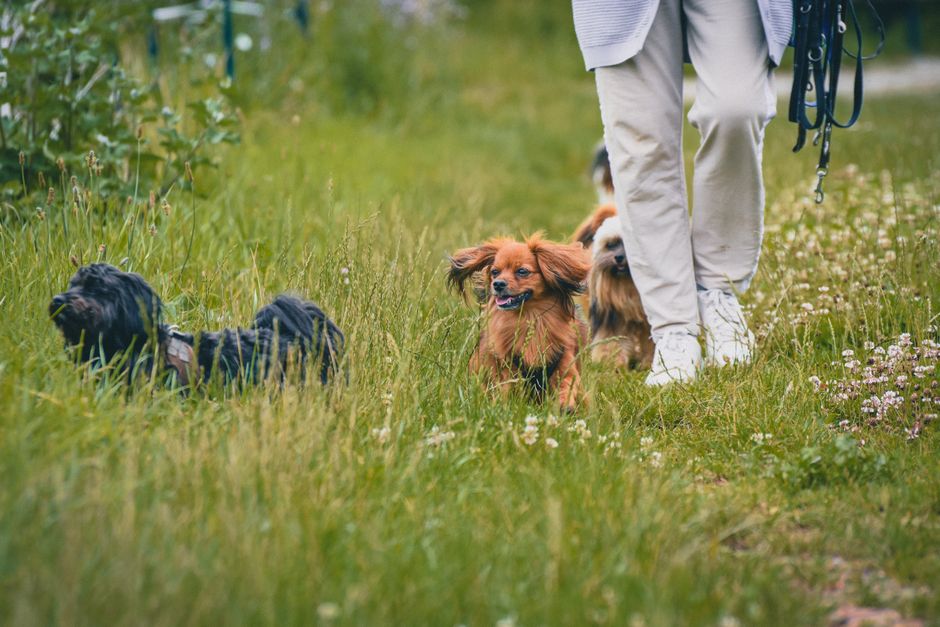
If your dog barks at every dog on a walk, skip the forced greetings. For dog training for socialization, start far enough away that your dog can notice a person or dog and still stay calm. Reward a relaxed look or a glance back at you. Move closer only when your dog is ready.
For puppies, add short, pleasant experiences with new sounds, surfaces, gentle handling, and friendly people. The goal is not to meet everyone. It is to help your dog feel safe when the world gets busy.
I'm David Wright. I began working through social challenges with my own puppy in 2009, then spent five years apprenticing with a dog trainer. That experience shapes how I approach dog training for socialization at every age.
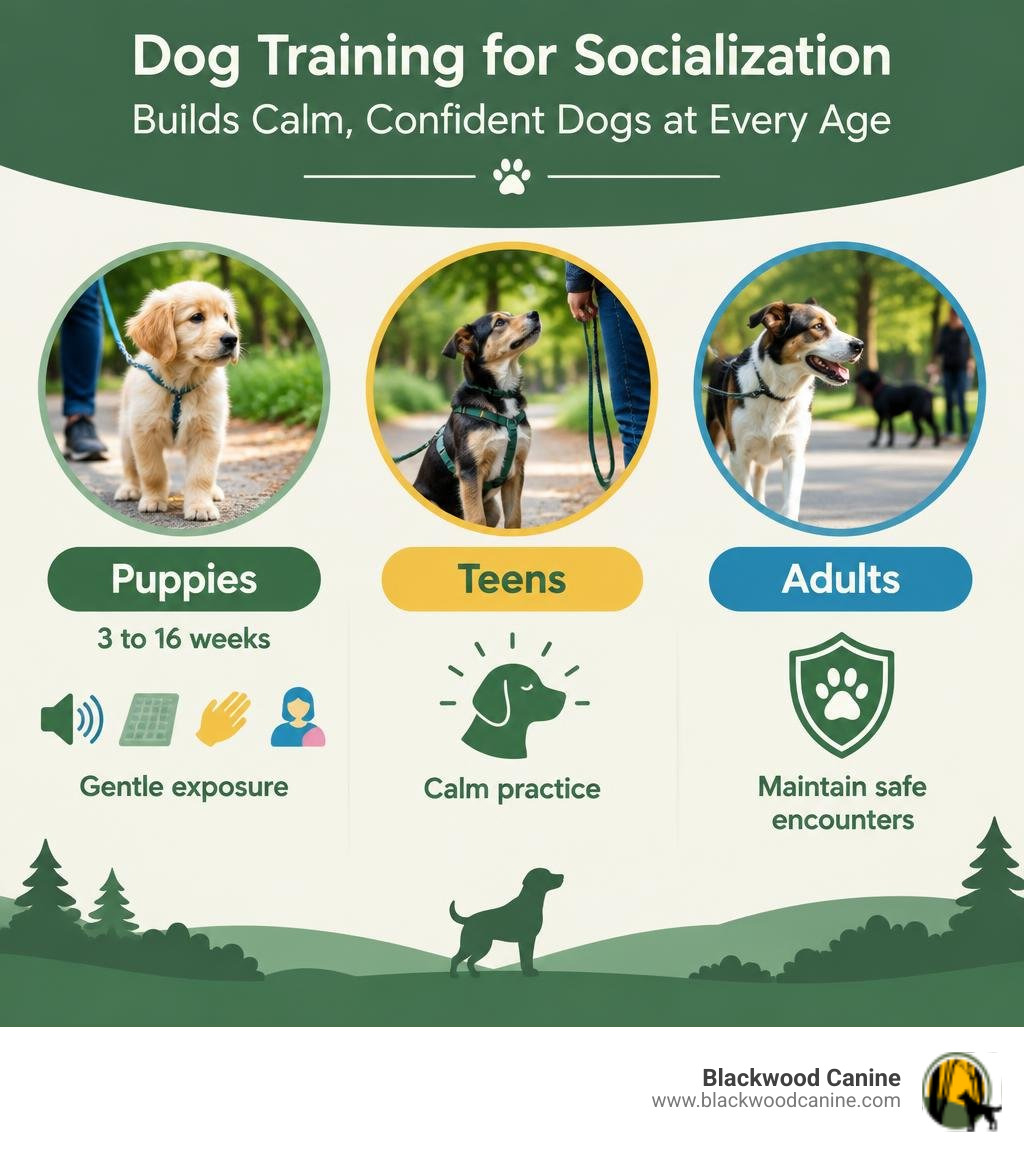
Proven Dog Training for Socialization Protocols for Every Life Stage
Socialization is widely misunderstood. Many dog owners believe it means letting their puppy greet every stranger on the sidewalk or survive a chaotic dog park free for all. In reality, real socialization creates a dog who can look at the world and feel completely neutral. It is about emotional stability, not forced physical greetings.
Different life stages require different priorities. A young puppy needs gentle exposure to novel stimuli, while an adult dog often needs clear boundaries and handler focus to navigate busy public spots in Scappoose, Beaverton, or Portland.
| Life Stage | Core Developmental Goal | Primary Socialization Focus | Common Mistake to Avoid |
|---|---|---|---|
| Puppy (3 to 16 Weeks) | Build trust and safe associations with novelty | Environmental exposure, sound habituation, gentle touch, basic impulse control | Flooding with overwhelming crowds or pushy dogs |
| Adolescent (5 to 18 Months) | Maintain focus despite rising hormones and drive | Enforcing handler focus around distractions, distance control, emotional regulation | Allowing demand barking and uncontrolled leash greetings |
| Adult (18+ Months) | Preserve emotional neutrality and polite manners | Controlled one on one setups, structured walks, practicing calm disengagement | Forcing interactions with unfamiliar dogs at dog parks |
The Critical Window: 3 to 16 Weeks
The primary window for canine learning begins at around three weeks of age and closes between sixteen and twenty weeks. During this brief timeframe, a puppy's brain possesses peak neuroplasticity. Experiences encountered during these weeks shape how your dog views everything for the rest of their life.
Missing this window does not mean a dog is ruined, but puppies who miss out on positive exposures often struggle with fear, anxiety, or aggression as adults. In a landmark study on early puppy challenges, researchers evaluated 83 puppies across multiple litters. The puppies exposed to mild challenge exercises such as novel objects, simple problem solving tasks, and controlled sound exposure between three and six weeks of age showed lower startle responses to loud noises and approached unfamiliar objects with noticeably more boldness. However, the study also found that without ongoing enrichment, these differences faded by six months of age, proving that early exposure must be sustained.
Building a well mannered puppy foundation involves pairing these early experiences with clarity, gentle handling, and fair boundaries so your young dog learns that you are their ultimate safety net.
Maintaining Balance in Adolescence and Adulthood
As dogs enter adolescence, surging hormones and increasing drive often disrupt earlier training. A puppy who once ignored neighborhood distractions might suddenly freeze, bark, or pull toward every passing dog along the street in Hillsboro or St. Helens.
Furthermore, adult dogs typically reach social maturity between one and three years of age. At this point, many dogs become dog selective. They no longer enjoy playing with large groups of unfamiliar dogs, and that is completely normal. Rather than forcing adult dogs to make friends, we teach owners to prioritize quiet observation and spatial management. Proper socialization means shifting your definition of success from social butterfly to calm, focused partner who views passing distractions as simple background noise.
Essential Pillars of Humane Socialization Training
Solid socialization is built on clear communication, structured management, and consistent expectations. It is not just about handing out cookies or handing down corrections. Successful training brings together rewards for good choices, clear boundaries for safety, and fair follow through.
Gentle Handling and Novel Stimulus Exposure
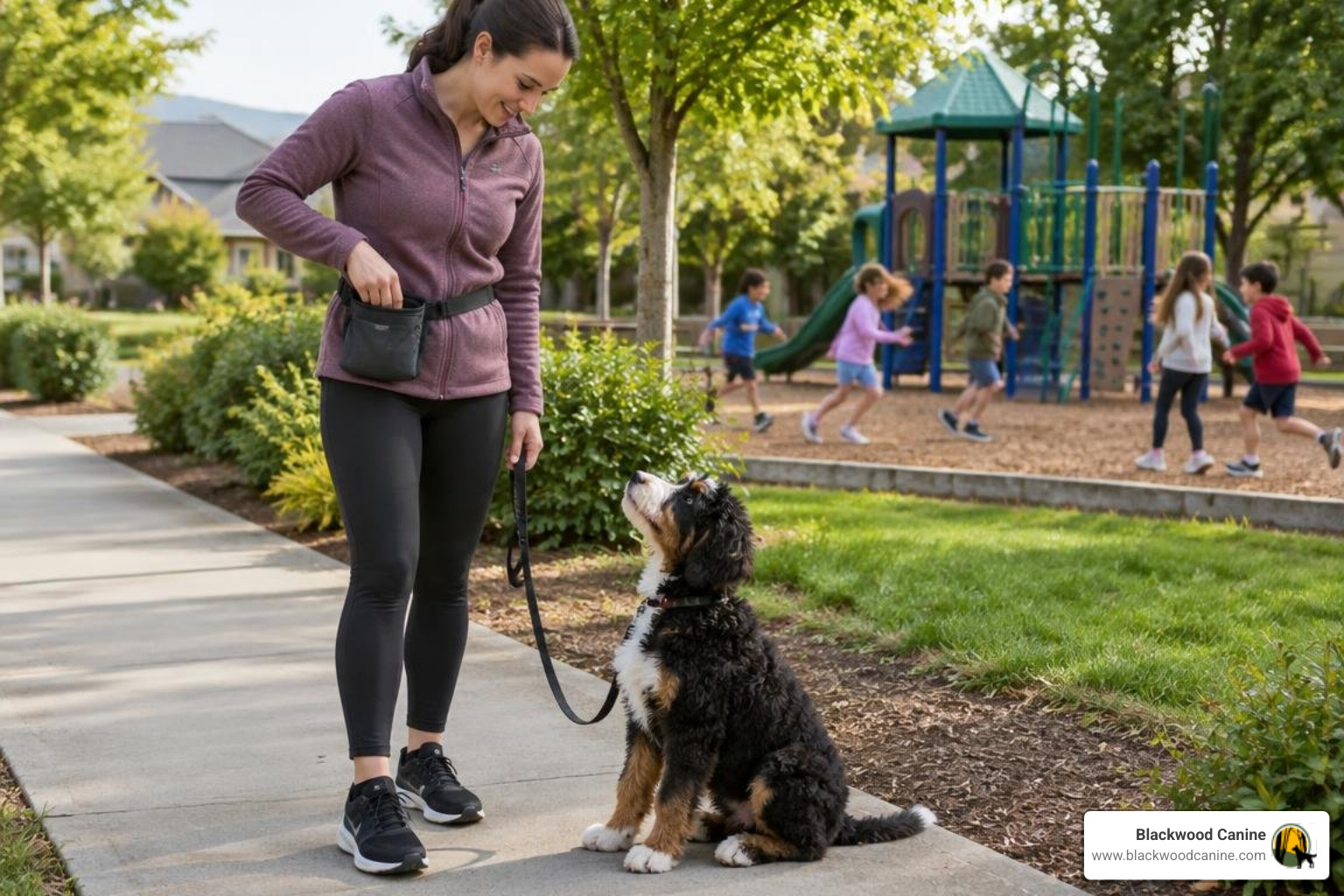
A socially confident dog must feel relaxed during everyday life events, such as grooming sessions, nail trims, and veterinary checkups. If a dog panics whenever a veterinarian touches their paws or ears, public trips quickly become stressful ordeals.
Practical home handling routines should include:
- Touching ears, lifting lips to check teeth, and gently holding paws for several seconds before rewarding with a high value treat.
- Introducing novel walking surfaces like metal grates, slick wood floors, plastic tarps, and wet grass.
- Gradual sound desensitization using household tools, recorded traffic noises, or thunder tracks played at low volumes during meal times, as detailed in this practical Dog Training Guide.
Up to half of the pet dog population suffers from noise sensitivity. Introducing odd sounds at low volumes while your dog is happily engaged in a meal or game prevents fear from setting in.
Reward Based Methods vs. Aversive Corrections
How you teach matters just as much as what you teach. Heavy handed corrections during socialization can backfire significantly. When a dog is startled by a new trigger and receives a harsh correction, they often connect the punishment to the trigger rather than their own behavior, which accelerates fear and defensive aggression.
Research in veterinary behavior shows that reward based training creates more reliable long term behavior while protecting the relationship between dog and handler. In a 2021 survey of dog owners, 84 percent of respondents stated that a veterinarian recommendation was their most critical factor when selecting a dog trainer, highlighting the growing demand for science backed, humane techniques according to humane training research.
At Blackwood Canine, we believe training should never rely on raw intimidation or pure bribery. Understanding the balance between positive reinforcement and dominance training allows owners to teach clear expectations without unnecessary conflict. While tools such as slip leads, prong collars, or head halters are sometimes used in balanced training programs, they are never a substitute for clear teaching. Misuse is the real issue. Any training tool or consequence should always be applied fairly, thoughtfully, and under experienced professional guidance.
Step by Step Dog Training for Socialization on Daily Walks
Walking through neighborhoods in Vancouver, Bethany, or Warren should not feel like navigating a minefield. Structured walks provide the best opportunity to build real world neutral behavior around everyday triggers.

Step 1: The Engage Disengage Game for Trigger Neutrality
The Engage Disengage game teaches dogs to acknowledge a visual trigger and voluntarily look back to the handler without needing a verbal command. It combines classical counter conditioning with operant choice making.
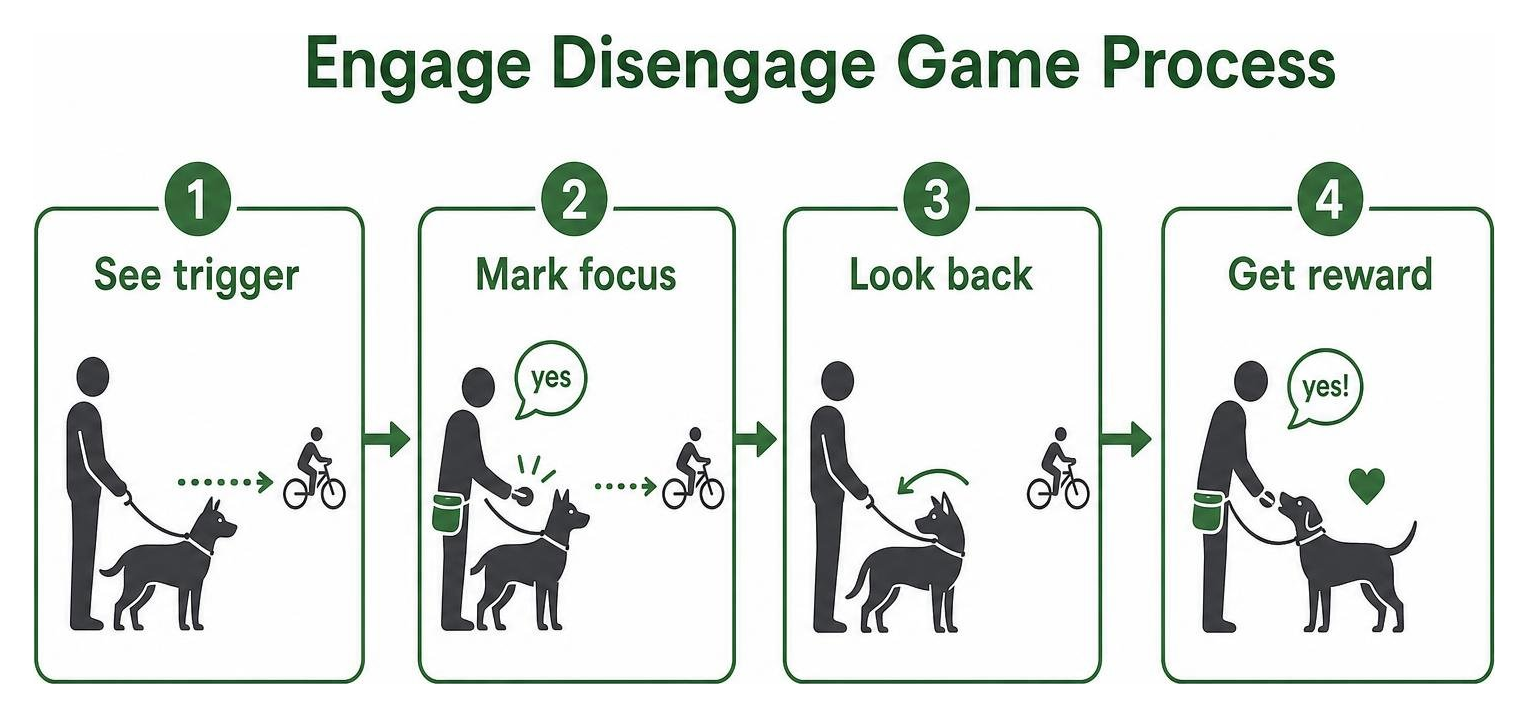
- Find the Working Threshold: Position yourself far enough away from a trigger (such as another dog or a passing cyclist) so your dog can observe without barking, whining, or lunging.
- Step One (The Engage Phase): The moment your dog looks at the trigger, immediately use your marker word (such as "yes") or a clicker. Deliver a high value reward right at your side. This teaches your dog that noticing the trigger predicts good things from you.
- Step Two (The Disengage Phase): After several successful sessions, wait for your dog to spot the trigger and give them three seconds to turn their head back toward you on their own. When they make eye contact, mark enthusiastically and reward generously.
By using practical protocols like the engage disengage protocol and building engagement with food, you teach your dog that choosing you over the environment pays off every single time.
Step 2: Reliable Foundation Cues in Public Spaces
You cannot manage social situations without reliable foundation control. A dog who ignores basic cues inside the living room will fall apart completely on a crowded sidewalk in Beaverton or Portland.
- Name Recognition: Say your dog's name in a bright, happy tone once. When their head turns toward you, mark and reward immediately. Never use their name to scold them.
- The "Wait" and "Stay" Cues: Build duration and distance systematically. A steady sit stay at an open front door or near the car tailgate prevents impulsive darting into traffic.
- Emergency Recall: Practice rapid recalls away from low level distractions first. A reliable recall keeps your dog safe if an off leash dog suddenly approaches.
Integrating these behaviors through structured basic obedience dog training creates dependable habits when unexpected distractions appear.
Preventing and Managing Complex Social Behaviors
Even with proactive socialization, dogs can encounter frightening events or develop behavioral quirks that require deliberate intervention.
Resolving Leash Reactivity and Fear Responses
Leash reactivity often stems from barrier frustration or underlying fear. When a dog feels insecure on a tight leash, they realize they cannot retreat. As a result, they display loud, defensive behaviors to force the approaching trigger away.
If you are dealing with barking and lunging on walks, step back and evaluate your distance. Tightening the leash, yelling, or pulling your dog closer often heightens their panic. Instead, create space immediately, utilize visual barriers like parked cars, and focus on structured reactive dog training. Working with dedicated protocols for dog training for fearful dogs helps rebuild confidence. Above all, stop feeling guilty about your reactive dog; reactivity is a common behavioral hurdle that can be resolved with structure and patience.
Addressing Resource Guarding and Over Arousal
Resource guarding occurs when a dog feels threatened that a valued item, like a chew bone, food bowl, or resting spot, will be taken away. This can disrupt interactions between multiple dogs or between dogs and family members.
To prevent and manage guarding:
- Never take items away forcibly unless there is immediate danger.
- Practice trading exercises. Approach your dog with a higher value treat, toss it near them to drop the low value object, and return the original item whenever safe.
- Feed dogs in separate, low traffic rooms or crates so they feel secure during meals.
- Avoid dog parks where shared toys, treats, and chaotic social dynamics frequently spark fights.
When over arousal and possessiveness escalate, structured behavior modification training gives handlers the clear routines needed to restore order safely.
Frequently Asked Questions About Socializing Dogs
How Long Does Dog Training for Socialization Take for Adult Dogs?
Adult dogs with deeply ingrained social habits take longer to adjust than young puppies. While a puppy can form new emotional associations within a few weeks, modifying adult fear or leash reactivity requires steady, repeated exposure. A reliable foundation usually takes several months of consistent management, structured handler focus, and careful threshold control.
How Can I Tell if My Dog Is Stressed During Socialization?
Dogs communicate discomfort through subtle body language long before they growl or lunge. Watch for early stress signals:
- Rapid lip licking or frequent yawning when not tired
- Showing the whites of their eyes (whale eye)
- Tense facial muscles and sudden body freezing
- Turning the head completely away from an approaching person or dog
- Lifting one front paw cautiously
If you spot these signs, do not push your dog forward. Increase distance from the trigger immediately to keep them comfortable and able to learn.
Should My Dog Greet Every Dog We Pass on Leash?
No. On leash greetings are unnatural for dogs because tight leashes prevent normal circling and body language. Allowing your dog to greet every dog builds an expectation of social access, which often causes intense frustration barking when greetings are denied. Aim for calm neutrality instead.
Build Real World Confidence on Every Walk
Navigating daily walks should not feel like an uphill battle. If your dog struggles with barking at neighbors, pulling toward other dogs, or freezing in public spaces, you do not have to guess your way through it. Blackwood Canine offers clear, no nonsense guidance for dog owners across Portland, Vancouver, Beaverton, Hillsboro, Scappoose, Warren, and St. Helens.
Our comprehensive programs are built for real life:
- 4 Week Basic Obedience Foundation: Build rock solid communication, leash manners, and core cues from the ground up.
- 6 Week and 8+ Week Complex Behavior Modification: Address persistent leash reactivity, fear, resource guarding, and severe public over arousal.
We help you set clear boundaries, establish practical daily management, and create consistent routines so you can enjoy peaceful walks anywhere. Schedule your Good Dog Game Plan through our private in home lessons and take the first step toward a relaxed, well mannered companion.